A cinema sofa isn't defined by a label — it's defined by how it makes a two-hour film feel. The right piece has the depth to allow proper lounging, the configuration to keep everyone facing the screen, and the build quality to stay comfortable long after the opening credits. Browse the collection above and use the filters to find the right size, configuration, and colourway for your room.
The term gets used loosely, but the best cinema sofas share a distinct set of characteristics that set them apart from a standard living room sofa and understanding what those are helps you choose well.
Seat depth is the most important factor. A cinema sofa needs to be deep enough to allow proper lounging — sitting back fully supported, with legs stretched out or curled up, without sliding off the edge. Shallow seats that work fine for sitting upright during a conversation feel uncomfortable within thirty minutes of watching a film. Look for seat depths of at least 65–70cm, and ideally 80–90cm for a genuinely generous lounging position.
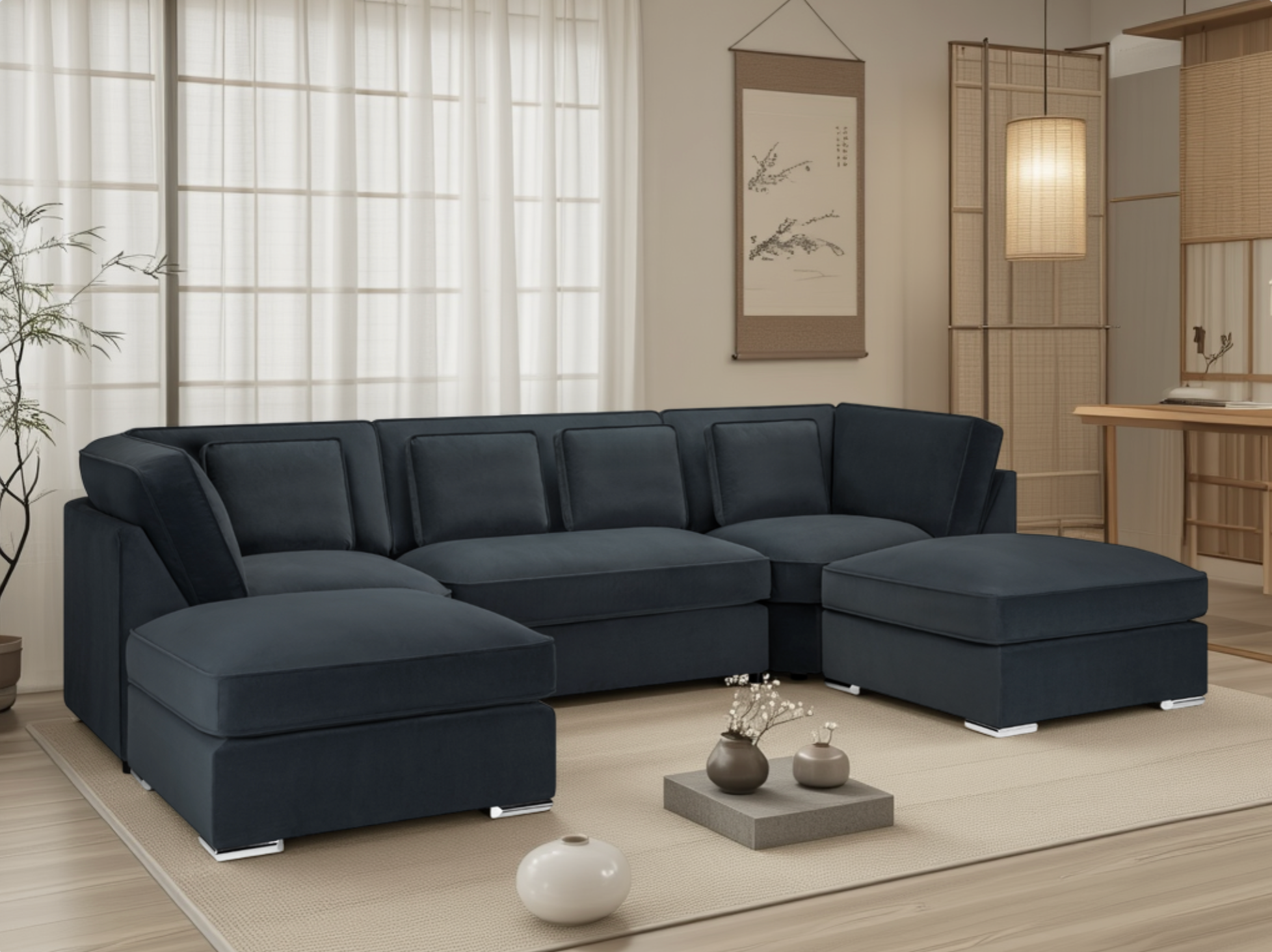
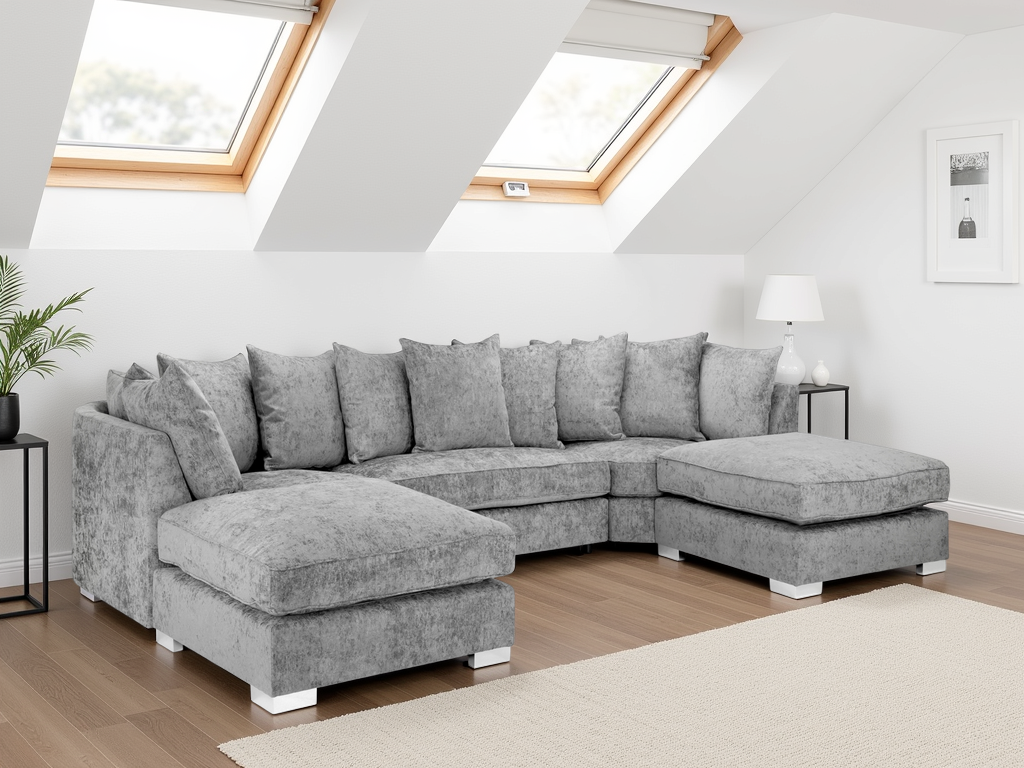
Configuration for sightlines matters almost as much. The wraparound layout of a U-shape sofa is particularly well-suited to a home cinema because it creates a natural focal point at the open end of the seating — wherever the screen is positioned. Everyone faces inward and forward, and no one ends up sideways or craning their neck. An L-shape corner sofa achieves something similar for smaller rooms, with the right-angled layout drawing the seating naturally towards the screen wall.
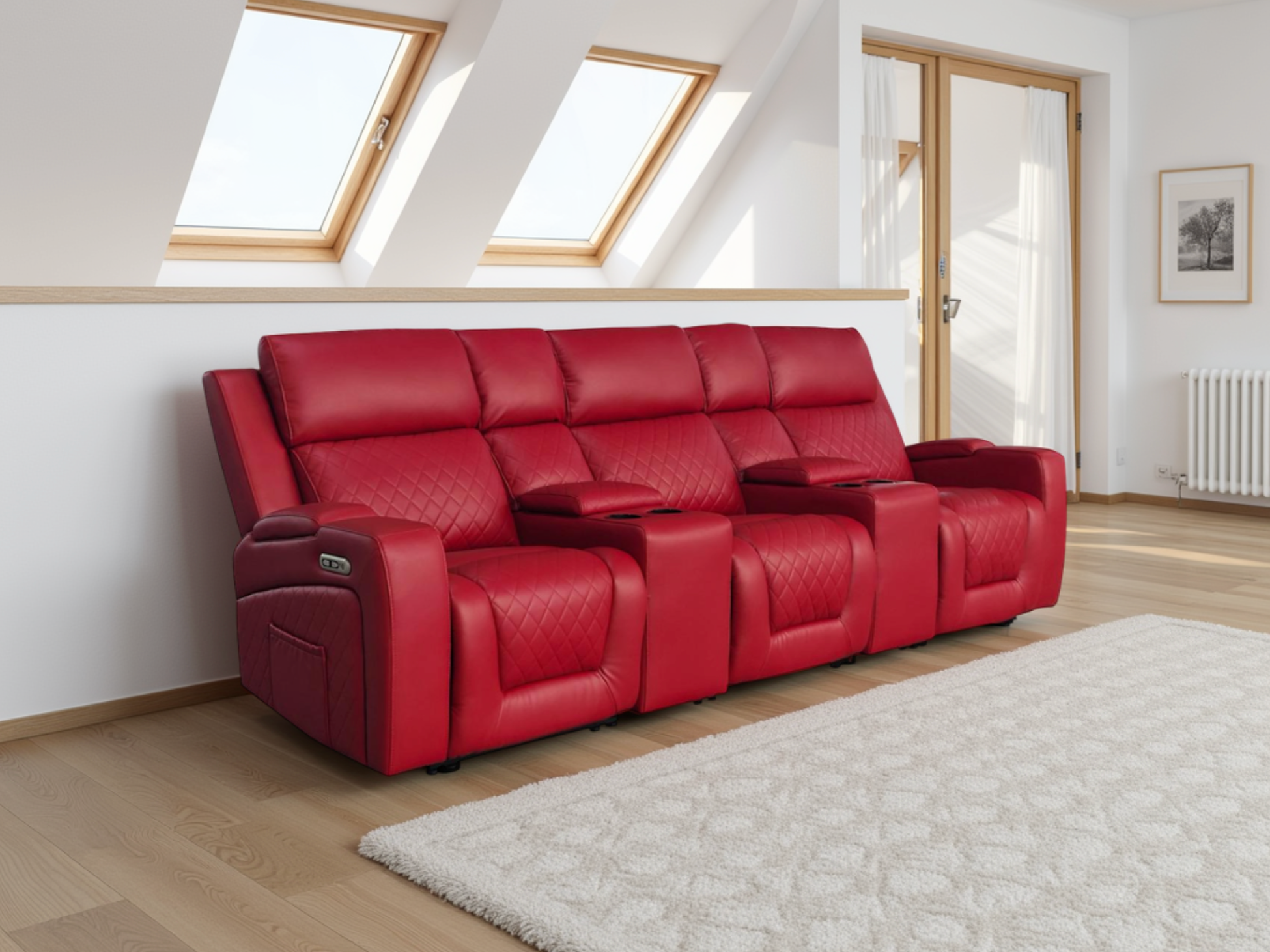
Features that earn their place. Cup holders, USB charging ports, storage compartments within the armrests or ottoman — these aren't gimmicks on a cinema sofa. They're practical elements that remove the small friction points (where do I put my drink, where's my phone, do I need to get up) that interrupt an evening of watching. If those features are in the range, they're worth having.
Reclining. Not essential, but transformative when it's done well. A recliner sofa in a dedicated media room allows you to settle into a genuinely reclined position without a separate footstool — closer to the lie-flat experience of a proper home cinema chair, but in a format that also functions as a conventional sofa when the screen is off.
Choosing the Right Cinema Sofa for Your Room
The room you're working with shapes the decision more than any other factor. Cinema sofas at this scale need proper planning before you commit.
Dedicated media rooms give you the most freedom. With no competing functions — dining, socialising, everyday sitting — you can optimise entirely around the screen. A large U-shape sofa positioned at the right viewing distance from a wall-mounted screen creates an immersive arrangement that's genuinely hard to improve on. For a room of 4m x 4m or larger, a full U-shape is the natural choice. For something more compact, a generously proportioned 4-seater or 3-seater positioned square-on to the screen works just as well with less floor commitment.
Open-plan living rooms require a different approach. The cinema sofa needs to function as an everyday living room sofa when films aren't playing, and it needs to anchor the seating zone within a larger space without feeling like a piece of specialist furniture dropped into a domestic room. U-shape and corner configurations work particularly well here because the enclosed, defined layout creates a seating zone that reads as intentional regardless of what's being watched.
Viewing distance matters. As a guide, the ideal viewing distance for a large screen (65–85 inches) is roughly 2–3.5 metres. Position your sofa within this range before ordering — the configuration and dimensions of the sofa need to work with your screen placement, not against it. A sofa that's too deep or too wide can push you outside the optimal viewing distance even in a large room.
Dark colours absorb ambient light. If your media room has blackout blinds or low ambient lighting, a dark grey, graphite, or black cinema sofa enhances the immersive quality of the space. Browse our grey U-shape sofas or black U-shape sofas if this is your setup. For a brighter open-plan room that doubles as a living space, beige U-shape sofas keep the room feeling light when the screen is off.
Cinema Sofa Beds: The Dual-Purpose Option
Several sofas in this collection are available as sofa beds — and for a media room or open-plan space where overnight guests occasionally need accommodation, this combination is particularly compelling.
A U-shape sofa bed gives you the full wraparound cinema seating experience during the day and a generous sleeping surface when needed. The fold-out mechanism sits within the main sofa body, so when the bed isn't in use the sofa looks and feels exactly like any other piece in the range. There's no visual compromise — guests simply don't know it's there until you need it.
For a room that genuinely pulls double or triple duty — living space, cinema room, and guest bedroom — the U-shape sofa bed is probably the most versatile single piece of furniture you can buy. It eliminates the need for a separate sofa bed in a spare room, consolidates seating and sleeping into one considered piece, and keeps the overall room feeling uncluttered.
When choosing a cinema sofa bed, prioritise mattress depth and mechanism quality alongside the sofa's seating credentials. A cinema sofa that sleeps poorly defeats half its purpose — look for a mattress of at least 10cm depth and a smooth, reliable fold-out mechanism that doesn't require wrestling with the frame.
Complete Your Cinema Setup
The sofa is the centrepiece, but a well-considered media room comes together through the surrounding pieces too.
A complementary armchair positioned at the side of your U-shape or corner sofa creates an additional viewing seat for guests without disrupting the primary seating arrangement — particularly useful for rooms where the sofa alone doesn't seat everyone comfortably.
Back style is worth thinking about in a cinema context. A scatterback sofa allows you to rearrange cushions for optimal lounging support during a long film — push them behind your lower back, stack them for height, or remove them entirely to recline further. It's a flexibility that fixed or tight-back sofas don't offer.
If maximum comfort is the priority and you're building a dedicated media room, a recliner sofa is worth serious consideration alongside the cinema range. The ability to move from upright to fully reclined at the press of a button — without a separate footstool or rearranging cushions — elevates a film night in a way that's hard to overstate once you've experienced it. Electric recliner models are particularly well-suited to a darkened media room where fumbling for a lever mid-film isn't ideal.
Browse our best sellers to see which cinema sofa configurations our customers choose with the most confidence, or explore new arrivals for the latest additions to the range.
Every Airedale Living cinema sofa is built on a hardwood frame with high-resilience foam seating — engineered for genuine long-session comfort. Free UK delivery, in-room assembly by our two-person team, a 5-year frame guarantee, and free returns are all included as standard.
Browse the full cinema sofa collection above — and build the viewing setup your living room deserves.
Frequently Asked Questions
A cinema sofa is a sofa designed specifically for extended, immersive viewing comfort — prioritising deep seats for lounging, generous configurations that keep everyone facing the screen, and practical features like cup holders, USB charging ports, and built-in storage. The term covers several sofa types including U-shape sofas, large corner sofas, and recliner sofas, all of which share the common trait of being built for the long sit rather than upright everyday seating.
It depends on your room dimensions and how many people you're seating. For a dedicated media room of 4m x 4m or larger, a full U-shape sofa comfortably seats six or more and creates the most immersive viewing arrangement. For a smaller room or open-plan space, a 3-seater or 4-seater positioned square-on to the screen works well without the same floor commitment. Always check viewing distance too — for a 65–85 inch screen, aim to position your seating roughly 2–3.5 metres from the display.
Yes a U-shape sofa is arguably the best configuration for a dedicated cinema room. The wraparound layout creates a natural focal point at the open end of the seating, so everyone faces the screen without twisting or craning. The enclosed arrangement also creates a defined, immersive viewing zone within the room — particularly effective in open-plan spaces where you want the seating area to feel purposeful and contained. The generous seat depth typical of U-shape sofas adds to the lounging comfort that a long film demands.
Dark colours — graphite, charcoal, and black — absorb ambient light rather than reflecting it, which enhances the immersive quality of a dedicated media room with blackout blinds or controlled lighting. Our grey U-shape sofas and black U-shape sofas are particularly well-suited to this type of setup. For a brighter open-plan living room that doubles as a cinema space, beige and lighter neutrals keep the room feeling inviting when the screen is off.
Both are strong choices for different setups. A recliner sofa offers hands-free, position-adjustable comfort that's genuinely transformative for long viewing sessions — electric models in particular let you move from upright to fully reclined without interrupting the film. A U-shape sofa offers more seating capacity and a stronger sense of an enclosed, defined cinema zone within the room. For a dedicated media room where comfort is the priority, a recliner. For a room that seats more people and doubles as everyday living space, a U-shape. If you want both, some models in the range combine a U-shape layout with individual reclining seats — the best of both configurations.
Choosing a selection results in a full page refresh.