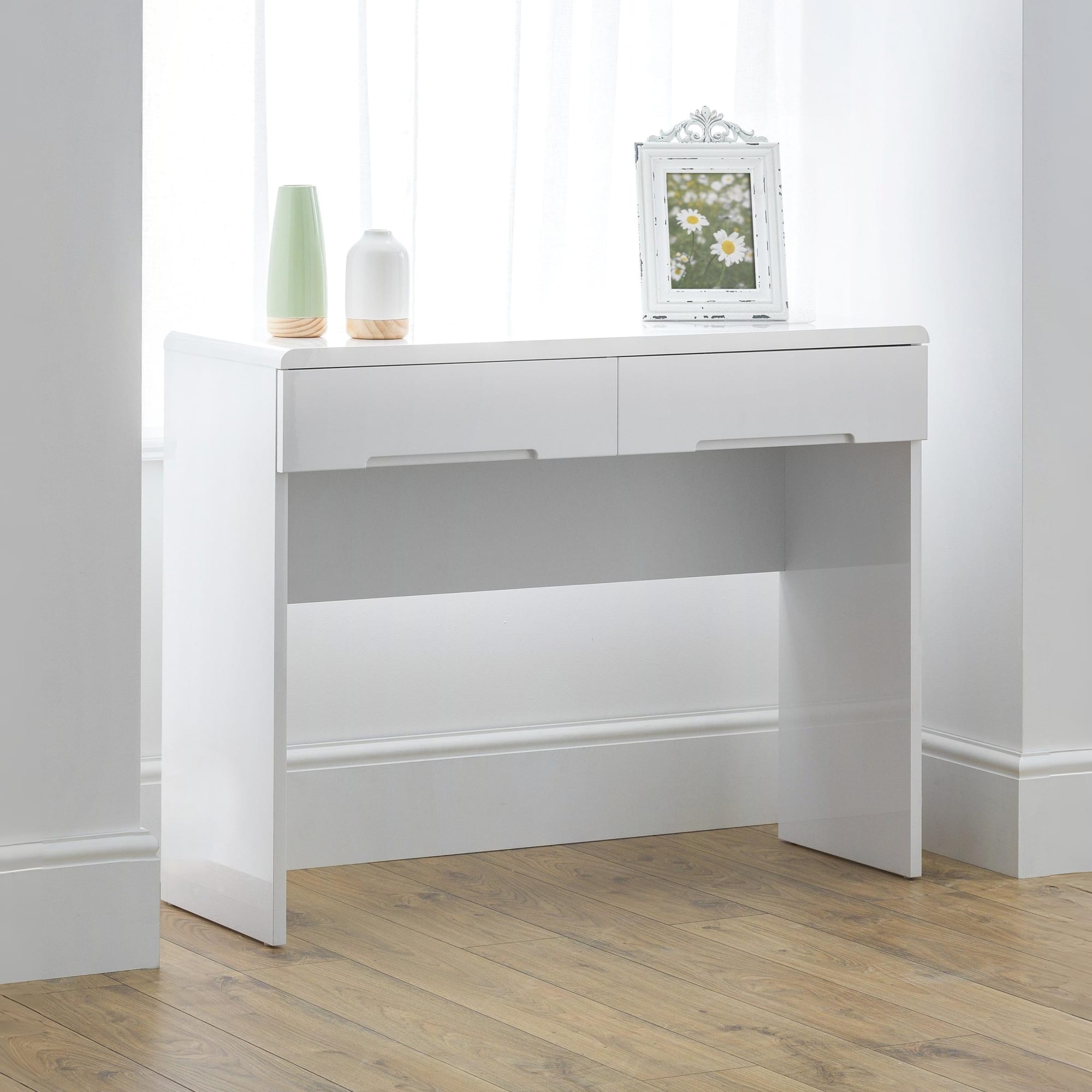
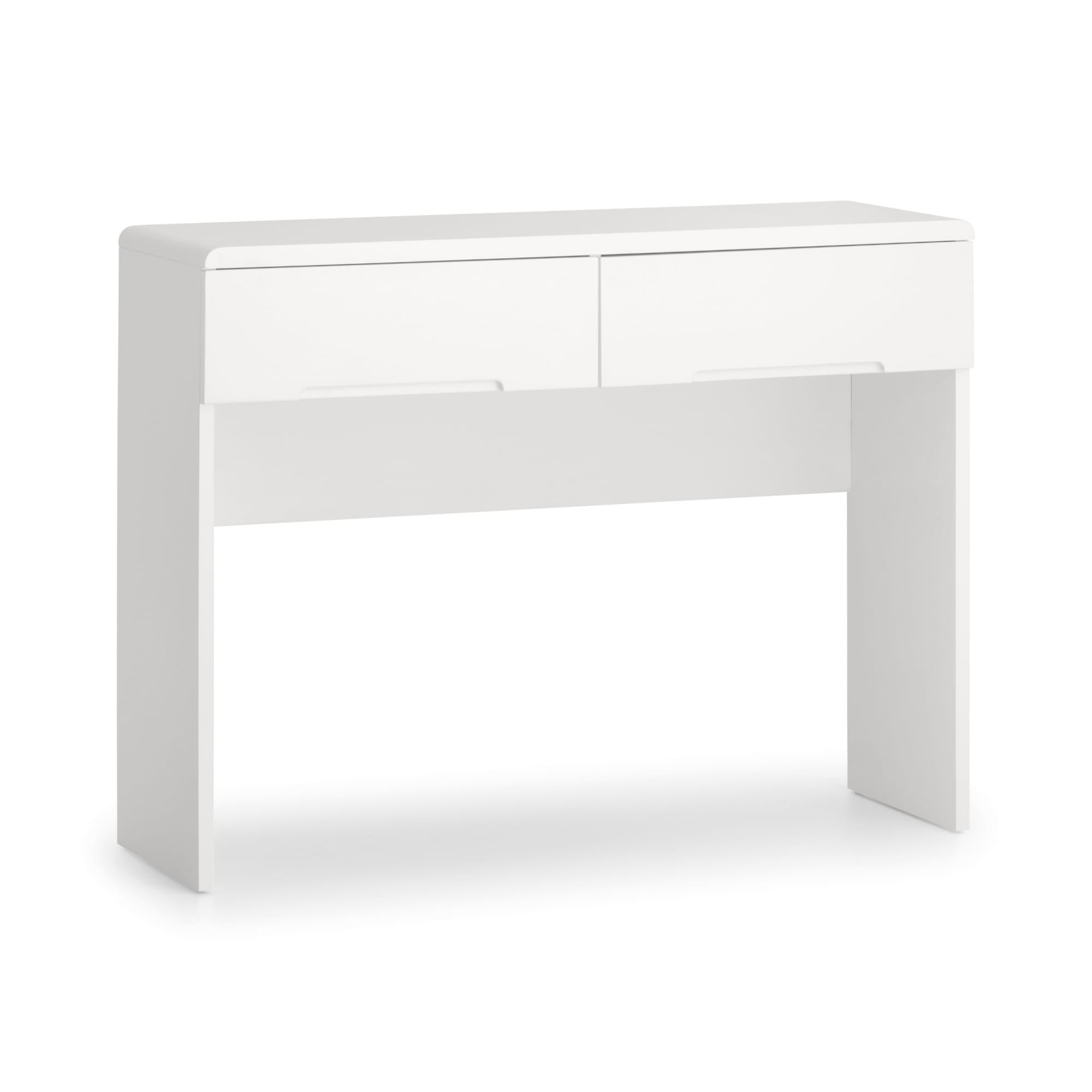
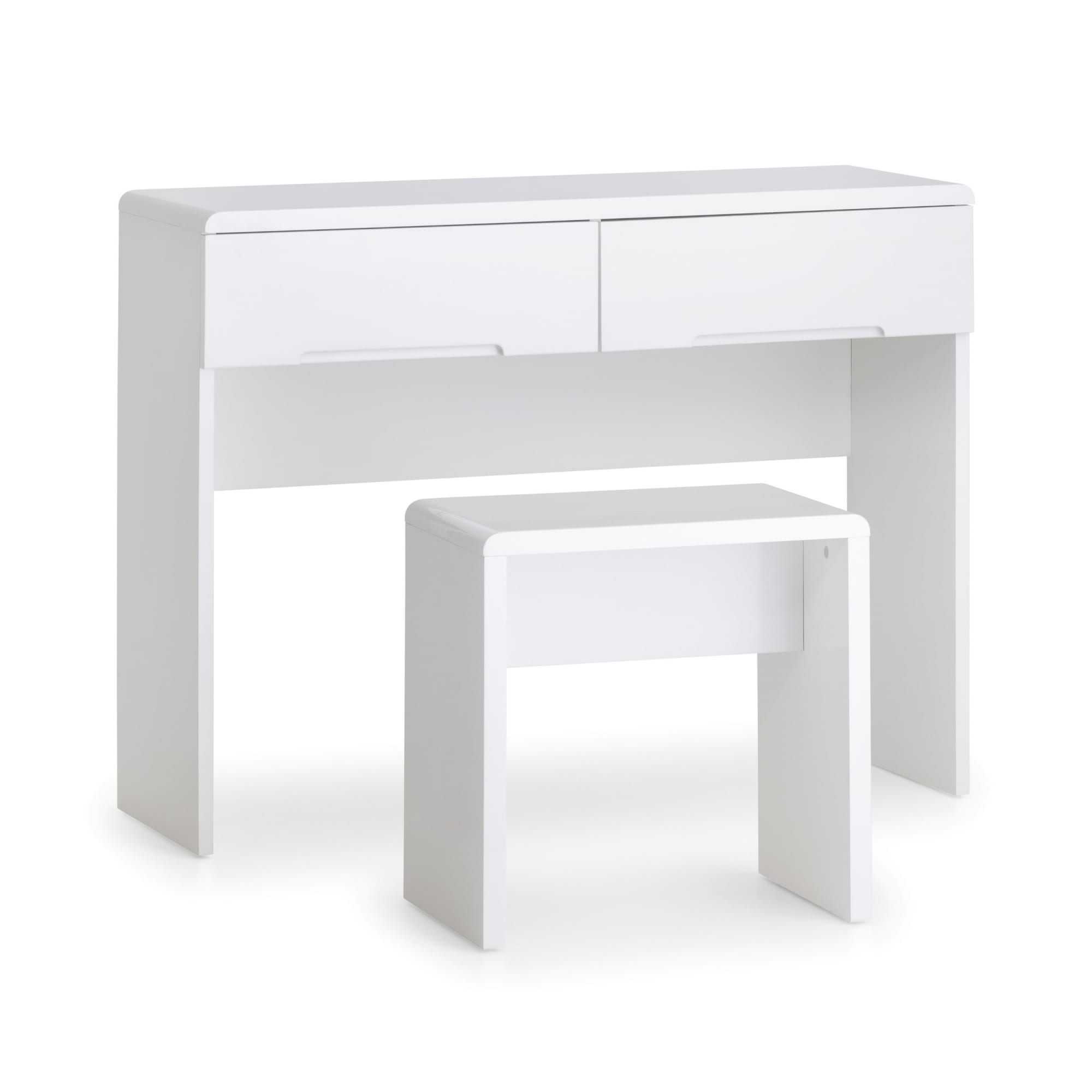
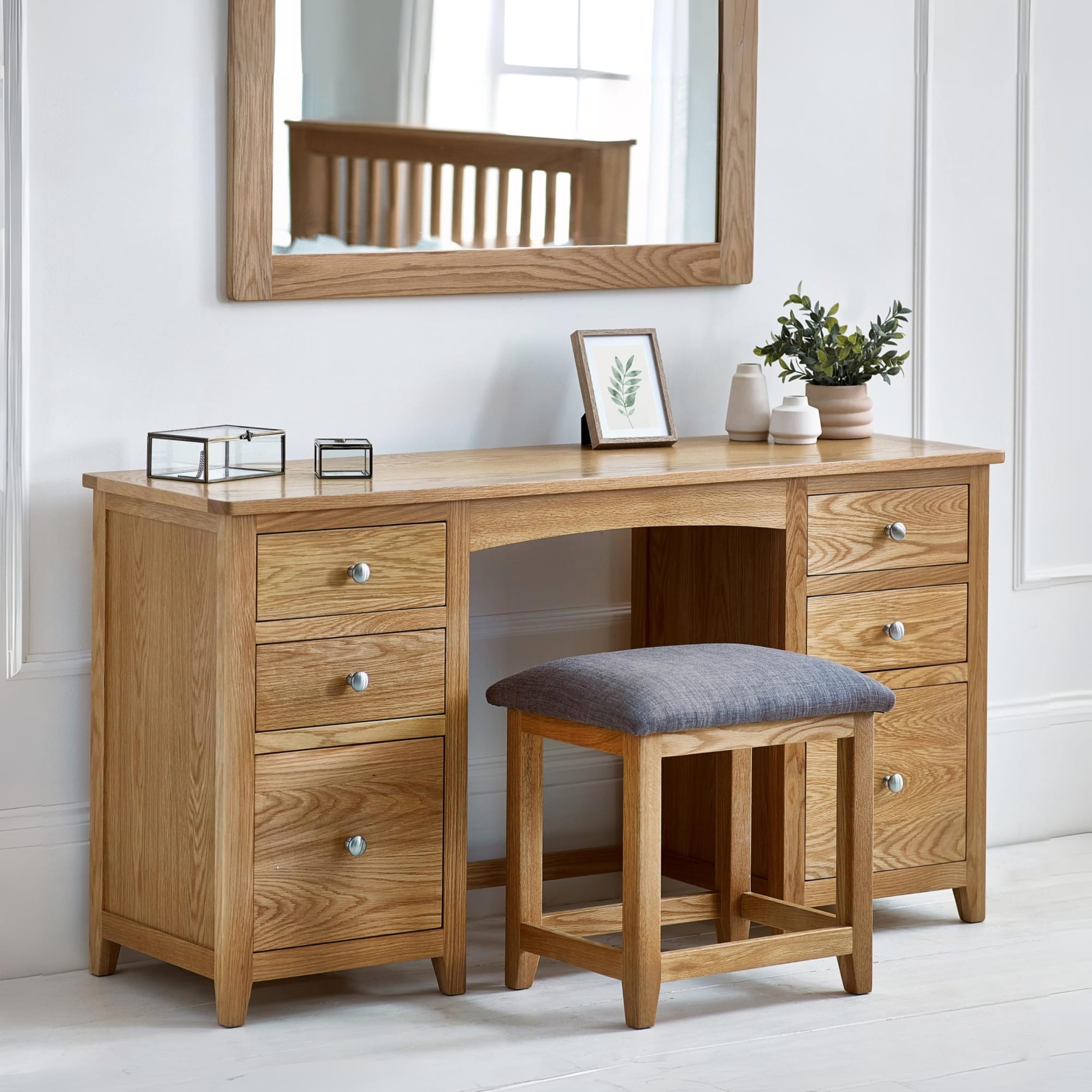
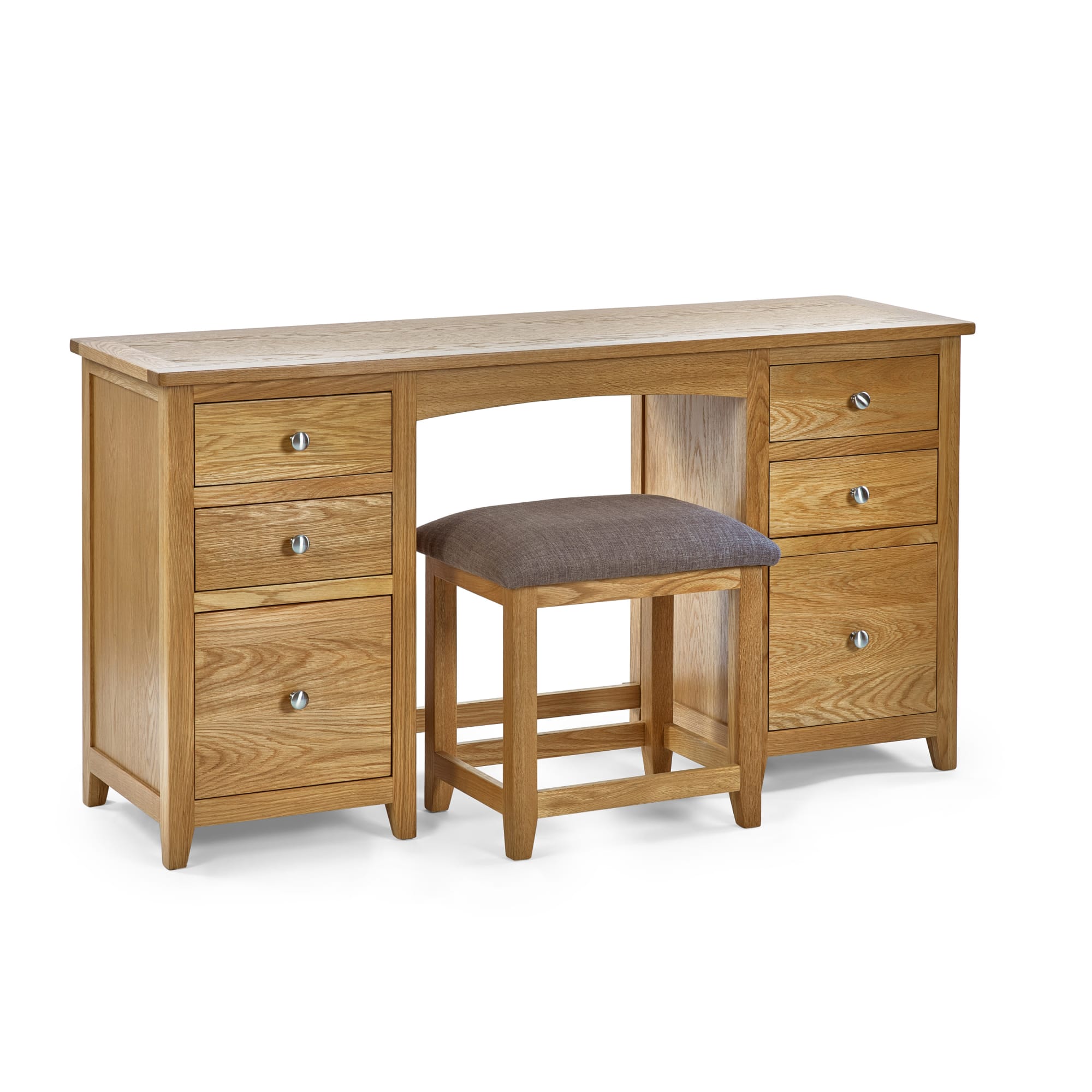
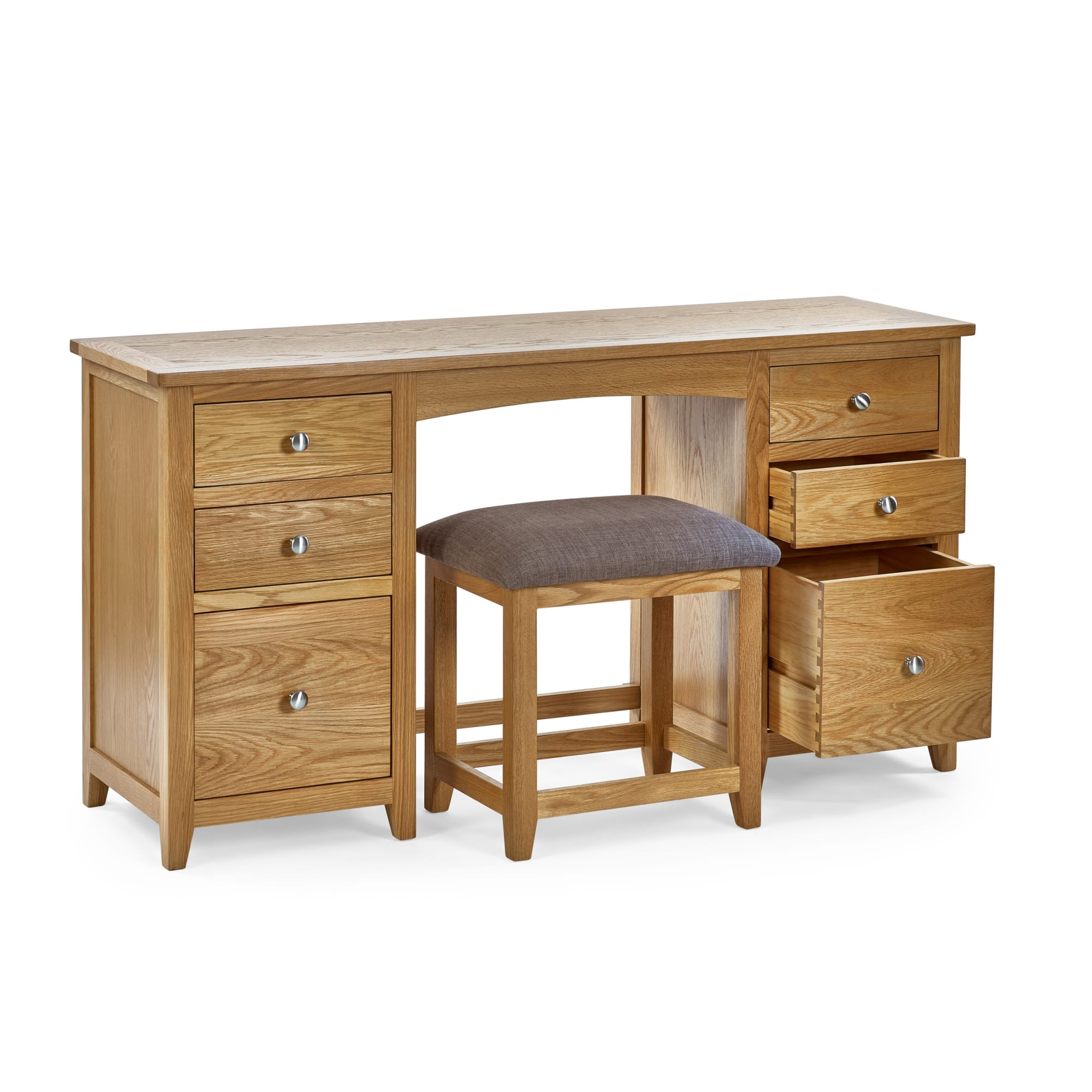
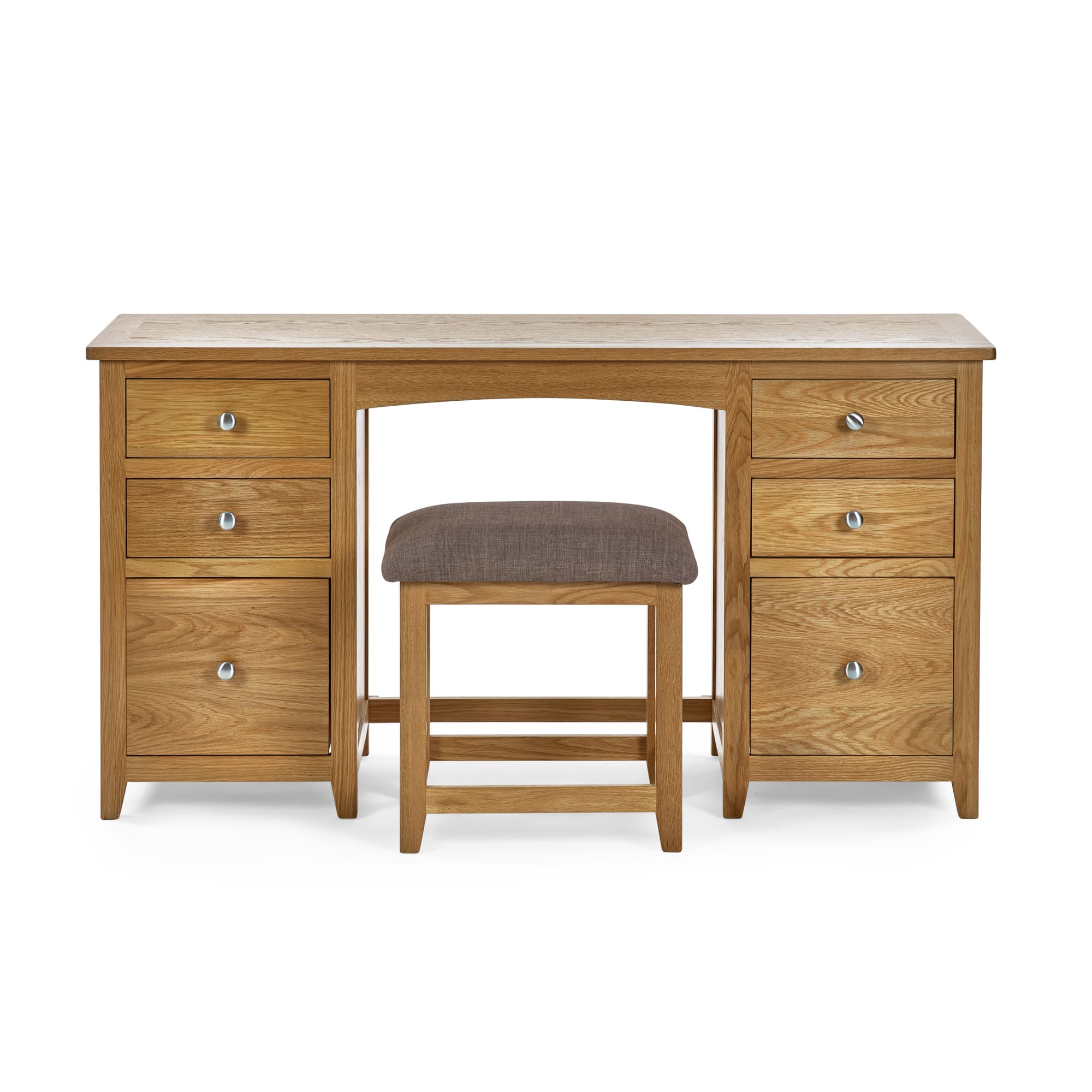
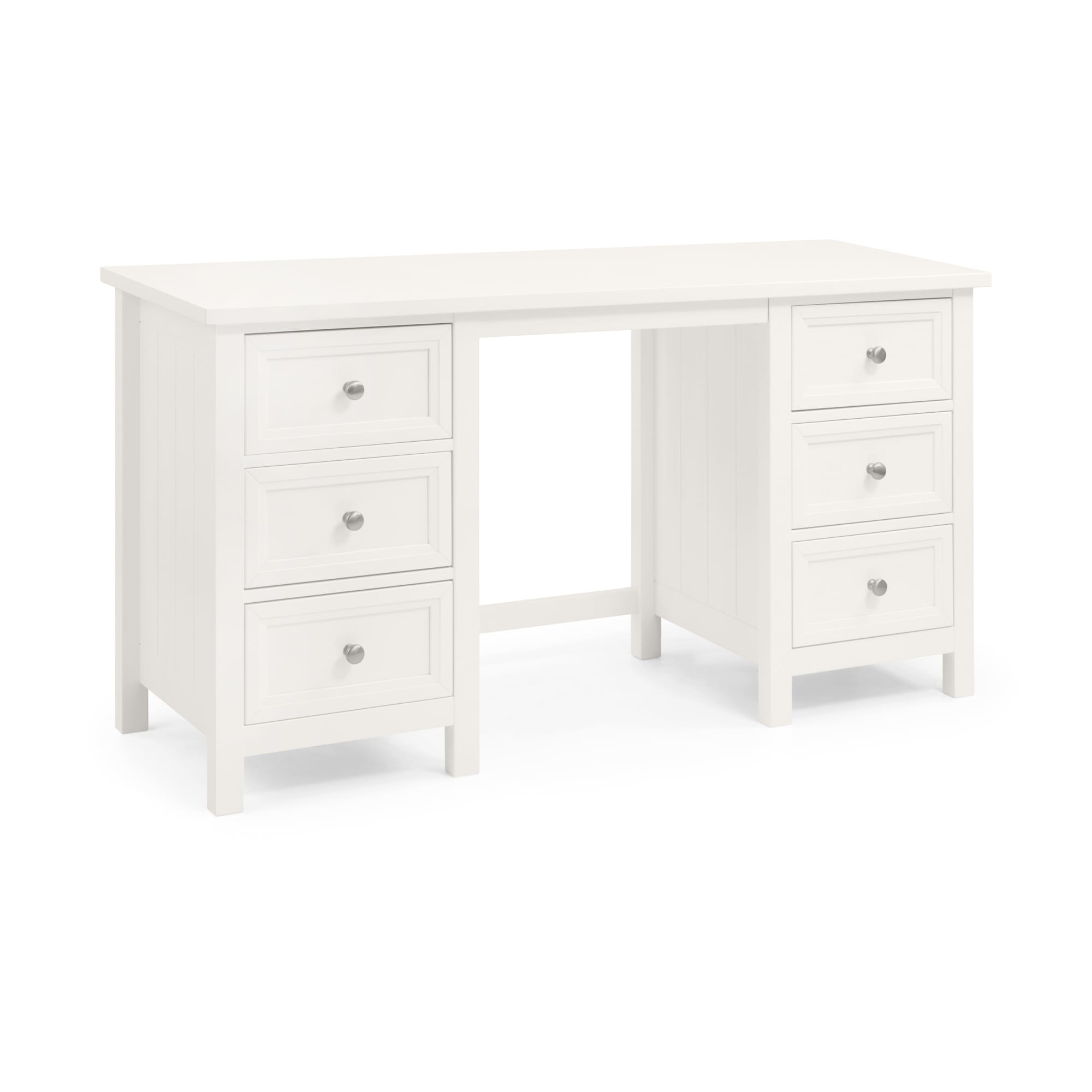
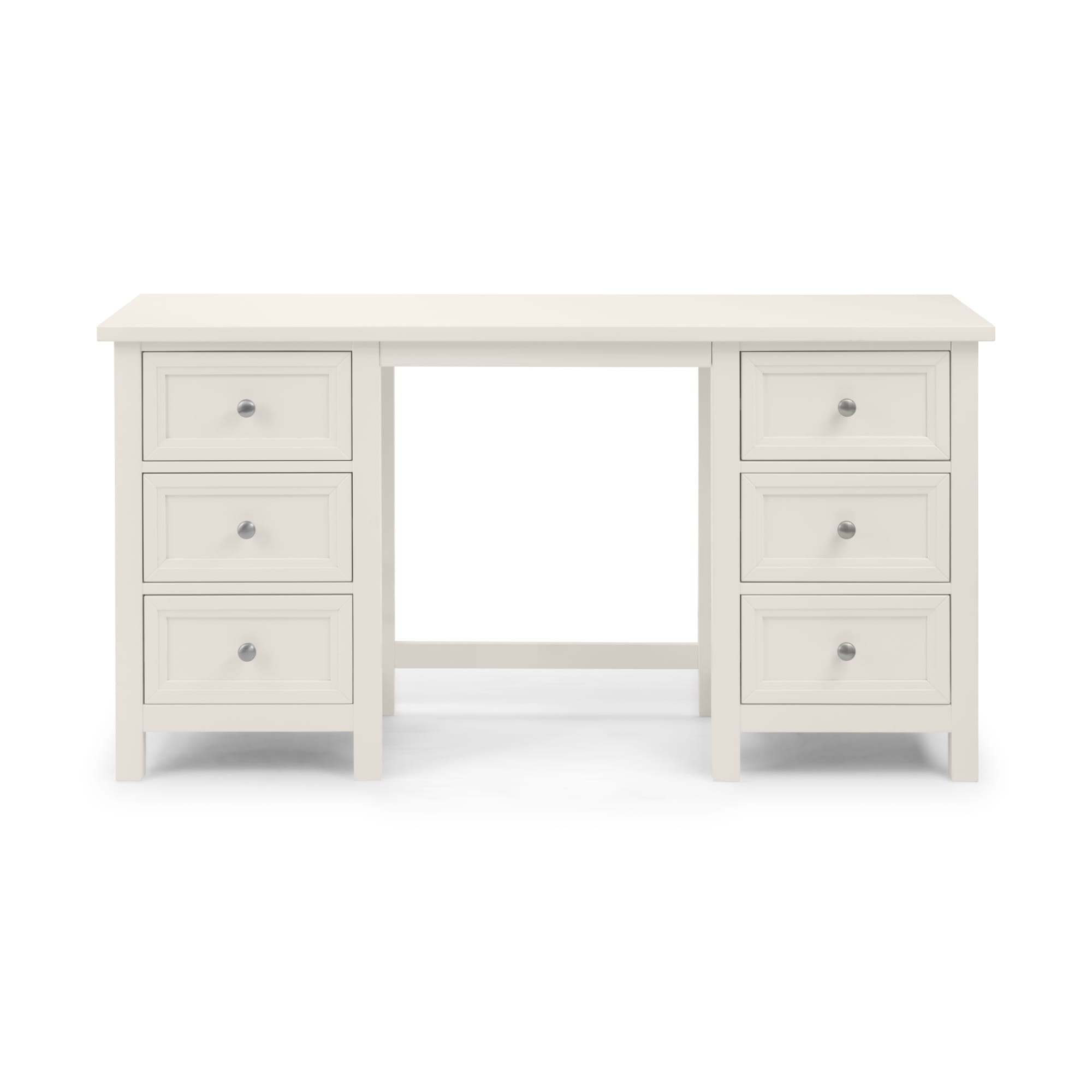
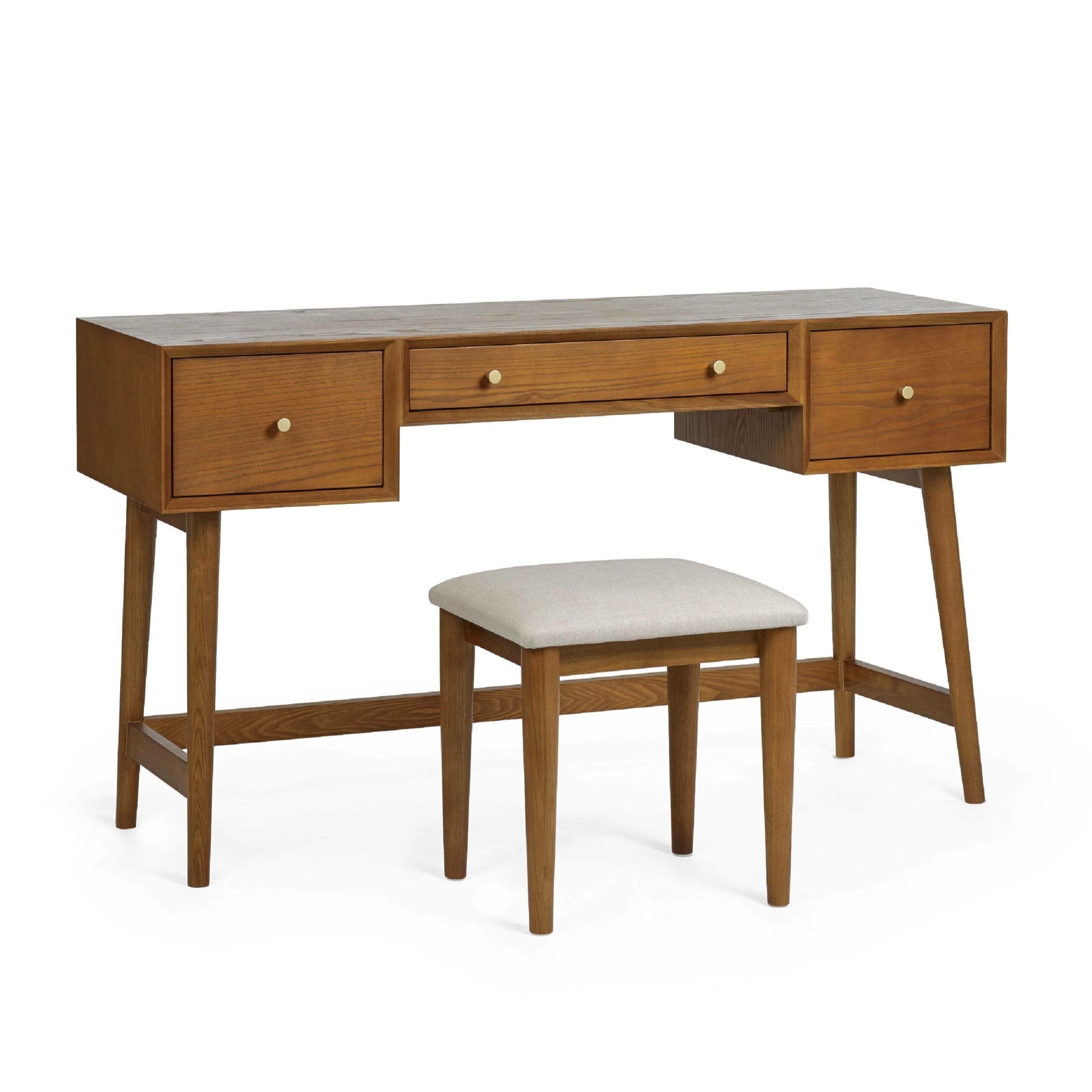
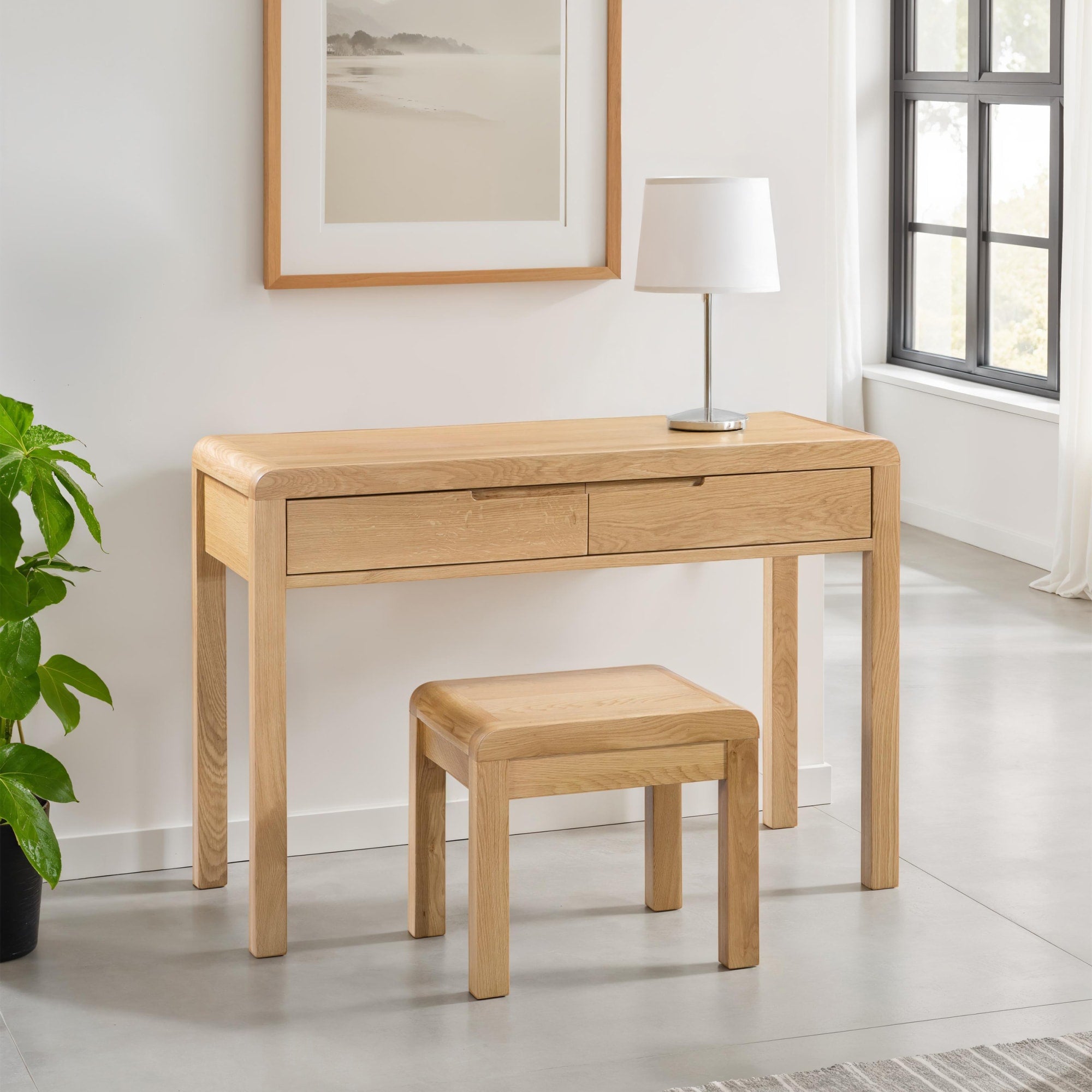
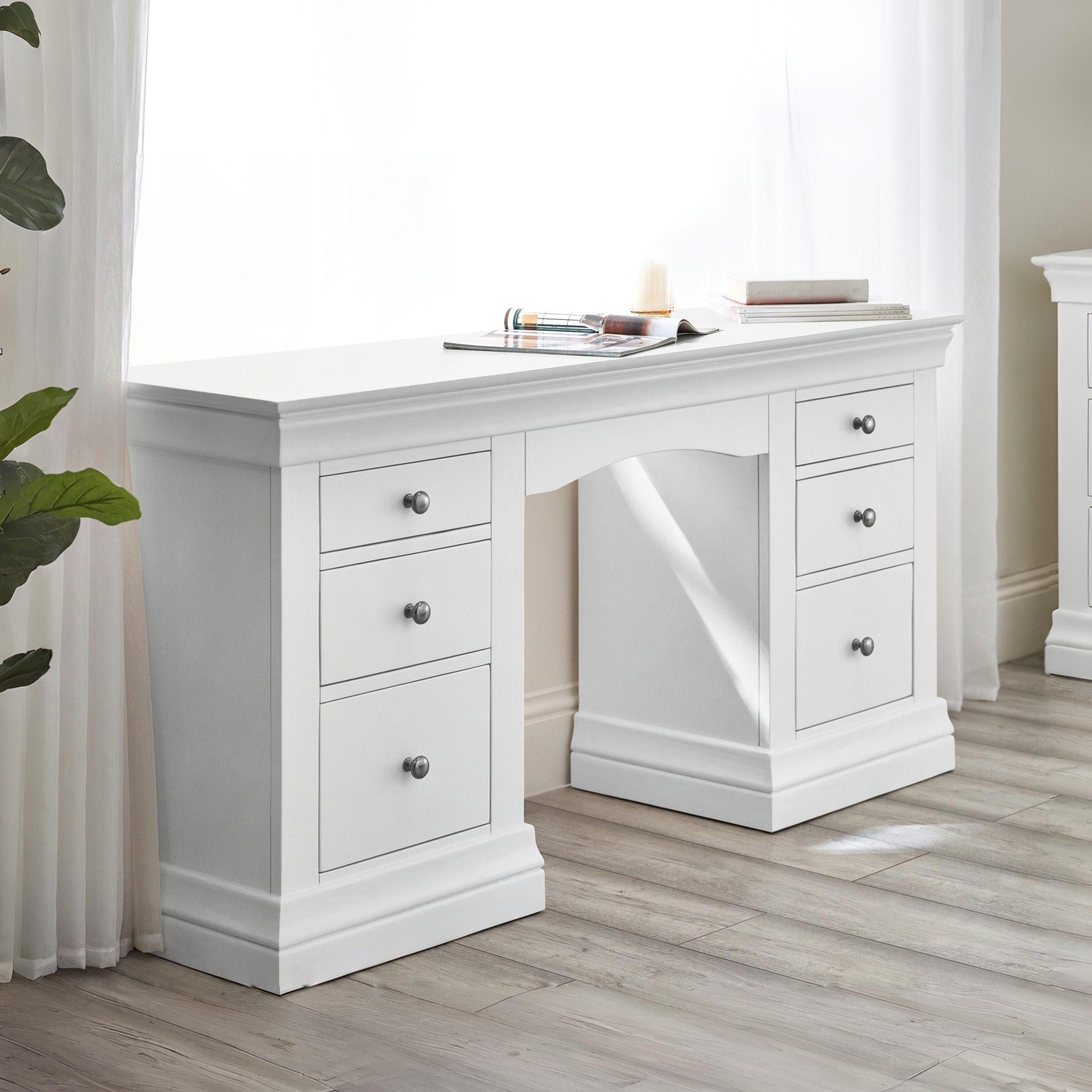
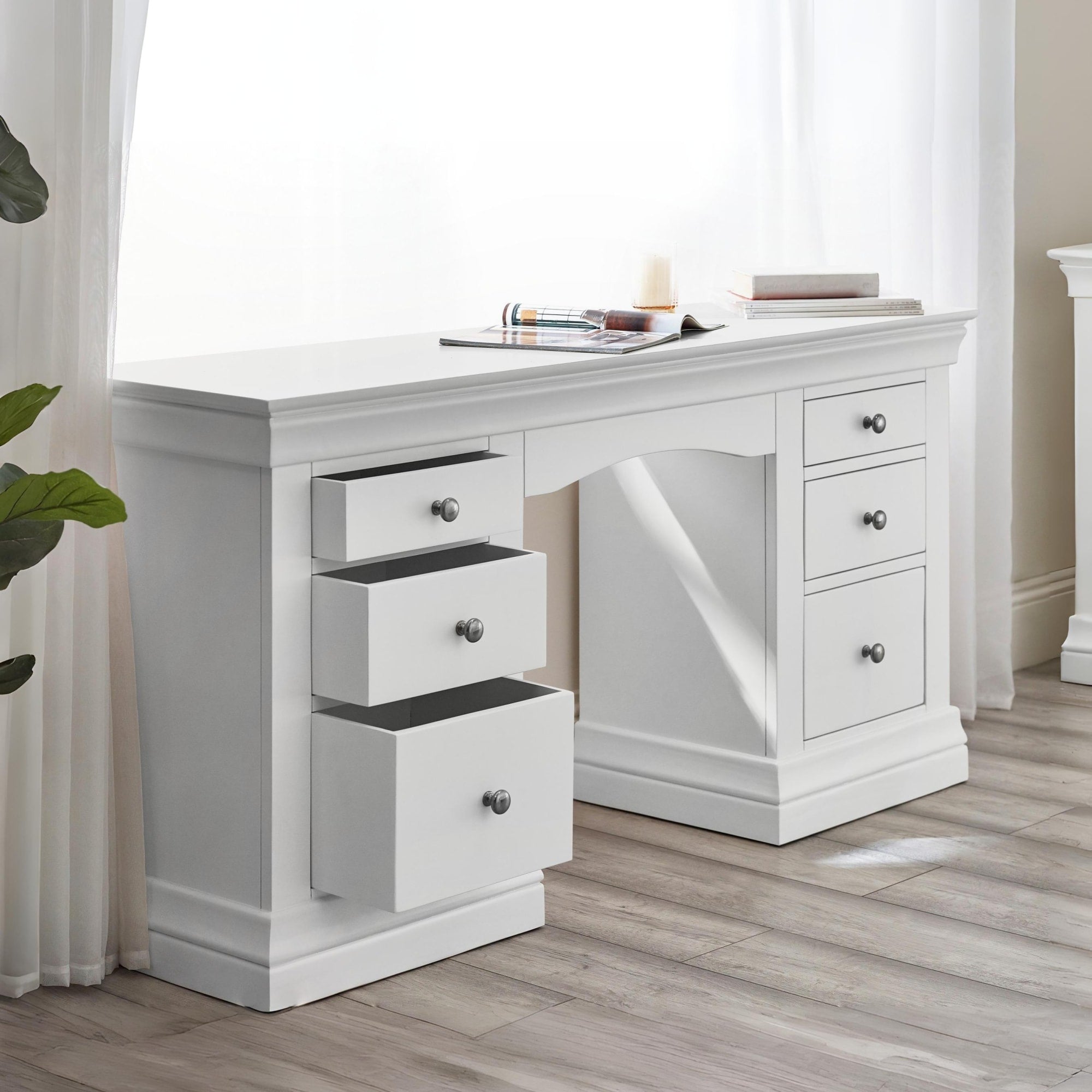
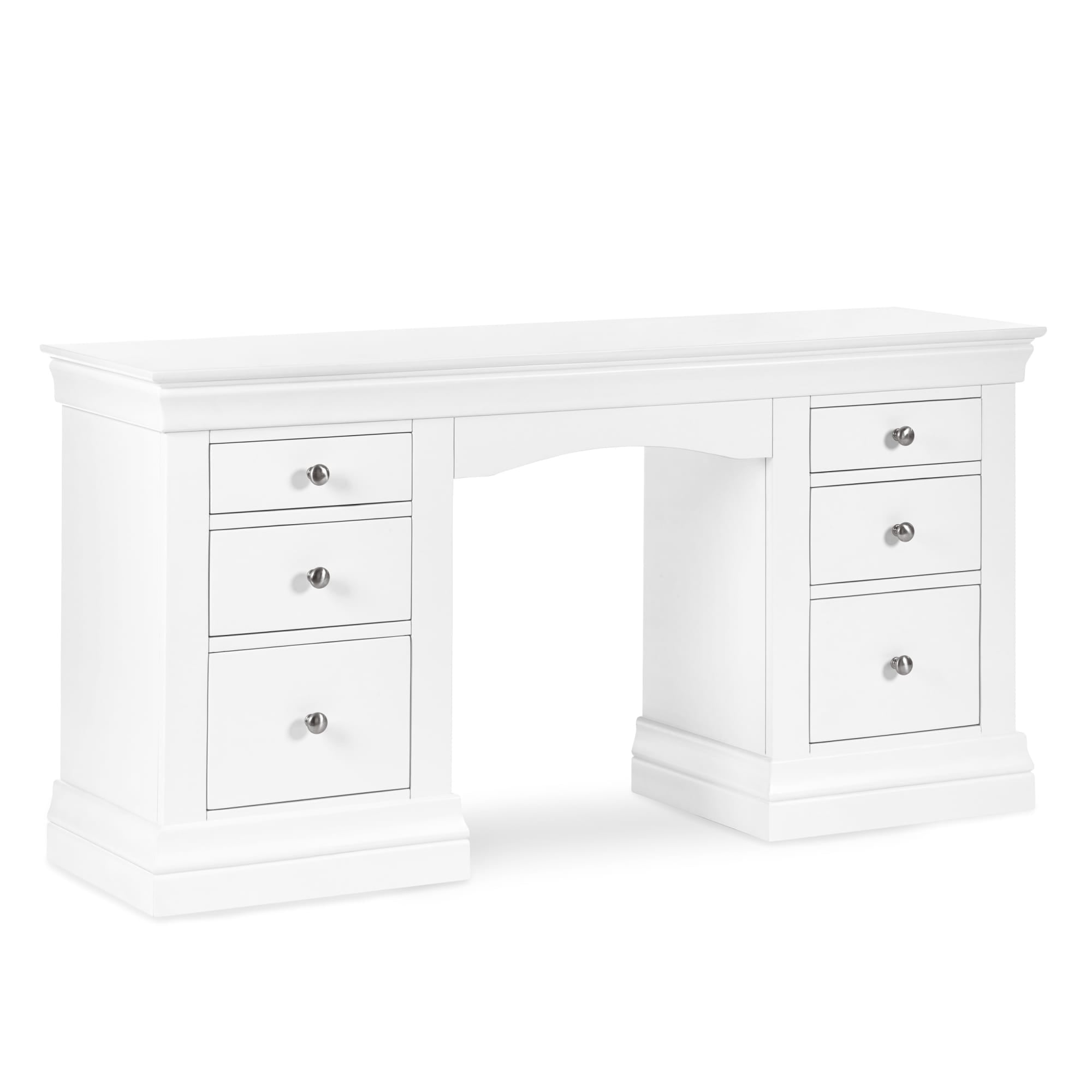
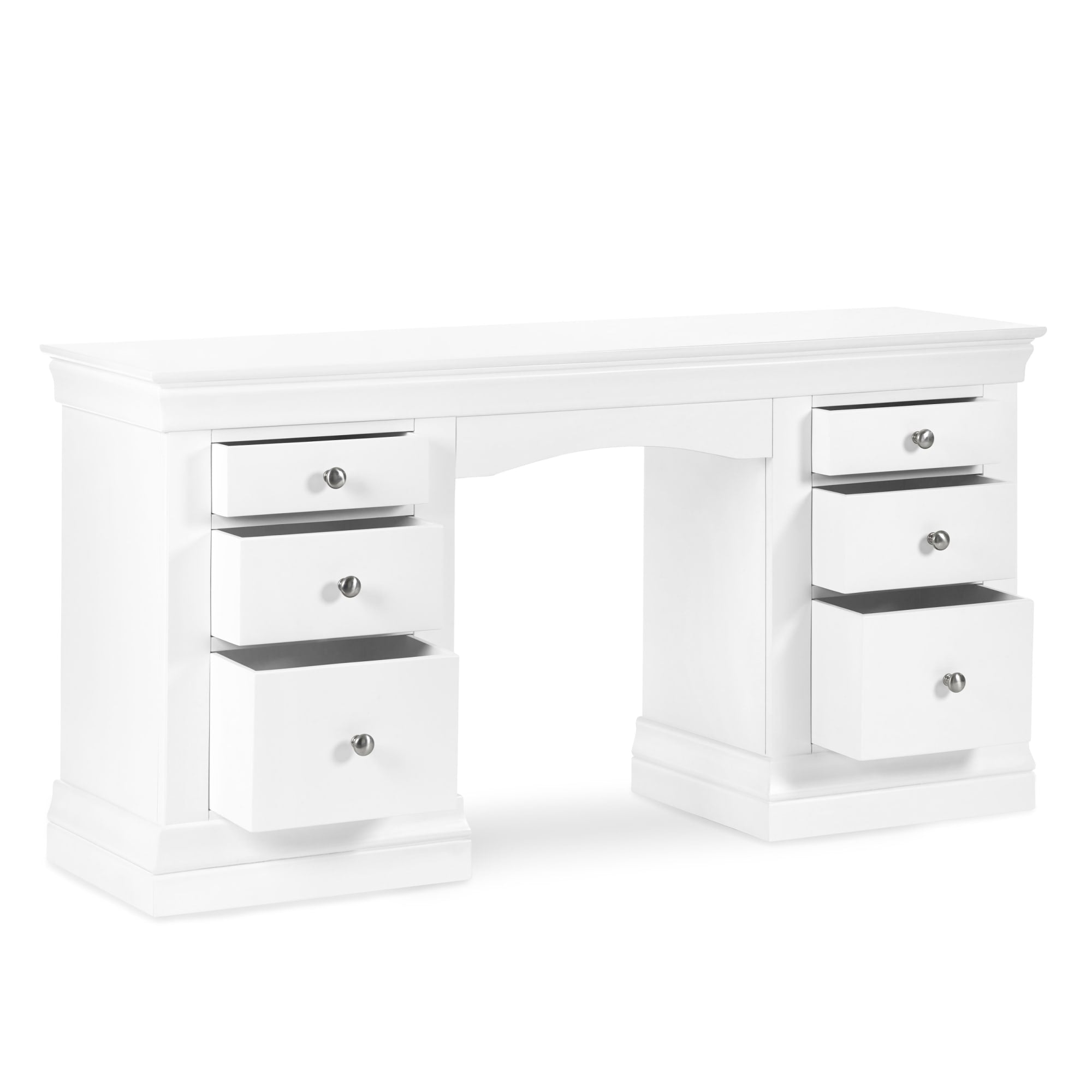
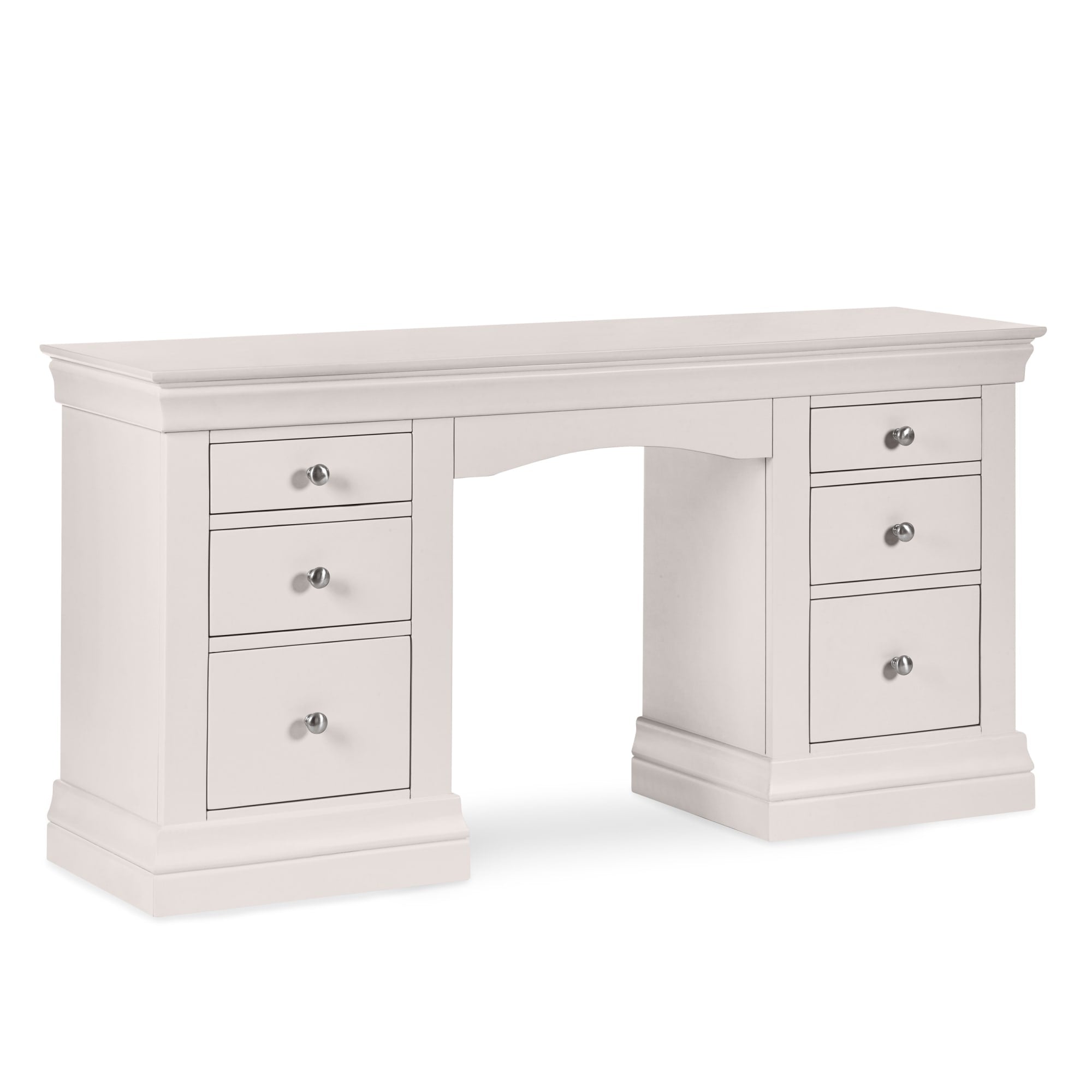
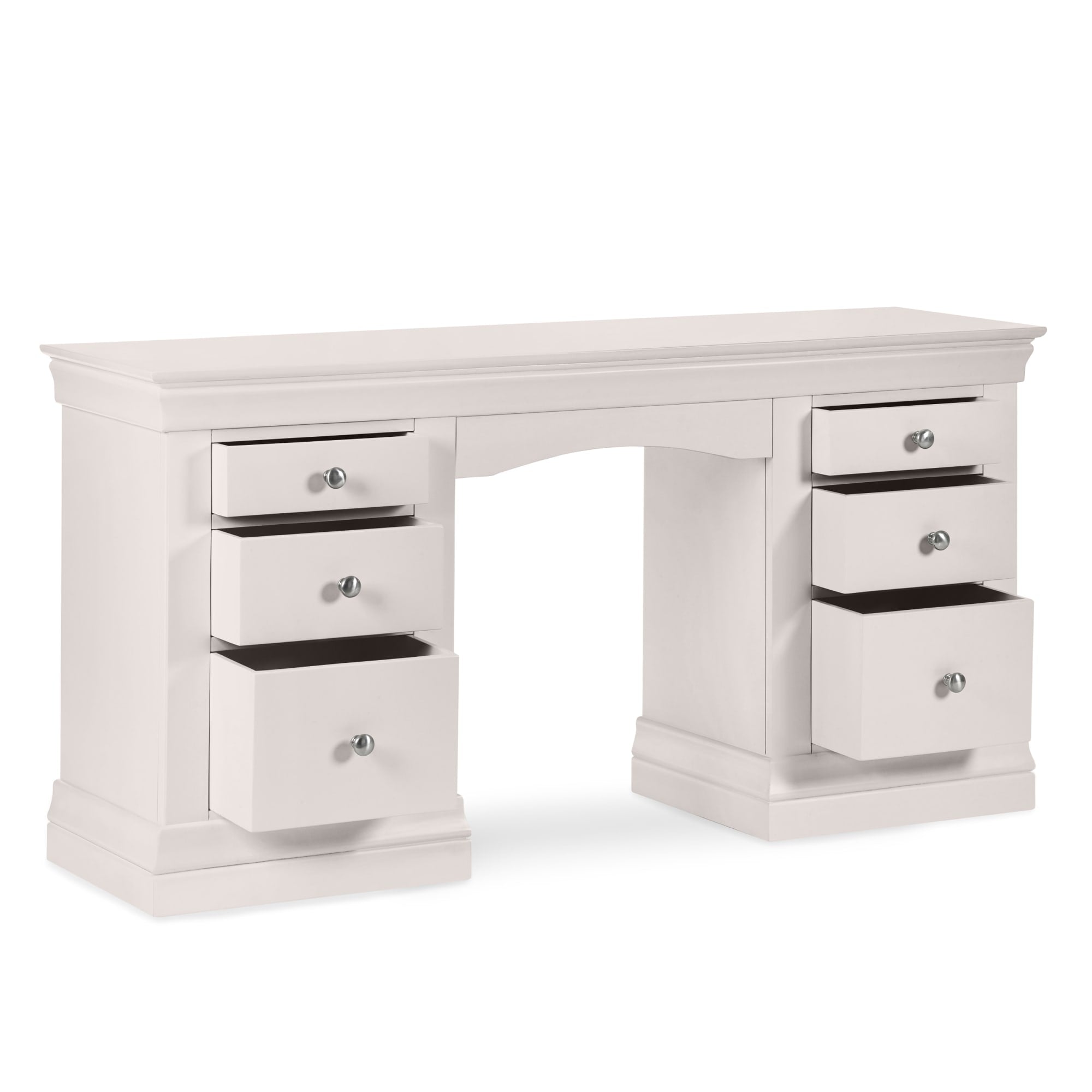
A dressing table is the most personal piece of furniture in a bedroom the surface that structures the daily getting-ready routine and, when chosen and placed well, brings a considered, intentional quality to the room that no other piece quite replicates. At Airedale Living, our dressing tables are available with and without mirrors, in configurations from compact single-drawer designs through to full-width multi-drawer vanity tables, across oak, white, grey, and black finishes. Browse the full collection above and use the filters to find the right size, mirror option, and finish for your bedroom and your daily routine. Free UK delivery is included on every order.

16 products

Choosing the Right Dressing Table: Size, Mirror, and Placement

A dressing table rewards careful planning — particularly around placement — in a way that most bedroom furniture pieces don't. Choose the wrong position and the table becomes either too bright (facing a window directly) or too dark (against a windowless wall) to be comfortable to use daily. Choose the right position and it becomes one of the most consistently used and appreciated pieces in the bedroom.

Placement is the most important decision. The ideal position for a dressing table is beside a window rather than facing it. Beside a window, natural light falls across the face from one side — the most flattering and practical direction for applying makeup, styling hair, or any task that requires seeing detail clearly. Facing a window creates a strong backlight that places the face in shadow behind the light source — the worst possible lighting for getting ready. Against an interior wall with no natural light is workable if the table lamp or mirror-mounted lights are adequate, but natural light is always the better starting point. Before browsing dressing table sizes, identify which wall or position in your bedroom has the best natural light access and measure the available width.

Mirror or no mirror. Dressing tables are available with an integrated mirror (fixed or adjustable, typically mounted to the table or on a frame attached to the back) and without a mirror (for buyers who prefer a wall-mounted mirror, an existing freestanding mirror, or a specific mirror style not included with the table). A dressing table with mirror is the most convenient single-purchase solution — everything is included and coordinated. A dressing table without mirror gives more flexibility over mirror style, size, and position — particularly useful if you want a larger mirror than the integrated option provides, or a mirror with integrated lighting.

Stool or chair. Most dressing tables are used seated — a stool or occasional chair at the right height completes the setup. A standard dressing table surface sits at 70–80cm in height, which suits a stool of 45–55cm seat height. Check individual product pages for table height and ensure the stool you choose puts you at a comfortable eye level with the mirror.

Dressing Table Types: Finding the Right Configuration

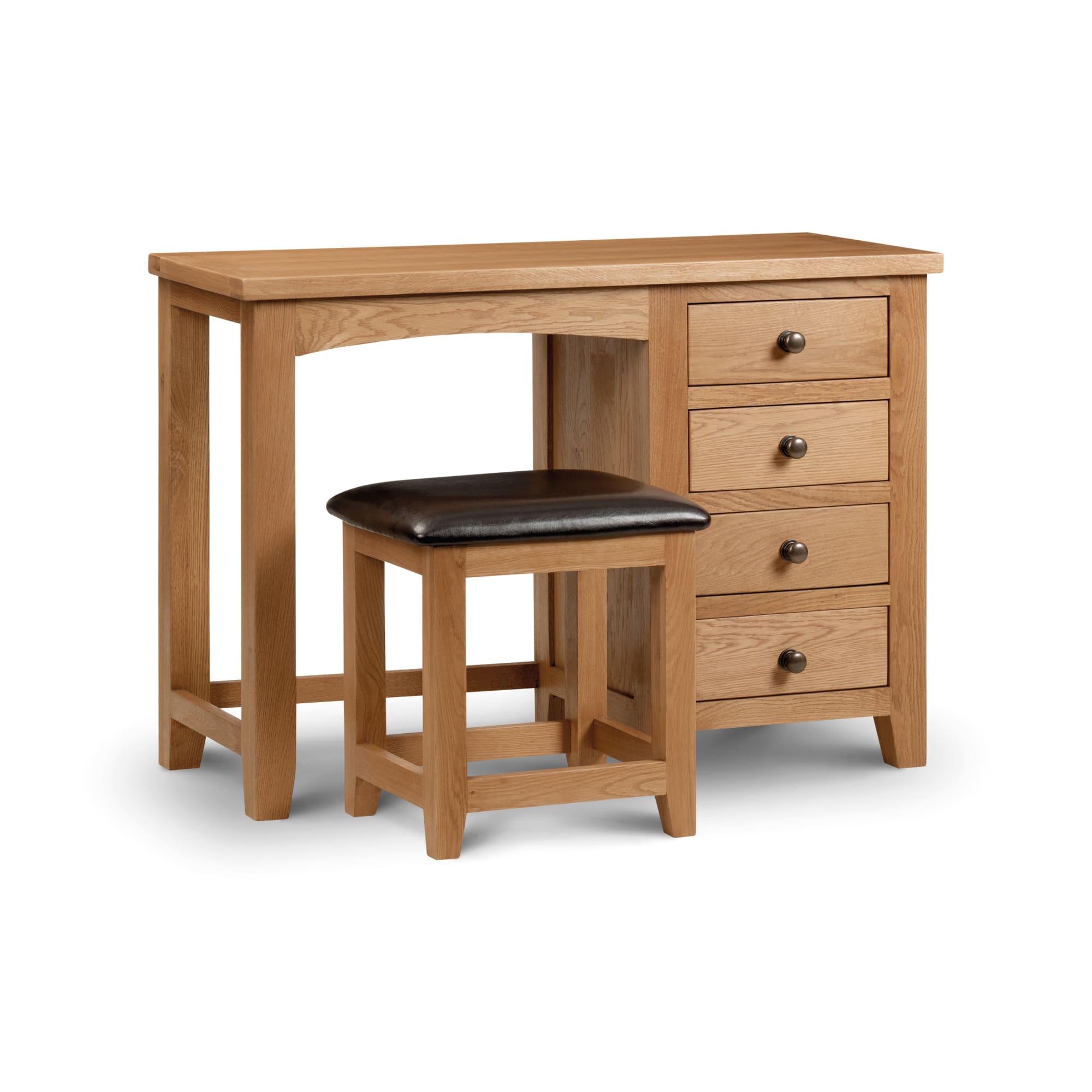
Compact dressing table. Typically 60–80cm wide with one or two drawers, a small surface area, and either an integrated or separately purchased mirror. The right choice for smaller bedrooms where dedicated dressing table space is limited — a bedroom where the dressing table needs to share a wall with a wardrobe or fit into an alcove. A compact dressing table provides the essential dedicated surface for getting ready without occupying significant floor area. Pair with a wall-mounted mirror above if the integrated mirror option is too small or the integrated mirror is unavailable at this size.

Standard dressing table. Typically 90–120cm wide with two to four drawers distributed across the surface width and an integrated mirror of adequate size for practical daily use. This is the most versatile configuration — wide enough to provide a genuinely useful surface area, with enough drawer storage for cosmetics, accessories, and the items that accumulate in daily use. Suits primary bedrooms where the dressing table has a dedicated wall or alcove position.

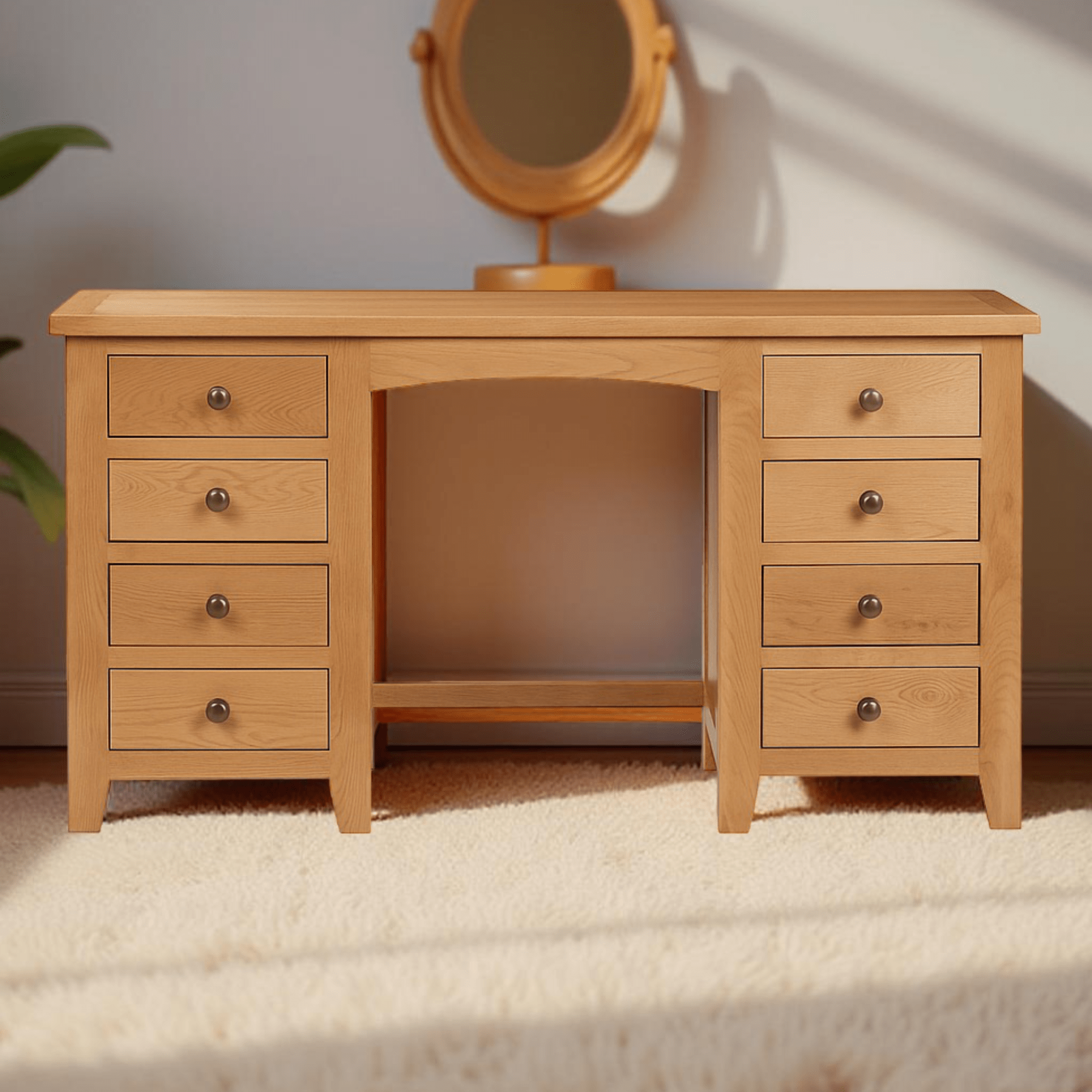
Wide vanity table. 120cm and above — a generous surface that suits buyers whose getting-ready routine involves significant surface area for products, tools, and accessories. Often features a central mirror section flanked by drawer units on each side, providing the most organised and comprehensive dressing table configuration available. Suits larger primary bedrooms or dedicated dressing rooms where the dressing table is the room's primary feature rather than one piece among several.

Dressing table with mirror and lights. Some models integrate lighting directly into the mirror surround — Hollywood-style vanity lights or LED strip lighting around the mirror edge. This eliminates the dependency on natural light or a separate lamp and provides consistent, face-flattering illumination regardless of the room's position or time of day. Particularly practical for bedrooms where the ideal dressing table position has limited natural light, or for users whose routine often happens early in the morning or evening.

Sizing and Surface Area: How Much Space Do You Actually Need?

Surface area. A dressing table surface needs to comfortably hold — at minimum — a mirror (if not integrated), the most frequently used cosmetics and skincare products, a lamp or other light source, and a few accessories without feeling cluttered. A surface of at least 70–80cm wide and 40cm deep handles this for most daily routines. Buyers with a more extensive product collection, multiple tools, or a professional makeup routine need more — a surface of 100–120cm wide provides significantly more usable space and the ability to organise products across the surface without everything feeling compressed.

Drawer storage. The drawers beneath a dressing table surface store the products not in immediate daily use — backup products, less-frequently used cosmetics, accessories, and the items that need a home but don't need to be on the surface. A single drawer handles a light product collection. Two drawers with dividers suits most buyers. Three or four drawers across a wider table suits an extensive collection or buyers who also use the dressing table drawers for jewellery, accessories, and bedroom essentials that would otherwise live in a chest of drawers.

Wall clearance and stool access. Allow at least 60cm of clear space in front of the dressing table for a stool to be pulled out and the user to sit comfortably. The table sits against the wall; the stool tucks beneath the table surface when not in use. In a bedroom where the dressing table sits beside a wardrobe, check that the wardrobe door opening doesn't interfere with the stool clearance zone.

Completing the Bedroom with Coordinating Pieces

A dressing table sits most naturally in a bedroom where the surrounding pieces share a consistent finish language. A pale oak dressing table alongside oak or warm-white wardrobes, chest of drawers, and bedside tables creates a bedroom that feels genuinely considered. White suits minimal and light-maximising schemes. Grey coordinates with upholstered bed frames and contemporary interiors. Black creates the boldest statement alongside matching dark-finish furniture.

Browse the full bedroom furniture collection to plan the complete room and compare finishes across all bedroom categories simultaneously. For the bed itself, see the double beds and king size beds collections, and pair with the right mattress for a complete bedroom setup.

Every Airedale Living dressing table comes with free UK delivery and arrives ready for self-assembly with all fixings and instructions included.

Browse the full dressing table collection above — and find the piece that makes your daily routine feel considered.

Frequently Asked Questions

Beside a window rather than facing it. Natural light falling across the face from one side provides the most flattering and practical illumination for getting ready — applying makeup, styling hair, or any task requiring clear visibility. Facing a window directly creates a strong backlight that puts the face in shadow, which is the least useful lighting direction for a dressing table. Against an interior wall with no natural light is workable with a good lamp or mirror-integrated lighting, but natural sidelight is always preferable. Before choosing your dressing table size, identify the wall or position in your bedroom with the best natural light access and measure the available width there.

A surface of at least 70–80cm wide and 40cm deep handles most daily getting-ready routines comfortably — enough for a mirror (if not integrated), daily-use products, and a lamp without everything feeling compressed. For a more extensive product collection or a professional makeup routine, a surface of 100–120cm provides significantly more practical space and organisation. For compact bedrooms where space is the constraint, a 60–70cm wide dressing table with a wall-mounted mirror above is often the most space-efficient solution. Always allow at least 60cm of clear floor space in front for a stool to be pulled out and used comfortably.

It depends on your mirror preference. A dressing table with an integrated mirror is the most convenient single-purchase solution — everything is coordinated and included. A dressing table without a mirror gives more flexibility: you can choose a larger wall-mounted mirror, a mirror with integrated lighting, or a specific style that isn't available with the table. If you already have a mirror you love, or you want a mirror with Hollywood lighting, a dressing table without integrated mirror is the more practical choice. If you're starting from scratch and want a complete setup in one purchase, an integrated mirror is simpler.
A standard dressing table surface sits at 70–80cm in height. A stool of 45–55cm seat height positions most adults at a comfortable eye level with the mirror — close enough to see clearly, high enough that the table surface is at a natural working height. Check the specific table height on the individual product page before purchasing a stool separately, as height varies between models. The stool should tuck beneath the table surface when not in use — check the table's leg clearance height to confirm the stool fits beneath it.
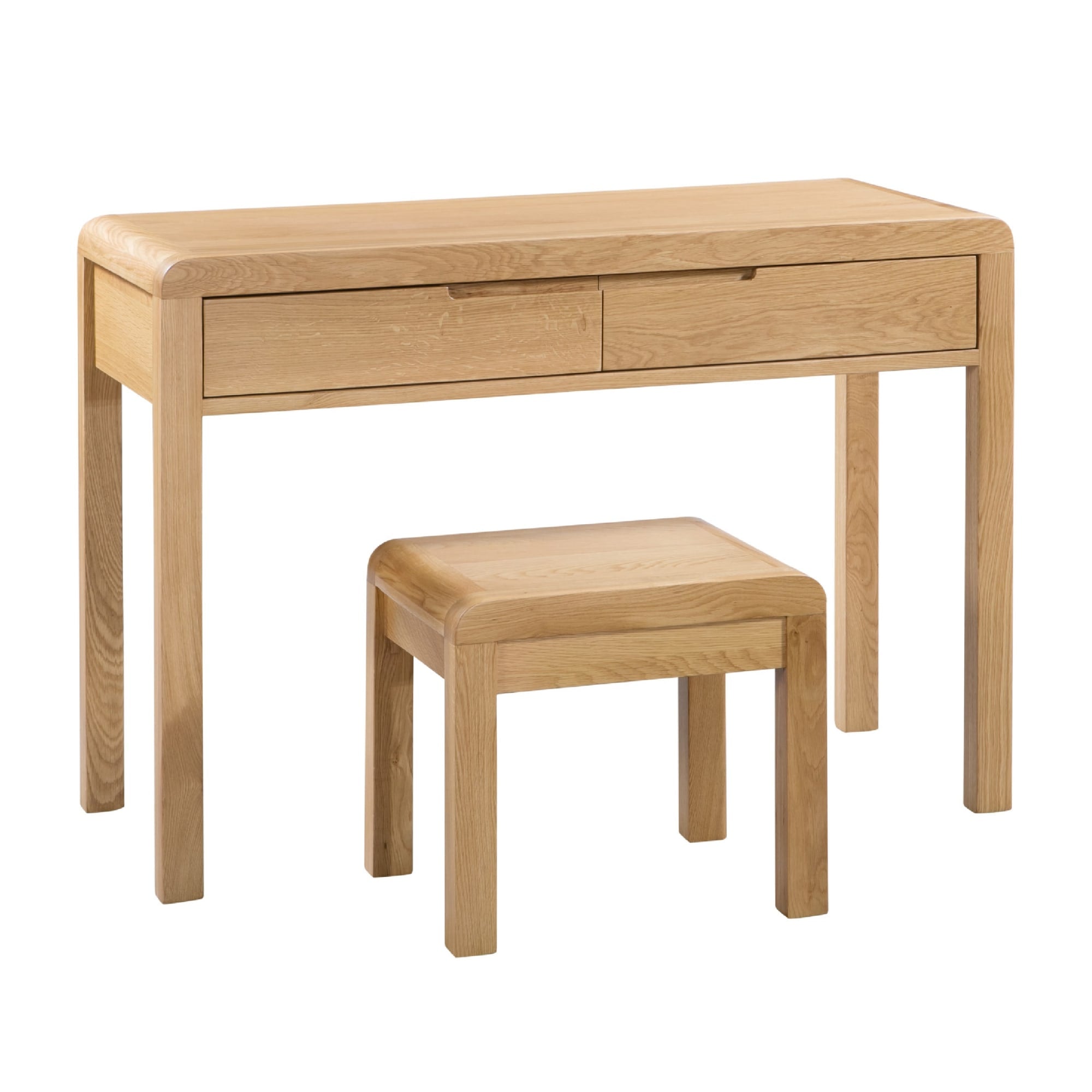
Choose a dressing table in the same finish as your wardrobe, chest of drawers, and bedside tables. Pale oak, white, grey, and black are the four main finish families available across the Airedale Living bedroom range — choosing from the same family across all bedroom pieces creates coherence without requiring an exact match. Browse the full bedroom furniture collection to compare finishes across all categories simultaneously and plan the complete room before purchasing individual pieces.