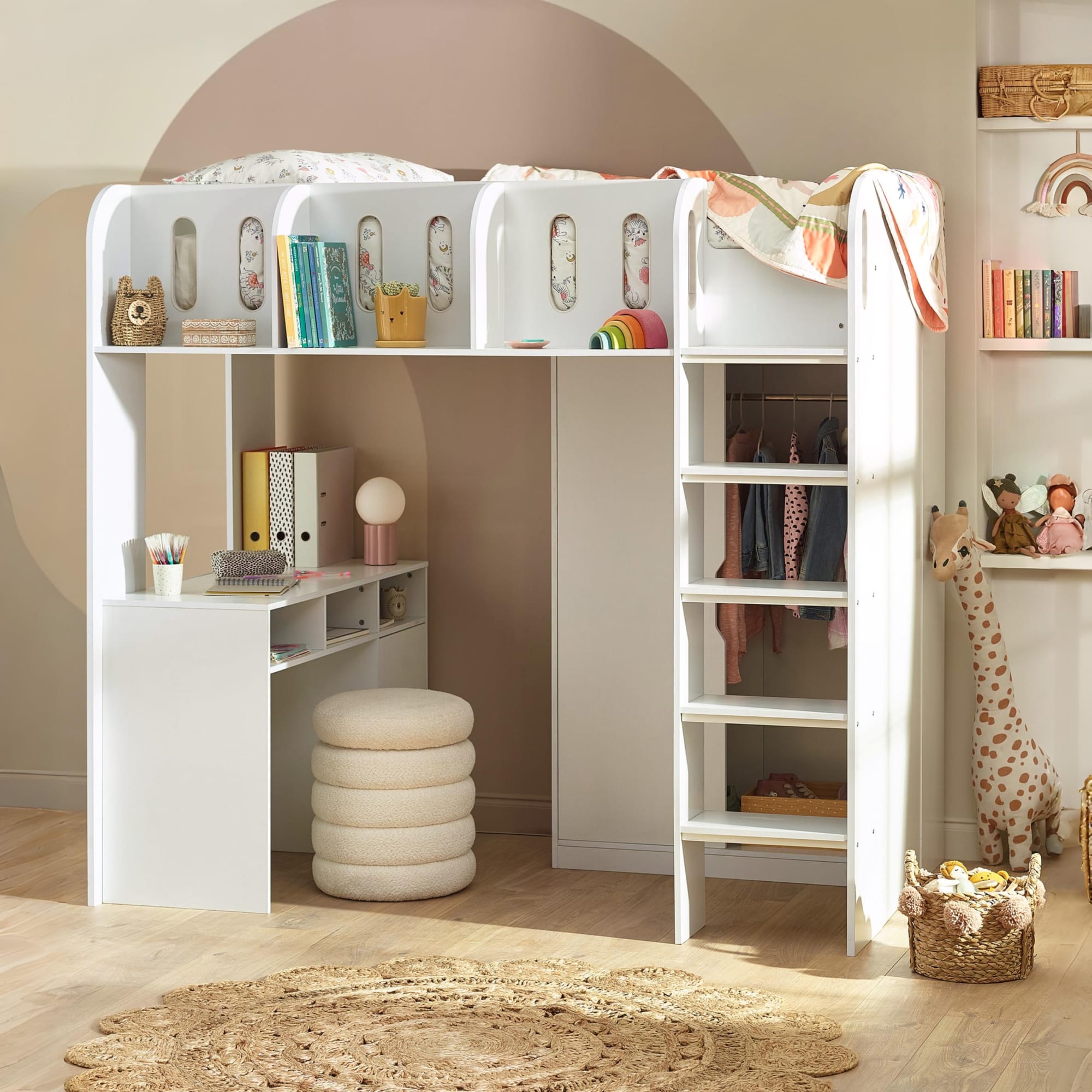
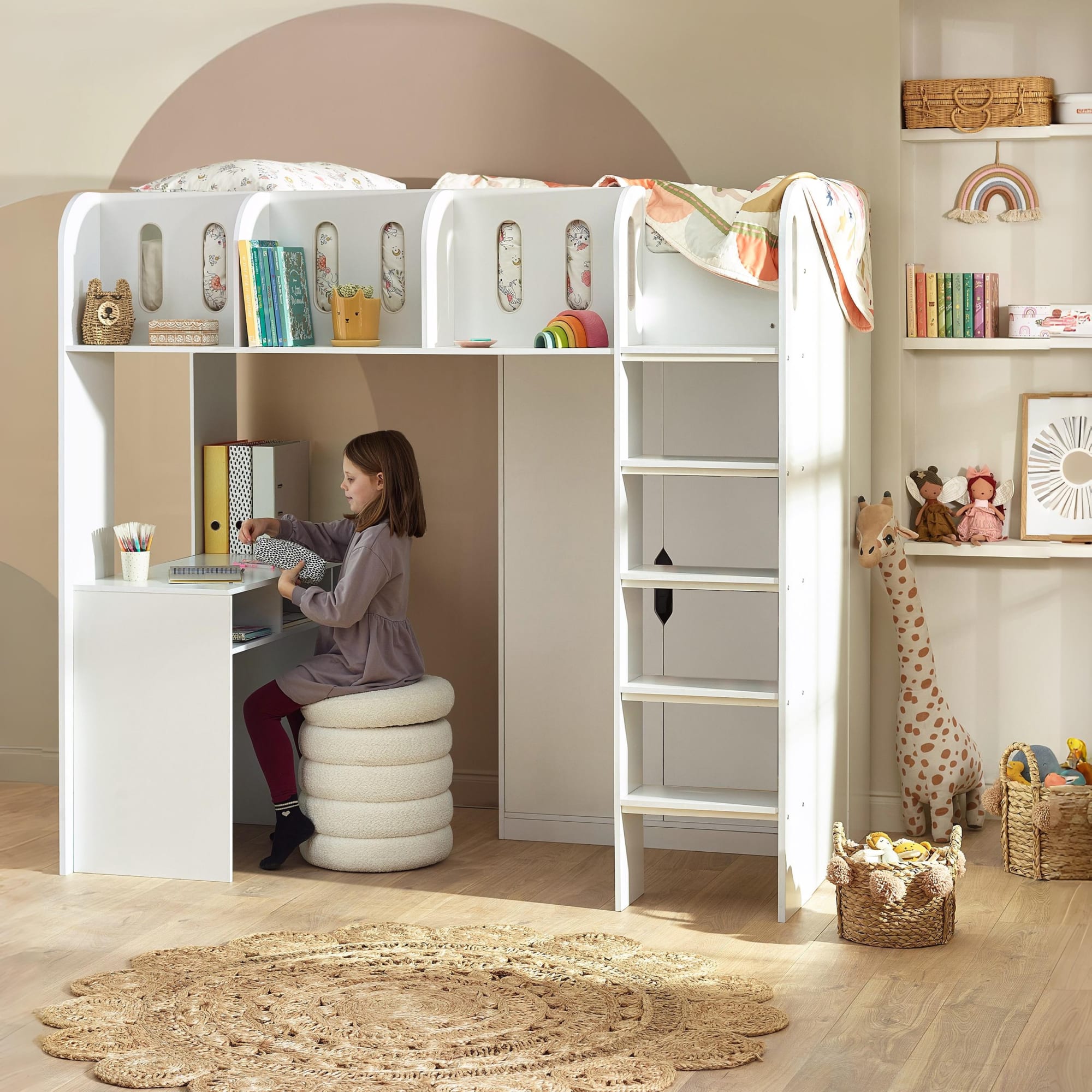
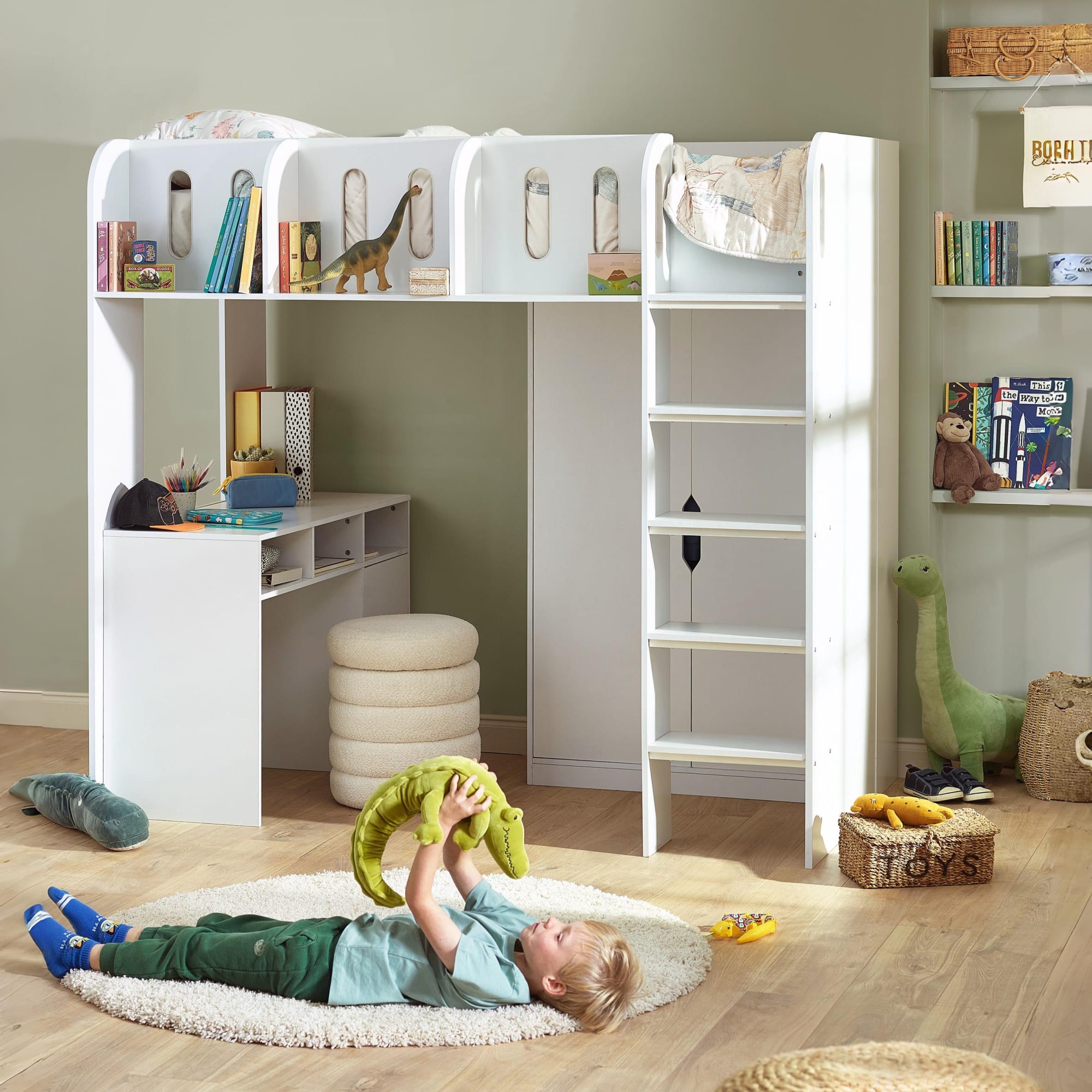
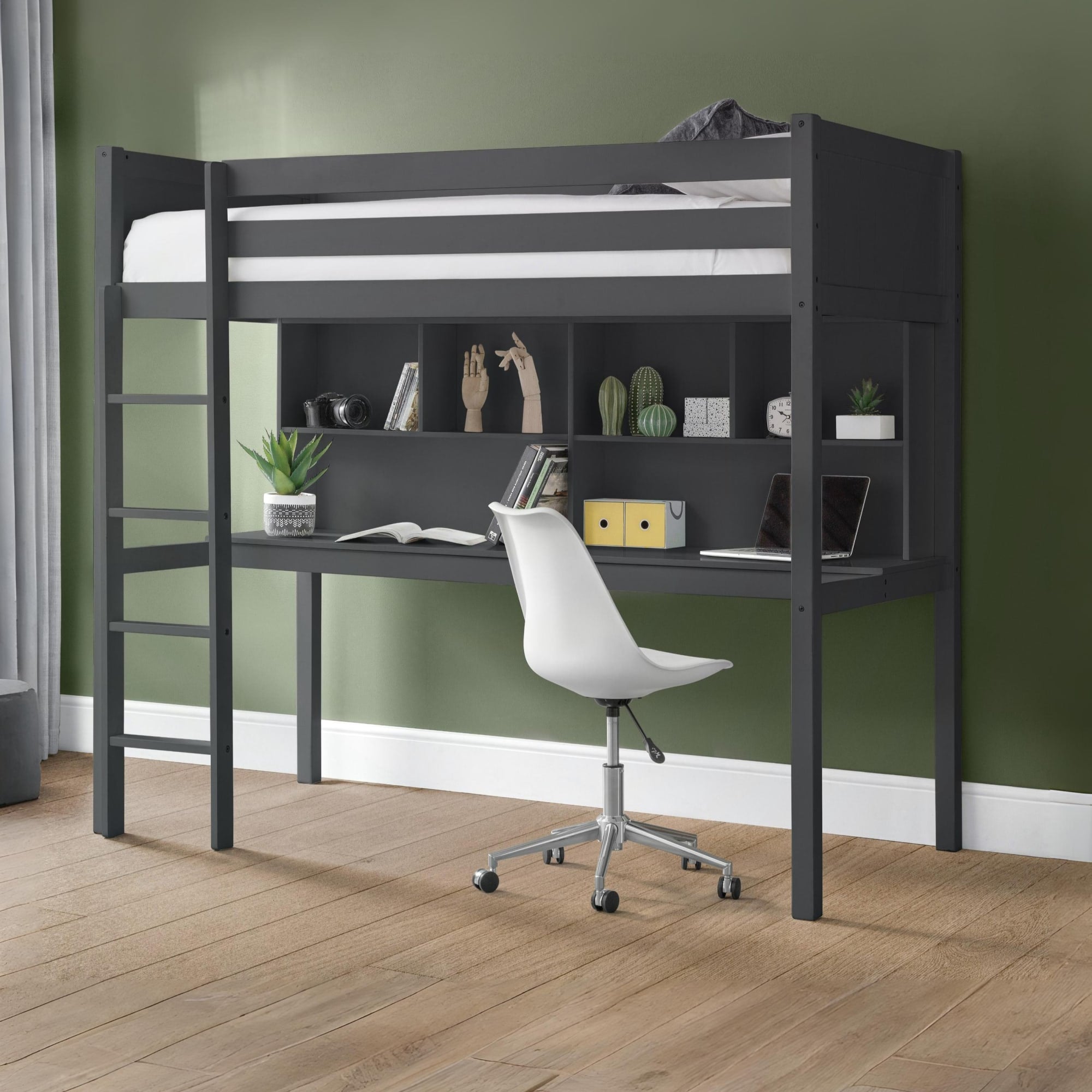
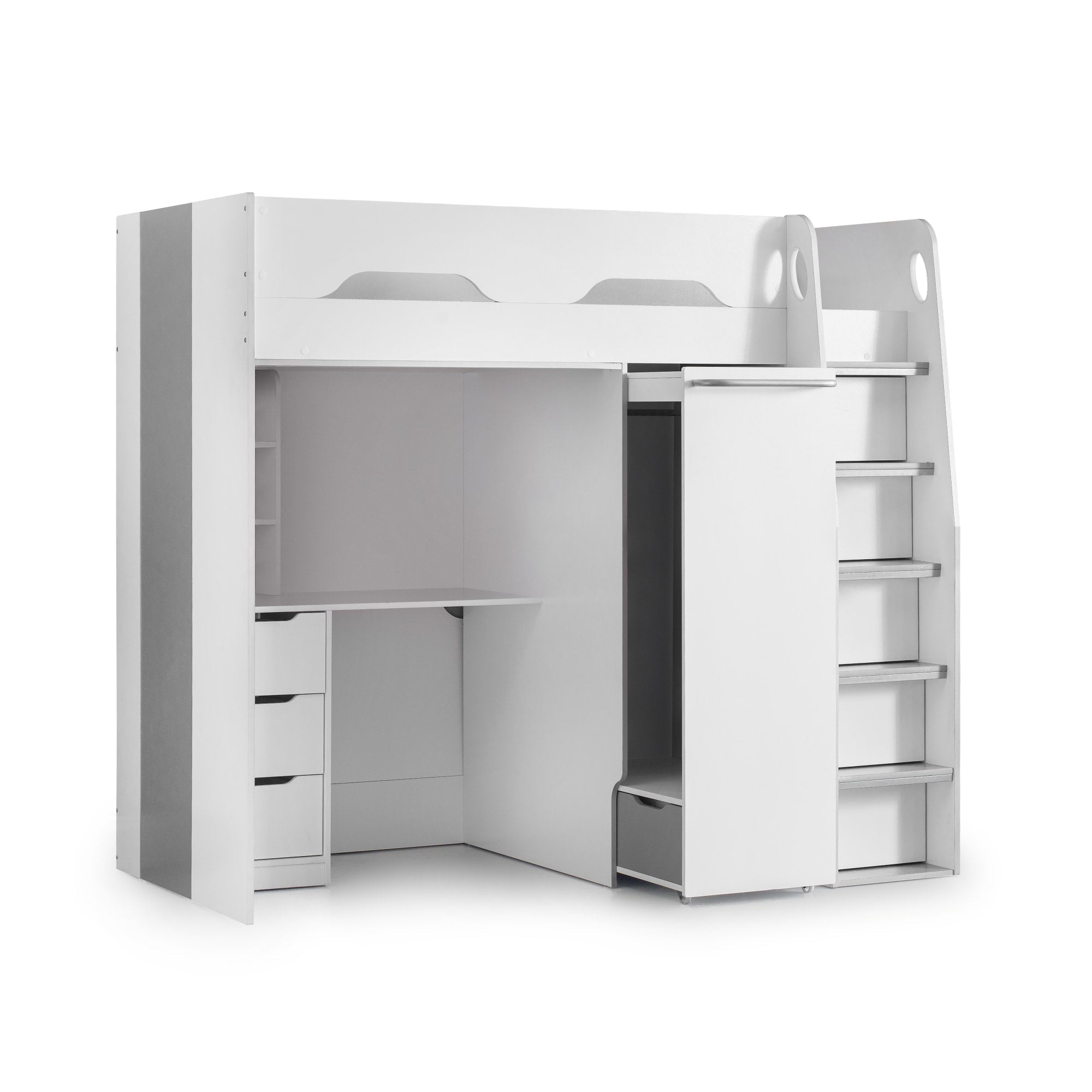
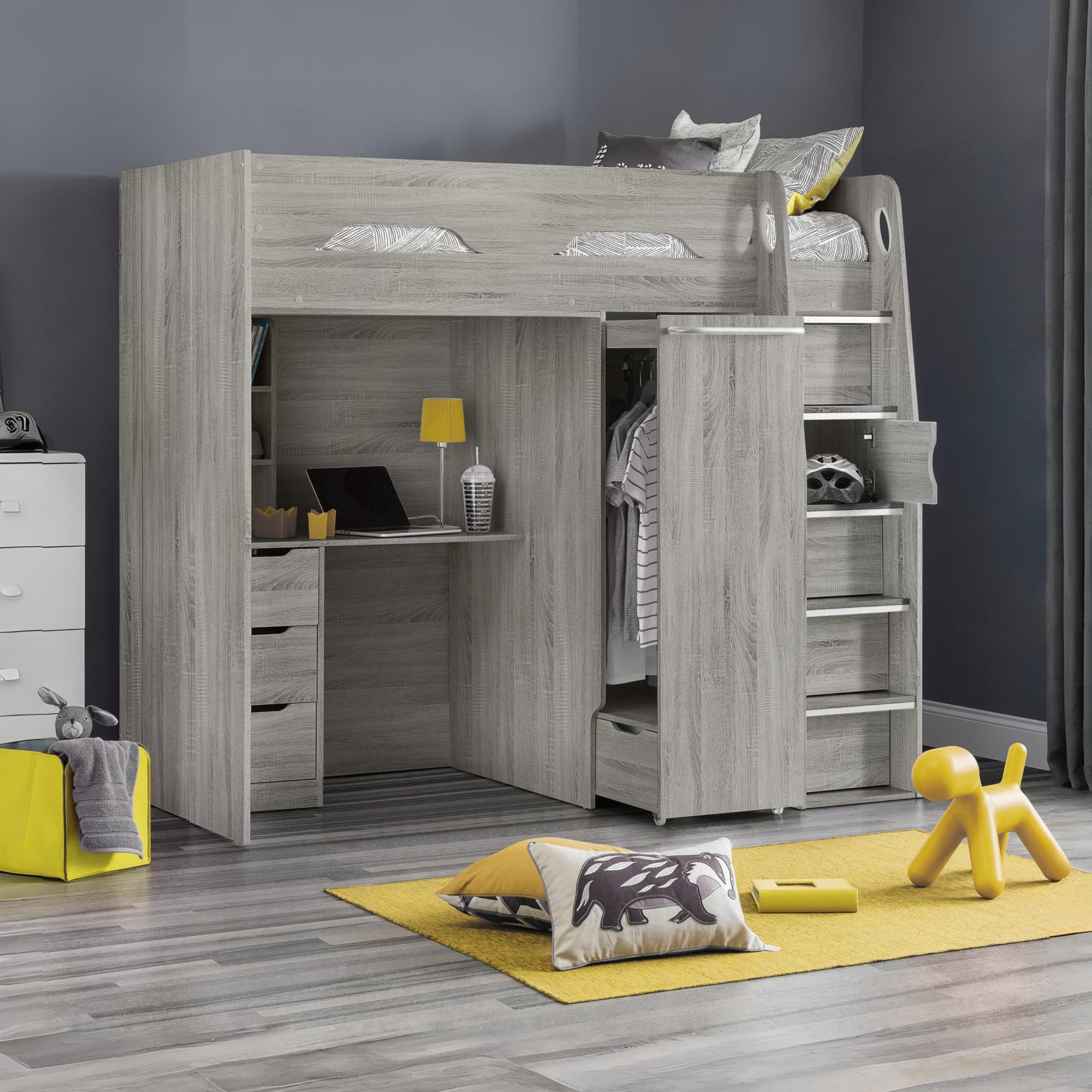
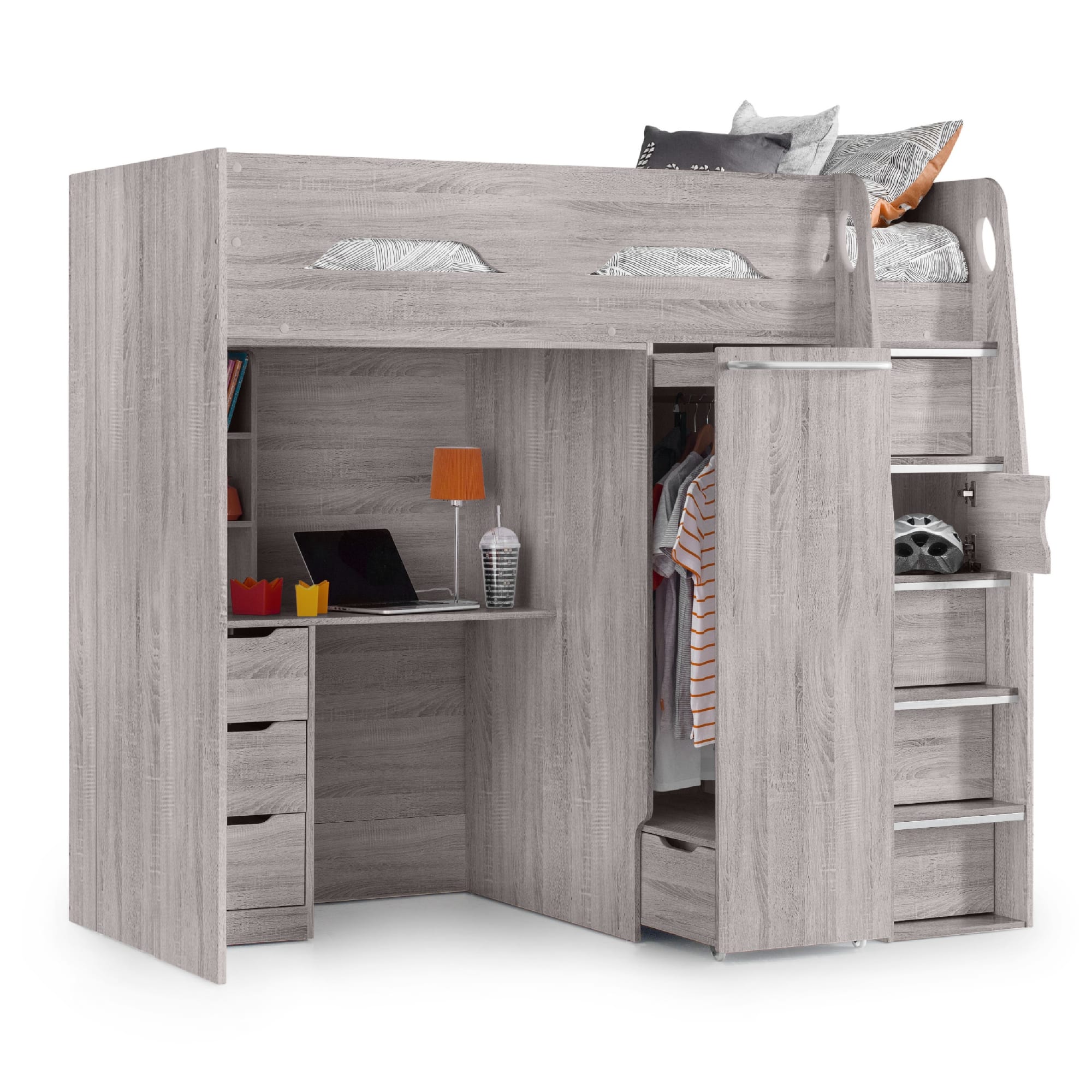
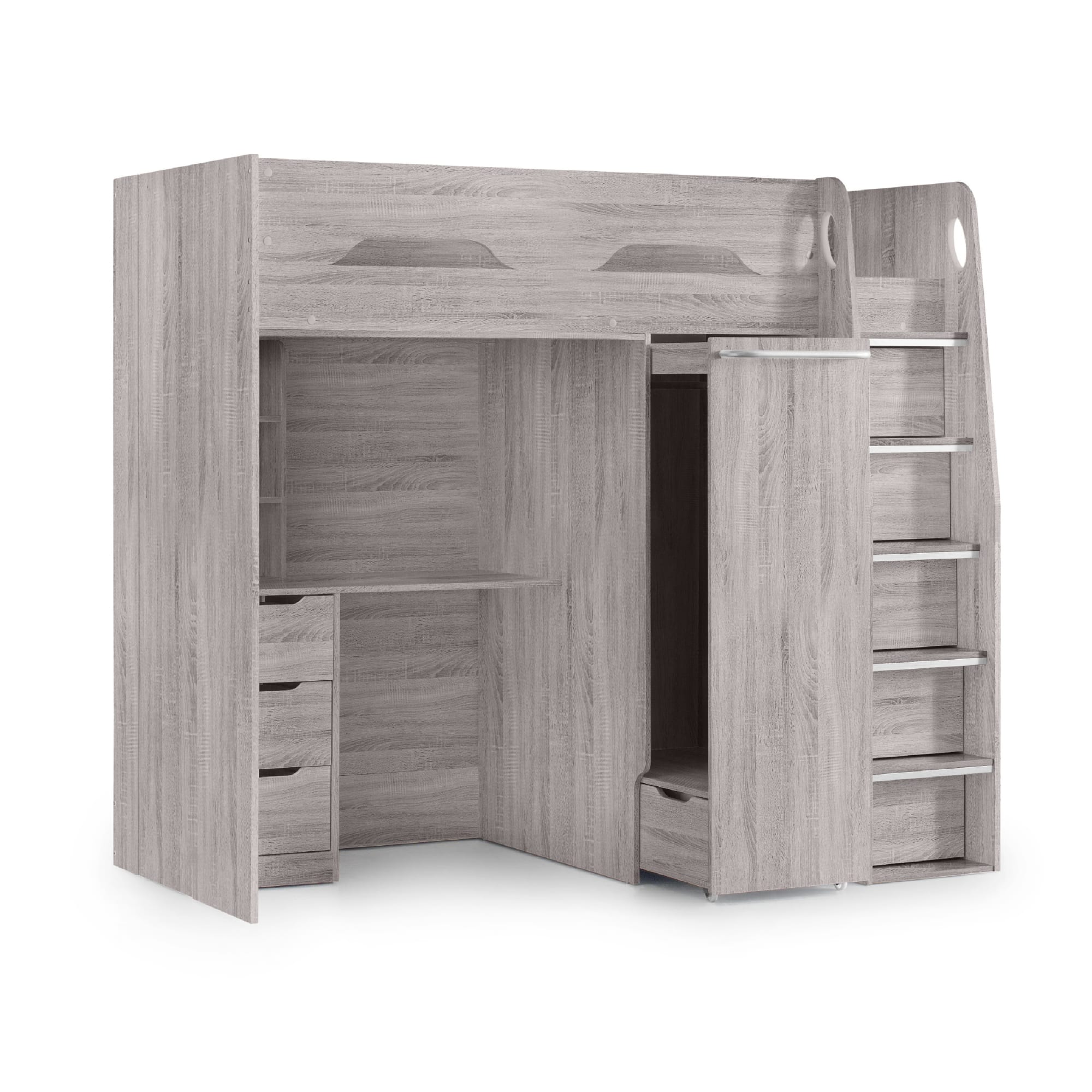
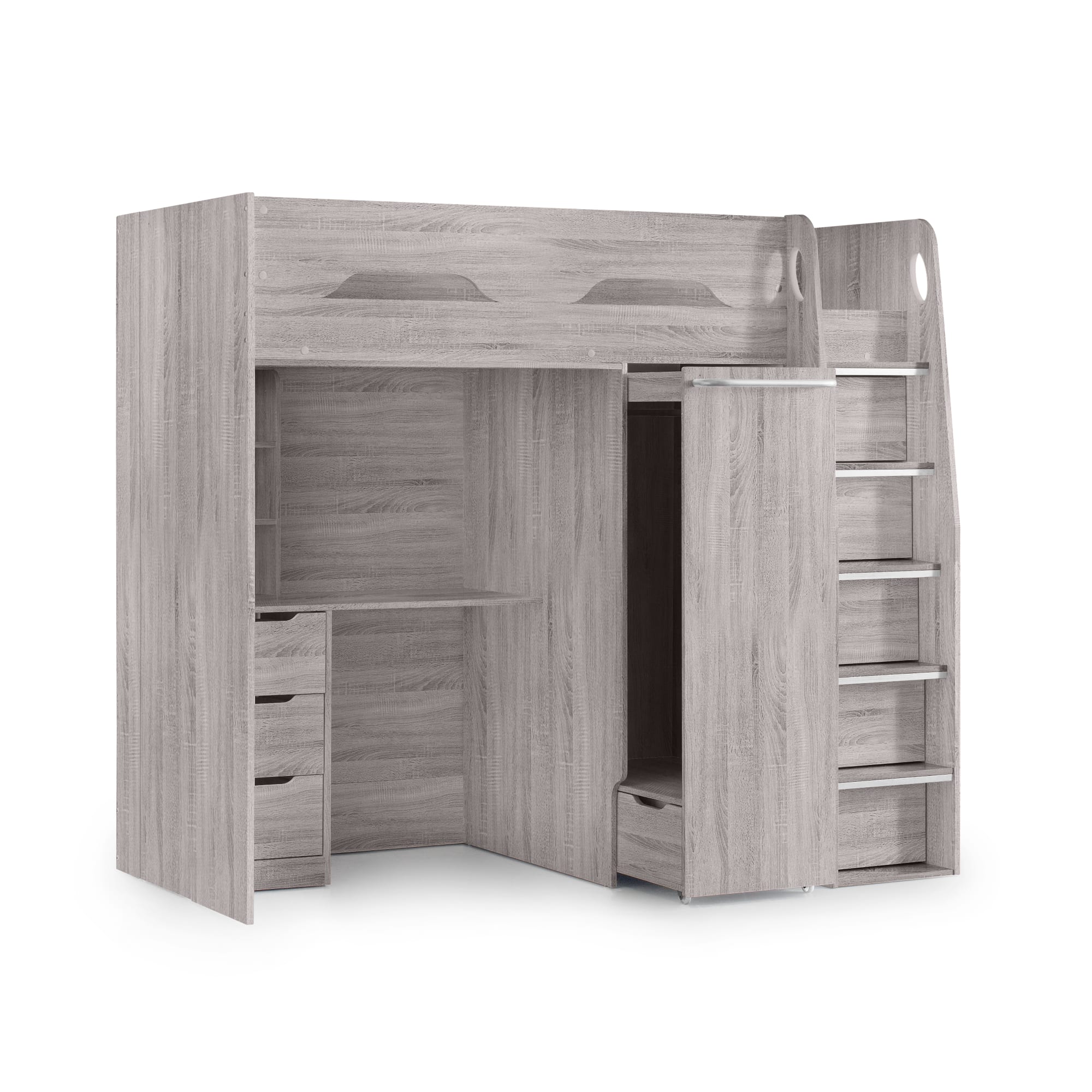
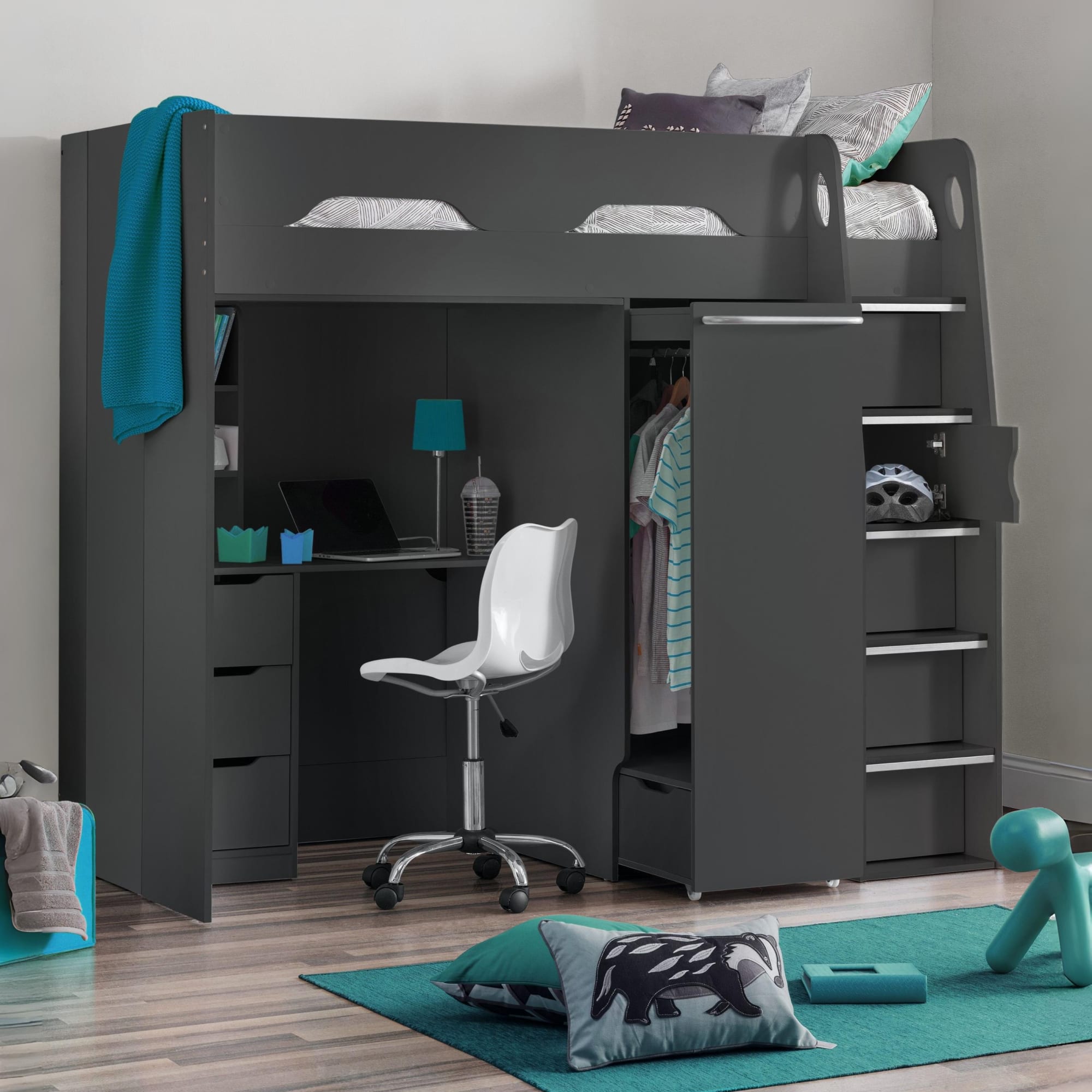
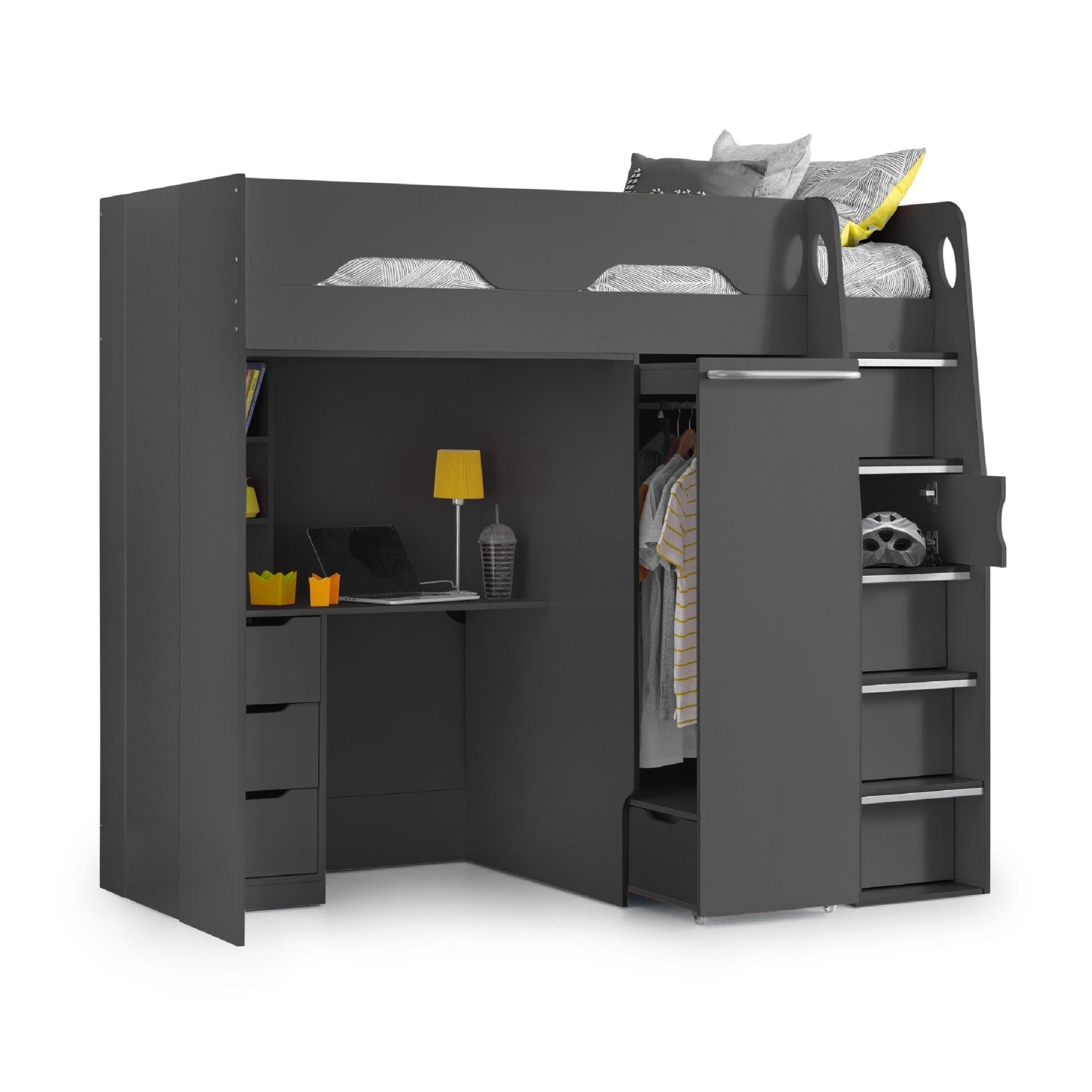
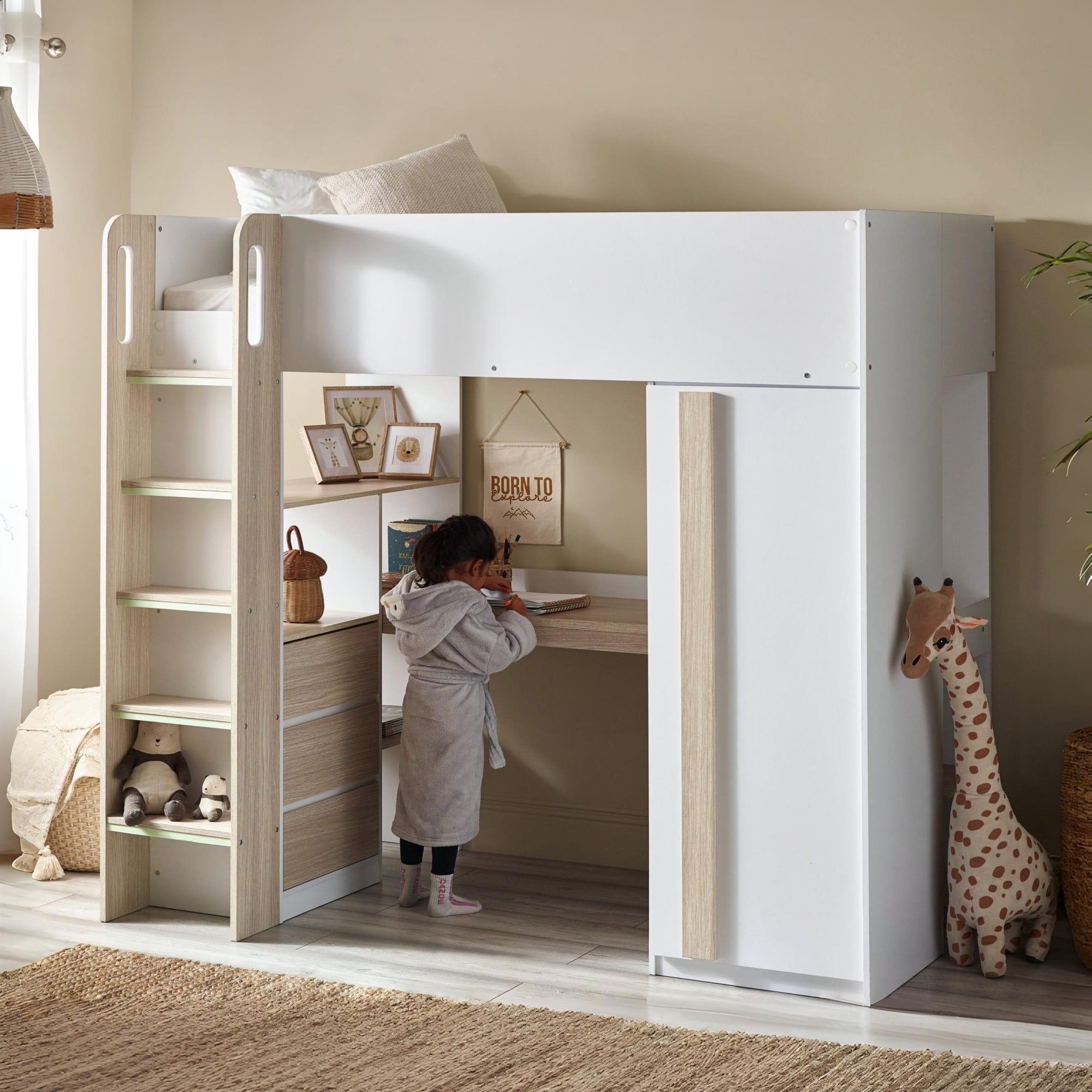
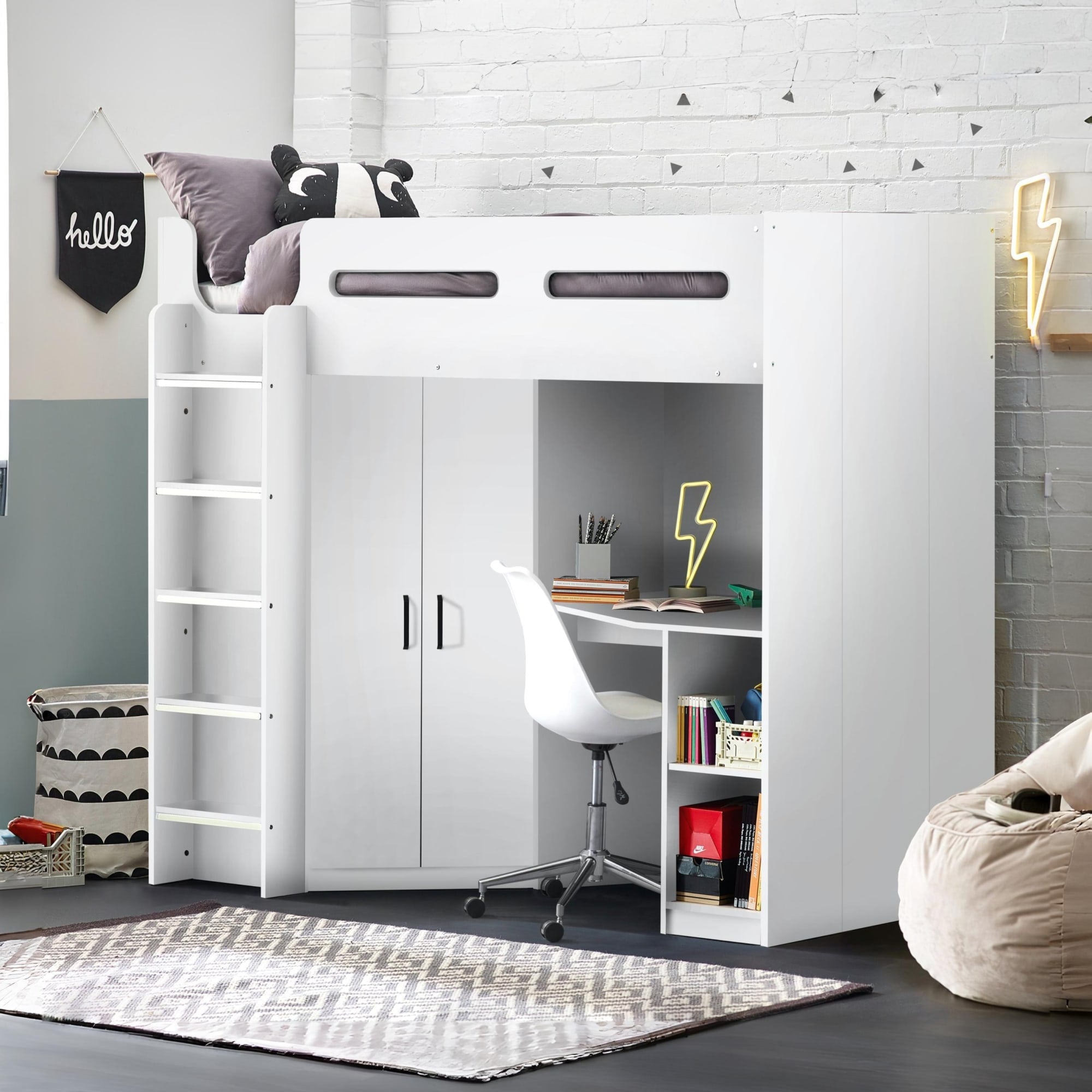
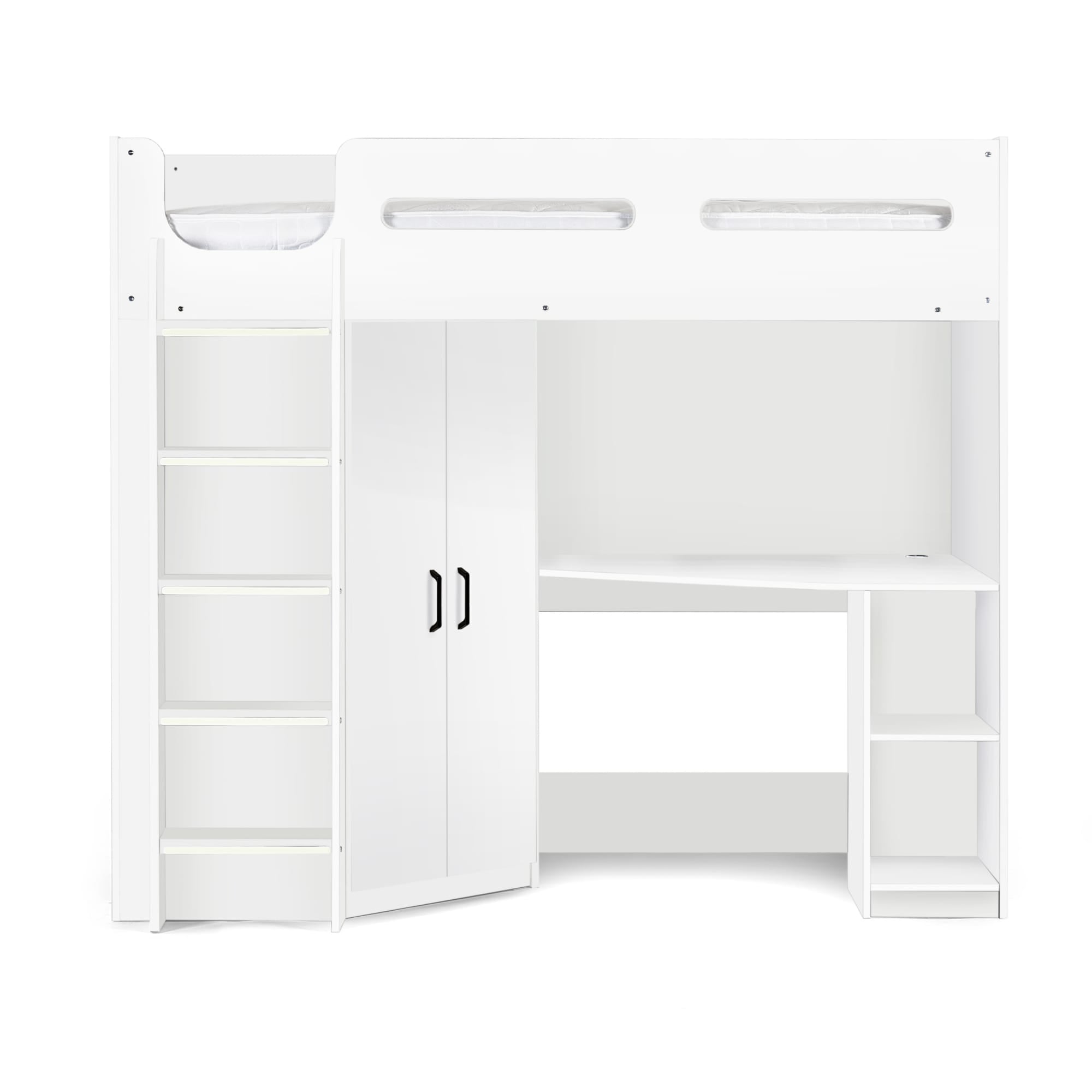
A high sleeper bed is one of the most genuinely useful furniture purchases you can make for a child's bedroom — it takes the sleeping area off the floor entirely, freeing the full footprint of the bed for a desk, storage, a futon, or a combination of all three. In a single bedroom of average UK size, a high sleeper can transform a room that barely accommodates a bed and a desk into a genuinely functional study and sleeping space. At Airedale Living, our high sleepers are available across desk, storage, and futon configurations in a range of finishes, built to UK safety standards with guardrails and secure ladders as standard. Browse the full collection above, or use the guide below to find the right configuration and specification for your child's room and age. Free UK delivery is included on every order.

16 products

High Sleeper Beds: Everything You Need to Know Before Buying

A high sleeper is a larger, more structurally complex purchase than a standard bed — and one where the wrong choice has more obvious consequences. A desk that faces the wrong wall, a ladder on the wrong side for the room layout, or a mattress that's too thick to sit up comfortably under the guardrail are all avoidable problems with the right information. Here's what to work through before browsing.

Is your child ready for a high sleeper? Most manufacturers — and the UK child safety guidance — recommend high sleeper beds for children aged 6 and above. The reasoning is practical: at 6 and above, most children have developed the spatial awareness, coordination, and night-time caution to navigate a ladder safely in the dark. Below this age, the height of a high sleeper creates a fall risk that even guardrails cannot fully mitigate. For children between 4 and 6, a mid-sleeper — lower to the ground, with a shorter ladder or integrated steps — is almost always the more appropriate and safer choice.

Does your room have enough ceiling height? This is the most commonly overlooked high sleeper specification — and the one that causes the most returns. A high sleeper raises the sleeping surface to approximately 140–160cm from the floor. Above the mattress, you need at least 60–75cm of clear space for a child to sit upright without hitting the ceiling. This means your ceiling needs to be at least 200–230cm high — which the vast majority of standard UK bedrooms are (typically 240cm), but attic rooms, loft conversions, and rooms with sloped ceilings may not be. Measure from floor to ceiling at the exact position the bed will sit before ordering.

High Sleeper Types: Choosing the Right Configuration

The space beneath a high sleeper is the entire point — and how that space is used determines which configuration suits your child's room and daily habits. Here's what each type actually provides.

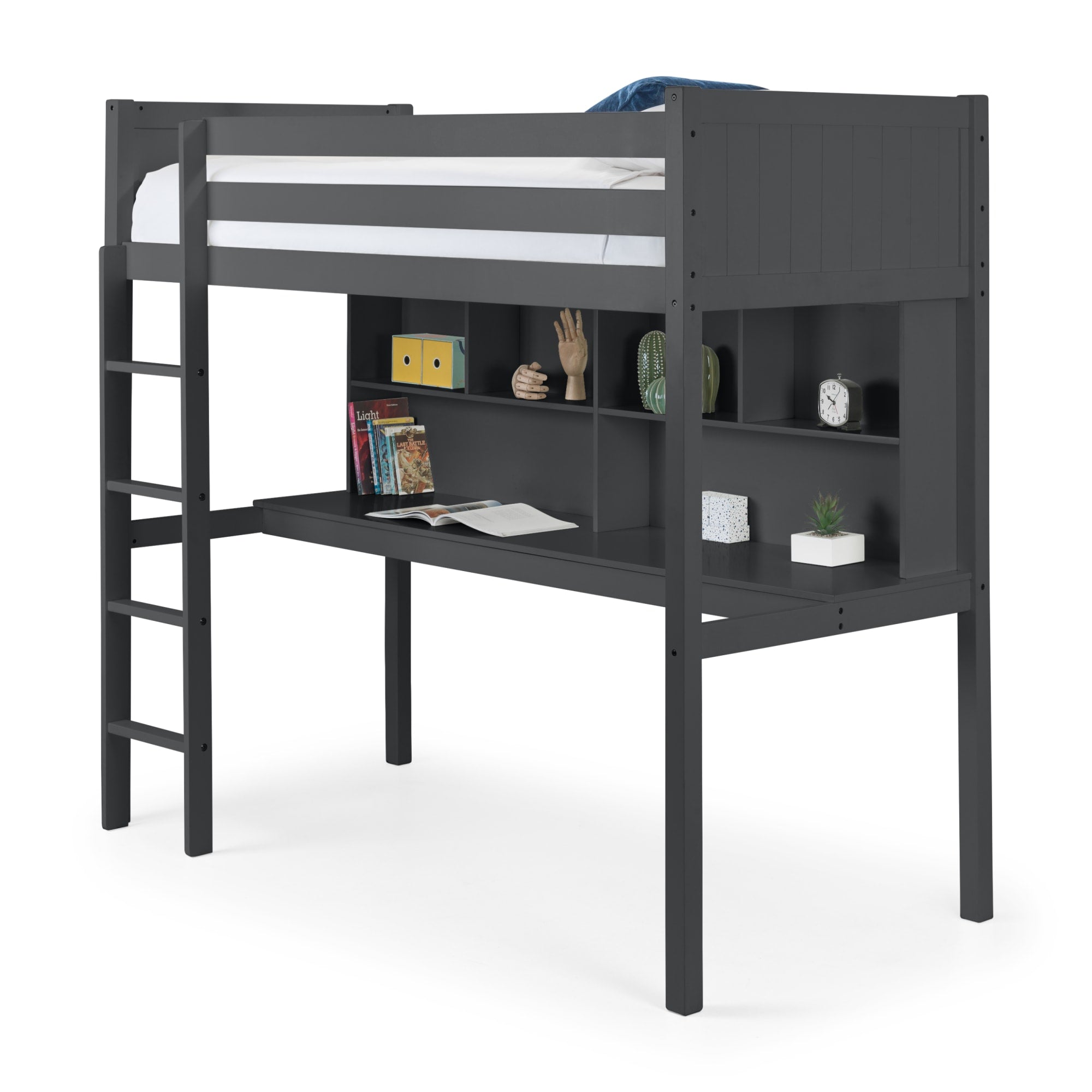
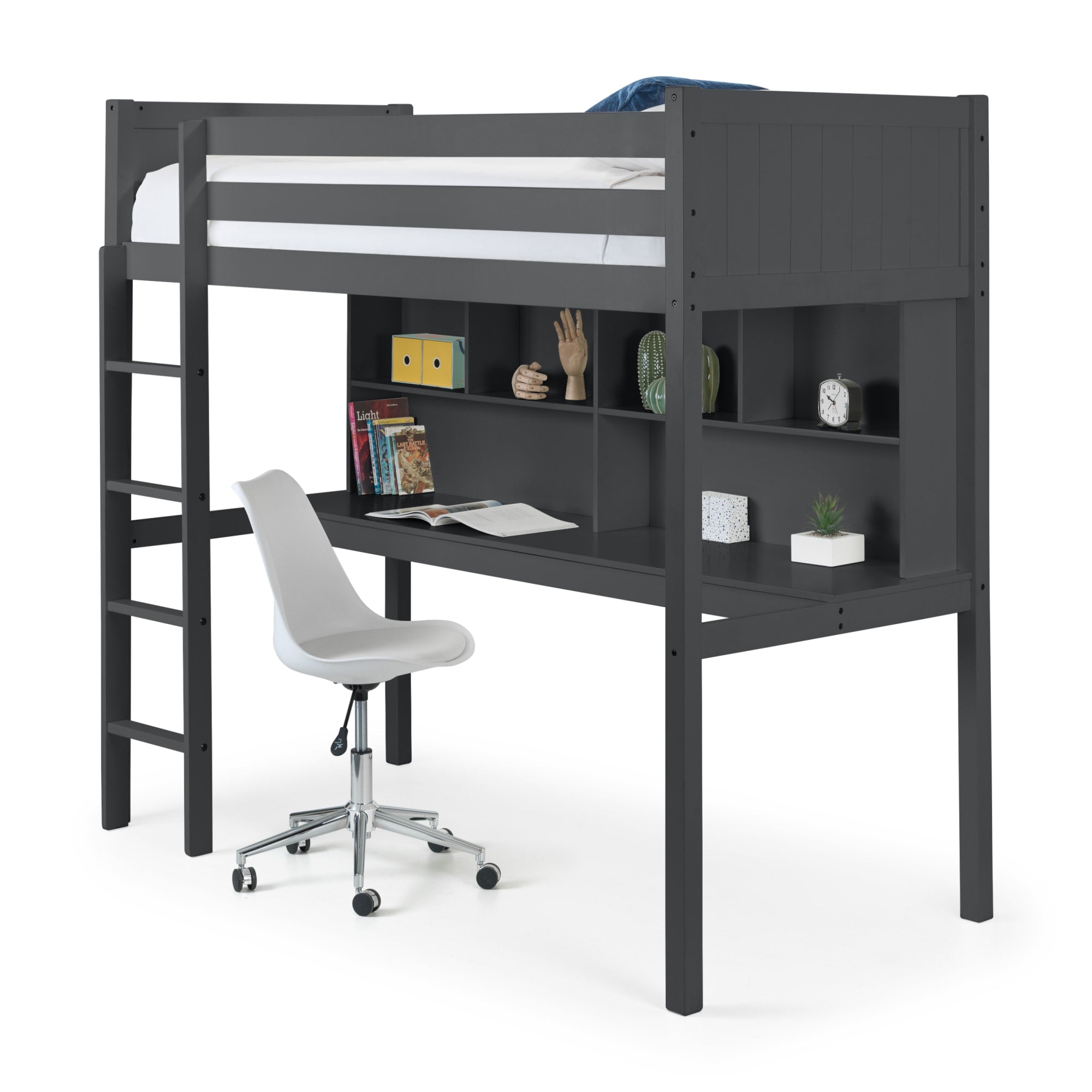
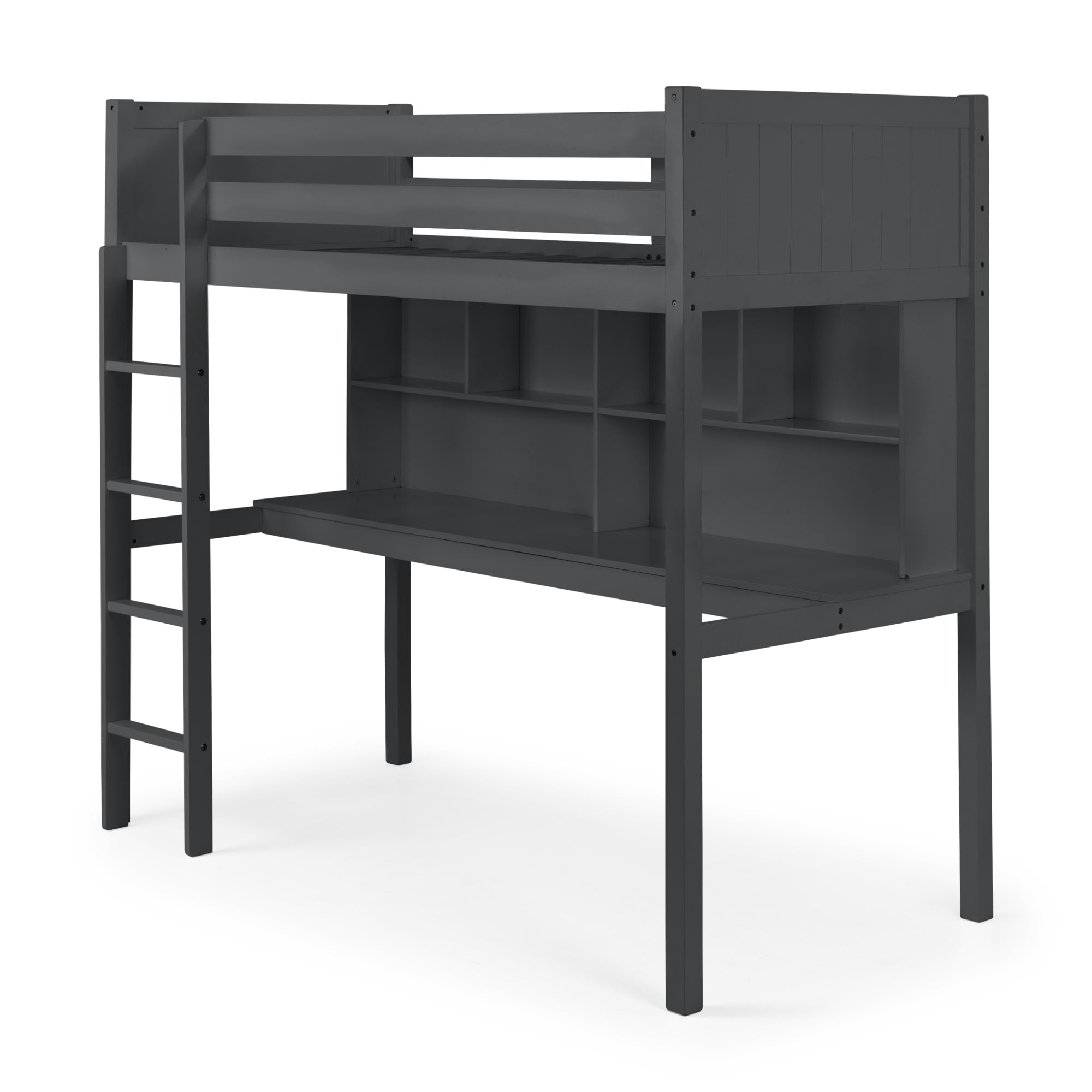
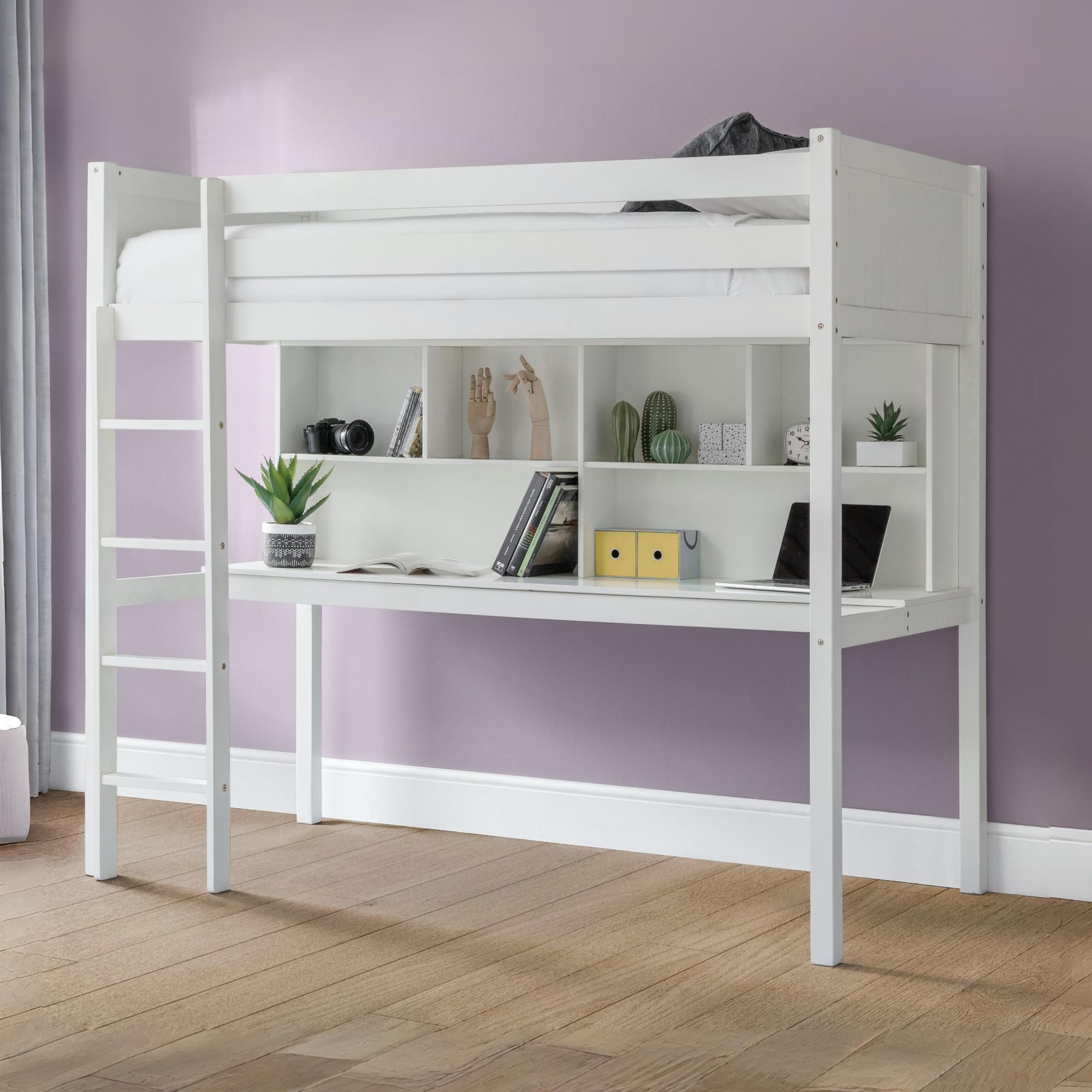
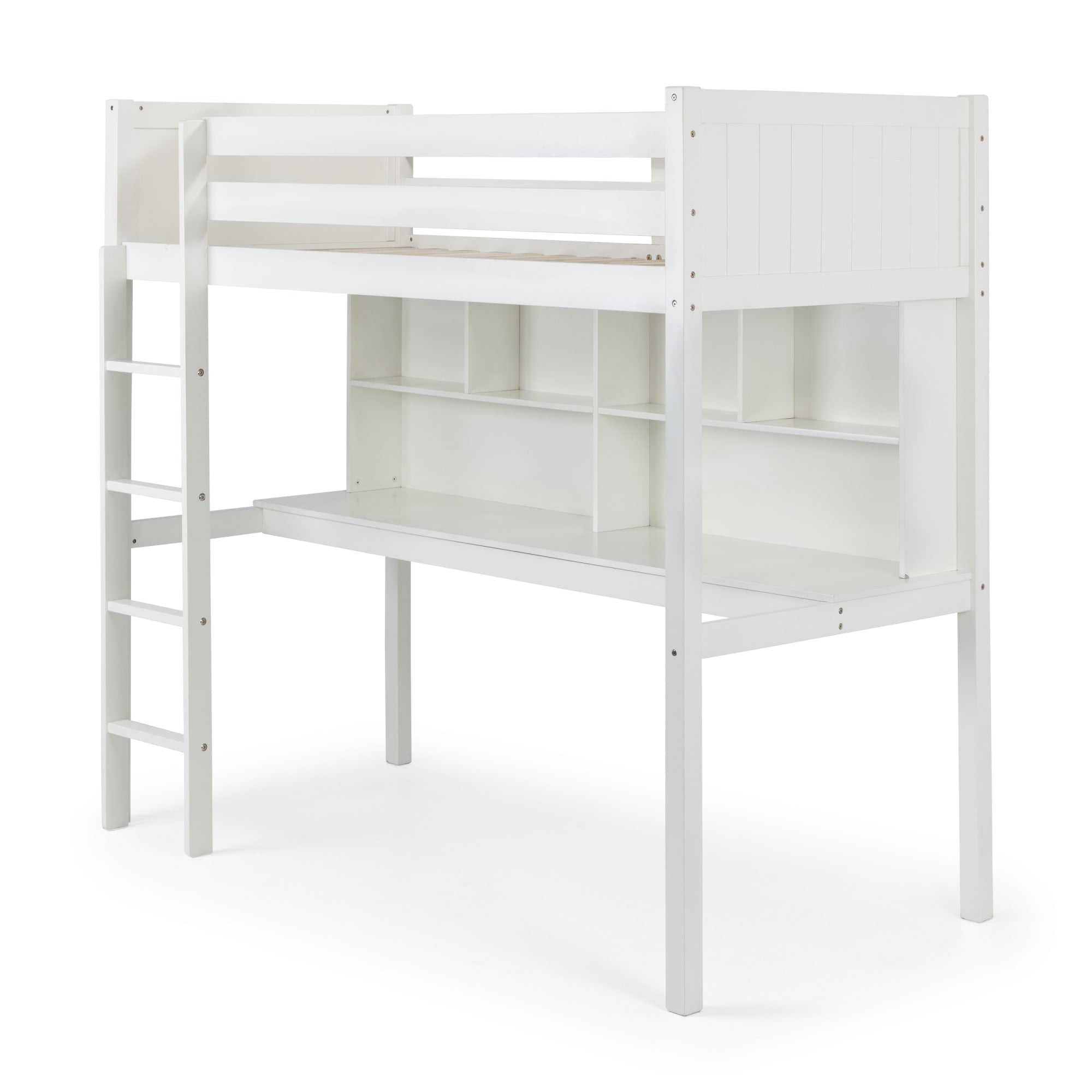
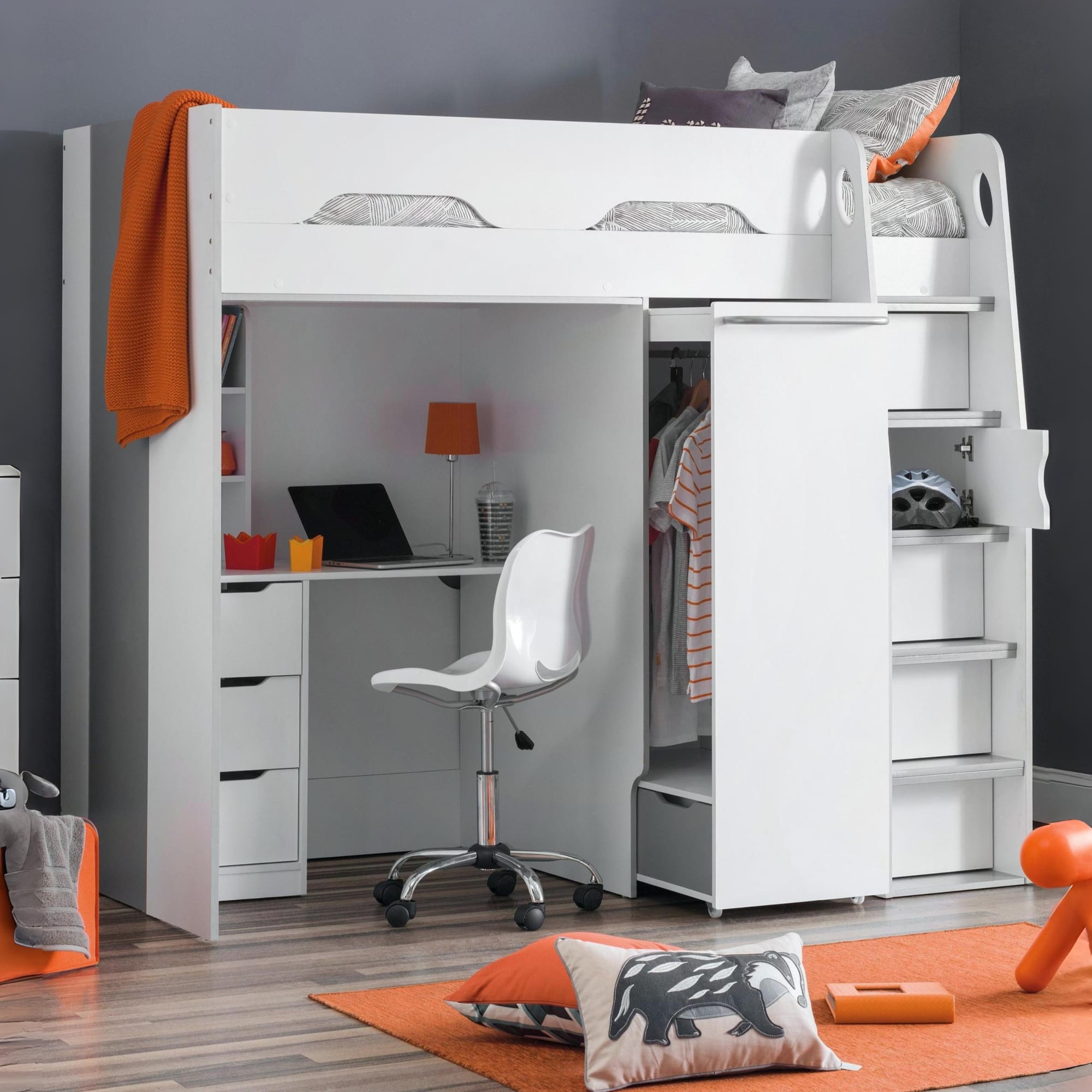
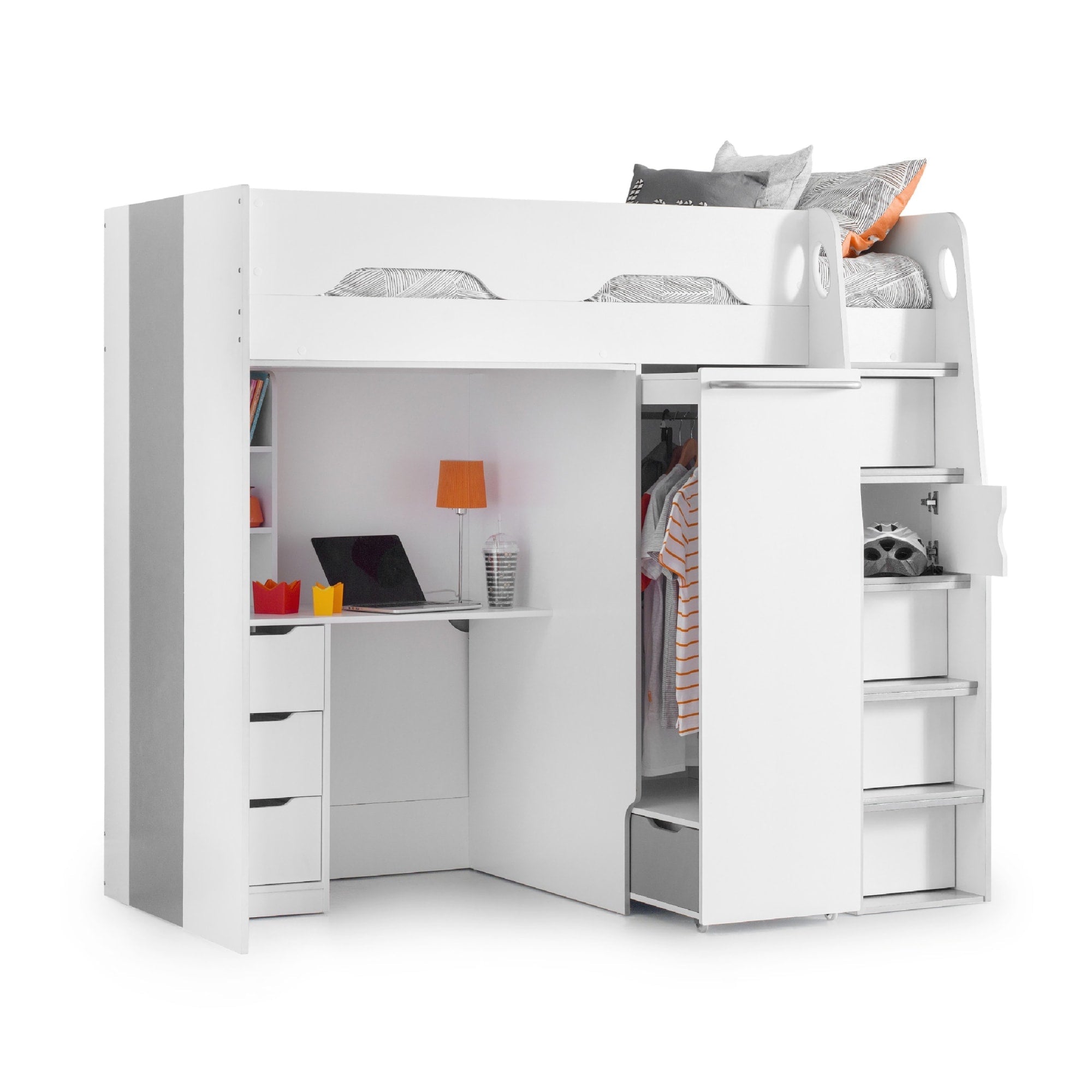
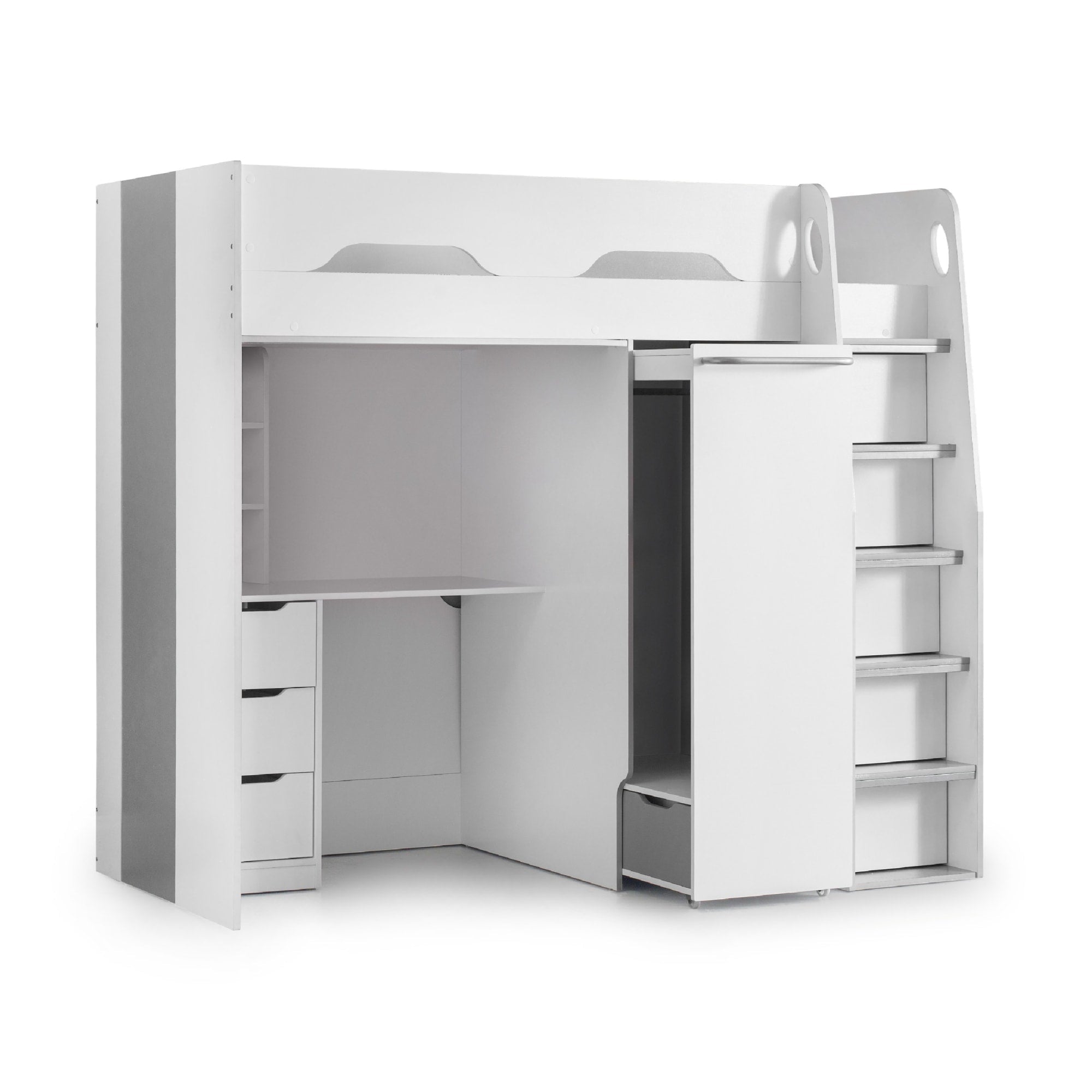
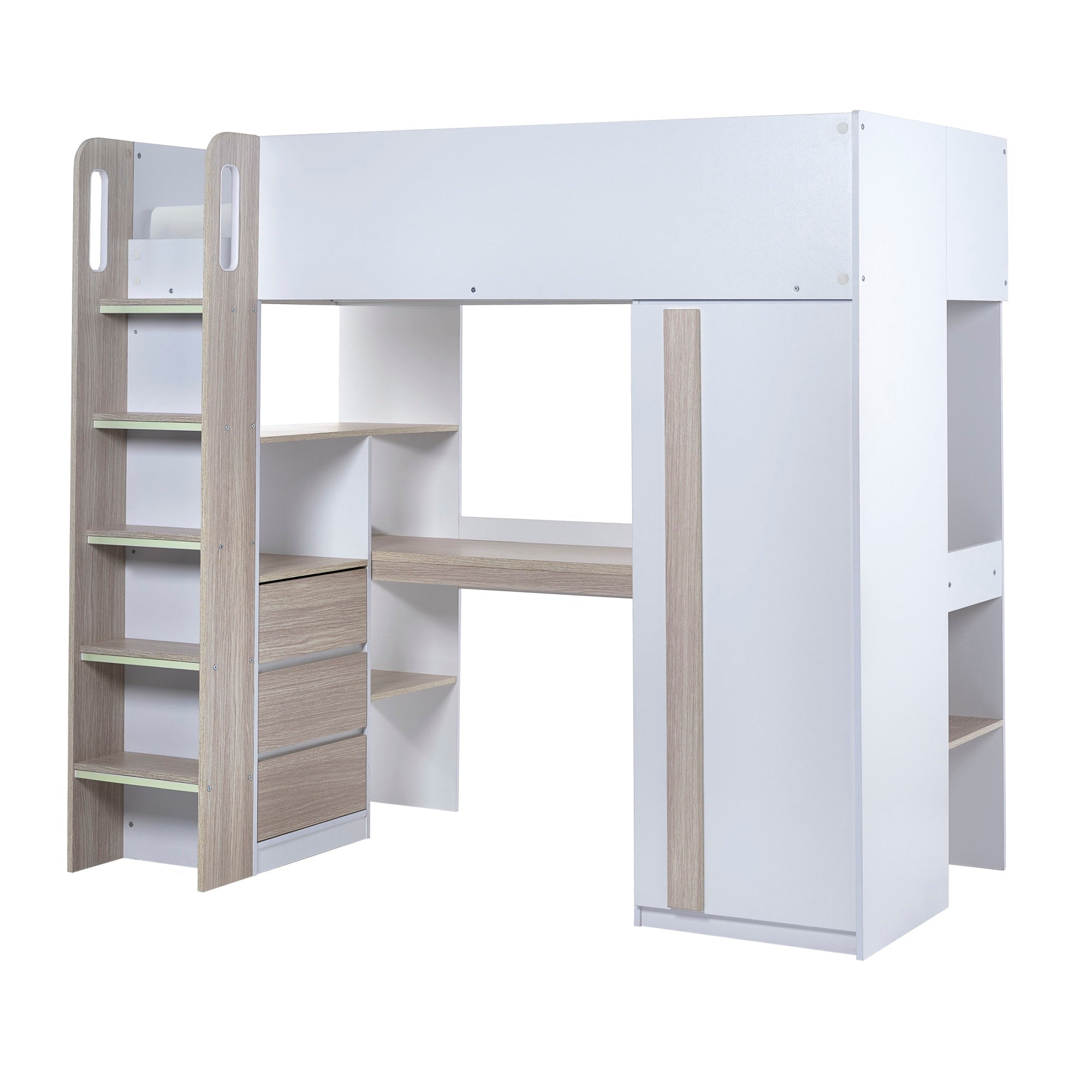
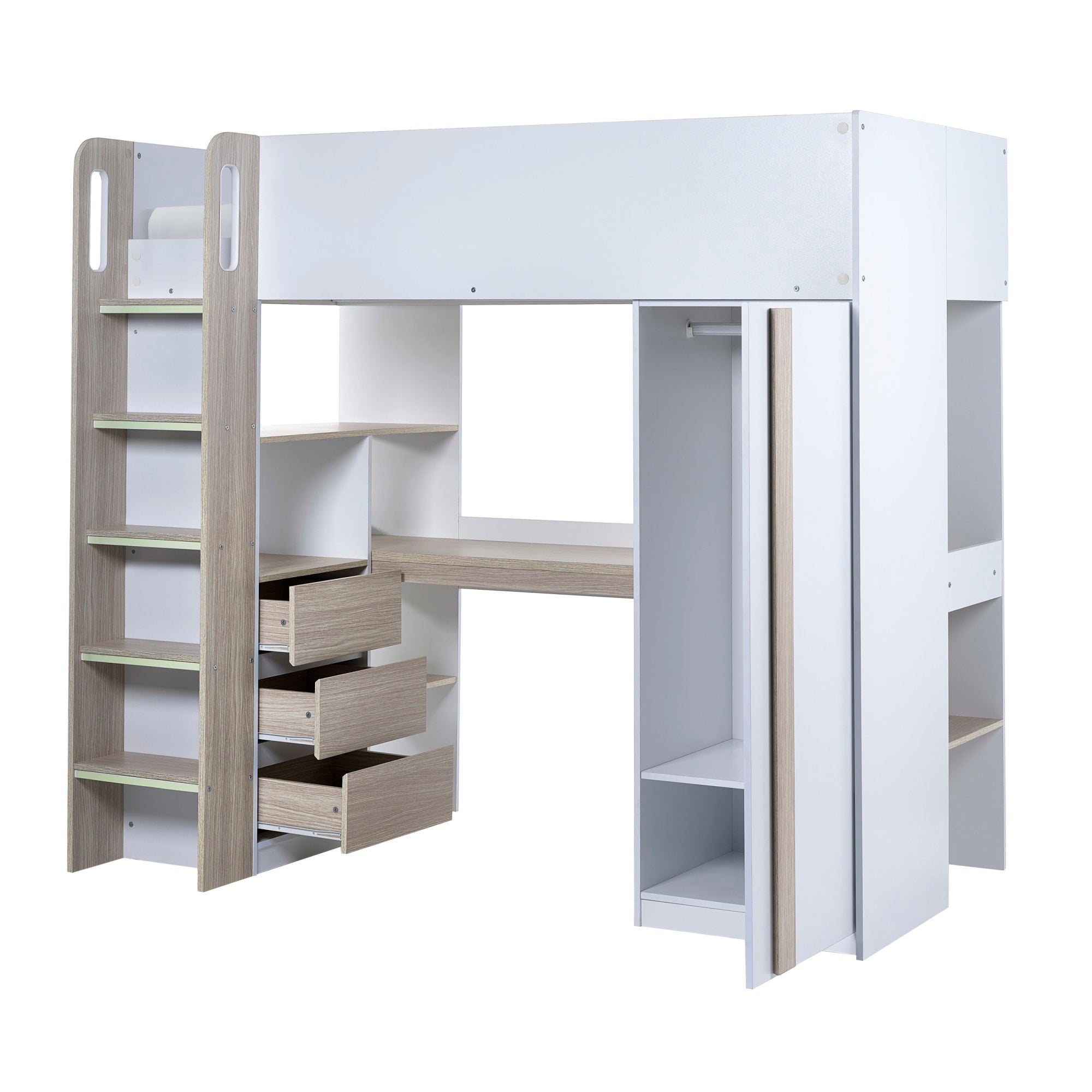
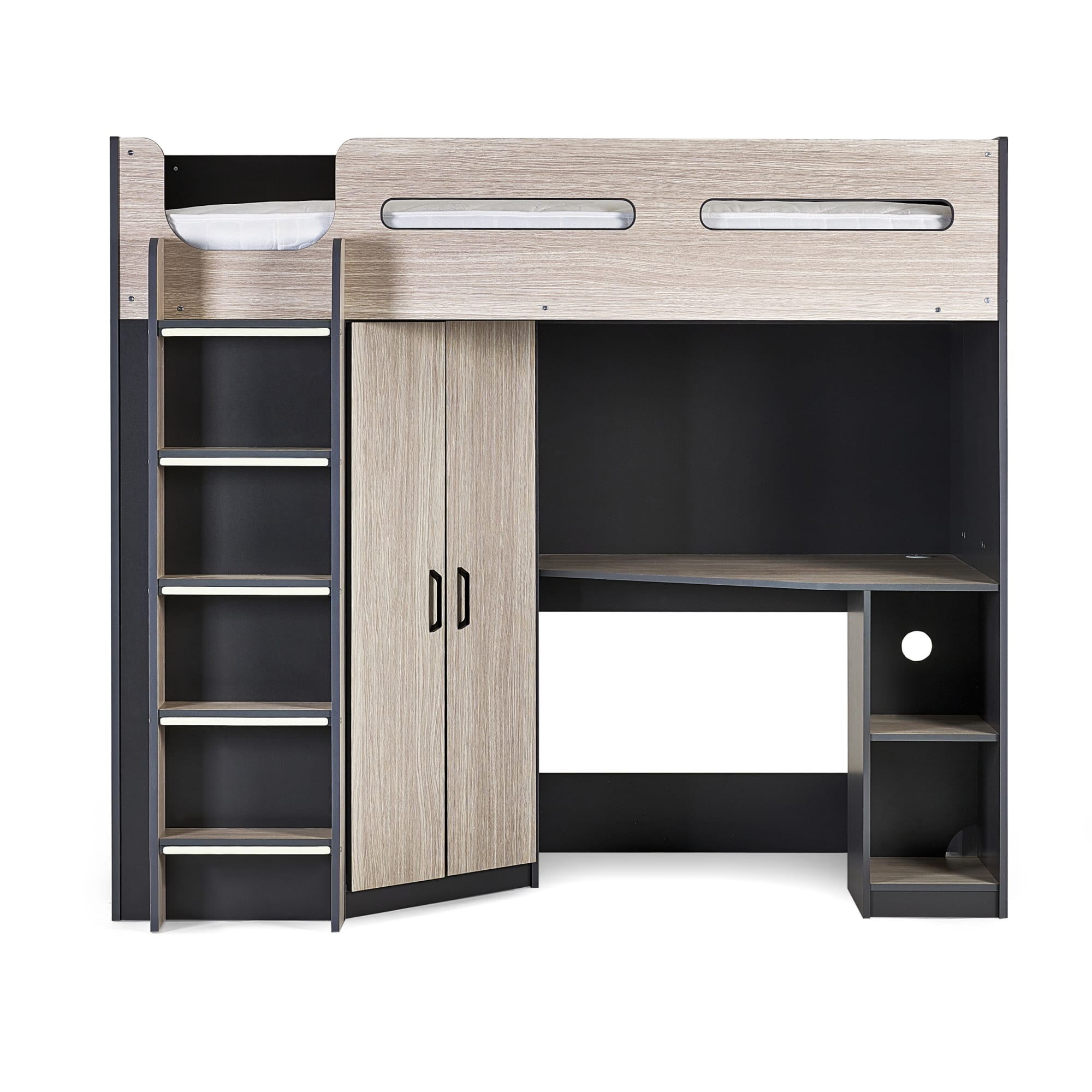
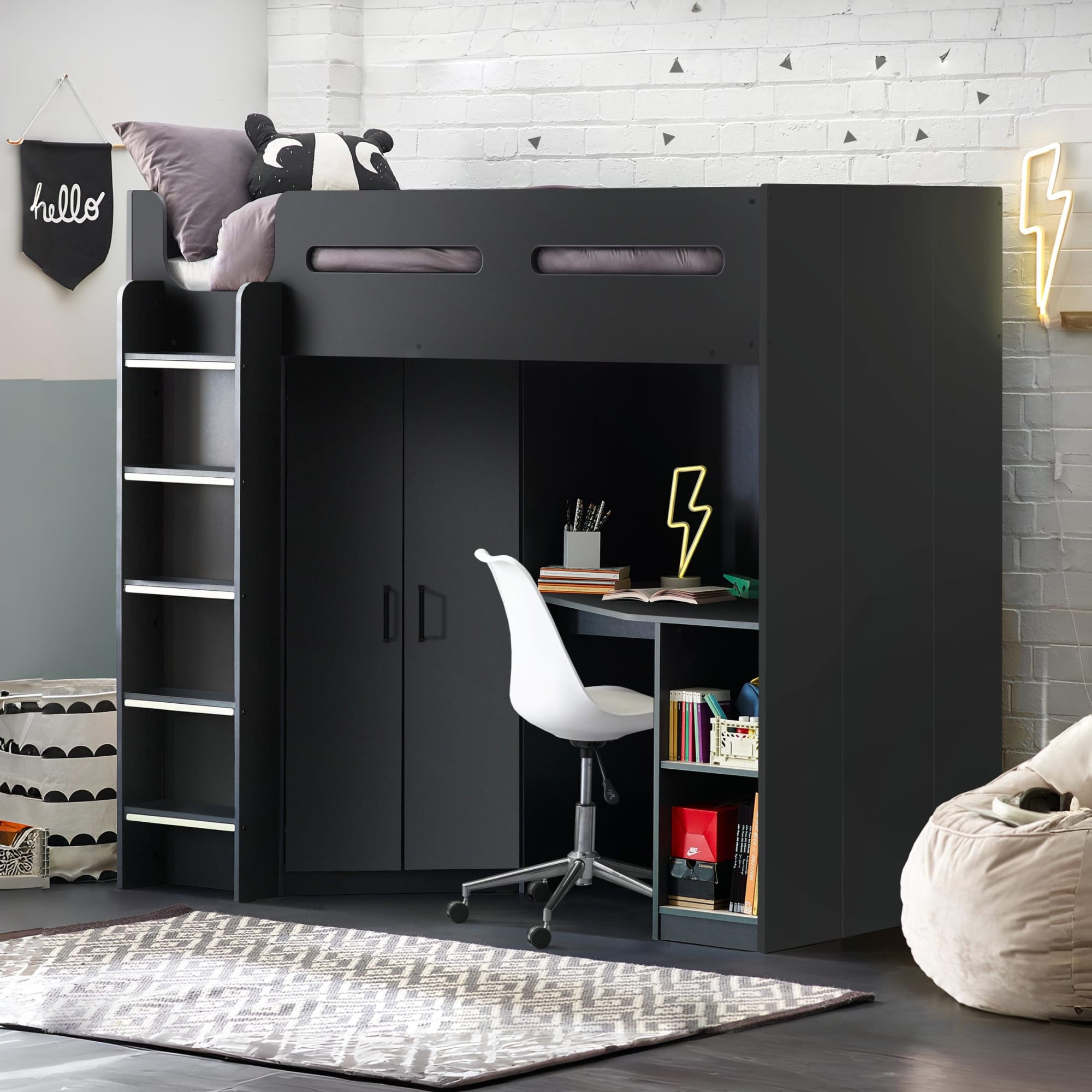
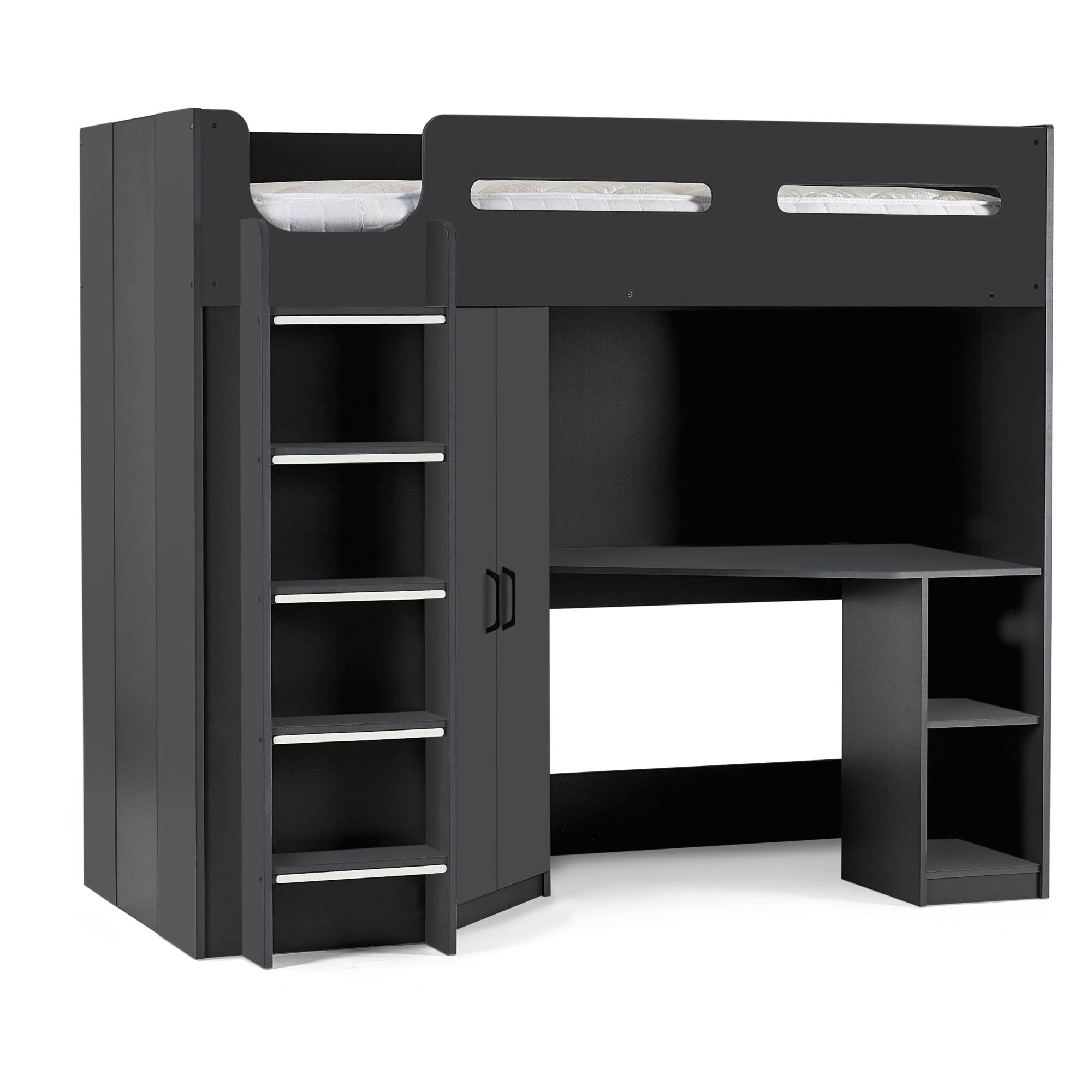
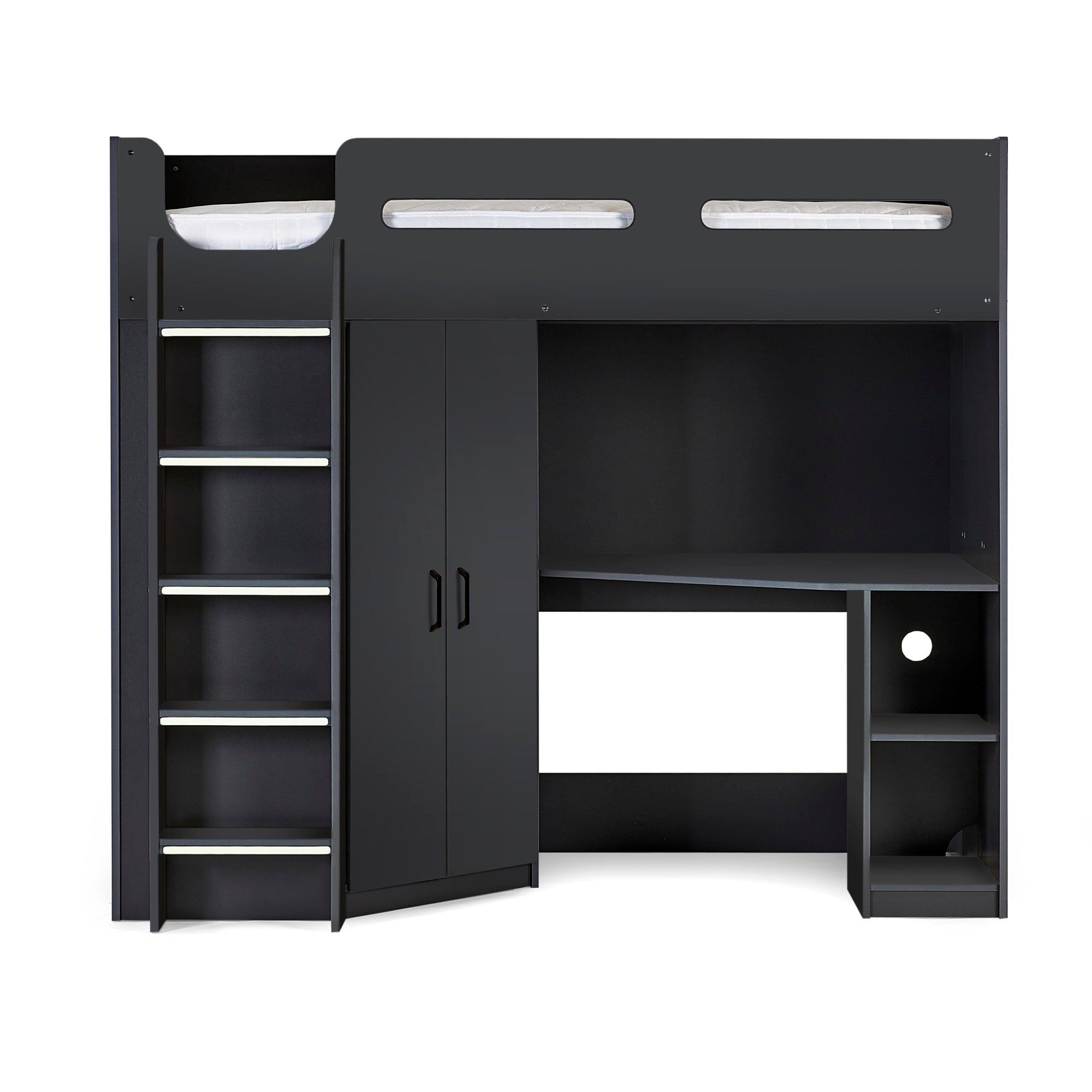
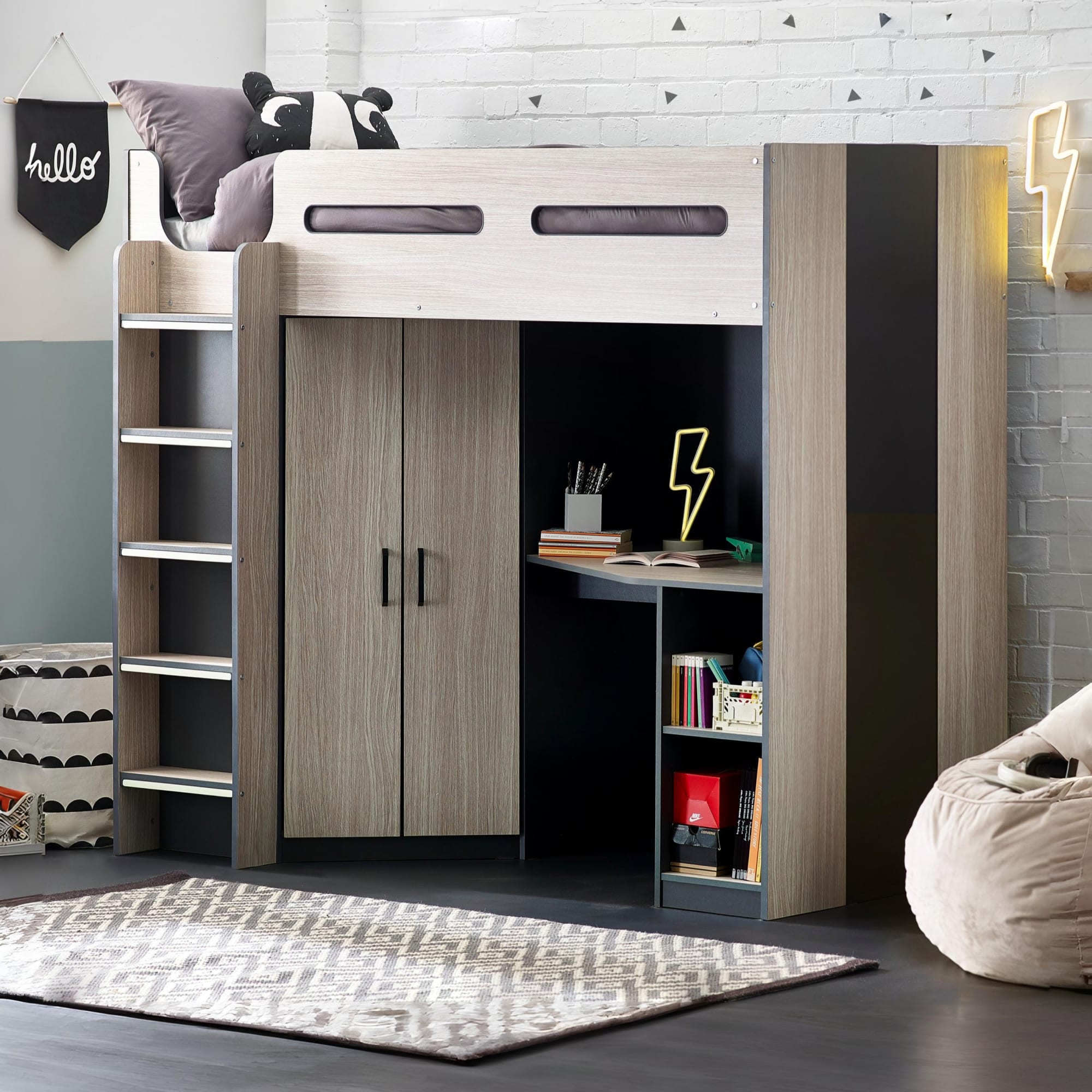
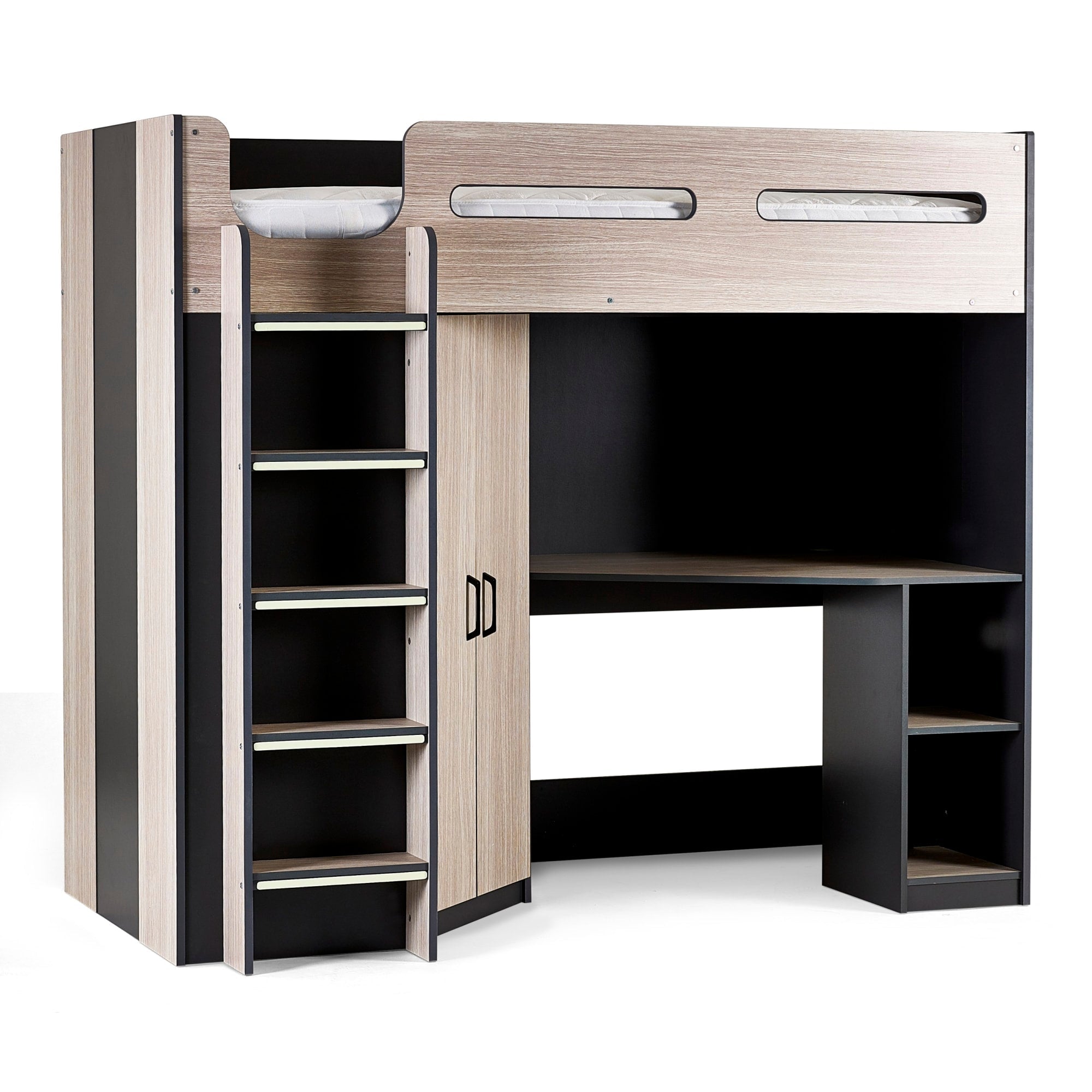
High sleeper with desk. The most popular configuration and the one that suits most school-age children and teenagers. A built-in desk beneath the sleeping area creates a dedicated homework and study space without requiring any additional room floor area. The desk is typically at standard or slightly lower desk height, with storage shelving or cubbies above. For a child who studies at home regularly — or who needs an increasingly well-equipped workspace as they move through secondary school — this is the configuration that provides the most functional long-term value. The position of the desk (left or right of the ladder) varies by model, so check the product page to confirm the layout works with your room's door, window, and power socket positions.

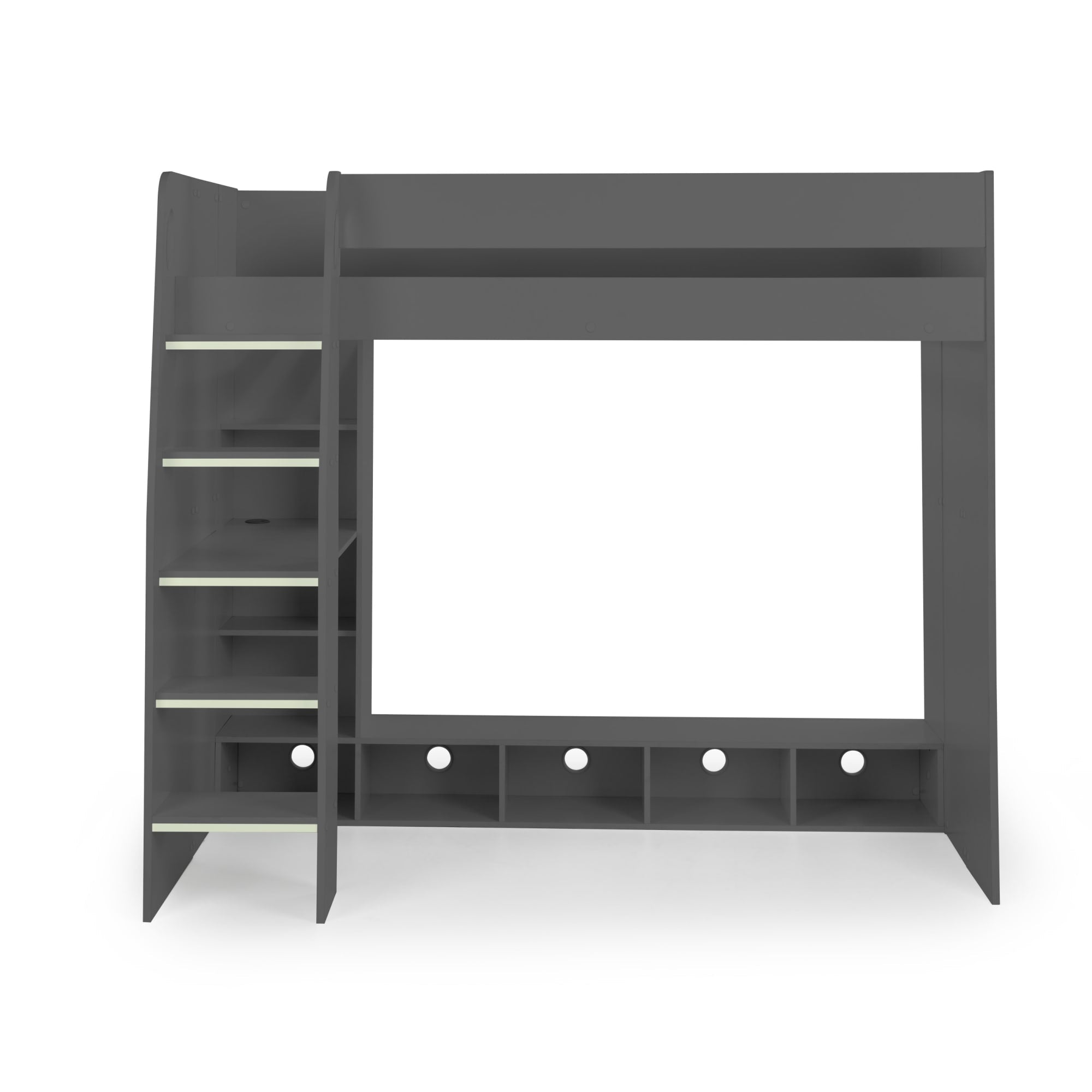
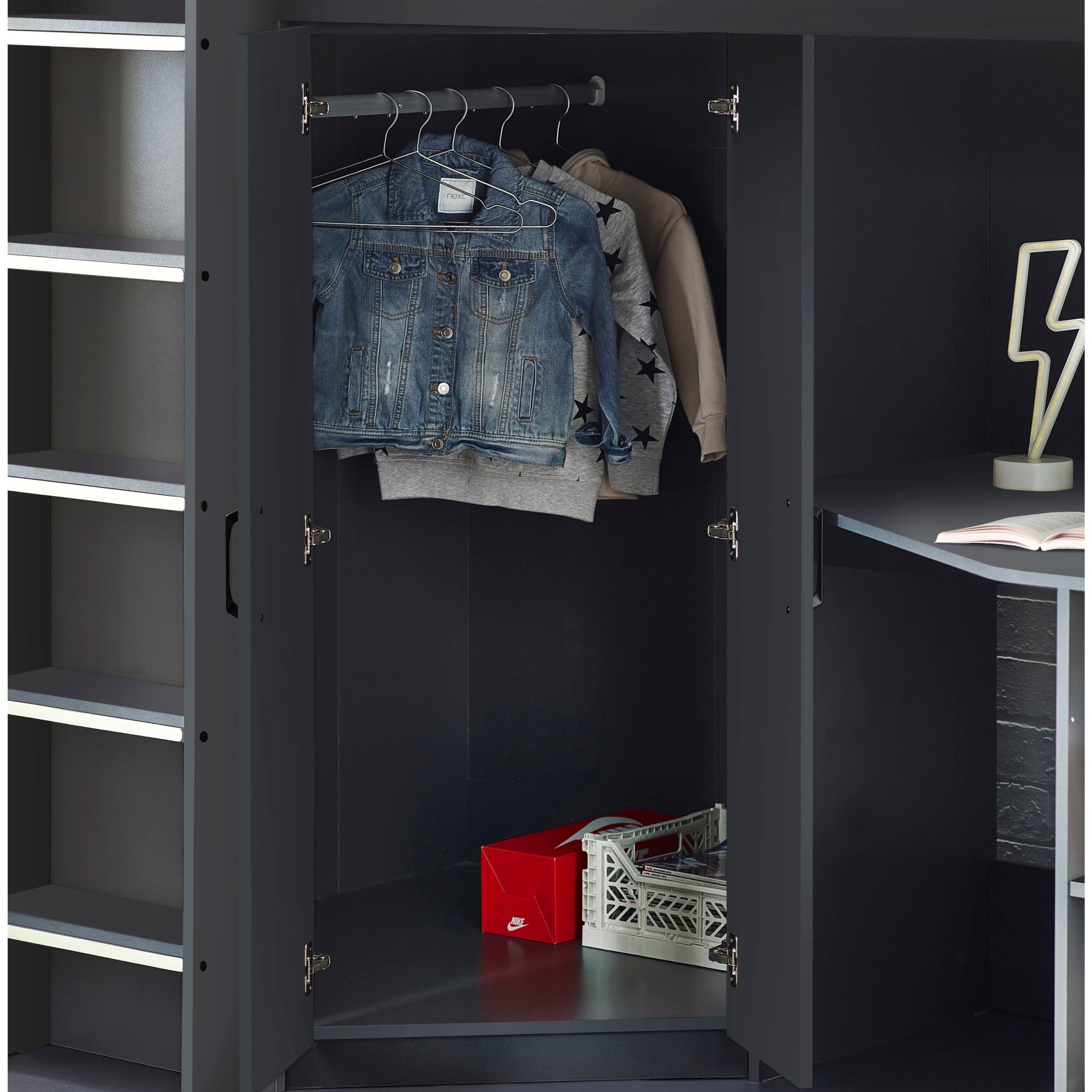
High sleeper with storage. Rather than a desk, this configuration places shelving units, drawer sets, or a combination of both beneath the sleeping area. It suits rooms where study space exists elsewhere — a separate desk, a shared family workspace — and where bedroom floor storage is the greater need. For a child with a significant collection of books, toys, or hobbies that require organised storage, a high sleeper with storage can replace a wardrobe or chest of drawers arrangement. Compare with our chest of drawers collection if standalone storage is the primary need.

High sleeper with futon. A futon underneath the sleeping area serves as a sofa or chair during the day and folds out into a single sleeping surface for sleepovers. This is the highest-fun configuration for younger teens who regularly have friends to stay and who want a space that feels more like a den than a bedroom. The futon-as-daybed also creates a comfortable sitting area for reading, gaming, or watching on a screen, which makes the room feel more functional as a social space rather than purely a sleeping one.

High sleeper with desk and storage. Many models combine a desk on one side with shelving or cubbies on the other — providing both study space and organised storage within the same configuration. For teenagers with multiple needs and a single bedroom, this combination is often the most practical long-term investment.

The Critical Specifications: Mattress Depth, Ladder Position, and Safety

Mattress depth: the most important specification to get right. A high sleeper is designed to be used with a slim mattress — and this is non-negotiable. The guardrails on a high sleeper are positioned at a specific height above the sleeping platform. If the mattress is too thick, the effective height of the guardrail above the sleeper is reduced — potentially to an unsafe level. For most high sleeper models, a mattress of 15cm or less in depth is the maximum recommended. Some models specify 12cm. Always check the individual product page for the maximum mattress depth and purchase accordingly. A single mattress or small single mattress in a slim profile is the appropriate pairing — not a standard adult mattress of 20–25cm depth. See our full mattresses collection and filter by depth if you need guidance.

Ladder position. The ladder on most high sleepers can be positioned on either the left or right side of the frame — check the individual product page for whether this is adjustable at the time of assembly or fixed by design. The correct position is determined by your room layout: the ladder should descend toward clear floor space, away from walls, doors, and any furniture a child could step onto or fall against when climbing. For rooms where the floor space adjacent to the bed is limited, confirm the ladder configuration before ordering.

Guardrail coverage. All Airedale Living high sleeper beds include guardrails on both sides of the sleeping area as standard. Check that the guardrails extend the full length of the sleeping surface on the wall side and provide adequate protection on the open side. Some models include a gap for the ladder access point — this is standard, but the gap should be positioned at the ladder and nowhere else along the open side.

Weight capacity. High sleeper frames have a rated maximum weight capacity that should be checked against the intended user's weight plus any items stored on the sleeping platform (bedding, soft toys, etc.). Most standard high sleepers are rated for 80–100kg on the sleeping platform. Check individual product pages for specific weight ratings.

High Sleepers vs Alternatives: Finding the Right Fit

Not every child's room or child is ready for a full high sleeper. Here's how the main alternatives compare:

Mid-sleepers sit at a lower height than a high sleeper — typically 90–110cm from floor to sleeping surface — with a shorter ladder or integrated steps. The space beneath is accessible as a play or storage area but is not tall enough for a desk or adult seating. Mid-sleepers suit children aged 4–10 who aren't yet ready for the full height of a high sleeper but would benefit from the space efficiency of a raised sleeping area. They're significantly safer for younger children and suit rooms where ceiling height may be a consideration.

Bunk beds use the same vertical space principle as a high sleeper but provide two sleeping surfaces — one at low level and one elevated. They suit rooms shared by siblings or frequent sleepover arrangements where two permanent sleeping spaces are needed rather than one sleeping area plus functional space underneath.

Standard single beds are the most straightforward option — no elevated sleeping, no ladder, no height considerations. They suit all ages, all ceiling heights, and rooms where the bedroom is large enough to accommodate both a bed and a desk as separate pieces.

Browse our full kids' beds collection to compare all children's bed types in one place, or explore bedroom furniture for the broader bedroom setup. Our best sellers show which configurations our customers choose with the most confidence, and new arrivals covers the latest additions. Current offers are in our sale collection.

Every Airedale Living high sleeper comes with free UK delivery and arrives ready for self-assembly with all fixings and instructions included.

Browse the full high sleeper collection above — and find the configuration that gives your child's room a second life.

Frequently Asked Questions

High sleeper beds are recommended for children aged 6 and above. Below this age, most children haven't yet developed the consistent spatial awareness, night-time caution, and coordination needed to navigate a high sleeper ladder safely — particularly in the dark. For children aged 4–6, a mid-sleeper at a lower height with a shorter ladder or integrated steps is almost always the safer and more appropriate choice. For teenagers, a high sleeper with a desk configuration provides a practical and well-used study space that typically justifies the purchase well into secondary school.

A high sleeper requires a slim mattress — typically a maximum of 15cm in depth, and some models specify 12cm or less. The guardrails on a high sleeper are positioned at a set height above the sleeping platform; a mattress that's too thick reduces the effective guardrail height to a potentially unsafe level. Always check the maximum mattress depth specified on the individual product page before ordering. A single mattress or small single mattress in a slim profile is the appropriate choice — a standard adult mattress of 20–25cm depth will not be suitable. Browse our mattresses collection and filter by depth.

A high sleeper raises the sleeping surface to approximately 140–160cm from the floor. Above the mattress, a child needs at least 60–75cm of clear headroom to sit upright without hitting the ceiling. This means your ceiling should be at least 200–230cm high at the position the bed will occupy — a measurement most standard UK bedrooms (typically 240cm) meet comfortably. However, attic rooms, loft conversions, and rooms with sloped or angled ceilings may not. Always measure from floor to ceiling at the exact location of the bed before ordering, accounting for any slope or beam.

A high sleeper raises the sleeping surface to approximately 140–160cm from the floor — high enough to accommodate a full-height desk, futon, or wardrobe underneath, and requiring a ladder to access. A mid-sleeper sits lower — typically 90–110cm from floor to sleeping platform — with a shorter ladder or steps rather than a full ladder. The space beneath a mid-sleeper is accessible as a play or storage area but is not tall enough for a desk or adult seating. High sleepers suit children aged 6 and above; mid-sleepers are appropriate from around age 4 and are significantly safer for younger children who aren't yet ready for the height of a full high sleeper.
Yes when used at the appropriate age and with the correct mattress depth. All high sleeper beds are built to UK safety standards and include guardrails on both sides of the sleeping area and a secure ladder as standard. The key safety factors to observe are: use only by children aged 6 and above; use only with a slim mattress of the maximum depth specified on the product page (typically 15cm or less); ensure the ladder descends toward clear floor space with no obstacles; and never allow children to play on the elevated sleeping area unsupervised. The sleeping surface itself is as safe as any other bed when used within these guidelines.