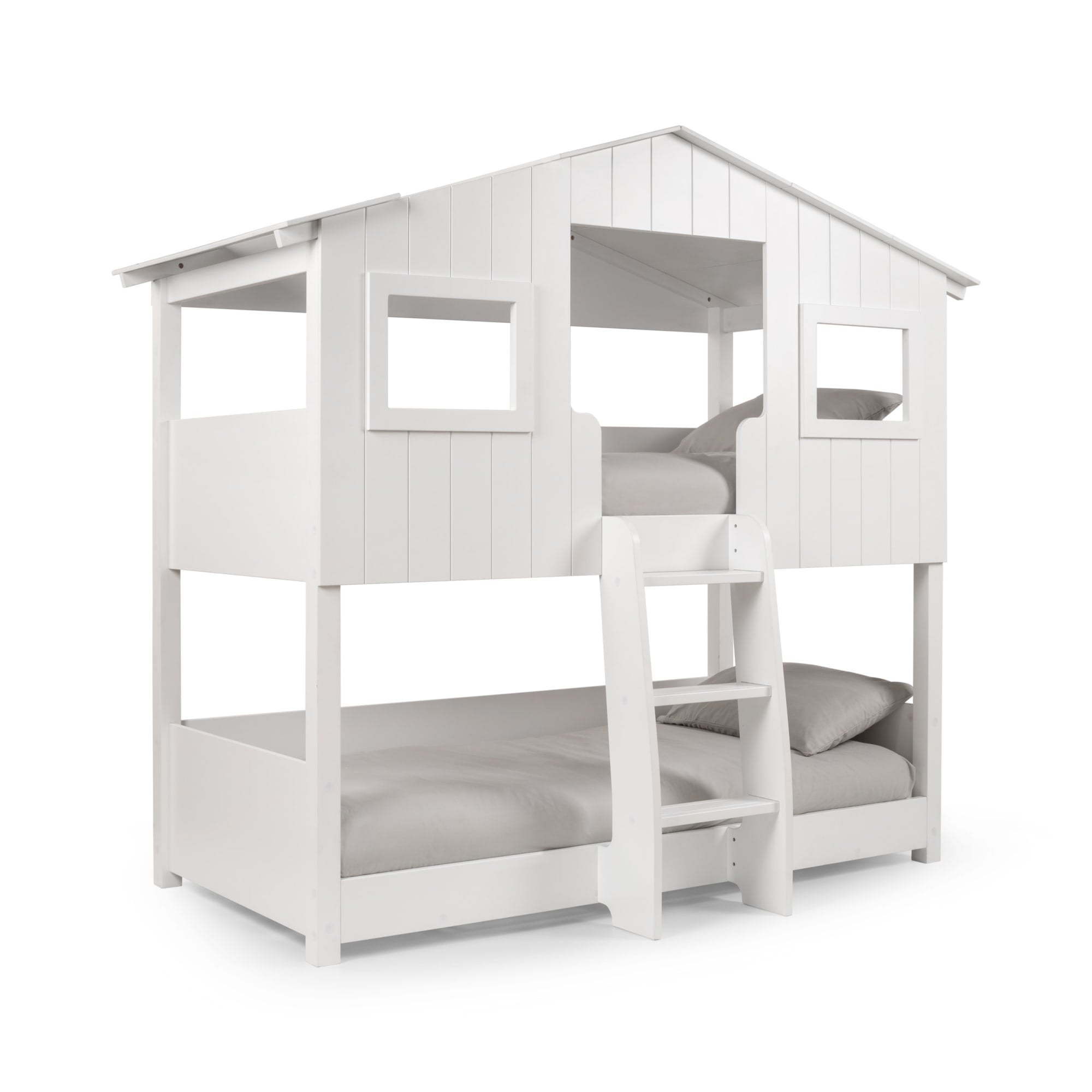
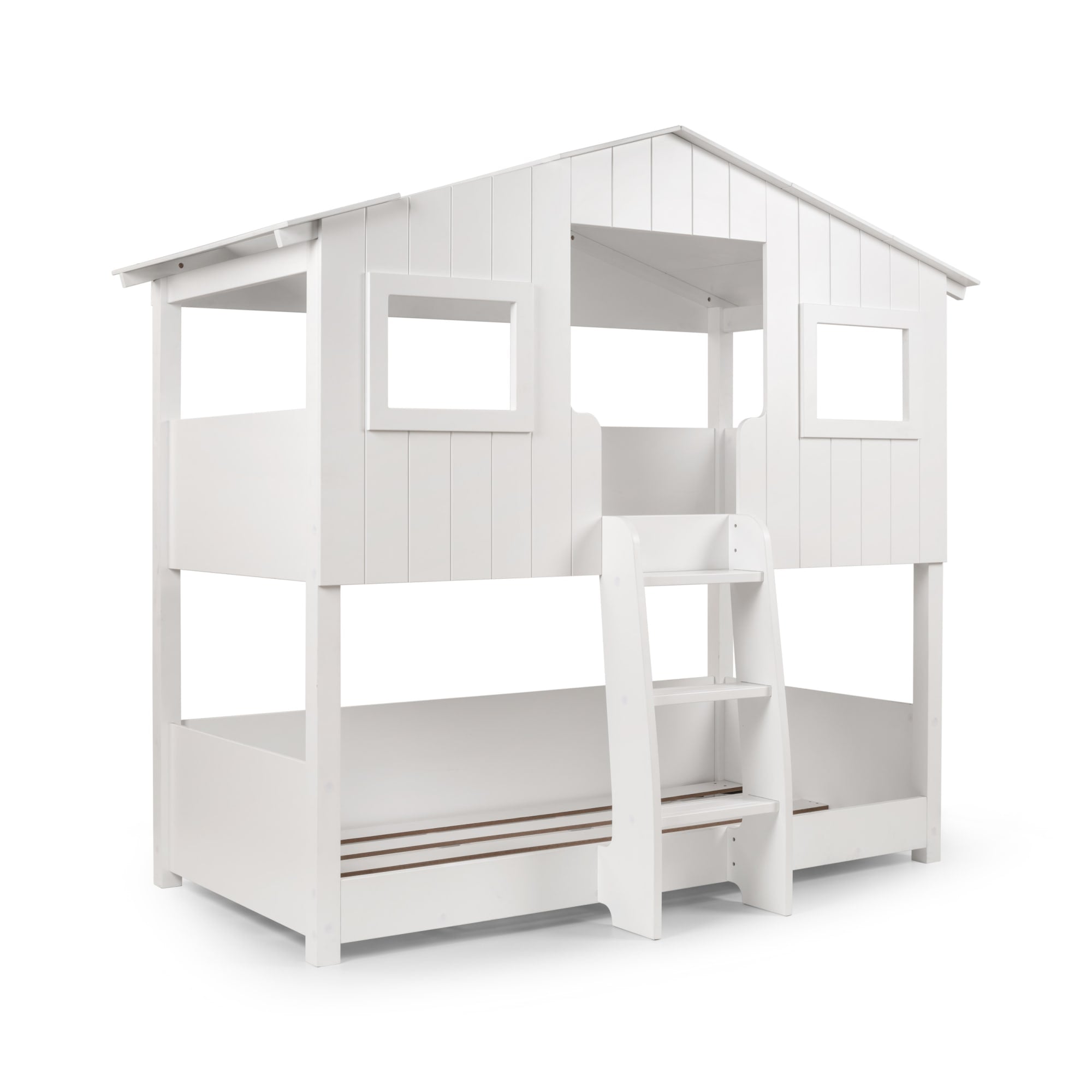
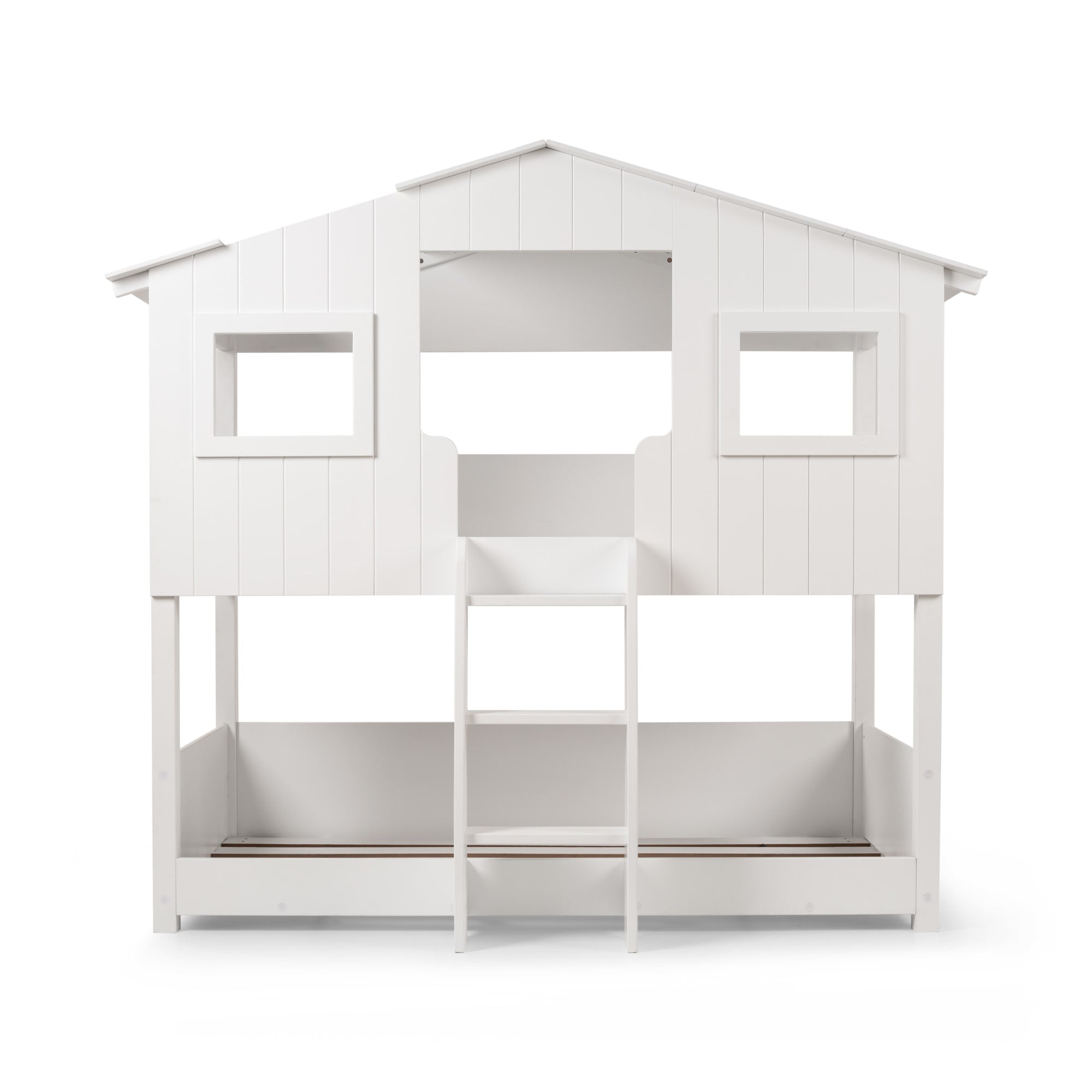
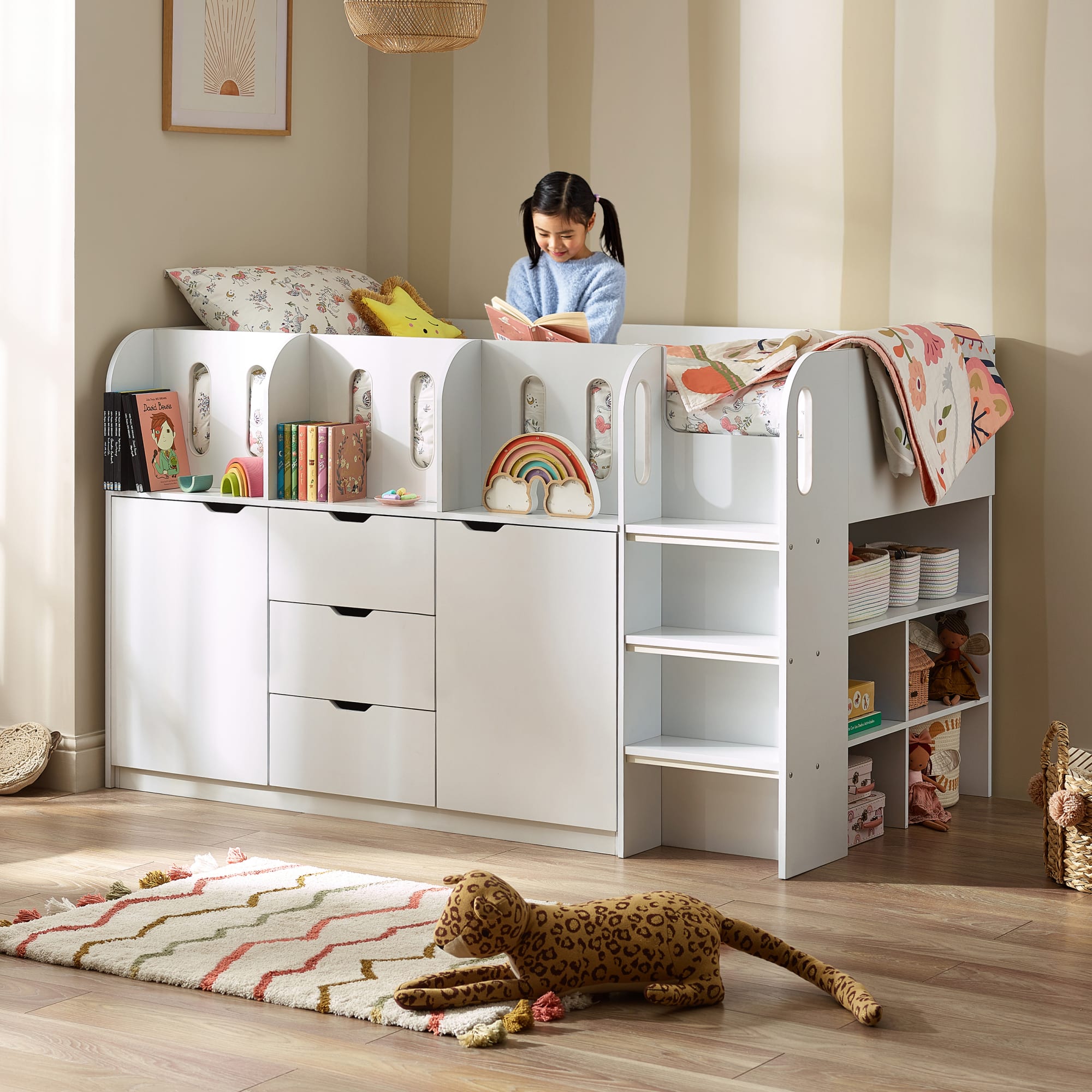
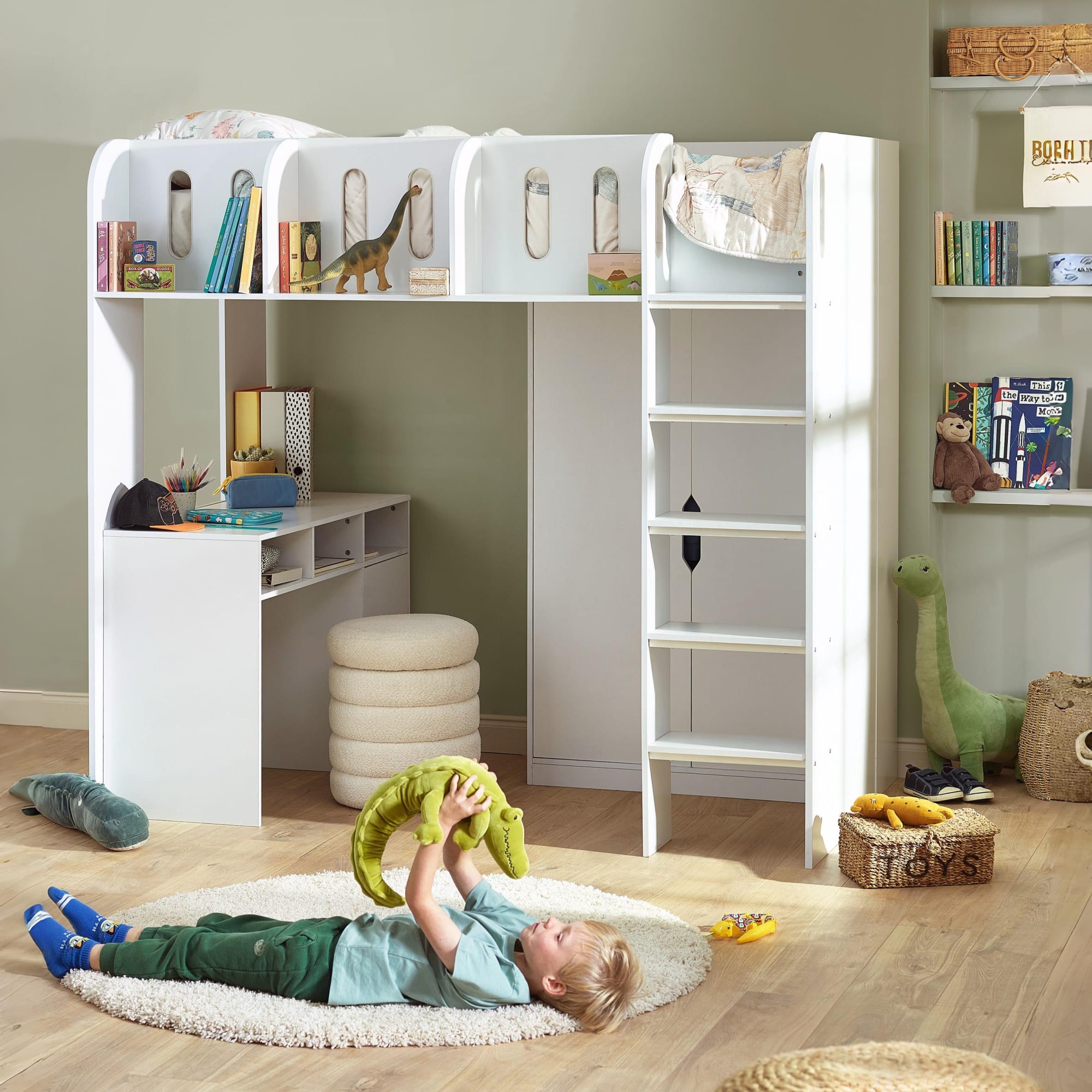
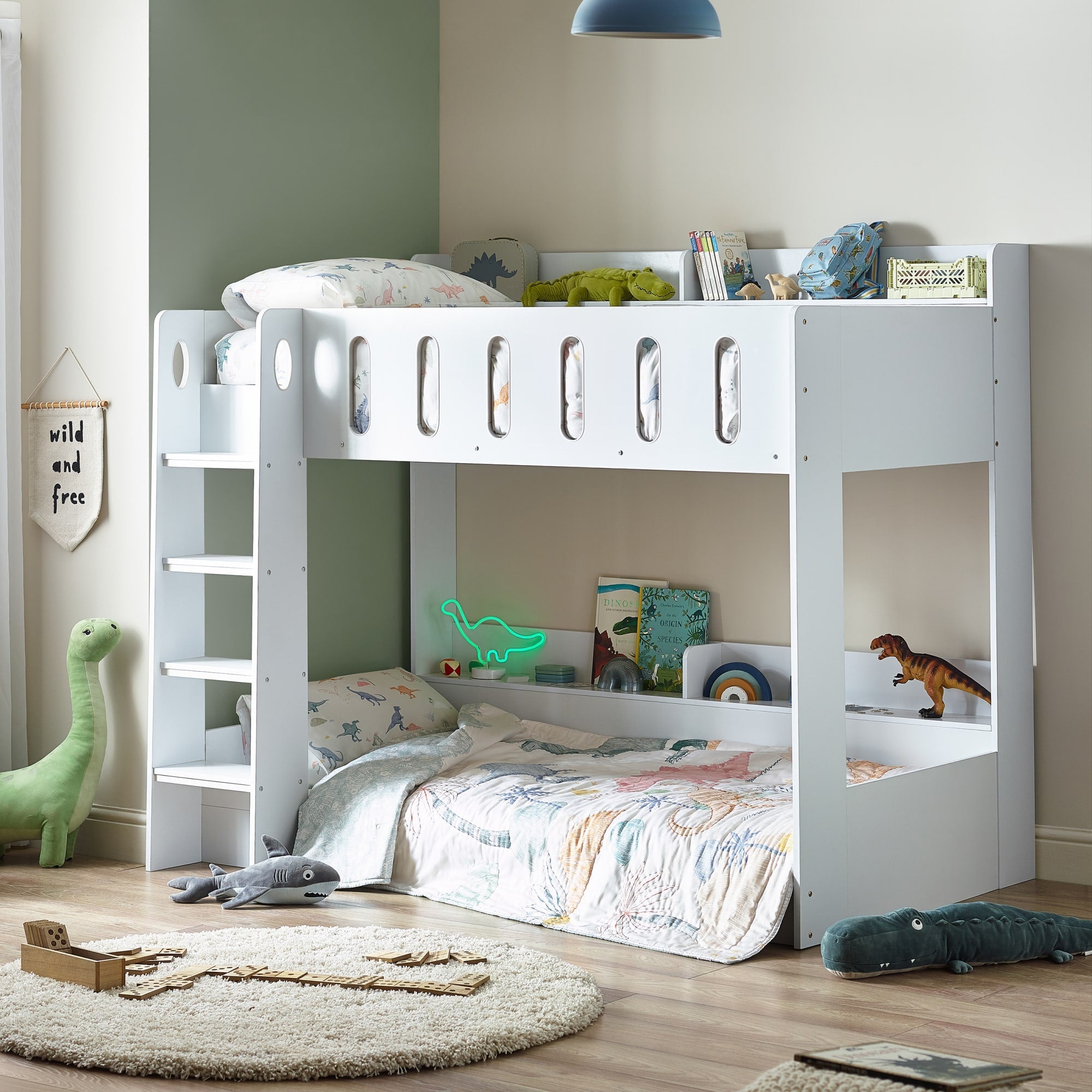
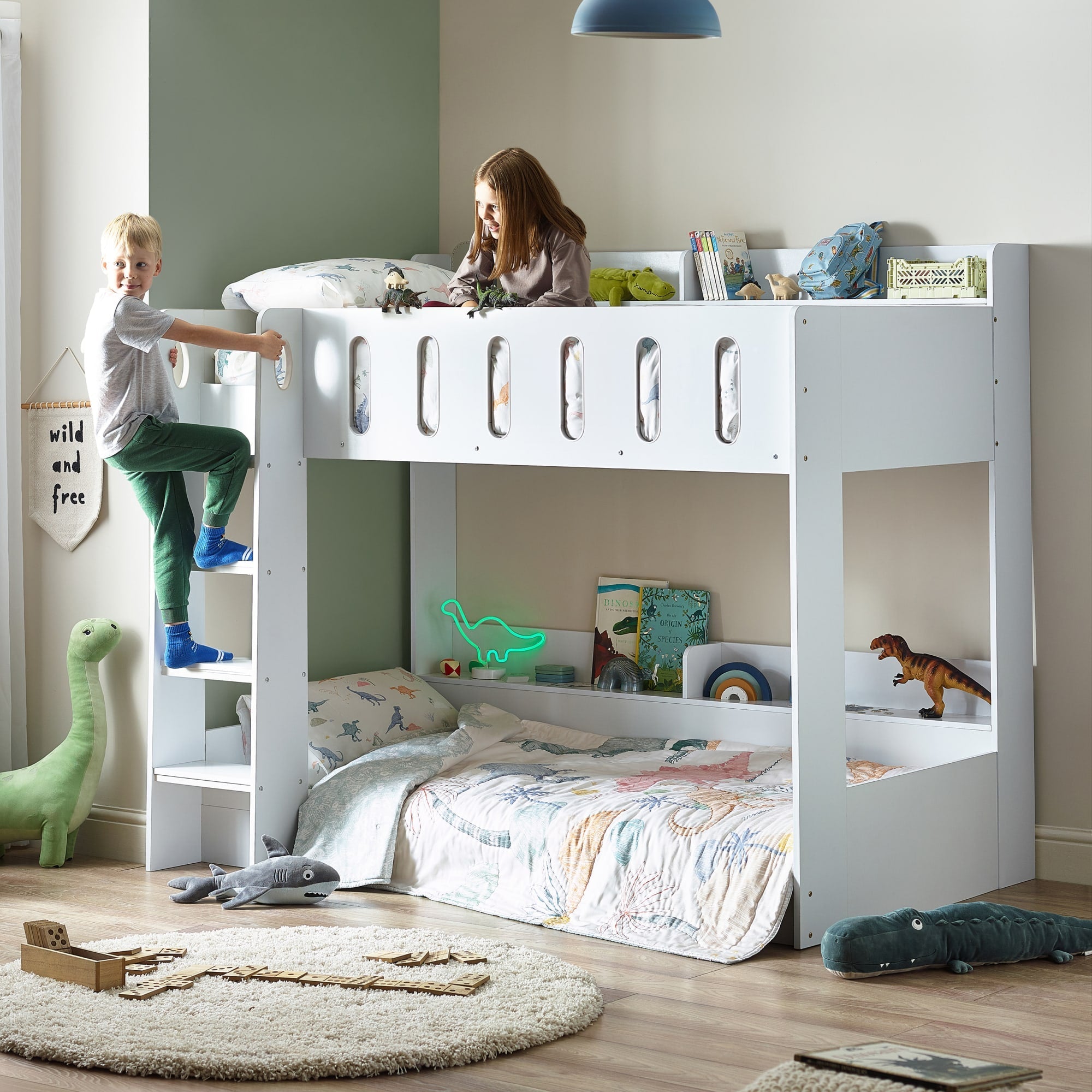
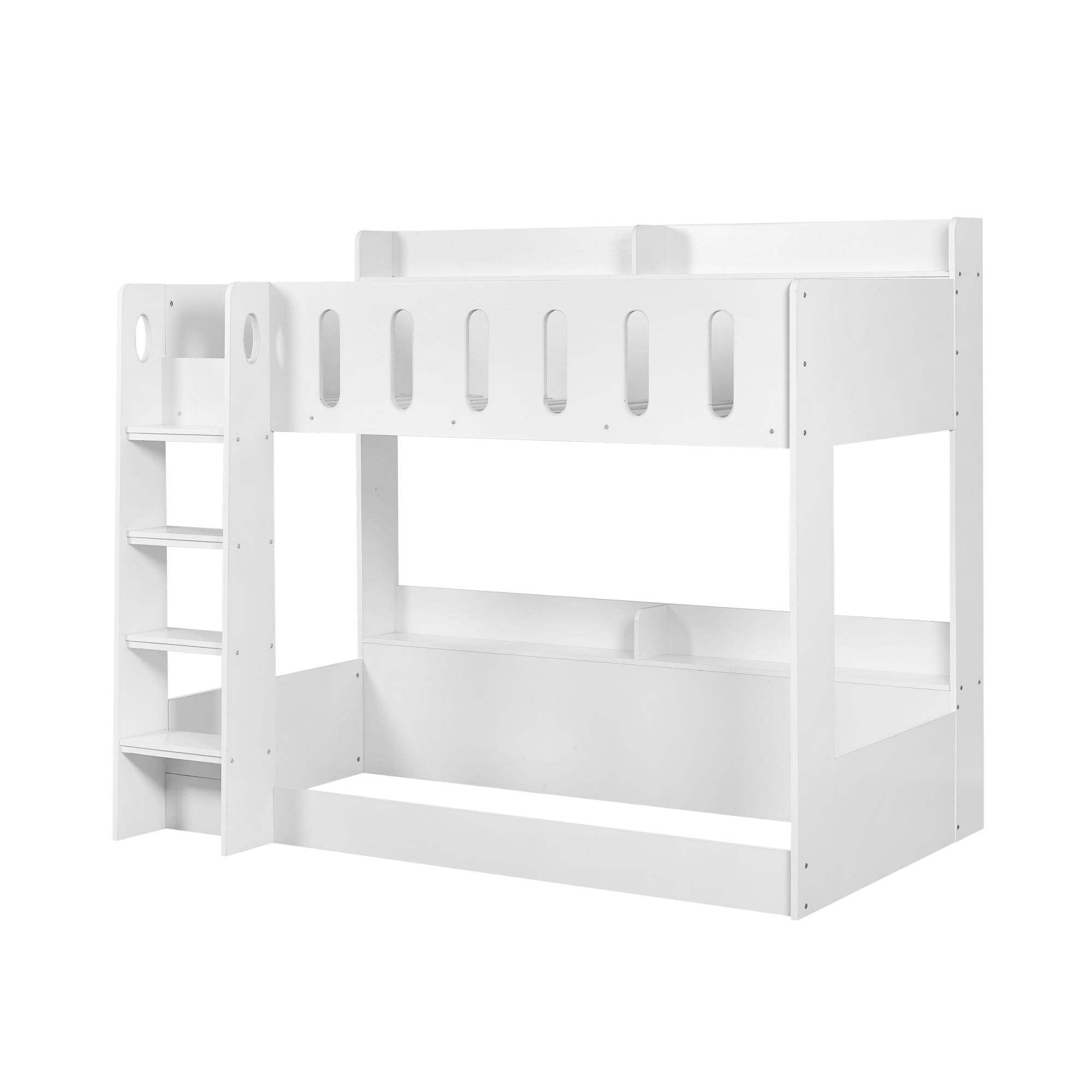
Choosing the right kids bed is a genuinely different decision from choosing a bed for an adult because the right answer changes as the child grows, and the wrong choice at the wrong stage creates problems that go beyond aesthetics. A toddler who needs to get in and out independently needs something very different from a ten-year-old who needs study space, and a teenager sharing a room needs something different again. At Airedale Living, our kids' beds span the full age range from first proper beds through to high sleepers and bunk beds for older children and teenagers — all built to UK safety standards with the practicalities of real family life in mind. Browse the collection above, navigate by type below, or use the age-by-age guide further down to find the right starting point for your child's specific stage. Free UK delivery is included on every order.

79 products

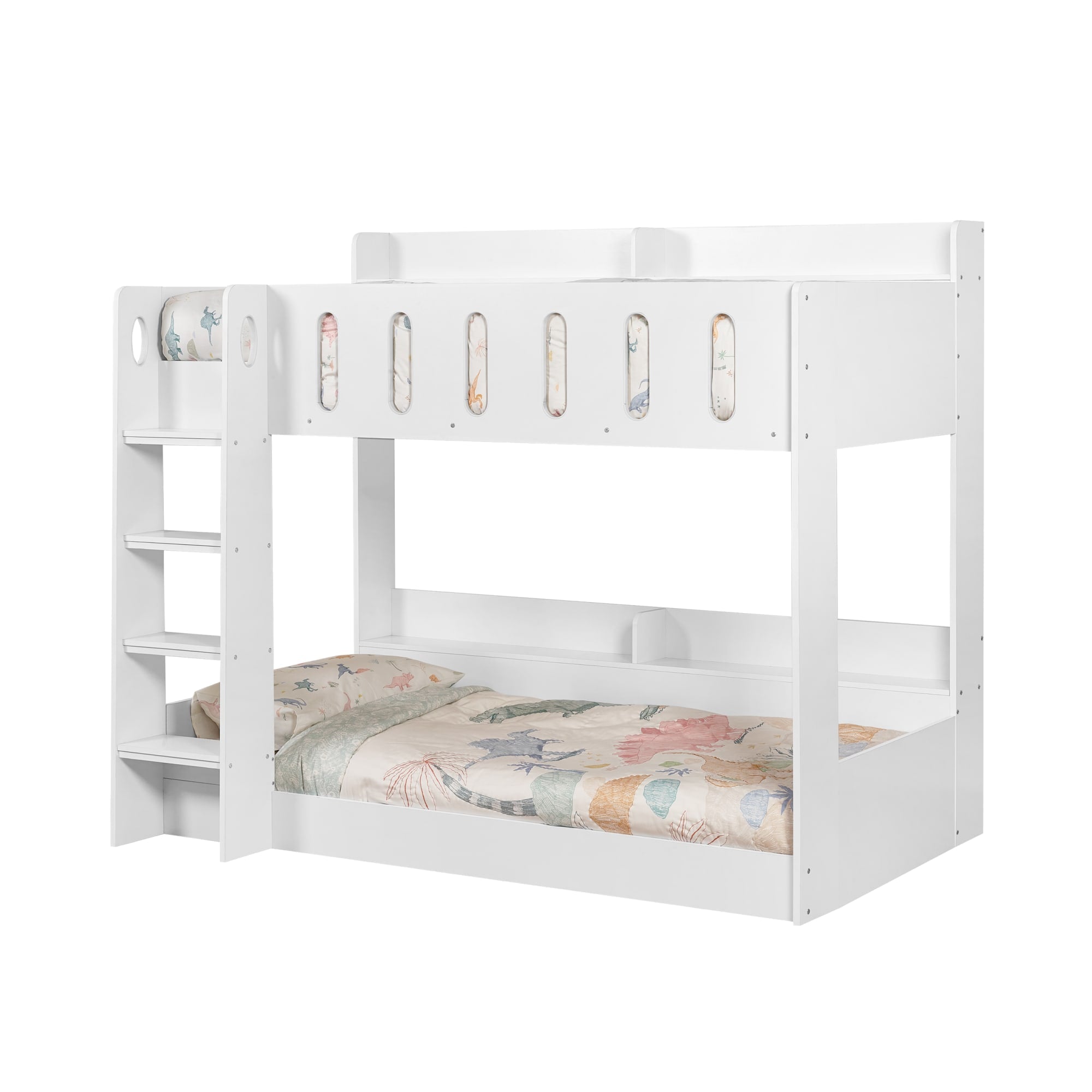
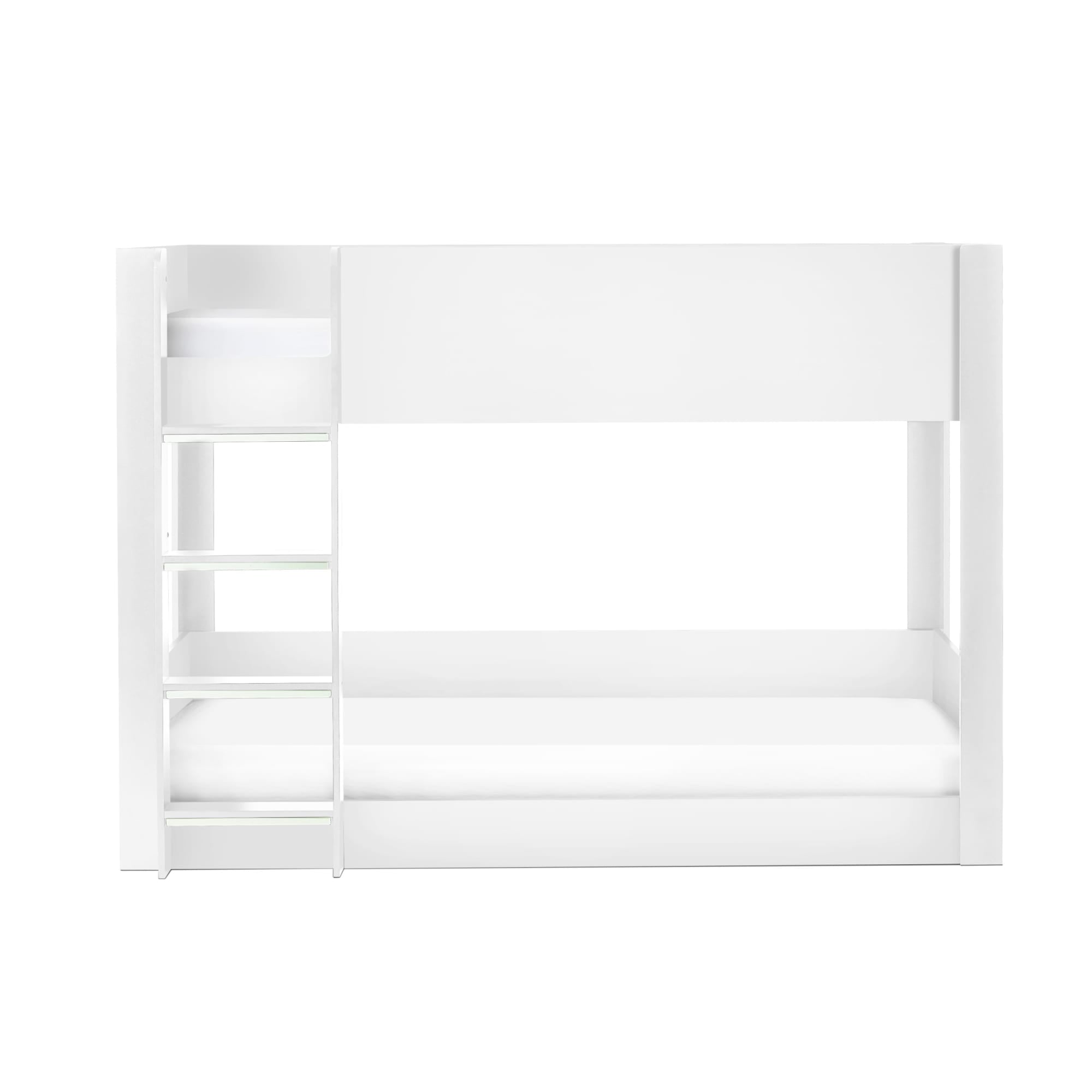
Vision Bunk Bed

£403.00

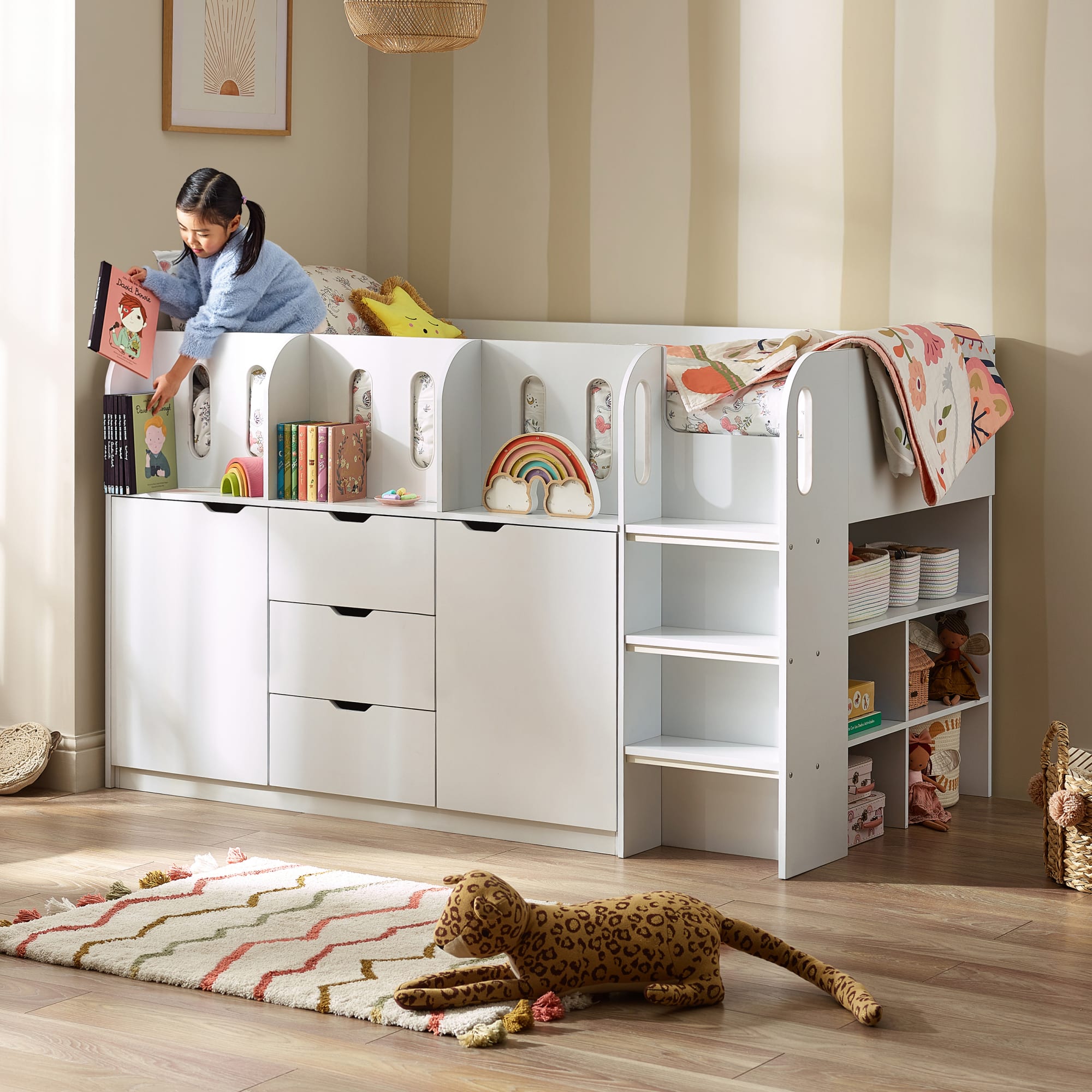
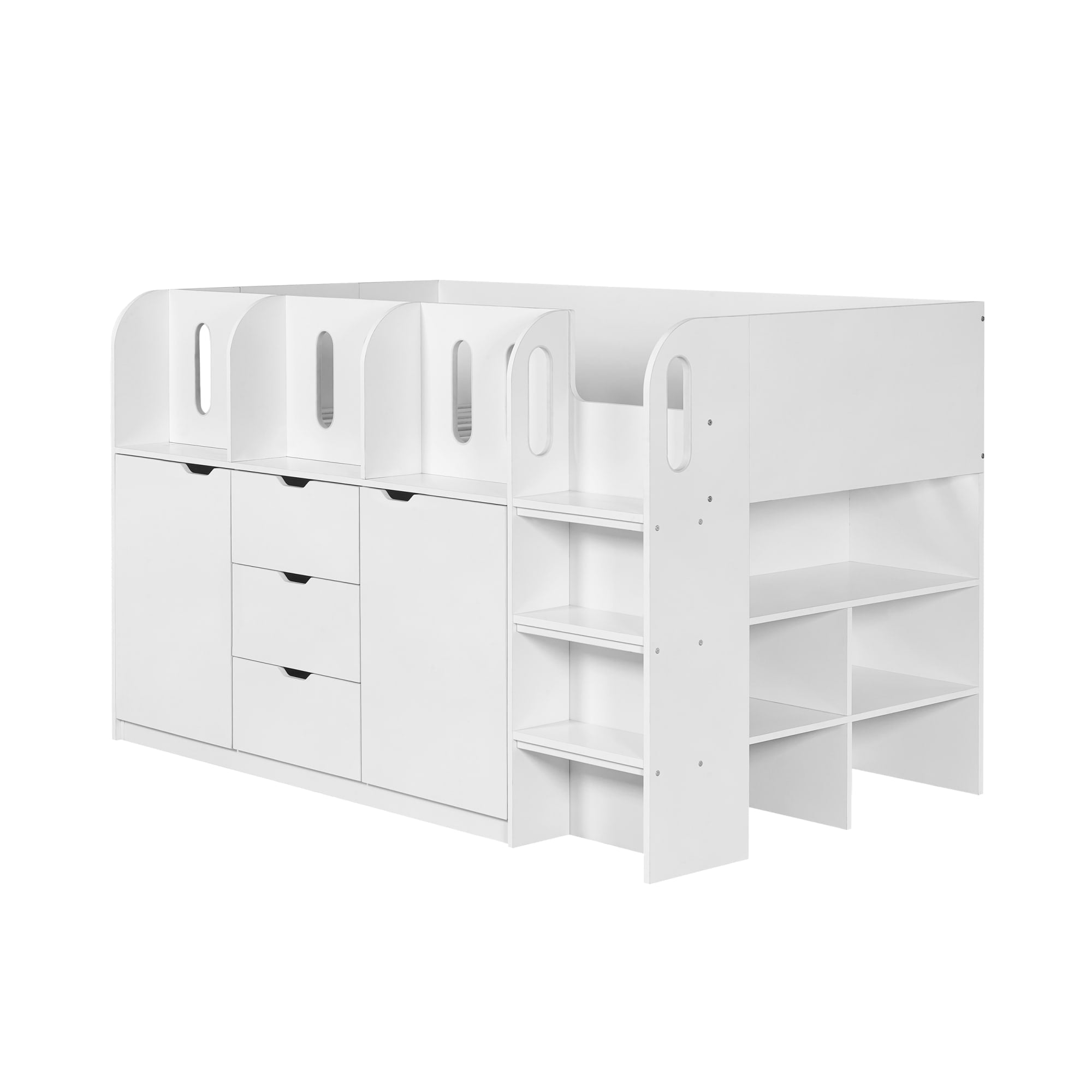
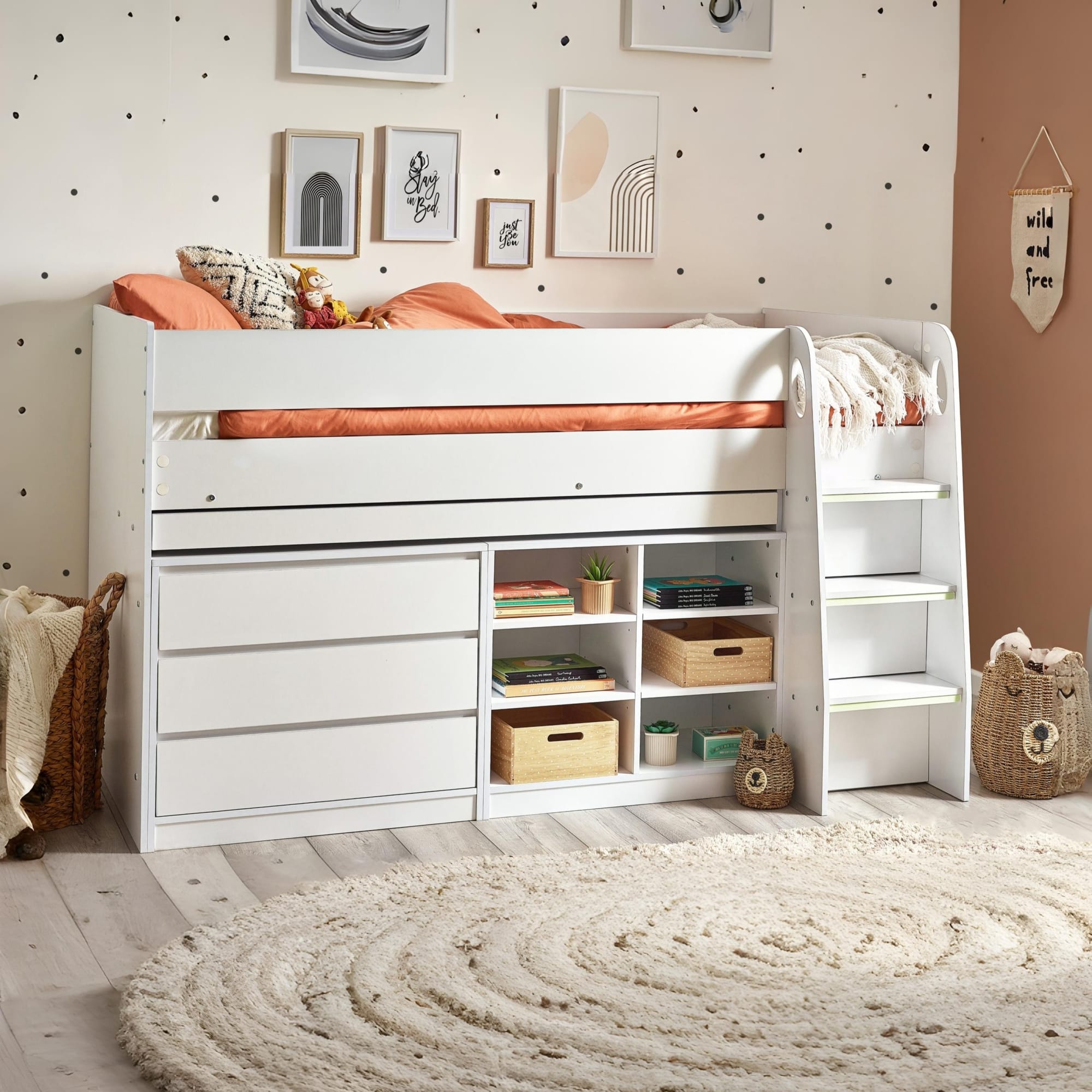
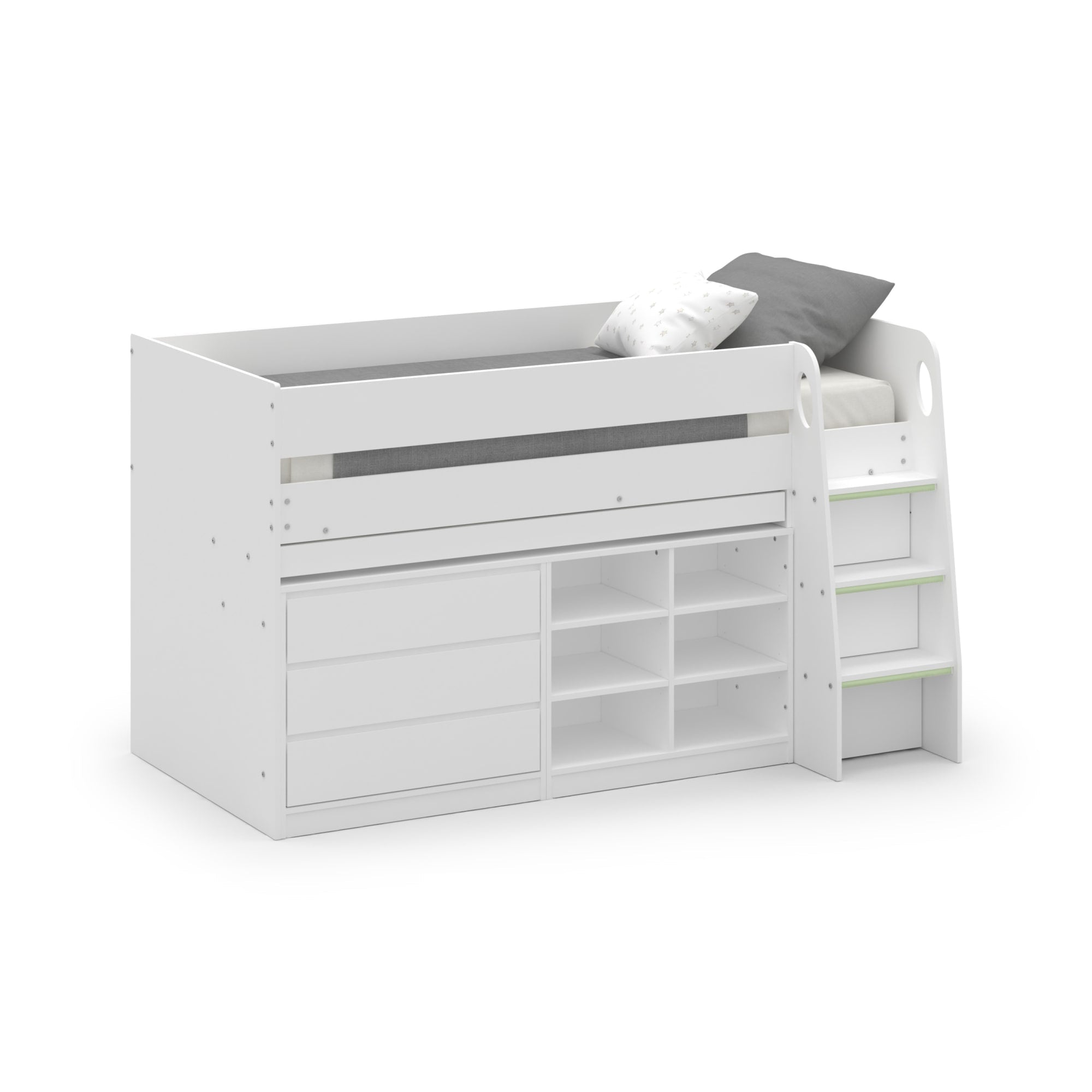
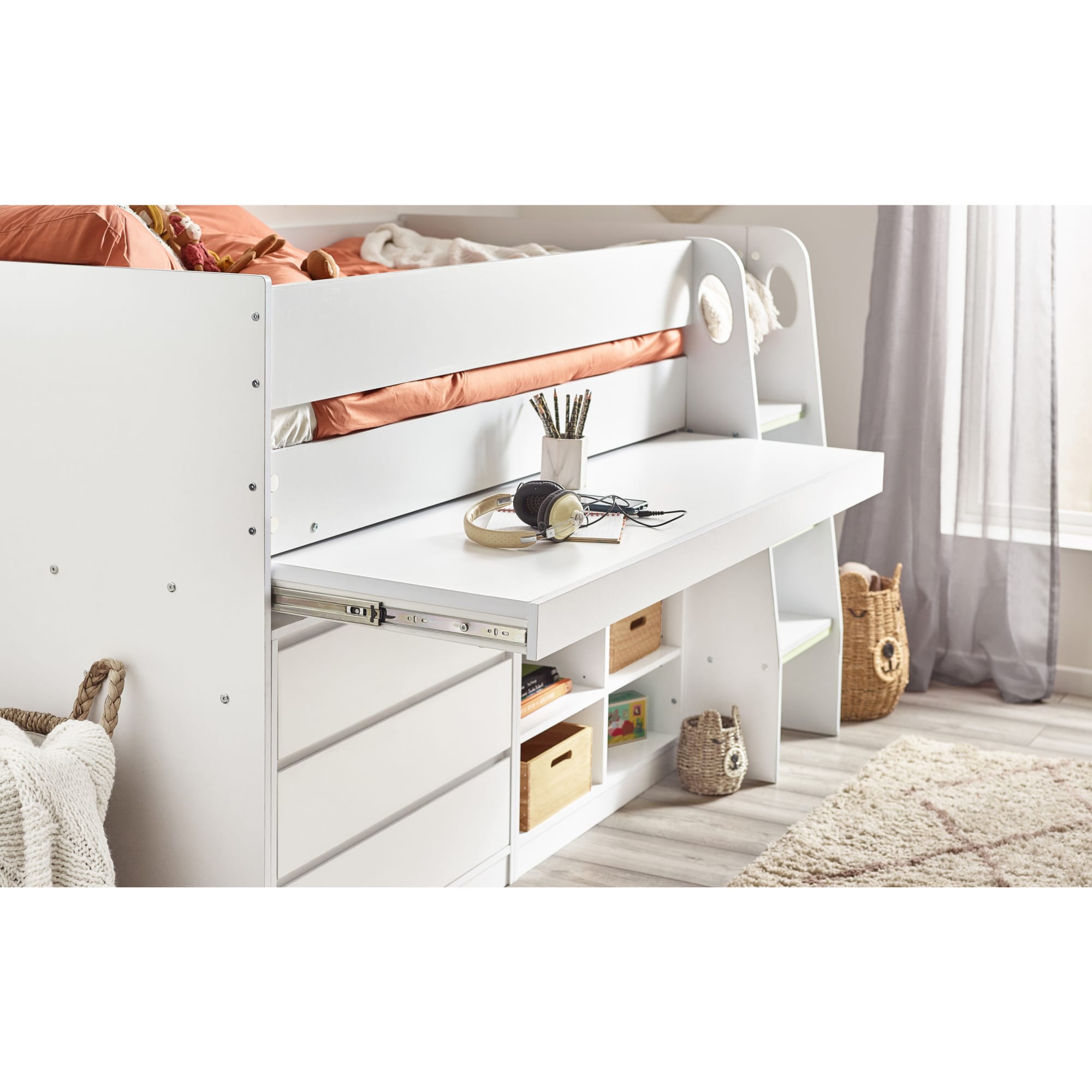
Vespa Midsleeper

£519.00

Choosing the Right Kids' Bed: An Age-by-Age Guide

The most useful way to navigate children's beds is by age — because a child's needs, safety requirements, and the practicality of different bed types change significantly at specific stages of development. Here's a straightforward guide to what works at each stage and why.

Ages 4–6: First proper beds and low mid-sleepers. At this age, a child is typically making the transition from a cot or toddler bed into a full-sized single. The priority at this stage is safety — specifically, keeping the sleeping surface close enough to the ground that getting in and out independently is safe, and that any nocturnal movement doesn't create a serious fall risk. A standard single bed at standard height is appropriate; a mid-sleeper at low height with integrated steps (rather than a full ladder) is also suitable for this age group and provides useful storage or play space beneath without the full height of a high sleeper.

Ages 6–10: Mid-sleepers, bunk beds, and low high-sleepers. Between six and ten, most children have developed the coordination, spatial awareness, and night-time caution to use a ladder safely. This opens up the full range of space-efficient children's beds. A mid-sleeper with a desk or storage underneath suits this age group well — the height is manageable, the space beneath is genuinely functional, and the bed doesn't need to evolve for several years. Bunk beds suit this age group for shared bedrooms — the bottom bunk is accessible from four upward; the top bunk from six, when ladder use can be supervised and then gradually made independent. A high sleeper at the lower end of this age group (six to eight) works if ceiling height permits, though many parents prefer to wait until eight or nine for the full high-sleeper height.

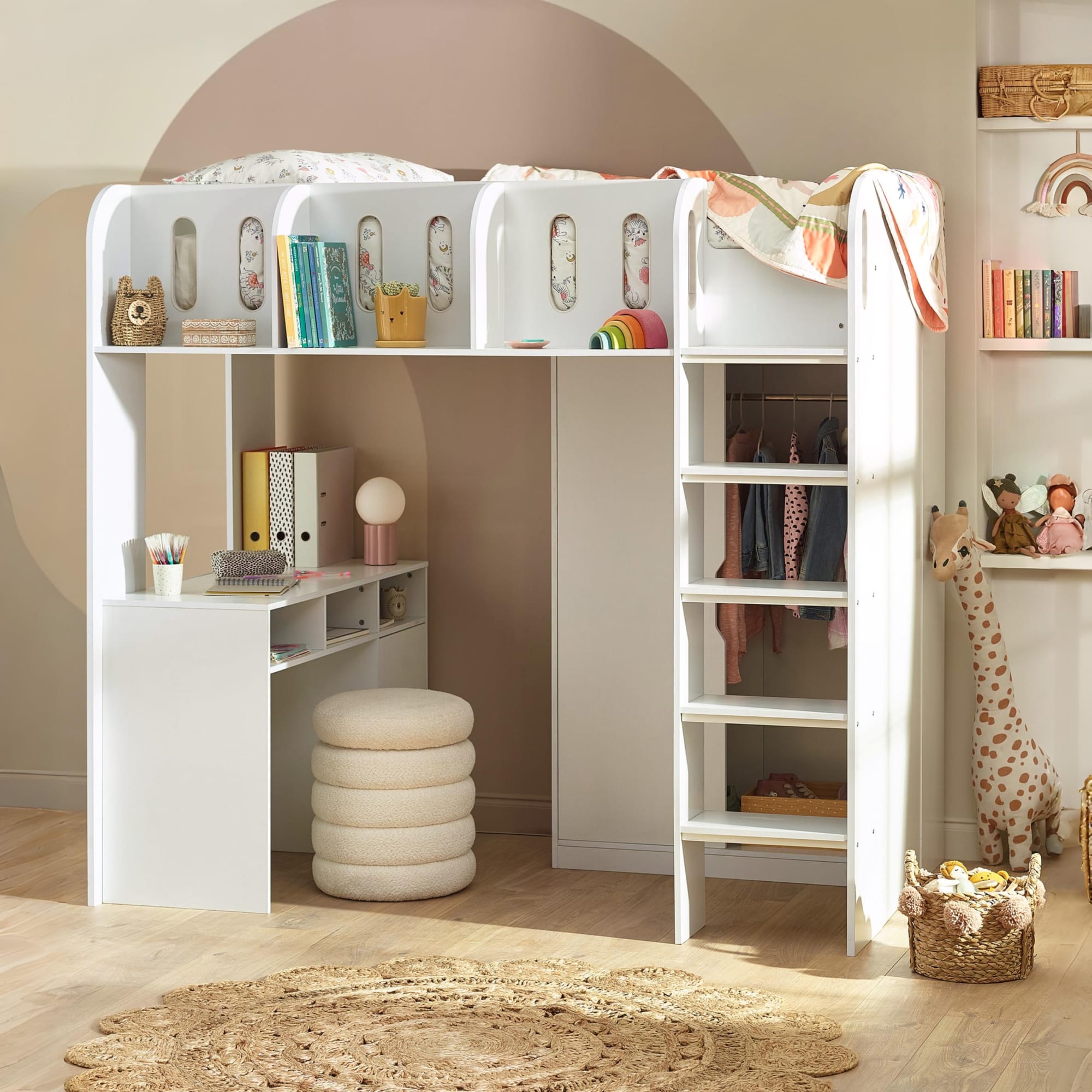
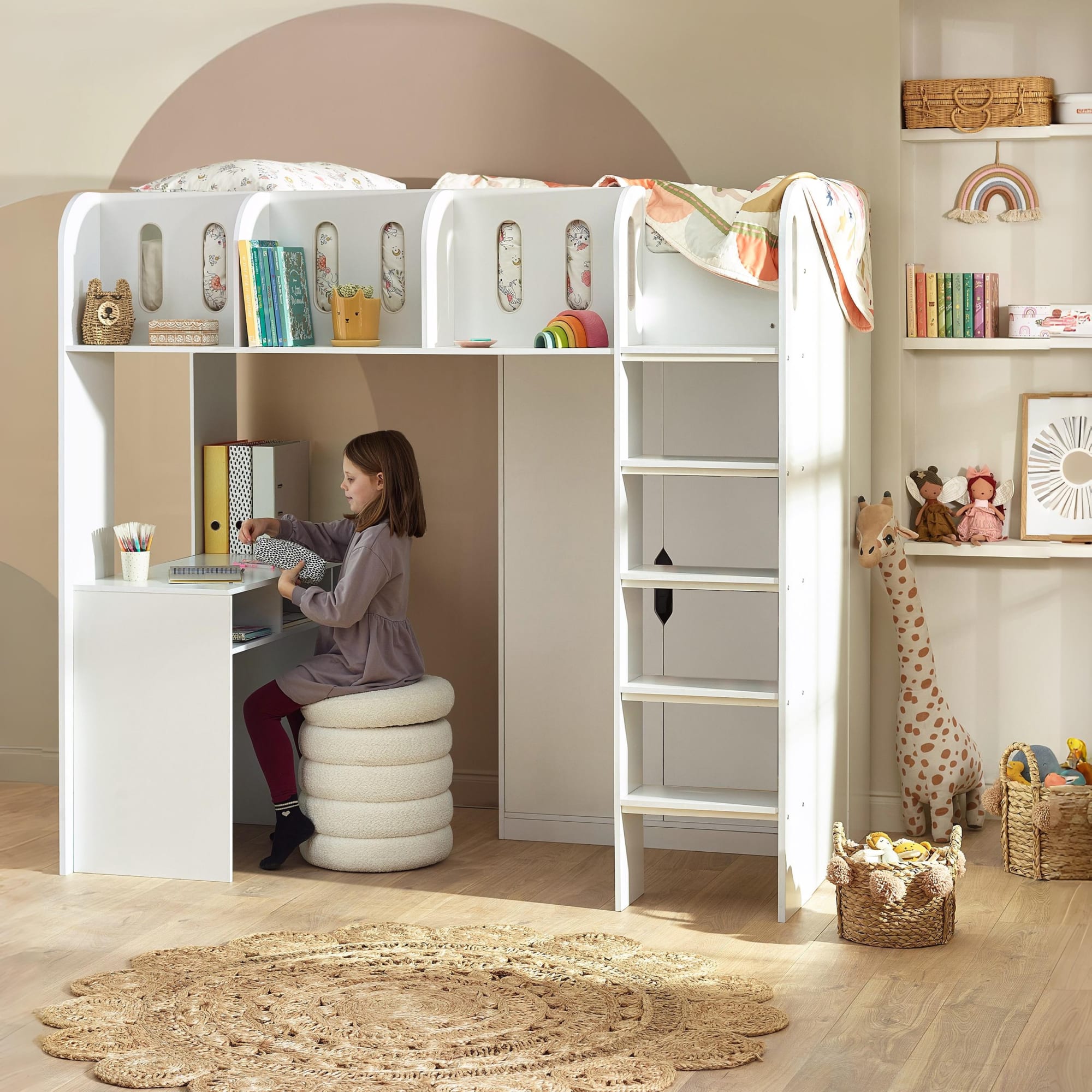
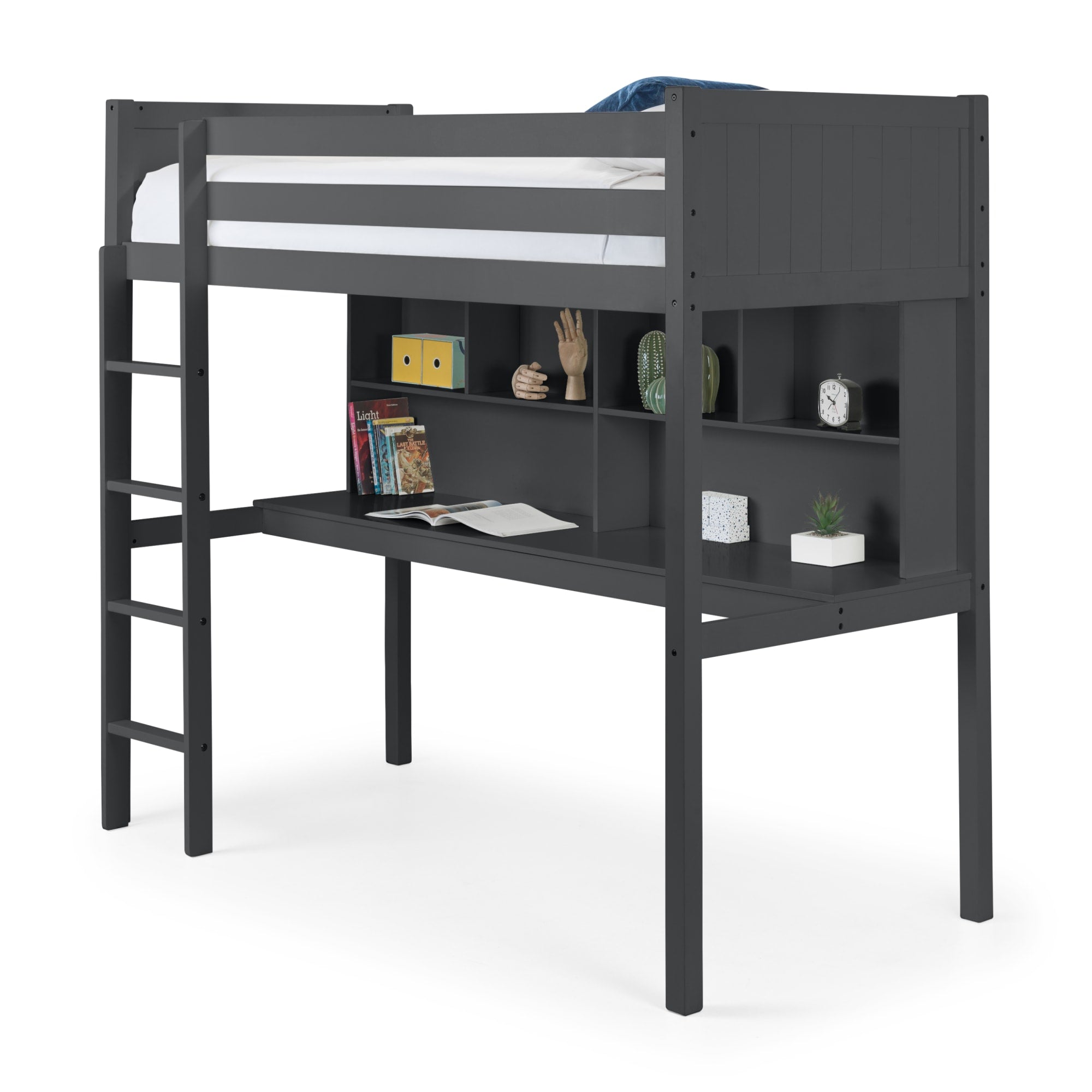
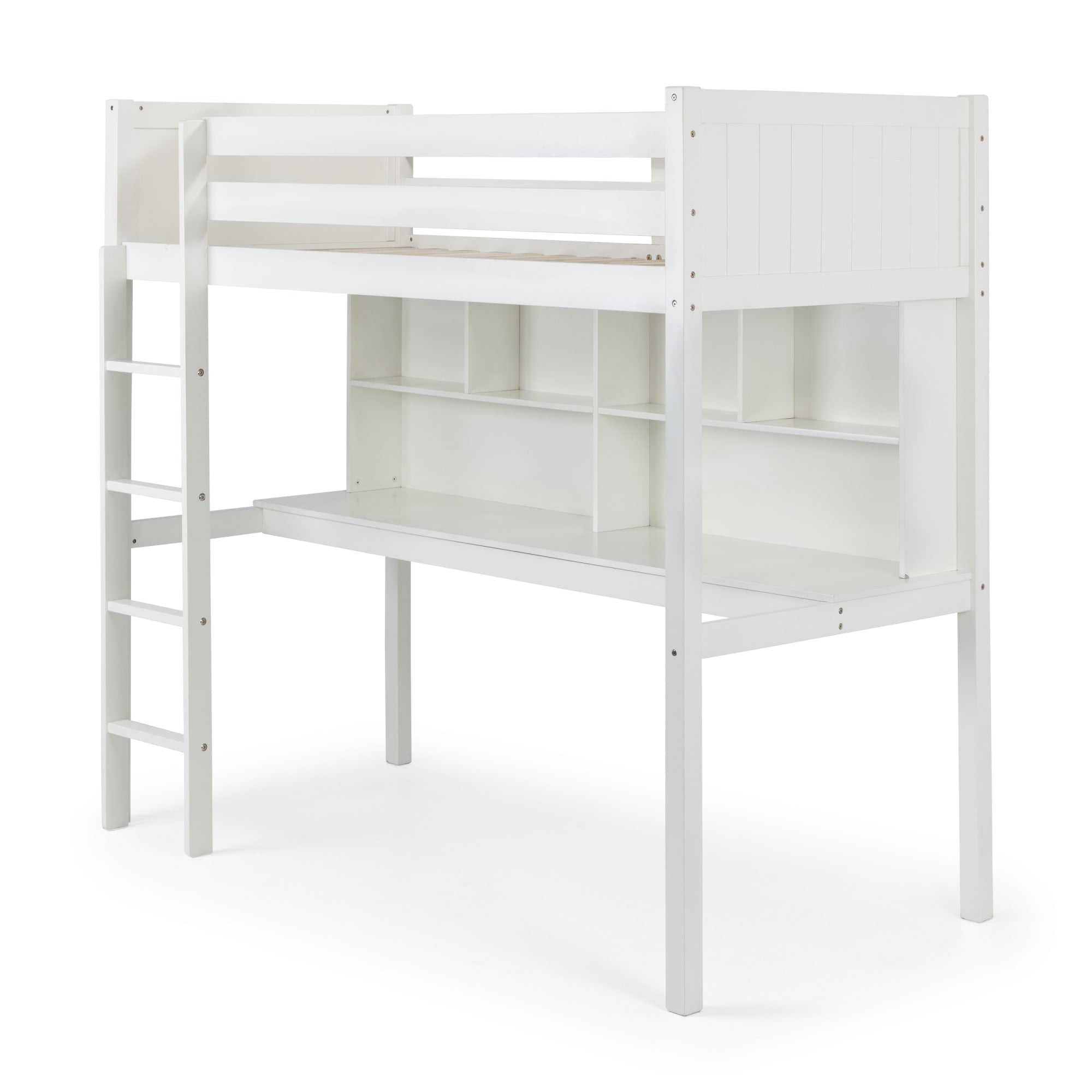
Ages 10–14: High sleepers and full-height study configurations. From ten upward, a high sleeper with a dedicated desk underneath is one of the most genuinely useful bedroom investments available. As schoolwork increases, having a dedicated study space within the bedroom without requiring additional floor area for a separate desk — becomes a practical priority rather than a feature. This age group can use any configuration of high sleeper safely and purposefully: desk, storage, futon, or combination.

Ages 14+: Standard singles with storage, or high sleepers retained. Teenagers often outgrow the novelty of high sleepers while still valuing the study space. From fourteen upward, a standard single bed with ottoman storage alongside a separate desk is a common and practical configuration it looks more grown-up than a high sleeper while still addressing the storage and study requirements of a teenager's bedroom. Many teenagers continue to use their high sleeper through to eighteen, particularly if the desk configuration is well set up and the room doesn't accommodate a desk elsewhere.

Shop by Kids' Bed Type

Navigate directly to the right bed type for your child's age and room:

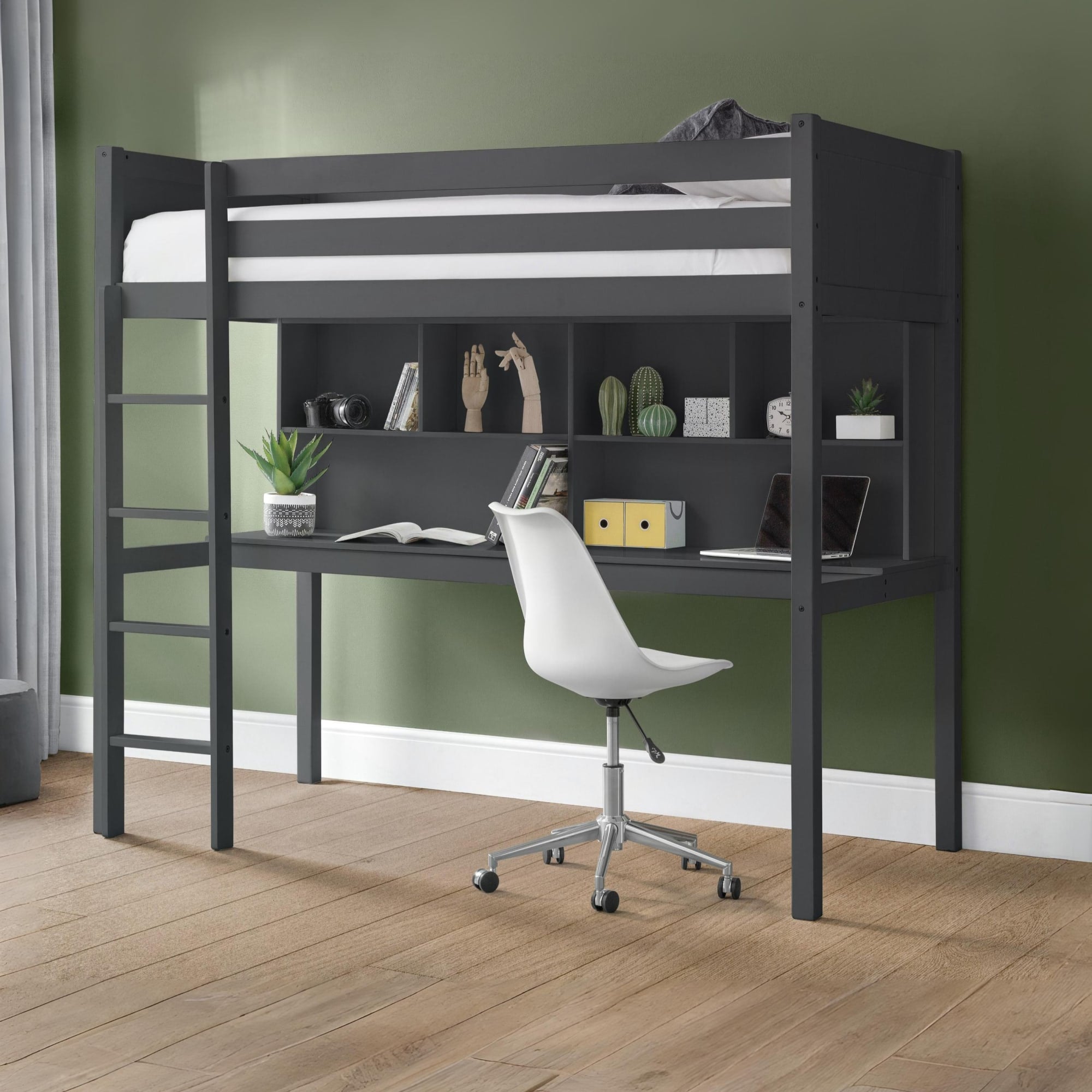
High Sleepers — Raised sleeping areas with a full desk, storage, or futon underneath. The sleeping surface sits 140–160cm from the floor, accessed by a full ladder. Suitable for ages 6 and above. Requires ceiling height of at least 200–230cm. The most space-efficient single-child bed configuration available — transforms a standard single bedroom into a sleeping and study space simultaneously.
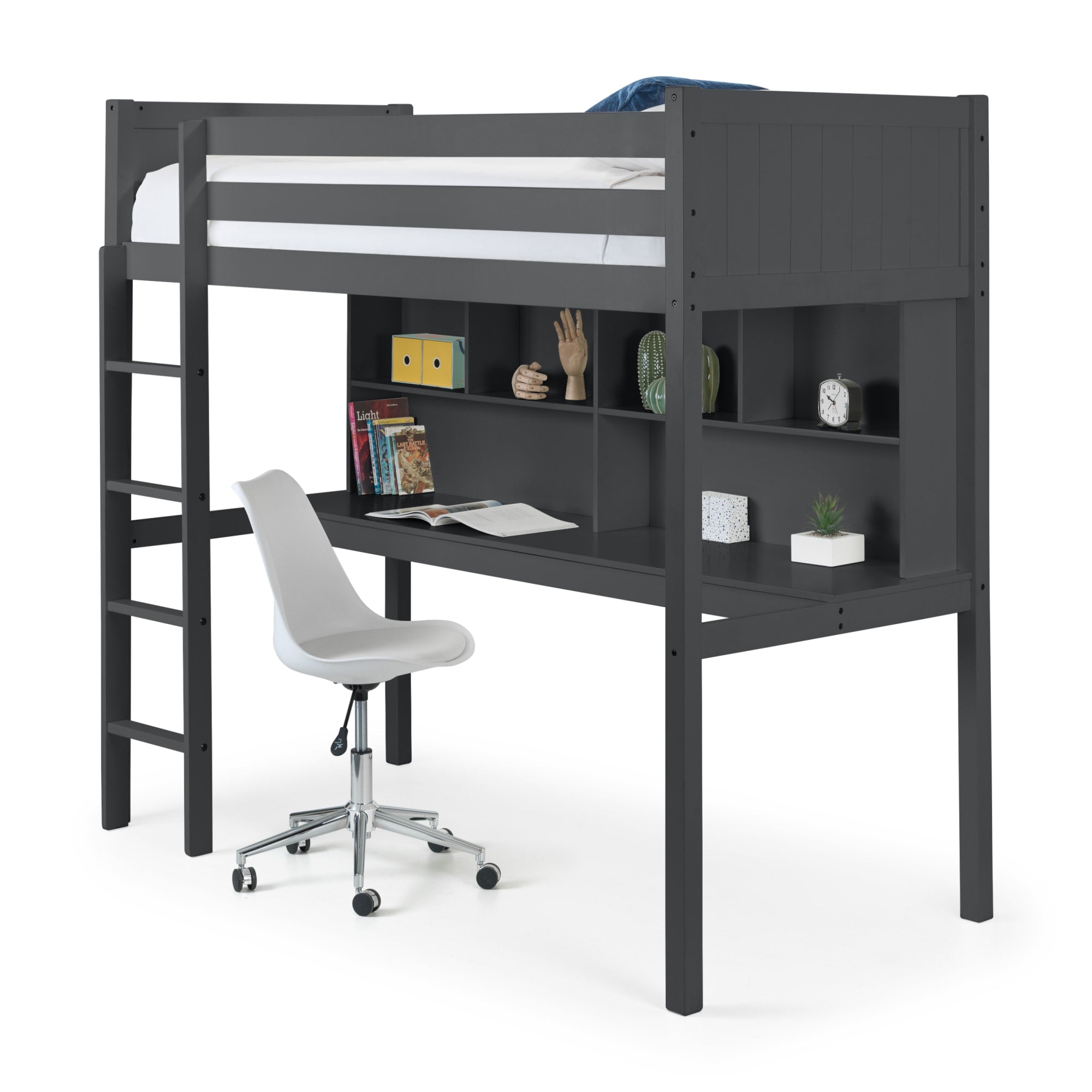
Mid-Sleepers — Lower raised sleeping areas with a shorter ladder or integrated steps. The sleeping surface sits 90–110cm from the floor. Suitable from age 4. The space beneath provides play, storage, or a small desk area at a height accessible to younger children. A mid-sleeper is the bridge between a standard bed and a full high sleeper — it offers the space efficiency of a raised sleeping area with the safety profile appropriate for younger children.

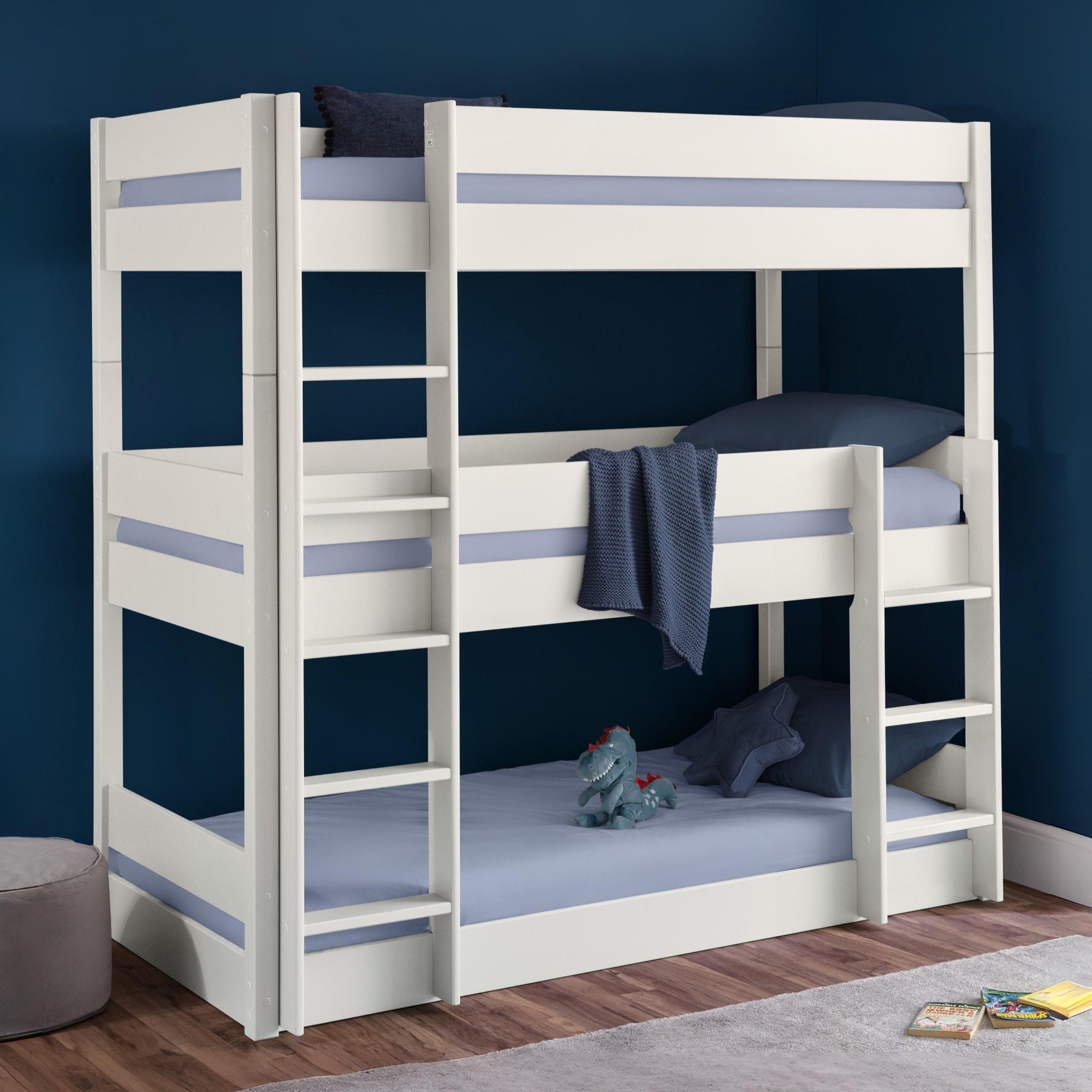
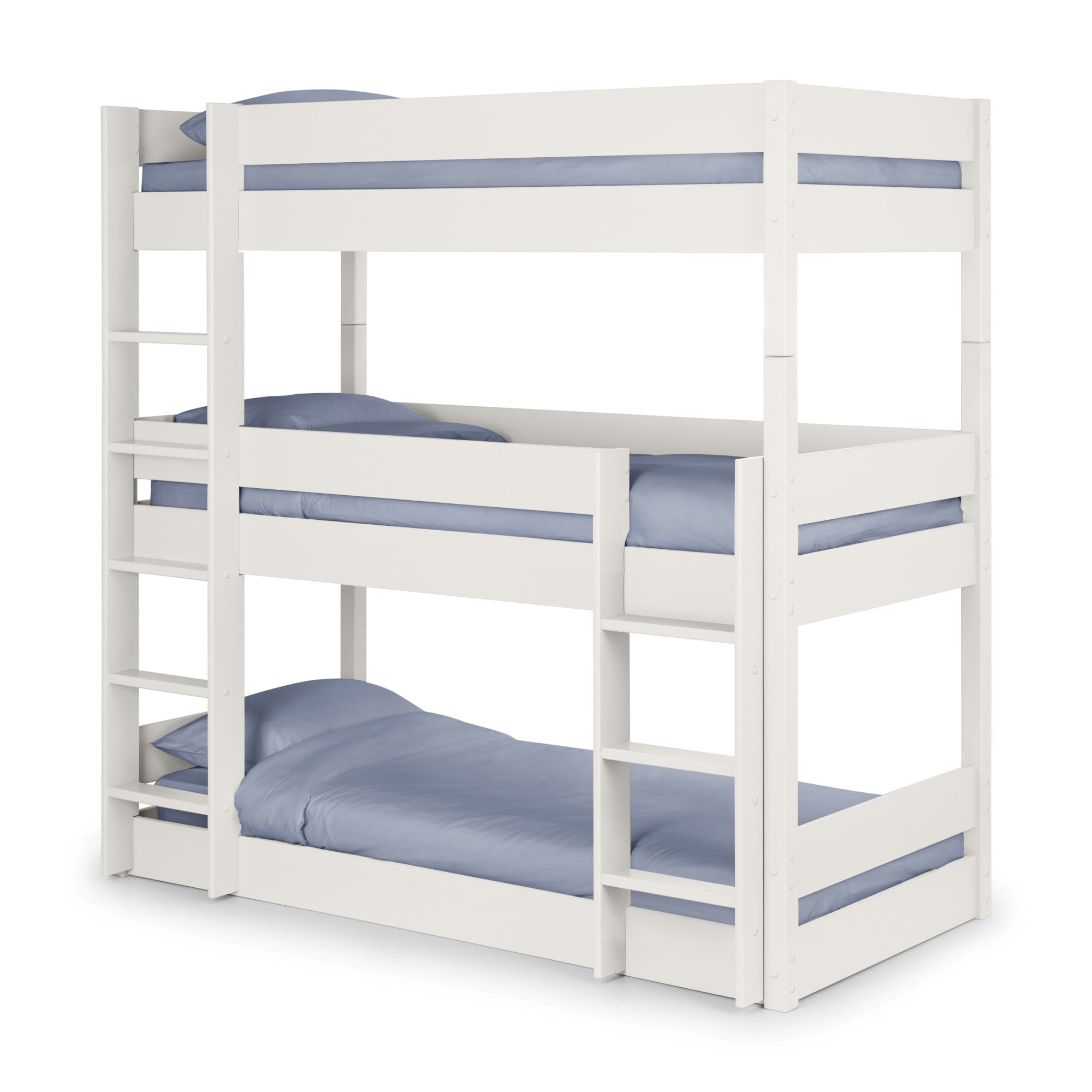
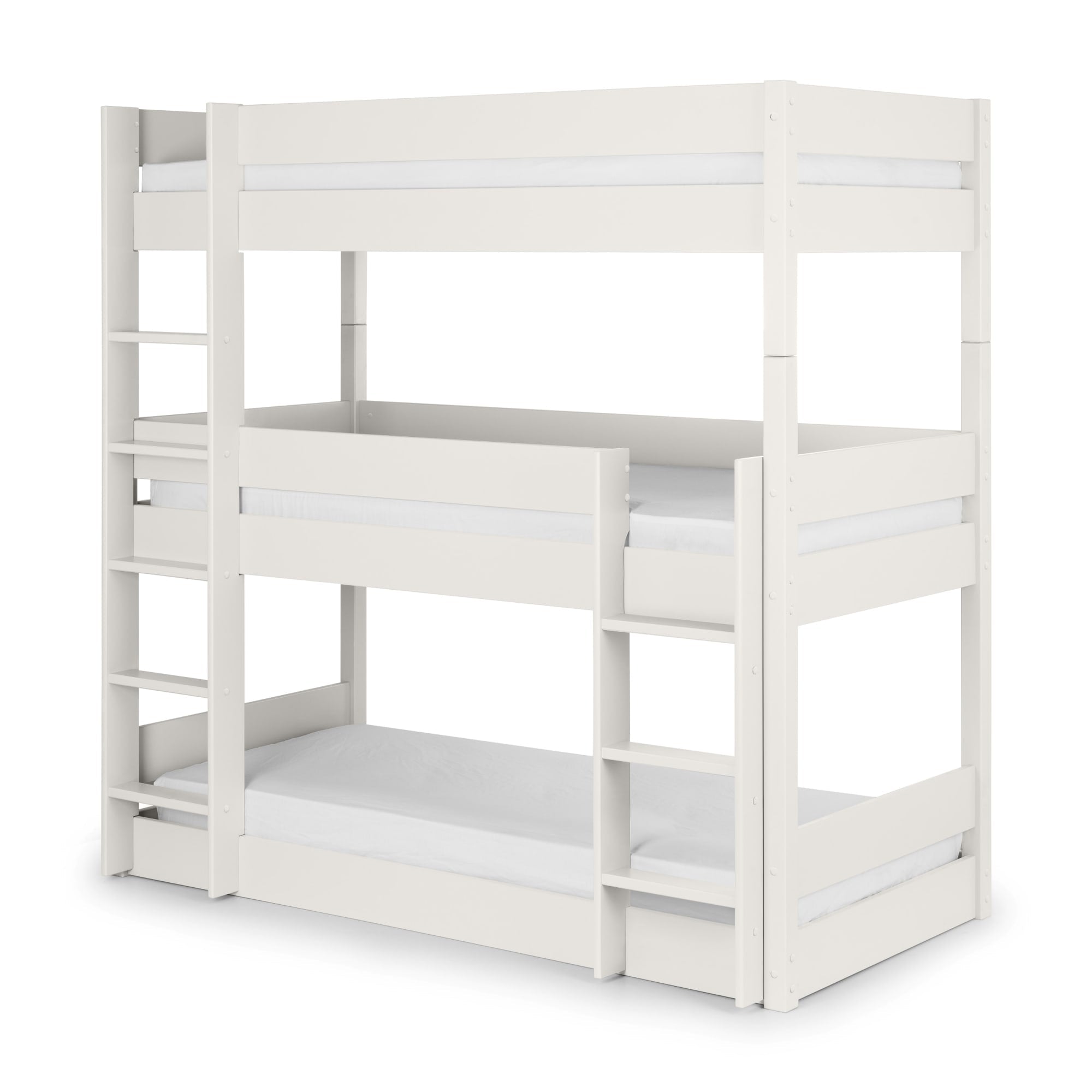
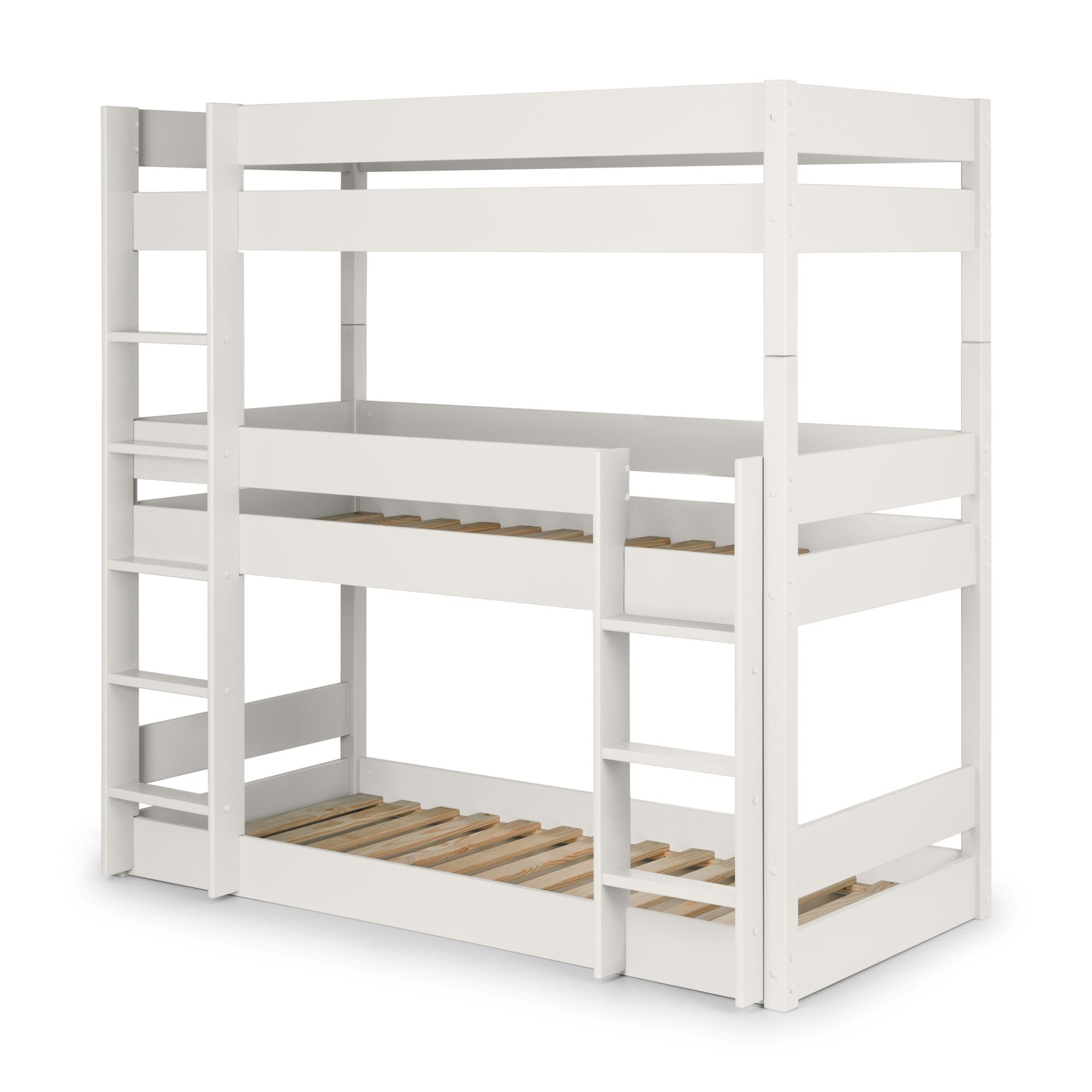
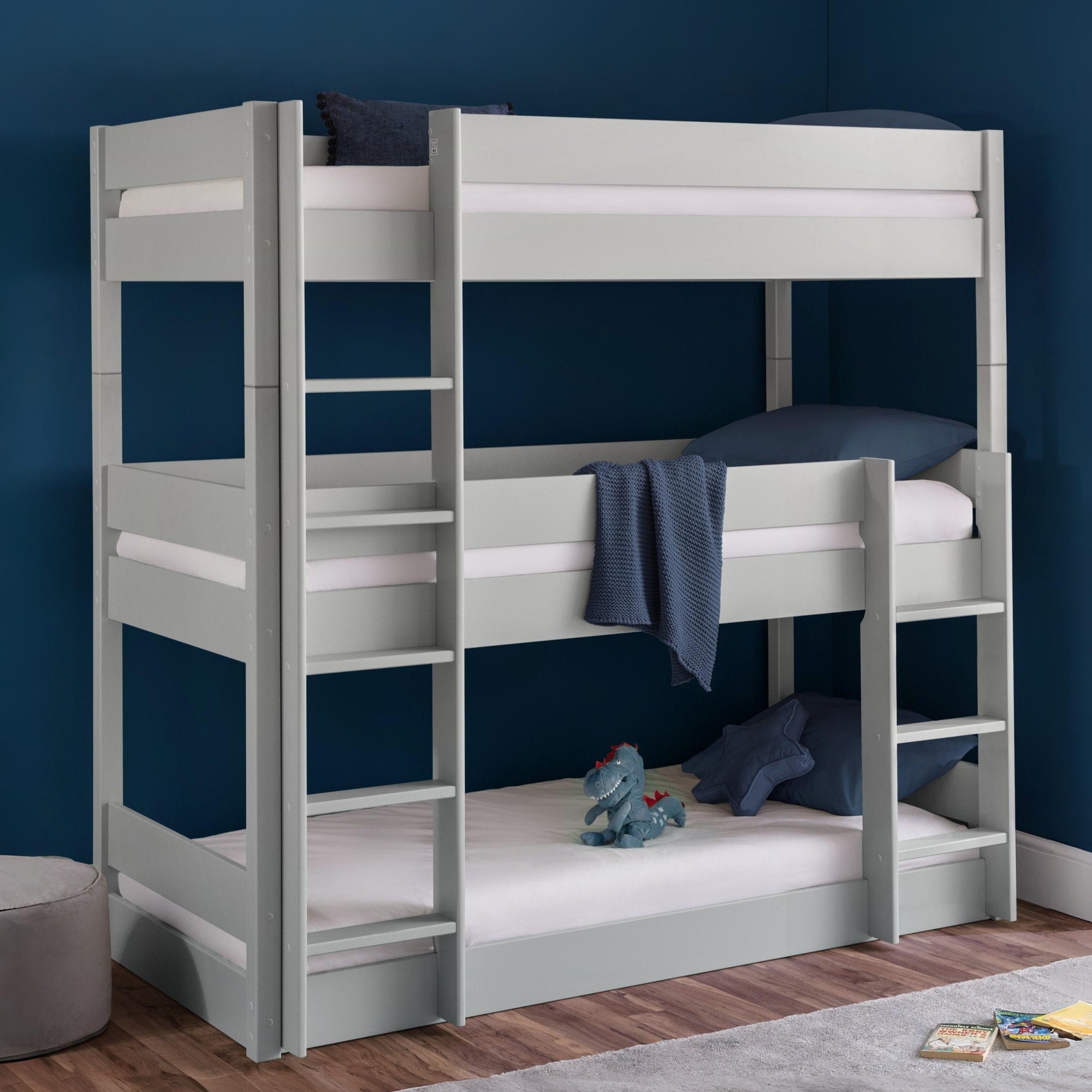
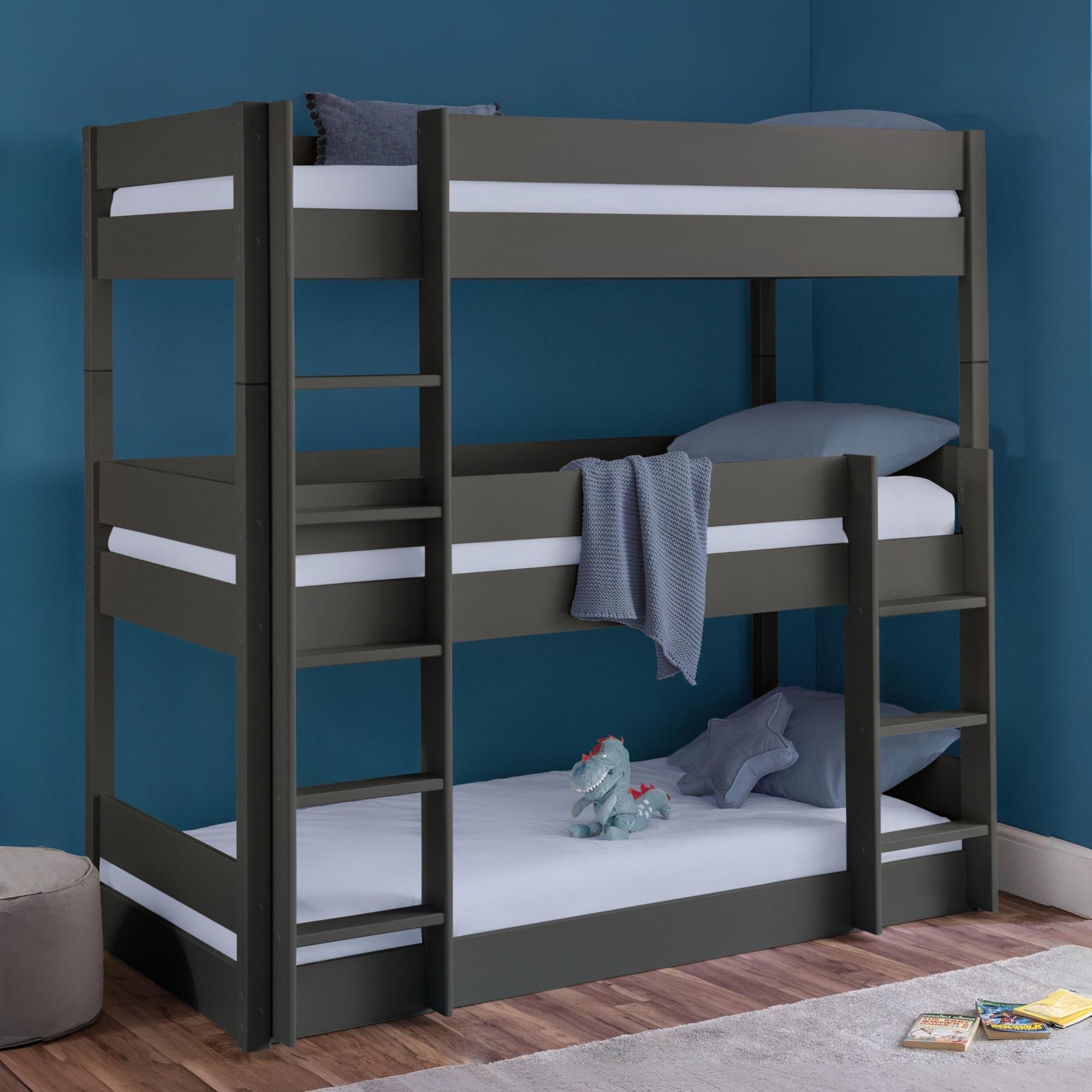
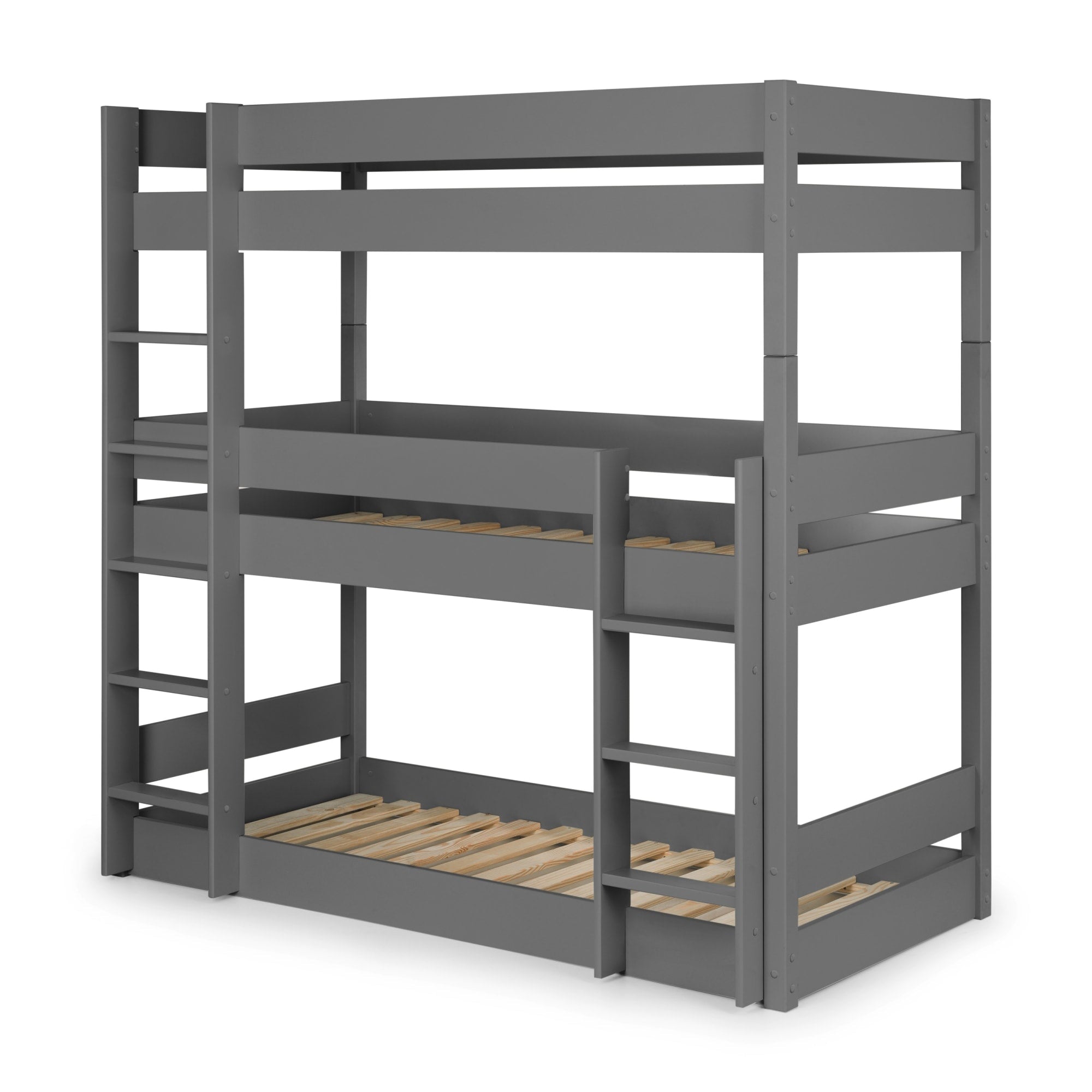
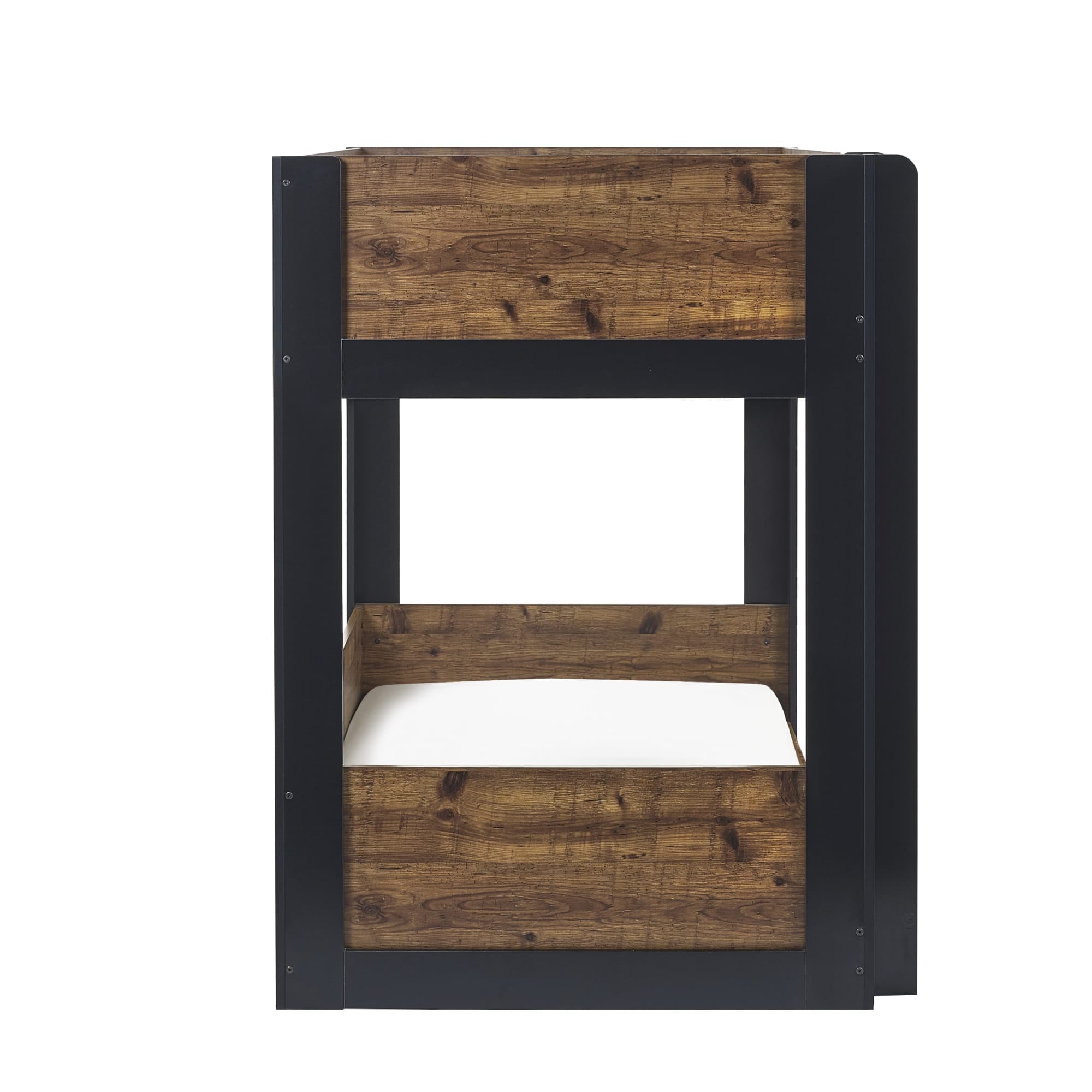
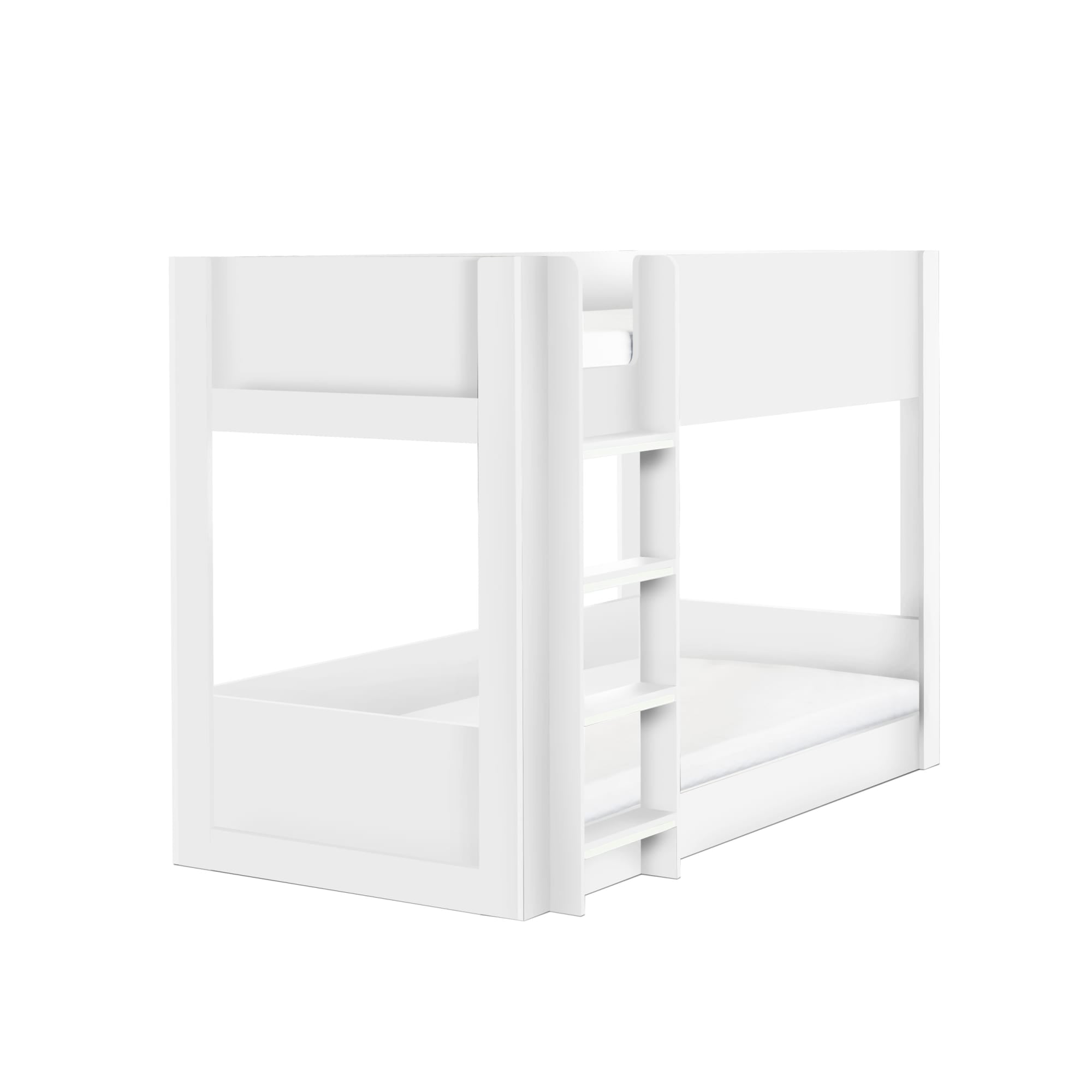
Bunk Beds — Two sleeping surfaces stacked vertically. The bottom bunk is accessible from age 4; the top bunk from age 6. Bunk beds suit shared bedrooms and regular sleepover arrangements — they provide two permanent sleeping spaces within the footprint of one single bed. Available as standard single-over-single, single-over-double, and configurations with built-in storage.

Single Kids' Beds — Standard height single beds at 90cm × 190cm. Suitable for all ages from around 4 upward. The most straightforward option — no height requirements, no ladder, no ceiling height considerations. Available with ottoman storage for rooms where under-bed storage is a priority. Suits all ages from first proper bed through to adulthood.

Key Safety and Practical Specifications Across All Kids' Beds

Certain specifications matter across all children's bed types regardless of configuration. These are the things to check before ordering any kids' bed.

Age suitability. Every children's bed type has a minimum recommended age. Standard single beds suit children from around 4 years. Mid-sleepers with steps are appropriate from 4; those with full ladders from 6. Top bunks and full high sleepers are recommended from 6 — when most children have the coordination, night-time caution, and ladder confidence to use elevated sleeping areas safely. These are guidelines rather than rules — parents know their child's maturity and coordination better than any specification sheet, and some children are ready earlier or later than the typical age.

Ceiling height for raised beds. For any raised sleeping surface — high sleeper, mid-sleeper, or bunk top bunk — measure your ceiling height before ordering. Add the sleeping platform height plus the mattress depth plus at least 60–75cm of sitting clearance. Most standard UK bedrooms (240cm ceiling) accommodate all configurations comfortably; attic rooms and loft conversions may not. Always measure at the exact position the bed will occupy, including any sloping sections.

Mattress depth for raised beds. High sleepers, mid-sleepers, and top bunks all have a maximum recommended mattress depth — typically 12–16cm — to ensure guardrails remain at a safe height above the sleeper. Never use a standard adult mattress (20–25cm) on a raised children's bed. Pair with a single mattress or small single mattress in a slim profile. Browse the full mattresses collection for appropriate options.
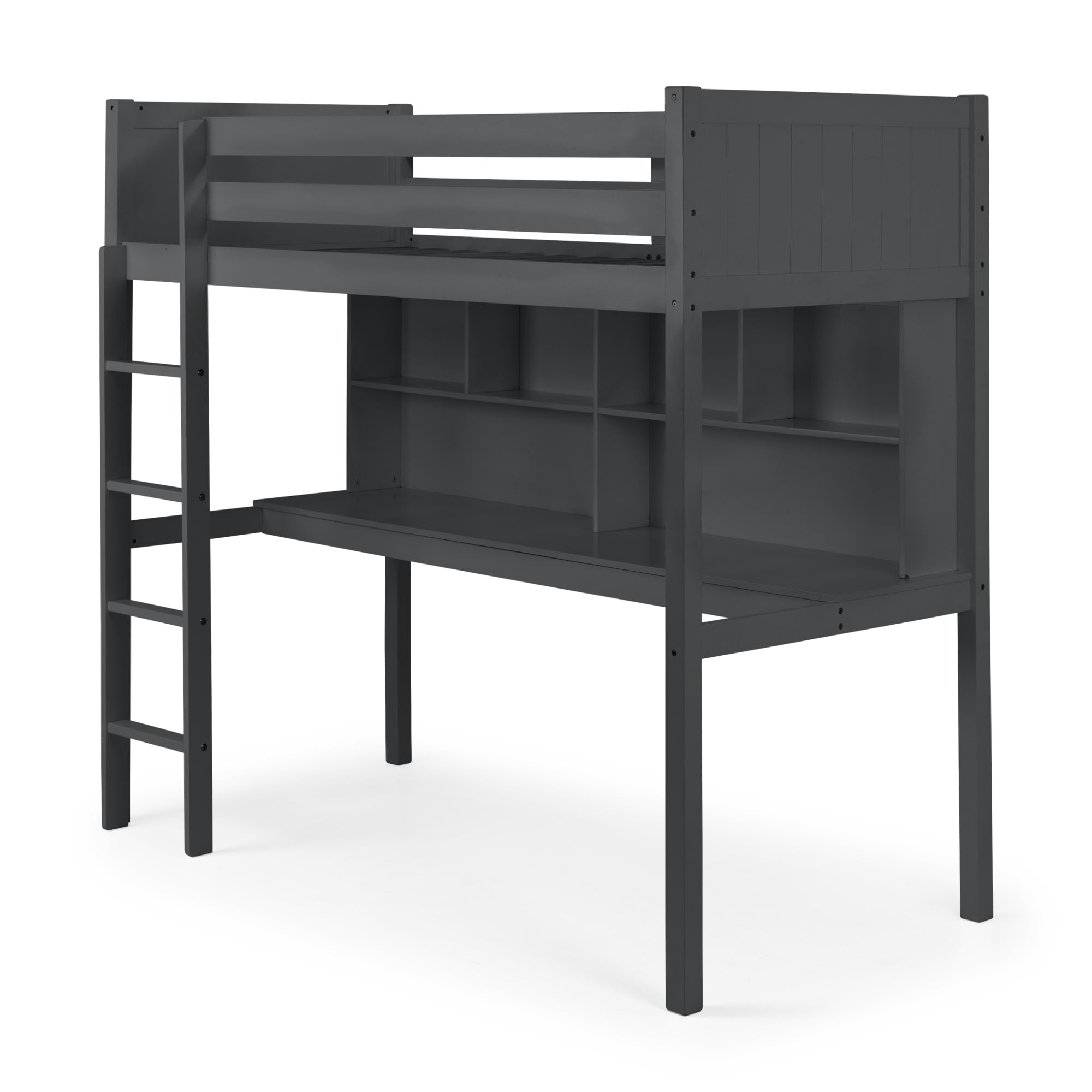
Weight capacity. All children's beds have a rated weight capacity — check this against your child's current weight with room for growth, particularly for top bunks and high sleepers where the structural requirements are greater. Most models are rated for 70–100kg on elevated sleeping surfaces.
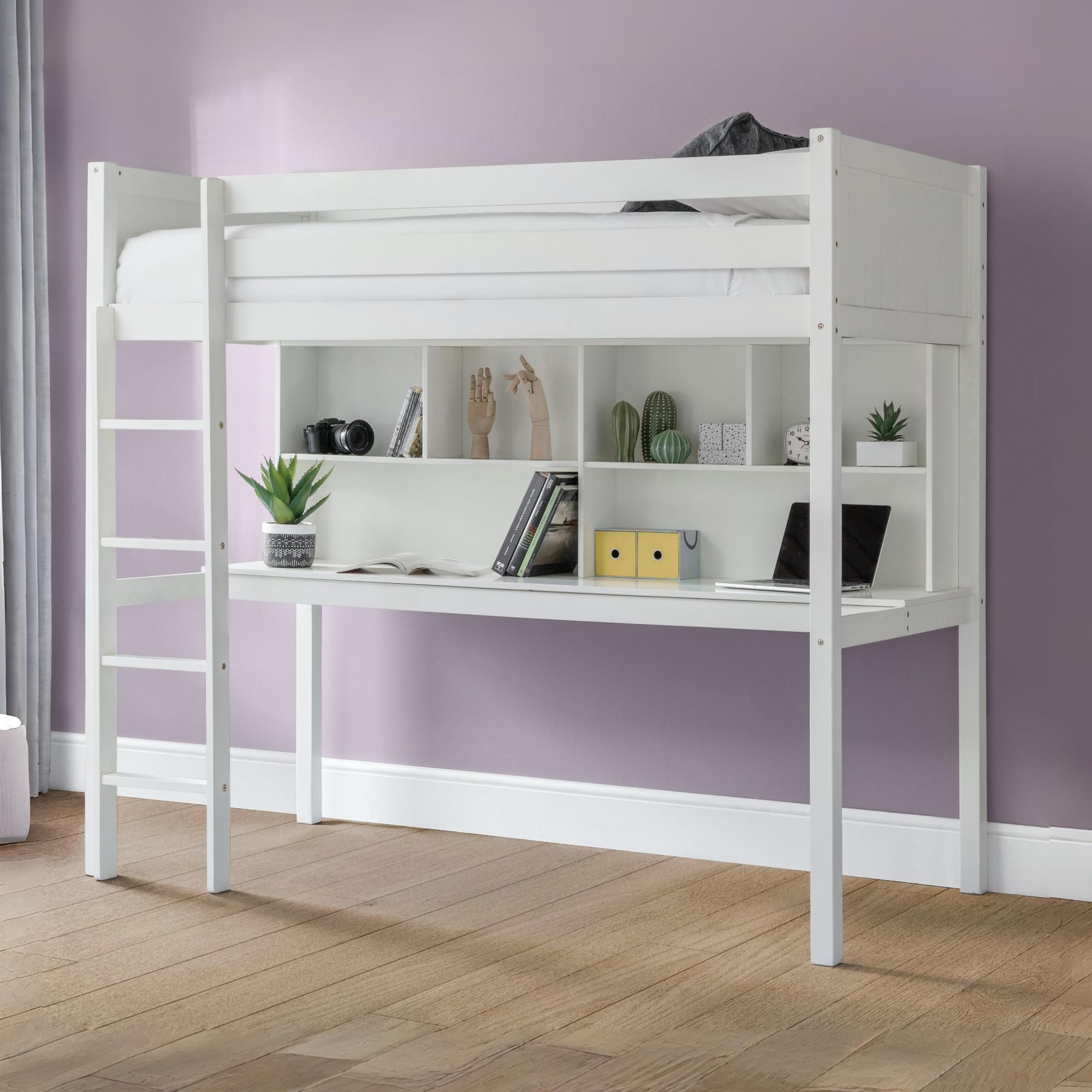
Guardrails and ladder security. All Airedale Living children's raised beds include guardrails on both sides of elevated sleeping surfaces and secure ladders as standard, meeting UK safety standard EN-747. Confirm that guardrails cover the full length of the sleeping surface except for the ladder access point.

Completing the Children's Bedroom Setup

A bed is the foundation of a child's bedroom but the surrounding setup shapes how well the room works as a sleeping, studying, and living space. Browse the full bedroom furniture collection for everything needed to complete a child's room alongside their new bed.

For storage that complements any bed configuration — particularly standard single beds without built-in storage our chest of drawers range covers compact and mid-size options suited to children's rooms.

For mattress pairing, every raised kids' bed requires a slim mattress. Browse our single mattresses filtered by depth, or see the small single mattresses collection for 75cm-width frames. The full mattresses collection covers all sizes and types in one place.

Every Airedale Living kids' bed comes with free UK delivery and arrives ready for self-assembly with full instructions and all fixings included.

Browse the full kids' beds collection above and find the bed that suits your child right now and grows with them for years to come.

Frequently Asked Questions

It depends on the type. Standard single beds at floor level suit children from around age 4 — when most children are ready to transition from a cot or toddler bed. Mid-sleepers with integrated steps are also appropriate from age 4. Beds with full ladders — top bunks, higher mid-sleepers, and full high sleepers — are recommended from age 6, when most children have developed the ladder confidence and spatial awareness for elevated sleeping areas. These are guidelines rather than absolute rules; a child's maturity, coordination, and night-time behaviour are the most relevant factors and only a parent can assess these accurately.

A high sleeper raises the sleeping surface to 140–160cm from the floor, with a full desk, storage, or futon underneath — suitable from age 6 and requiring adequate ceiling height. A mid-sleeper sits lower at 90–110cm, with a shorter ladder or steps and a play or storage area underneath — suitable from age 4. A bunk bed stacks two sleeping surfaces vertically within the footprint of one single bed — the bottom bunk is accessible from age 4, the top from age 6. The right choice depends on whether one or two children need sleeping space, and whether the primary need is a study area (high sleeper), a play area (mid-sleeper), or two sleeping surfaces (bunk bed).

Airedale Living kids' beds are sold as frames without a mattress — you select and order the mattress separately to ensure you get the right depth and firmness for your child and the specific bed frame. This is important for raised beds in particular, where the maximum mattress depth is specified by the frame and must not be exceeded. Always check the mattress depth specification on the individual frame product page. Browse our single mattresses and small single mattresses for slim-profile options suited to raised children's beds.

For a high sleeper: the sleeping surface sits 140–160cm from the floor; above the mattress you need at least 60–75cm of clear headroom, meaning a minimum ceiling height of around 200–230cm. Most standard UK bedrooms (typically 240cm ceiling) accommodate this comfortably. For bunk beds: the top bunk is typically 130–150cm from the floor; apply the same 60–75cm headroom requirement above the top mattress. Always measure at the exact position the bed will occupy — attic rooms, loft conversions, and rooms with sloped ceilings may have lower effective ceiling heights than the centre of the room suggests.

Yes all Airedale Living children's raised beds (high sleepers, mid-sleepers, and bunk beds) are built to UK safety standard EN-747 and include guardrails on elevated sleeping surfaces and secure ladders as standard. The key safety factors to observe for raised beds are: use by children of the minimum recommended age, use of a mattress at or below the maximum specified depth for the frame, and clear floor space beside the ladder. All specifications are listed on individual product pages. Free returns are available if any product is unsuitable once received.