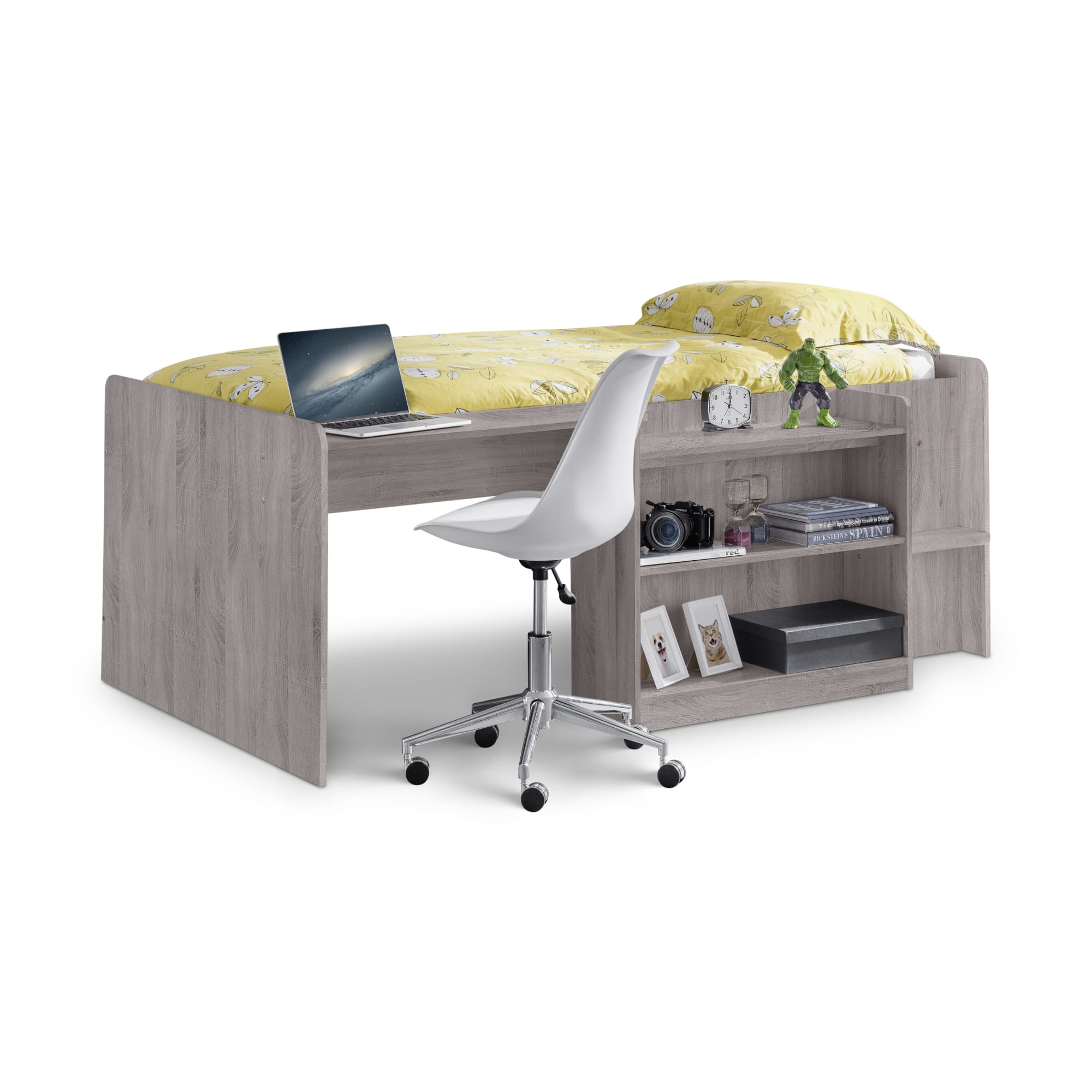
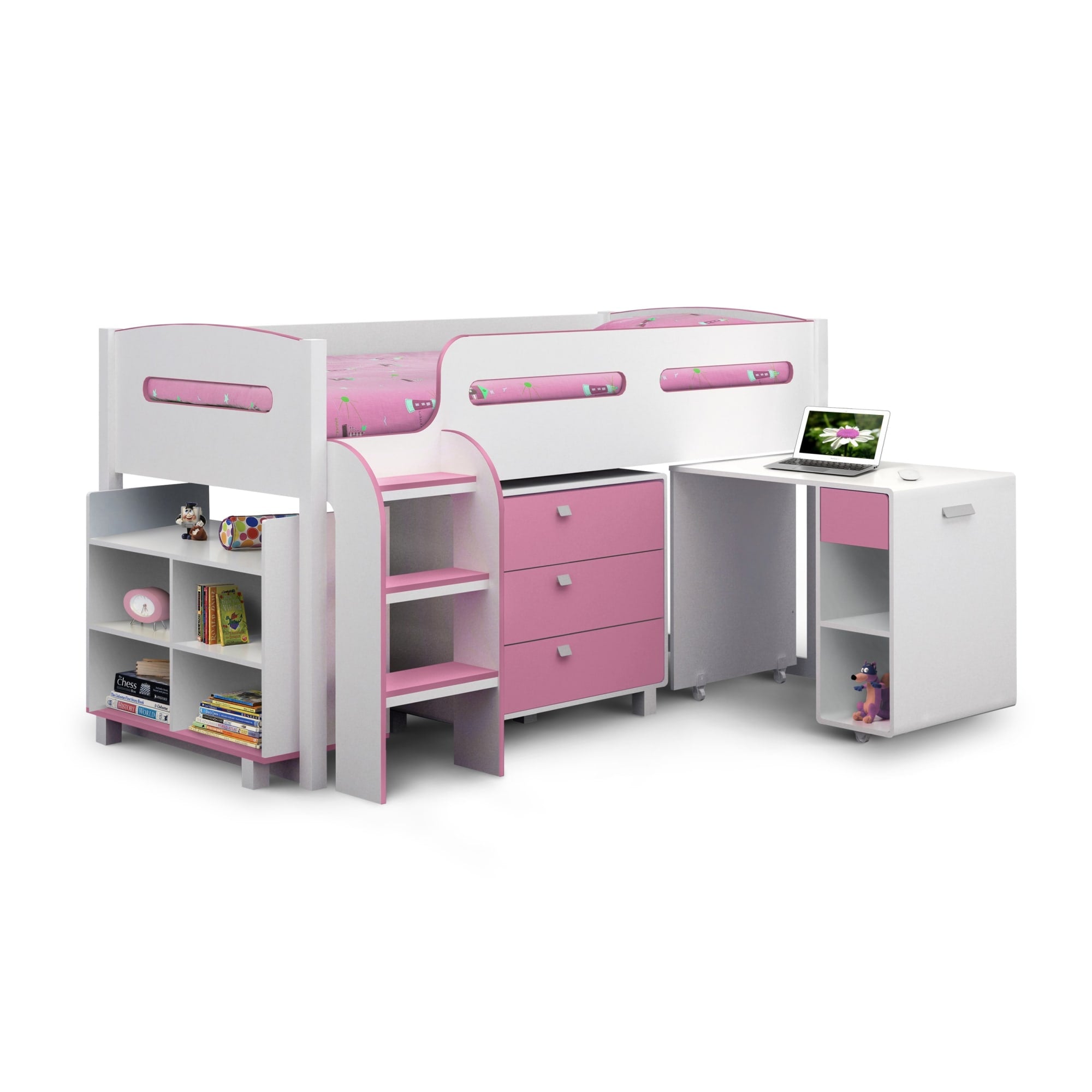
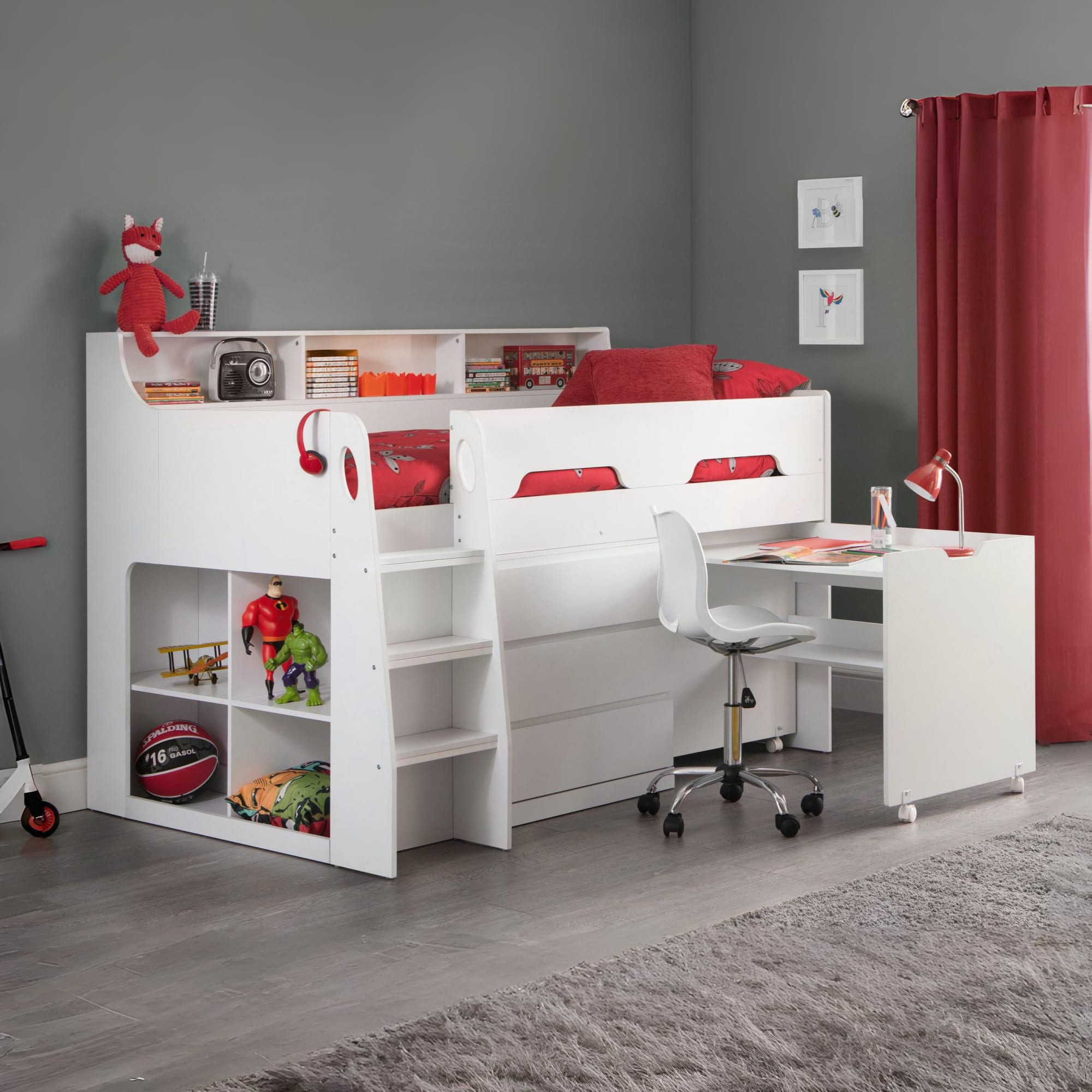
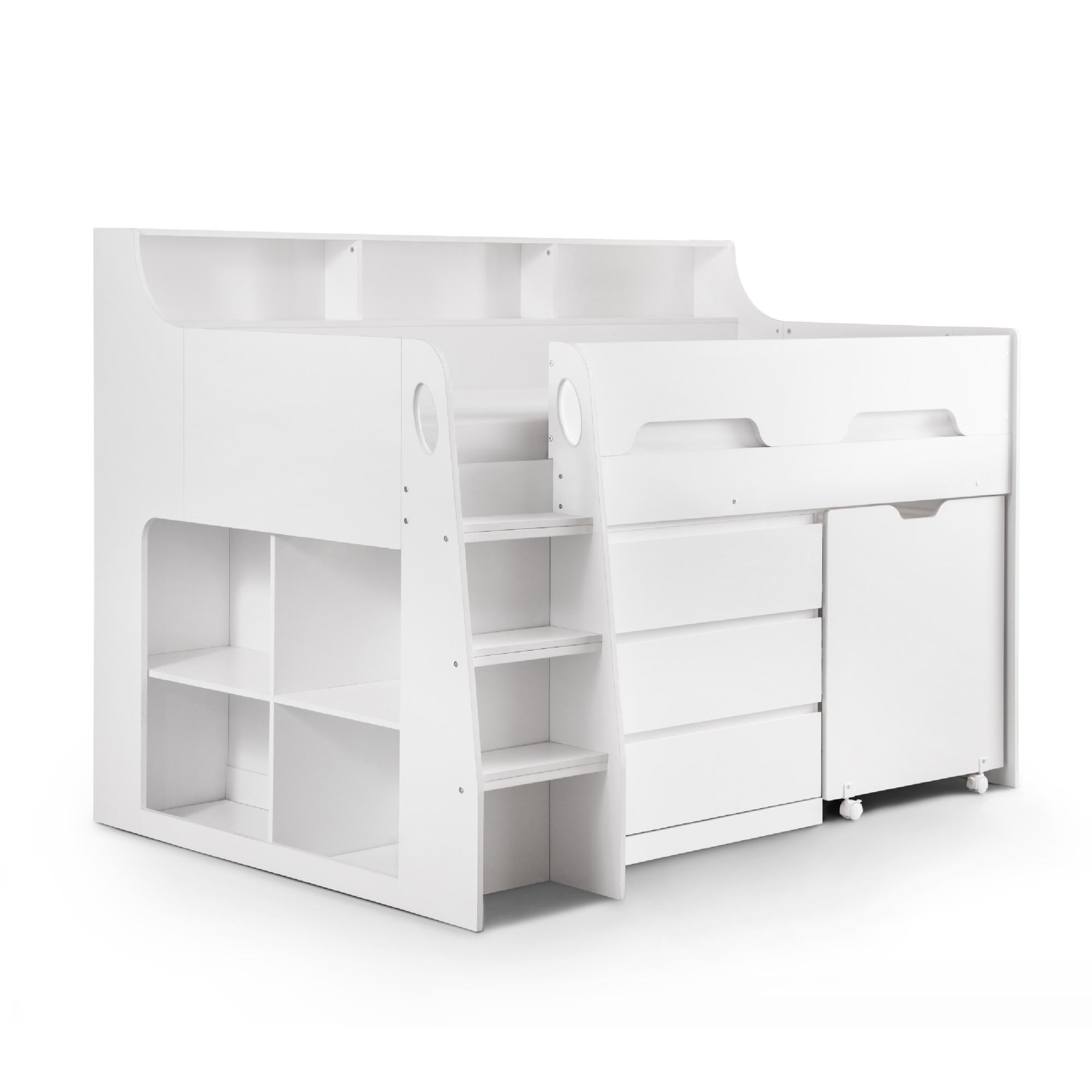
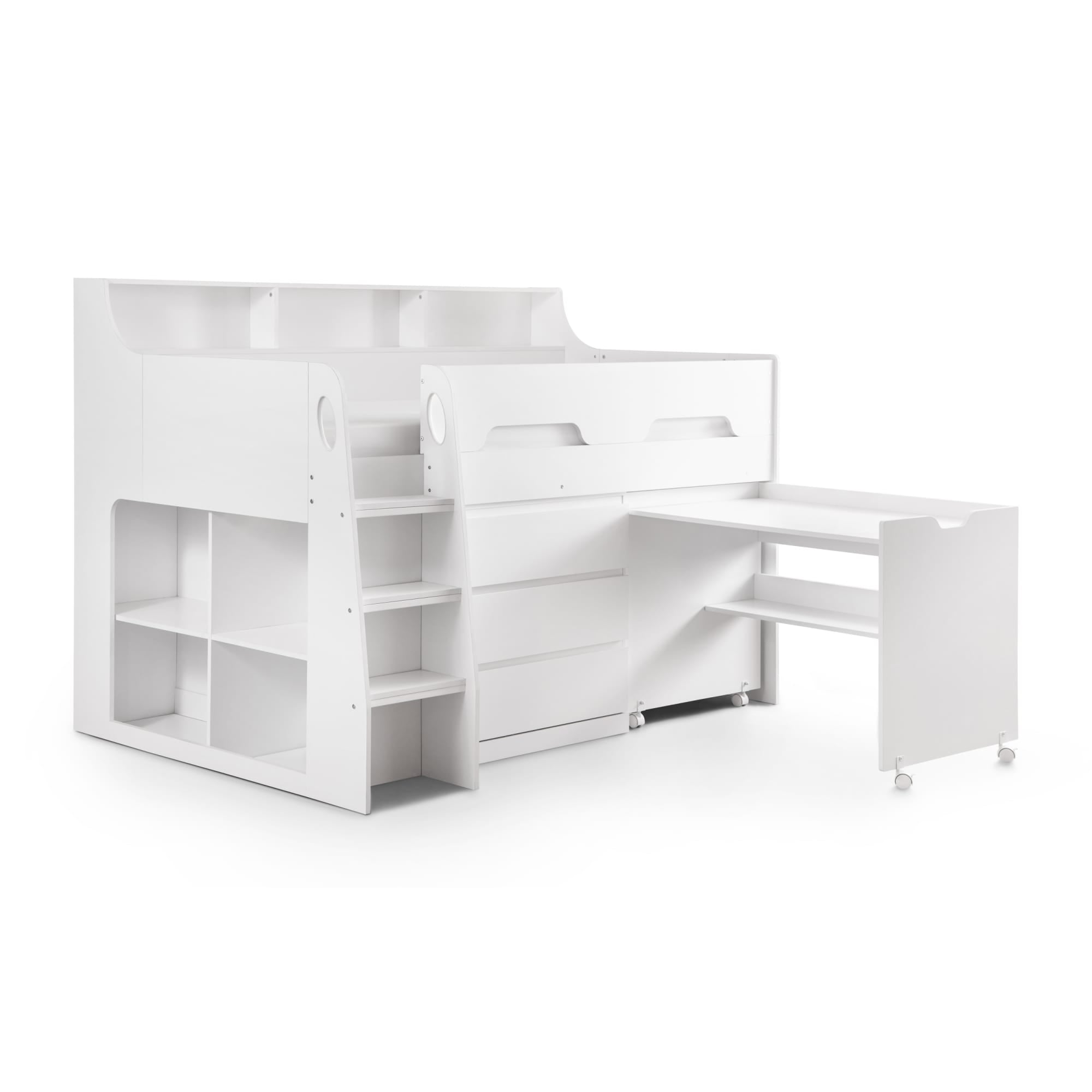
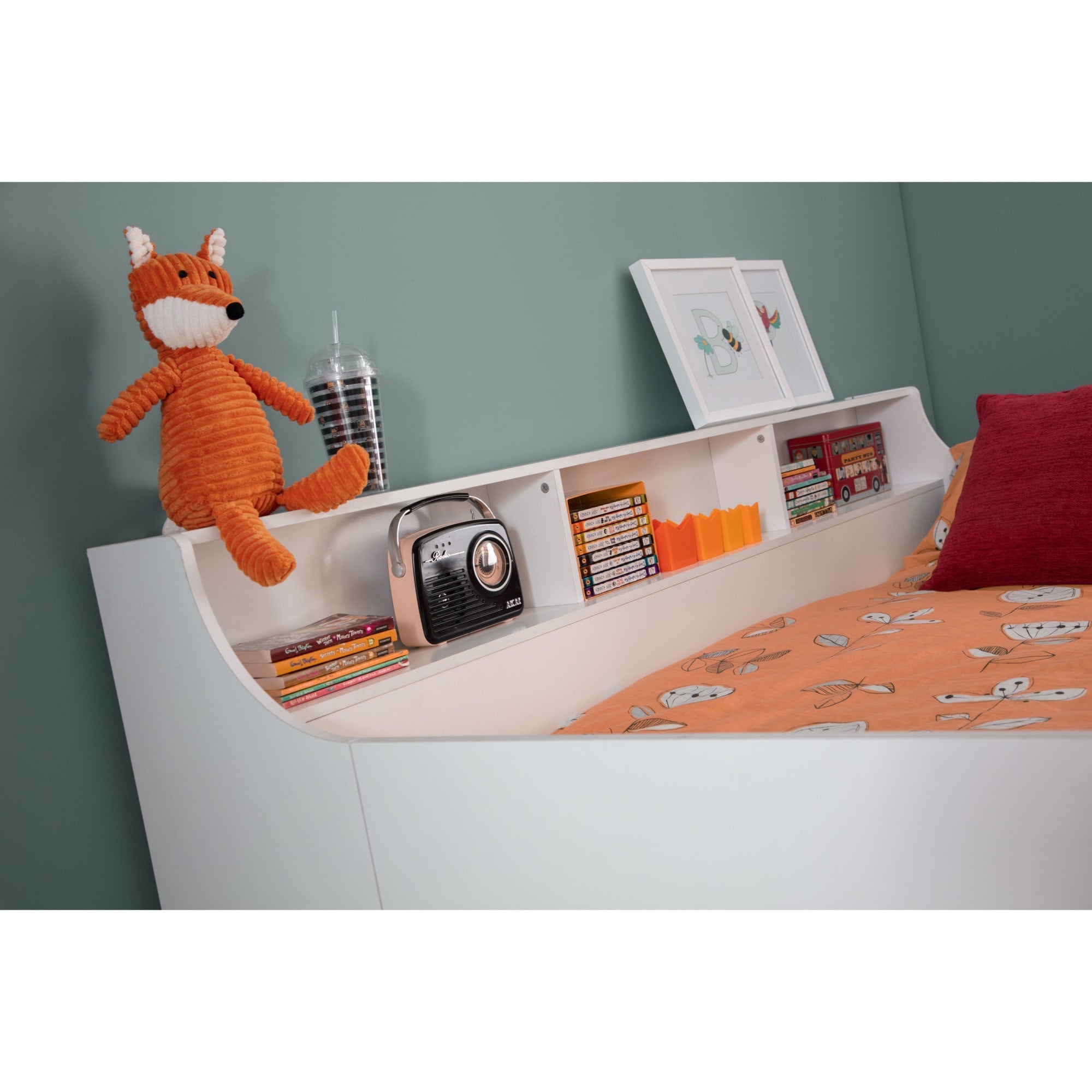
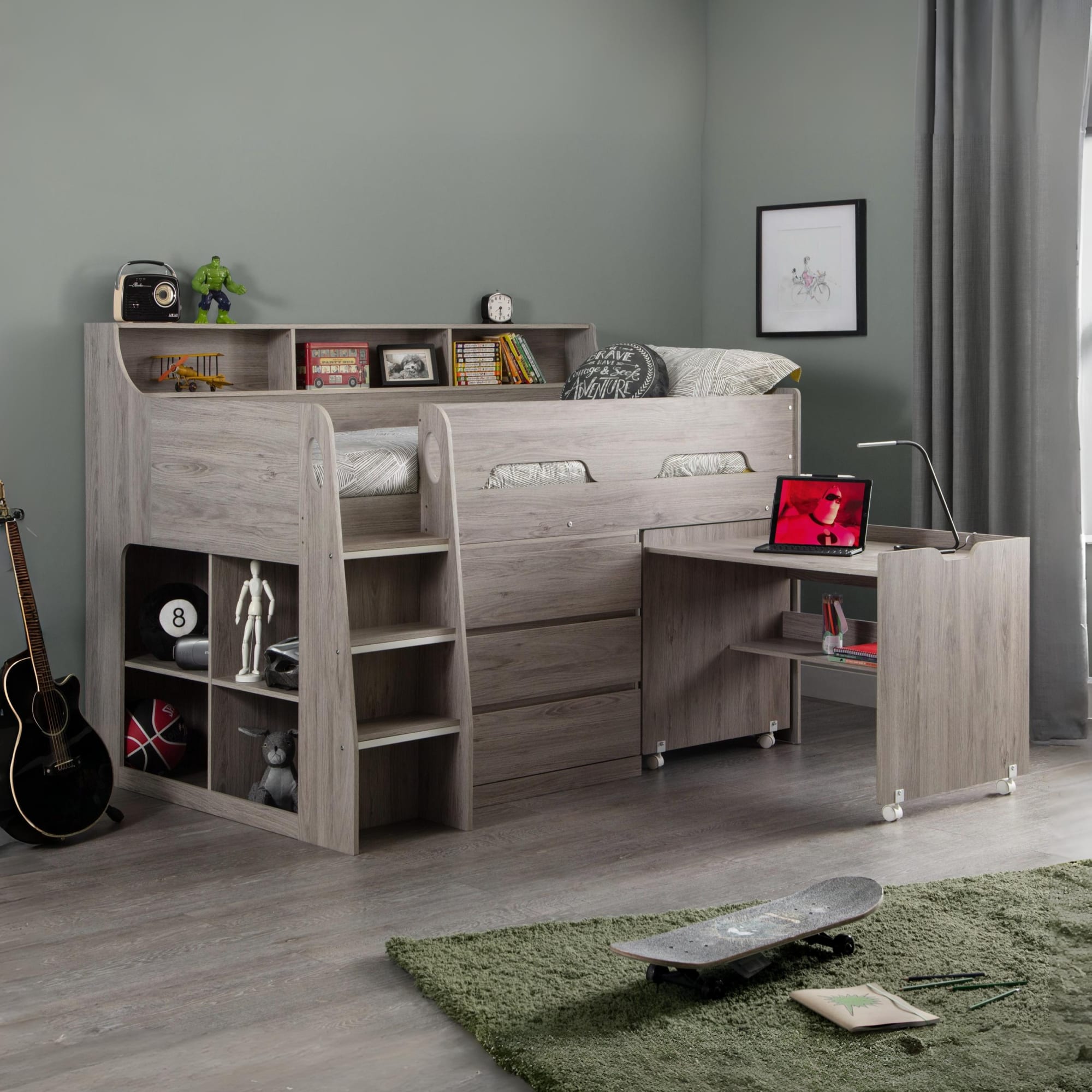
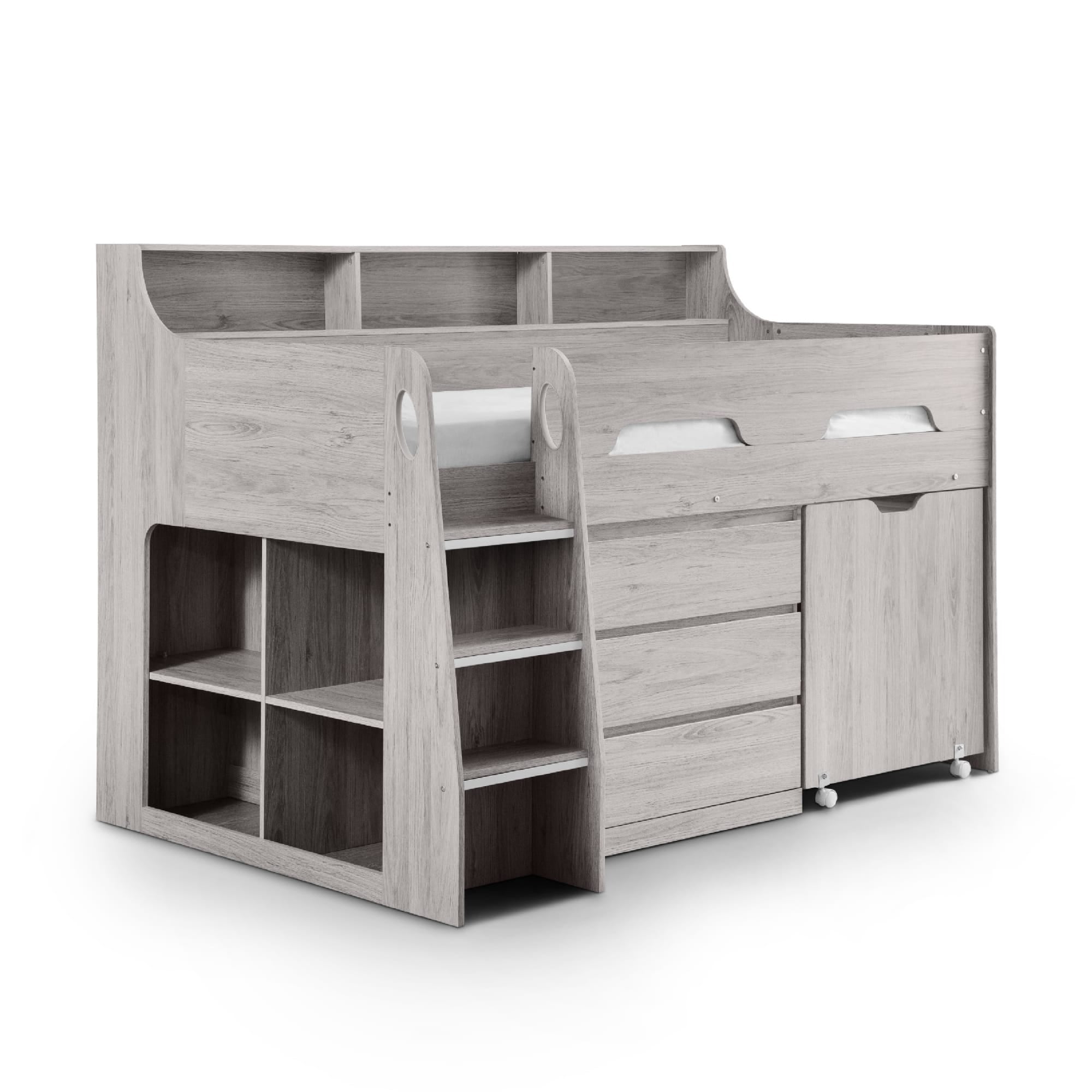
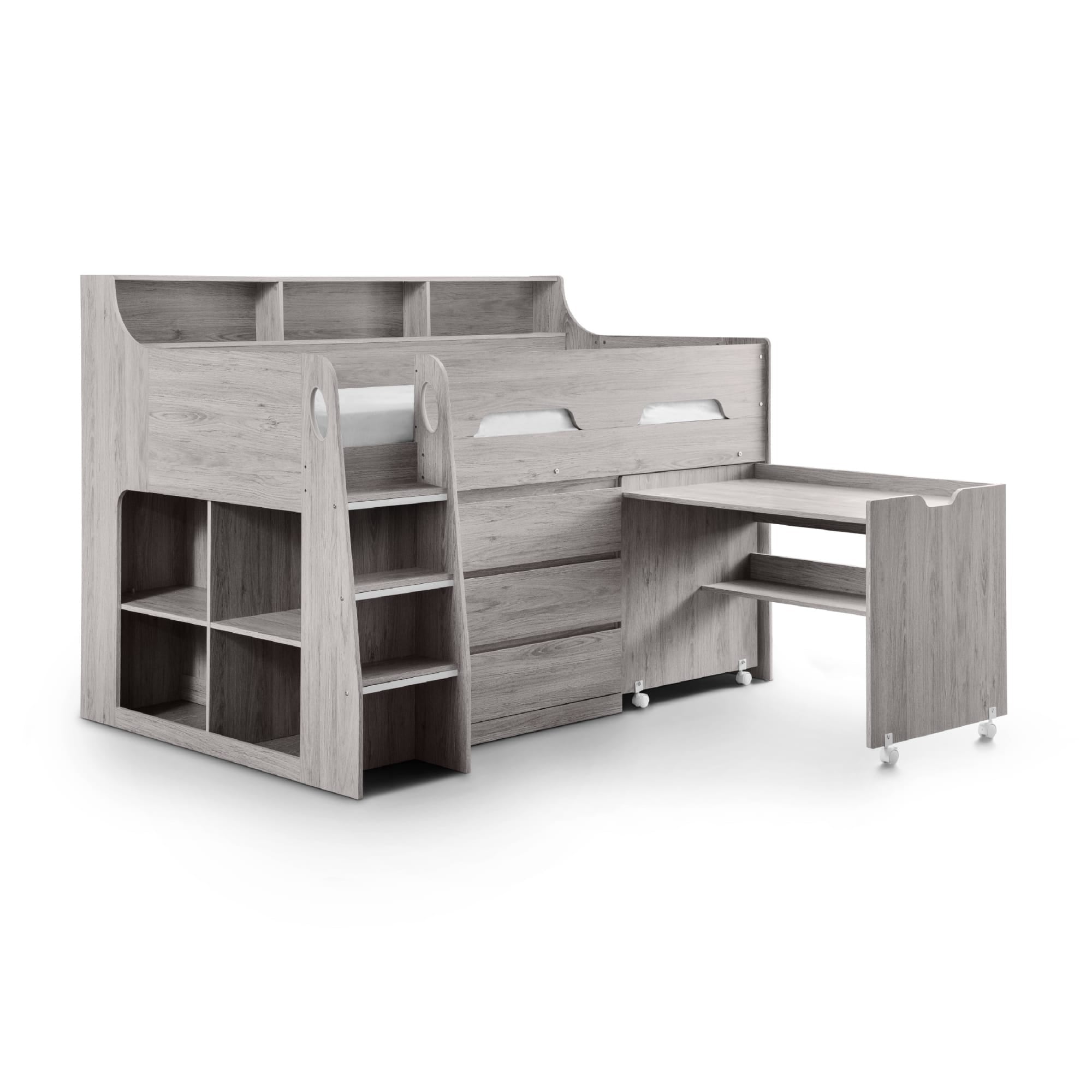
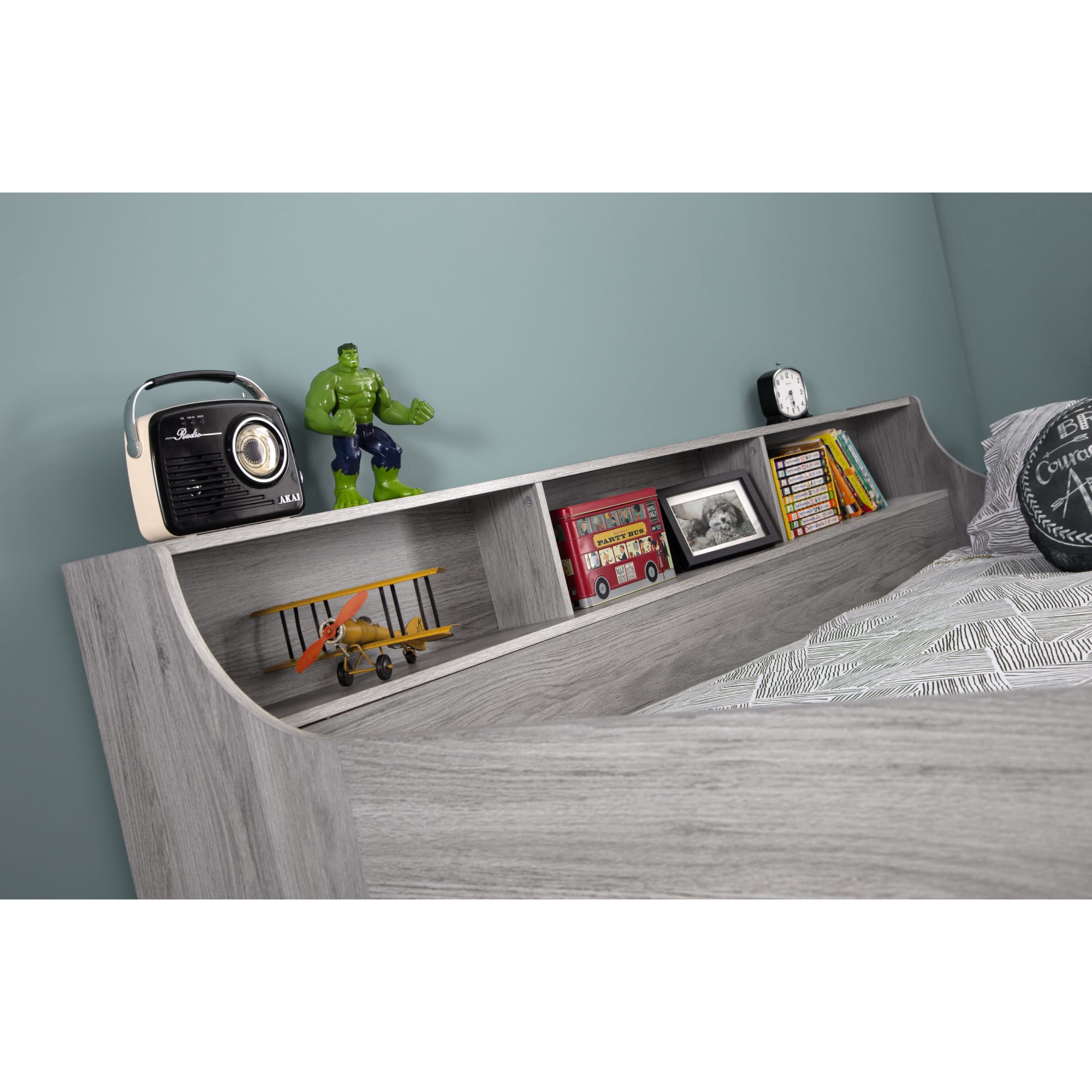
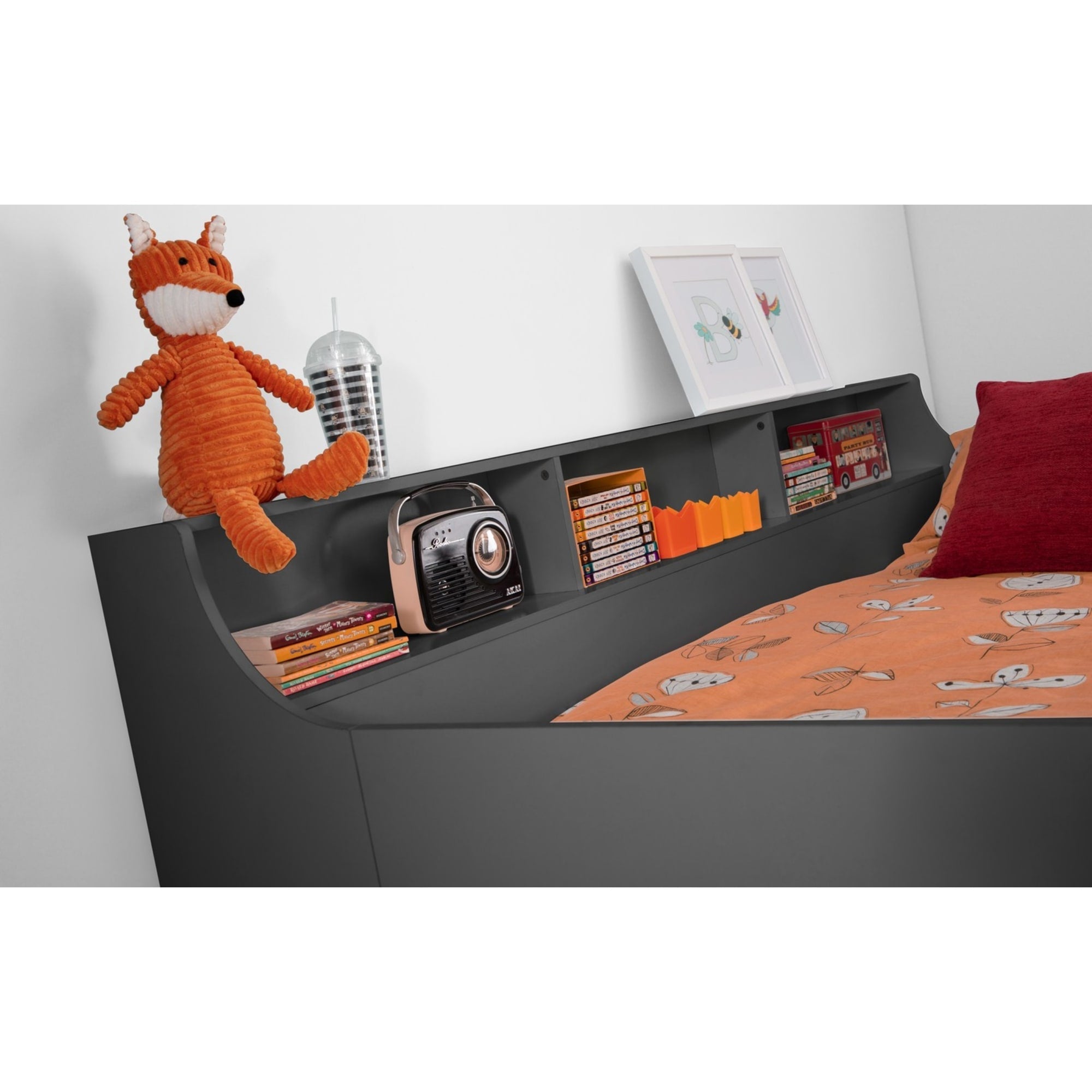
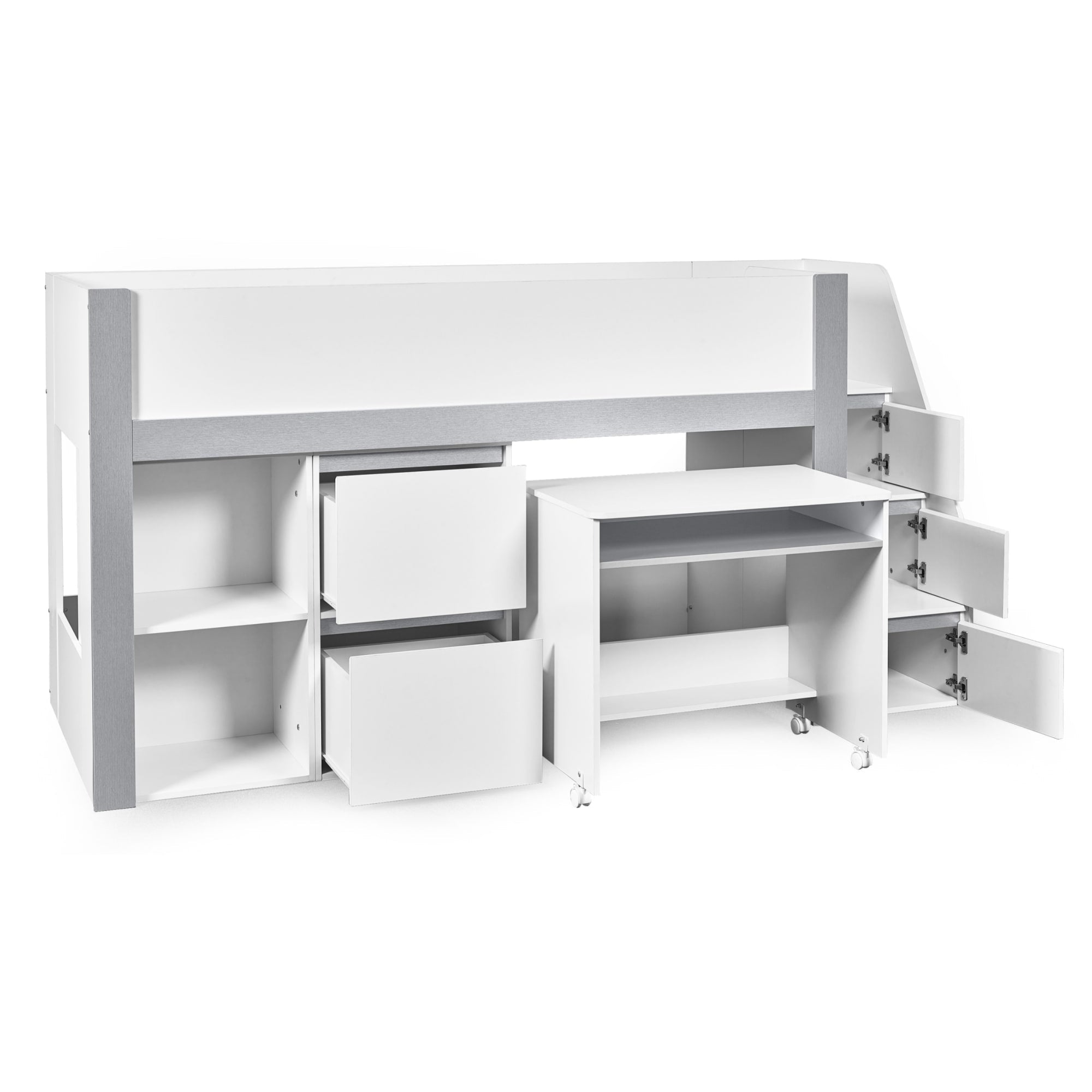
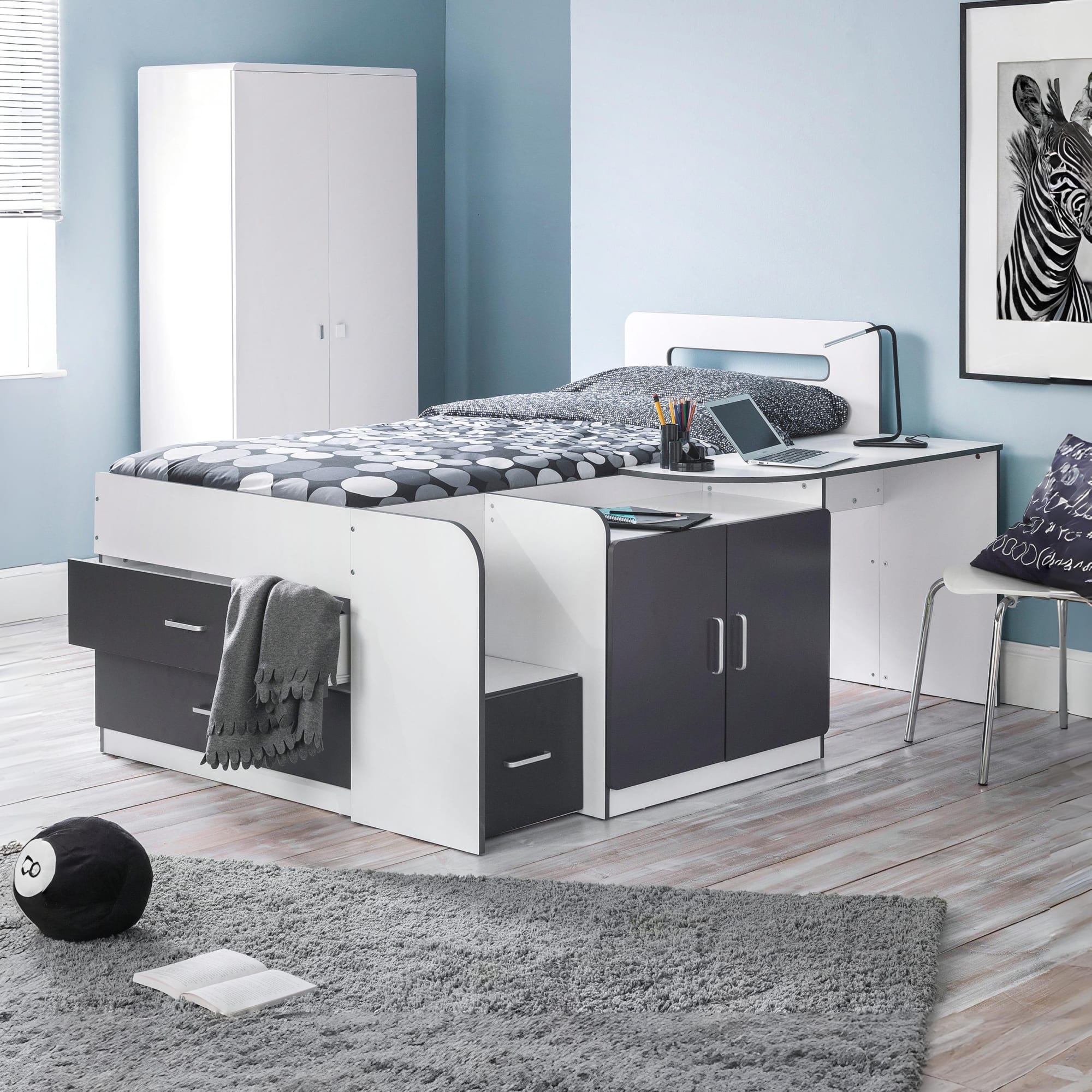
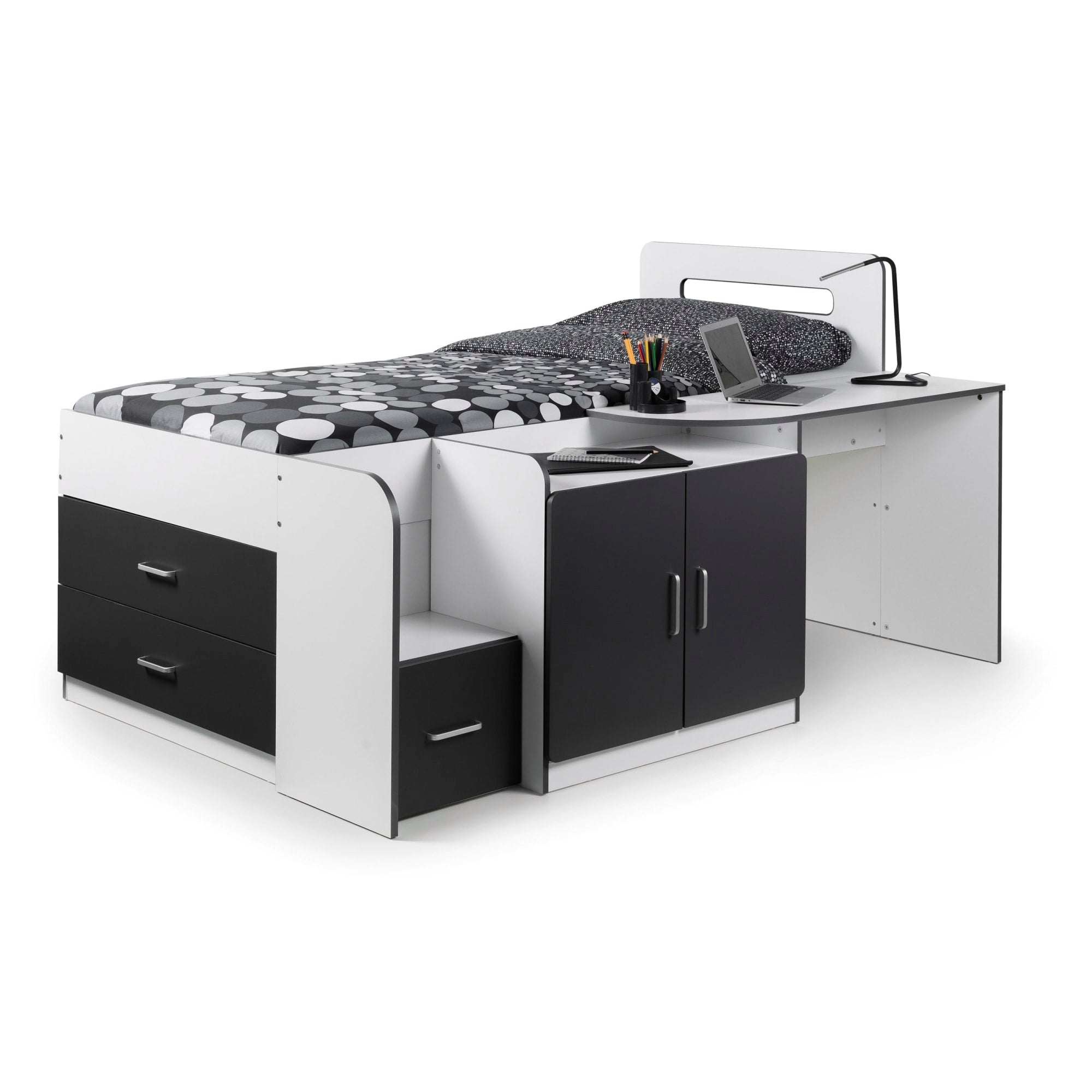
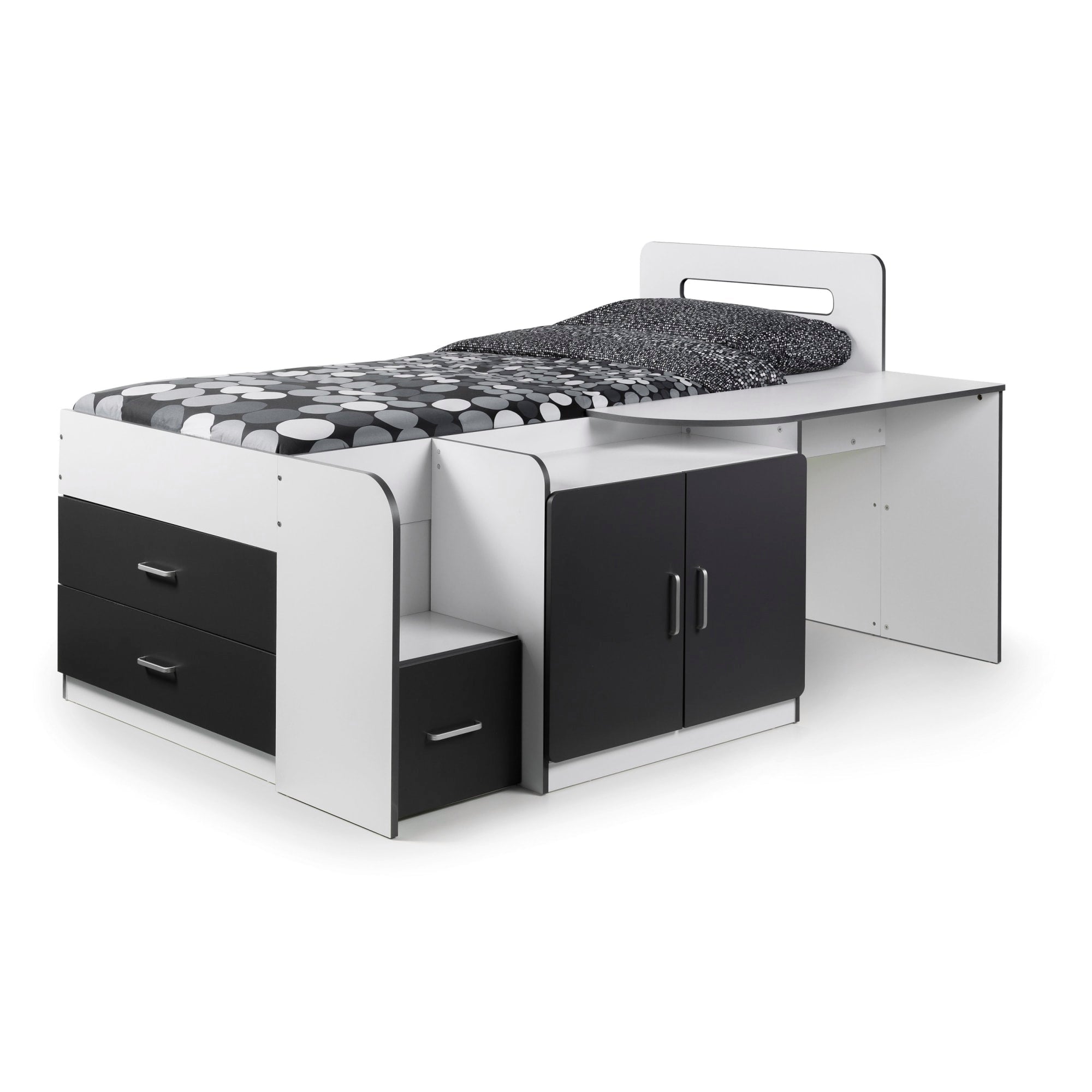
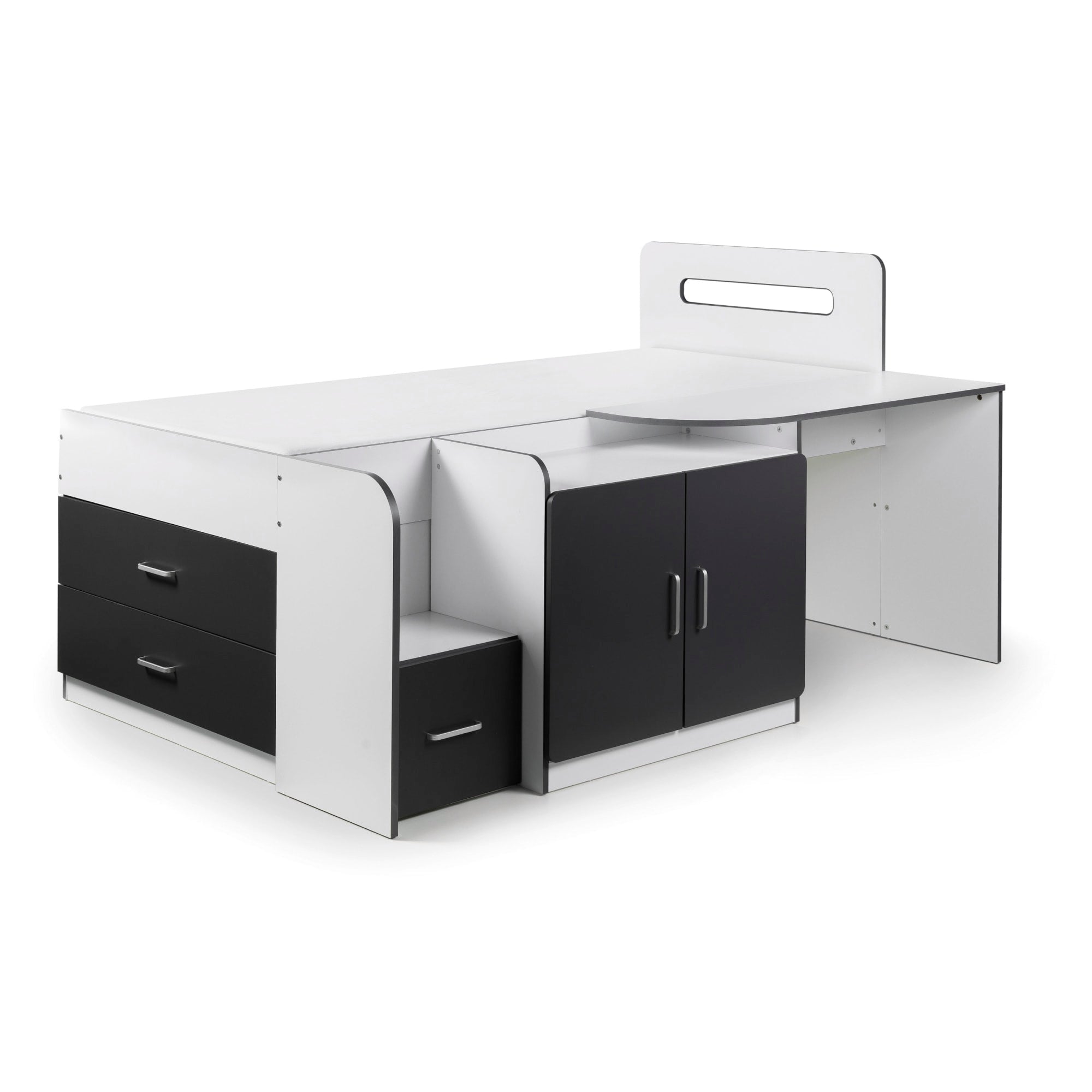
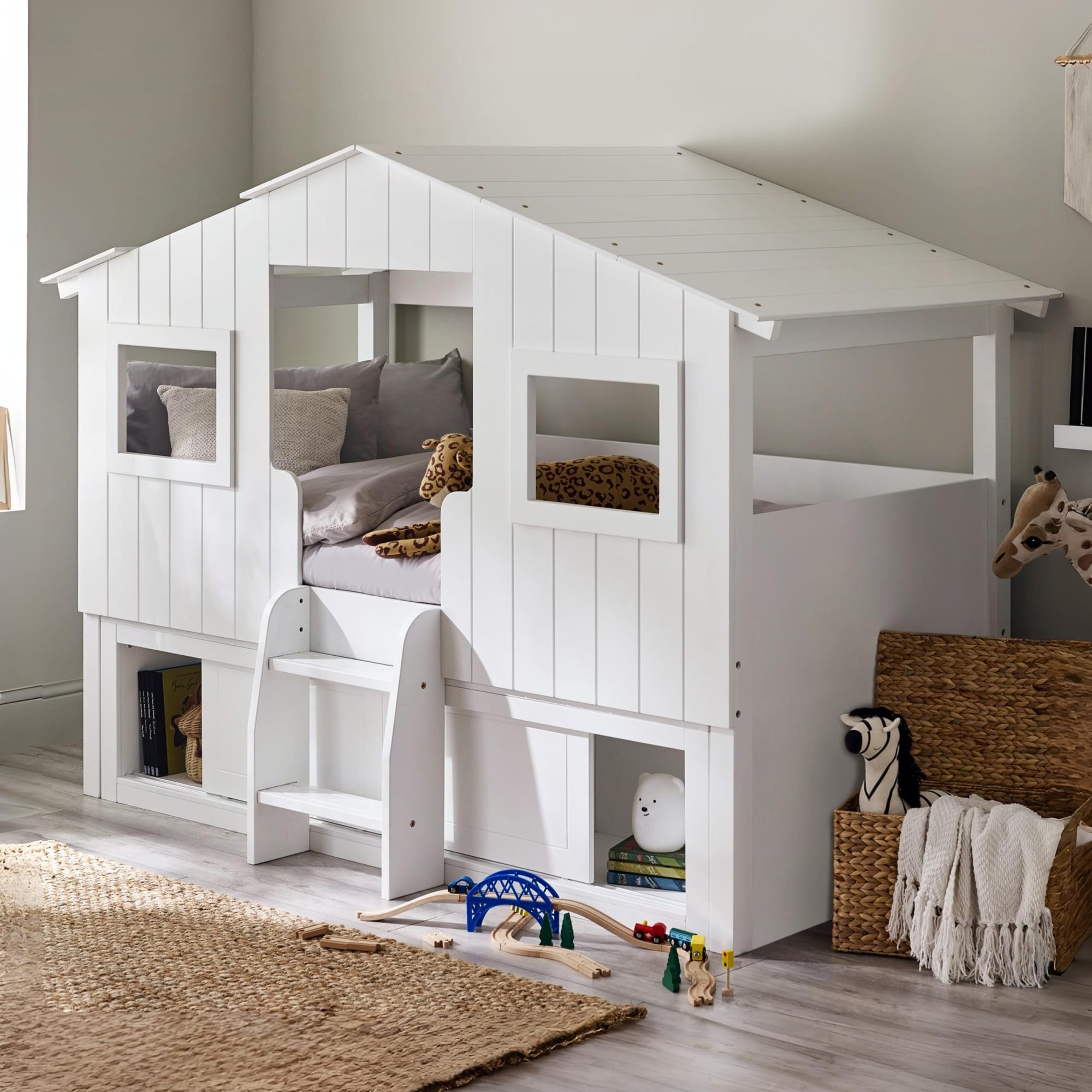
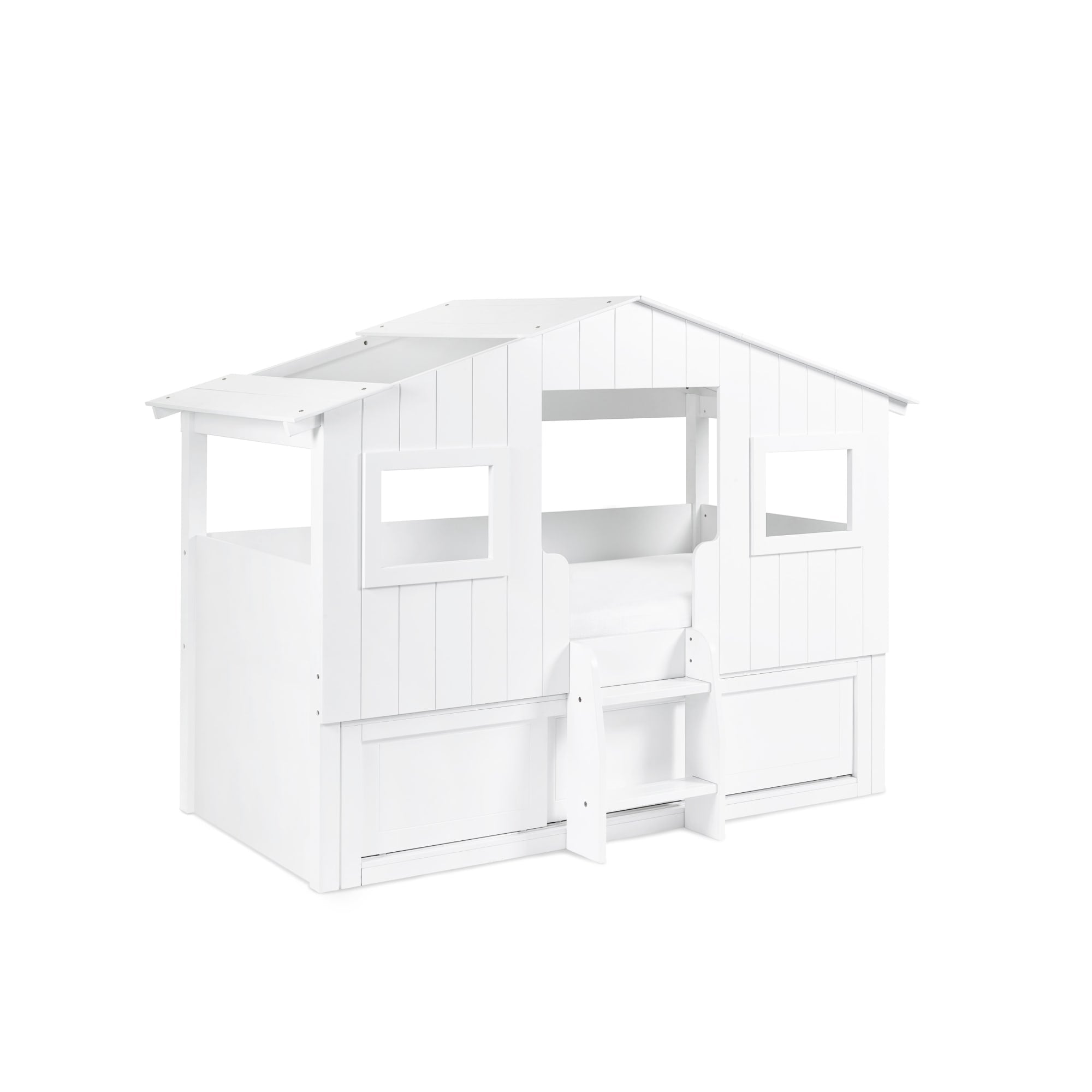
A mid sleeper bed raises your child's sleeping area to a height that creates genuinely useful space beneath — without the full height and ladder demands of a high sleeper. Sitting at around 100–130cm from floor to sleeping platform, a mid sleeper suits children from age 6 and provides play space, desk space, or built-in storage in a configuration that most standard single bedrooms accommodate comfortably. At Airedale Living, our mid sleepers are available across play-area, storage, and desk configurations in a range of finishes, built to UK safety standards with guardrails and secure ladders as standard. Browse the full collection above and pair your chosen frame with a single mattress — or a small single mattress for 75cm-width frames — in a slim profile of 16cm or less. Free UK delivery is included on every order.

20 products

Cookie Cabin Bed

£477.00

Mid Sleeper Beds: What They Are and Why They Work

A mid sleeper is defined by what it does with the space between the sleeping platform and the floor — and that space is what makes it genuinely more useful than a standard bed of the same footprint.

At around 100–130cm from floor to sleeping platform, a mid sleeper is lower than a full high sleeper (140–160cm) but significantly higher than a standard bed (30–40cm). This gives the space beneath a distinctive character: not tall enough for an adult to stand in, but exactly the right height for a child to use as a play den, a seated study area, or an organised storage zone. For children aged 6 to around 12, this height range is perfectly sized for how they actually use a bedroom — which is why mid sleepers are consistently among the most popular children's beds in this age group.

The practical case for a mid sleeper over a standard single bed is straightforward. A standard single bed and a separate desk, placed side by side in a small bedroom, use more floor area than a mid sleeper with a desk built in beneath it. The mid sleeper consolidates sleeping and functional space into a single footprint — which in a typical single bedroom of 2.5–3m in width is often the difference between a room that works well and one that feels perpetually cluttered.

Mid Sleeper Types: Choosing the Right Configuration for Your Child

The space beneath a mid sleeper determines how the bed works in daily life — and the right configuration depends on what your child actually needs from their bedroom at this stage.

Mid sleeper with play area. The open space beneath the sleeping platform is left clear as a den, play space, or creative area. This is the right configuration for younger children (ages 6–9) whose primary bedroom need beyond sleeping is imaginative play space — a zone that's theirs, enclosed, and separate from the rest of the room. As they grow, the open space can be furnished with a chair and lamp, a gaming setup, or a small bookcase — making it adaptable across several years without changing the frame.

Mid sleeper with storage. Built-in drawers, shelves, or cupboards beneath the sleeping area. This configuration suits children whose bedroom storage problem is the primary issue — accumulated clothing, books, toys, and growing collections that a standard single bed with under-bed boxes doesn't adequately address. A mid sleeper with built-in drawers can replace a standalone chest of drawers entirely, freeing the wall space it would have occupied for other uses. Well suited to ages 7 and above, particularly in rooms where floor space is the most constrained resource.

Mid sleeper with desk. A built-in desk beneath the sleeping area at seated height, typically with some shelving alongside it. This configuration suits school-age children from around age 8 who are beginning to do homework regularly and would benefit from a dedicated study space within the bedroom. The desk is at a fixed position relative to the ladder and frame — check the product page to confirm the desk side (left or right) works with your room's door, window, and power socket positions before ordering. A mid sleeper with desk at this age anticipates the study requirements that will increase significantly through secondary school.

Mid sleeper with desk and storage. Many models combine a desk on one side with shelving or drawer storage on the other — the most comprehensive single-frame solution for a child who needs both study space and bedroom storage. For a child moving into the 9–12 age bracket, this configuration is often the single best bedroom furniture investment available.

The Practical Specifications: Mattress Depth, Ceiling Height, and Safety

Mattress depth the specification most parents miss. A mid sleeper requires a slim mattress, and this is not optional. The guardrails are positioned at a fixed height above the sleeping platform; a mattress that exceeds the maximum specified depth reduces the effective guardrail height to an unsafe level. For most mid sleeper models, the maximum mattress depth is 16cm. Some models specify less. Always check the individual product page for the maximum mattress depth before purchasing a mattress. A single mattress in a slim profile is the correct pairing — not a standard adult mattress of 20–25cm. Browse the full mattresses collection and filter by depth to find appropriate options.

Ceiling height — measure before you order. A mid sleeper sleeping platform sits at approximately 100–130cm from the floor. Above the mattress, your child needs at least 60–75cm of clear headroom to sit upright comfortably. This means a minimum ceiling height of approximately 175–210cm at the position the bed will occupy. Most standard UK bedrooms (typically 240cm ceiling) accommodate this easily. However, attic rooms, loft conversions, and rooms with sloped ceilings may not — measure at the exact position the bed will sit, accounting for any slope.
Age suitability and ladder confidence. Mid sleepers are recommended for children aged 6 and above — when most children have the coordination and spatial awareness to navigate a ladder safely, including at night. Below this age, the ladder creates a fall risk that guardrails alone cannot fully mitigate. Assess your child's ladder confidence before transitioning — some six-year-olds are very ready; some are not yet. For children under 6, a standard single bed is the safer choice.

Weight capacity. Check the rated weight capacity on individual product pages — most mid sleepers are rated for 70–100kg on the sleeping platform. Confirm this against your child's current weight with room for growth.

Mid Sleepers vs Alternatives: Finding the Right Fit

A mid sleeper is the right choice in many situations — but not all. Here's how it compares to the main alternatives so you can make the decision with confidence.

Mid sleeper vs high sleeper. A high sleeper raises the sleeping platform to 140–160cm — high enough for a full-height desk, a wardrobe, or an adult to sit beneath. A mid sleeper at 100–130cm provides a seated or play-height space beneath, not a full-height one. High sleepers suit children aged 6+ with adequate ceiling height (200–230cm minimum) and a genuine need for full desk or storage furniture beneath the bed. Mid sleepers suit the same age range where ceiling height is a consideration, where the child is younger and the lower ladder is preferable, or where a play den rather than a study space is the current priority.

Mid sleeper vs bunk beds. A bunk bed uses the same vertical space as a mid or high sleeper but provides two sleeping surfaces. It suits shared bedrooms or frequent sleepover arrangements where two permanent beds are needed. A mid sleeper uses that vertical space for functional space beneath rather than a second sleeper — it suits single-occupancy bedrooms where study or storage is the priority over additional sleeping capacity.

Mid sleeper vs standard single bed with storage. A standard single bed with ottoman storage provides 300–400 litres of under-bed storage without requiring a ladder or elevated sleeping. It suits any age from around 4 upward, requires no ceiling height consideration, and is simpler for a child who isn't ready for a raised sleeping area. A mid sleeper provides more flexible and varied use of the under-bed space — play, desk, or specific storage configurations — but requires the child to be at least 6 and comfortable with ladder use.

Browse the full kids' beds collection to compare all children's bed types, or explore the wider bedroom furniture range to complete the bedroom setup. Every Airedale Living mid sleeper comes with free UK delivery and arrives ready for self-assembly with all fixings and instructions included.

Browse the mid sleeper collection above — and find the configuration that gives your child's bedroom a second function without taking a single extra centimetre of floor space.

Frequently Asked Questions

Mid sleeper beds are recommended for children aged 6 and above. At this age, most children have developed the ladder coordination, spatial awareness, and night-time caution needed to access an elevated sleeping area safely without supervision. Below age 6, the ladder creates a fall risk that guardrails alone cannot fully address — a standard single bed at floor level is the safer choice for younger children. Some children are ready for a mid sleeper slightly before 6; others are not ready until closer to 7 or 8. Assess your child's ladder confidence and their ability to navigate it independently in the dark before making the transition.

A mid sleeper requires a slim mattress — typically a maximum of 16cm in depth, though some models specify less. The guardrails are positioned at a fixed height above the sleeping platform; a mattress that exceeds the maximum depth reduces the effective guardrail height to below the safe threshold. Always check the maximum mattress depth specified on the individual product page before purchasing. A single mattress or small single mattress in a slim profile is the appropriate choice — not a standard adult mattress of 20–25cm depth. Browse the mattresses collection and filter by depth for appropriate options.

A mid sleeper sits at approximately 100–130cm from floor to sleeping platform — lower than a high sleeper, which sits at 140–160cm. The space beneath a mid sleeper is at seated or play height — right for a child's den, a small desk, or organised storage. The space beneath a high sleeper is at near-full standing height for a child, accommodating a full-height desk, wardrobe, or futon. High sleepers require more ceiling height (200–230cm minimum) and suit older children from 6 upward who specifically need full desk or storage furniture underneath. Mid sleepers suit the same age range where ceiling height is more constrained, where a lower ladder is preferable for younger children, or where a play area rather than a full workspace is the current priority.

A mid sleeper sleeping platform sits at approximately 100–130cm from the floor. Above the mattress, your child needs at least 60–75cm of clear headroom to sit upright. This means a minimum ceiling height of approximately 175–210cm at the position the bed will occupy — considerably lower than the requirement for a full high sleeper (200–230cm). Most standard UK bedrooms (typically 240cm ceiling) accommodate mid sleepers very comfortably. Even rooms with slightly lower ceilings — attic rooms or loft conversions at 210–220cm — will typically work for a mid sleeper where they would not for a high sleeper. Always measure at the exact position the bed will sit, including any sloped sections of ceiling.

Airedale Living mid sleeper beds are sold as frames without a mattress — you purchase the mattress separately to ensure you select the correct depth for the specific frame. This is important because each mid sleeper has a maximum recommended mattress depth that must not be exceeded for the guardrails to function safely. Always check the maximum mattress depth on the individual product page before ordering a mattress. Browse our single mattresses for the full range, and use the depth filter to find slim-profile options appropriate for mid sleeper use.