
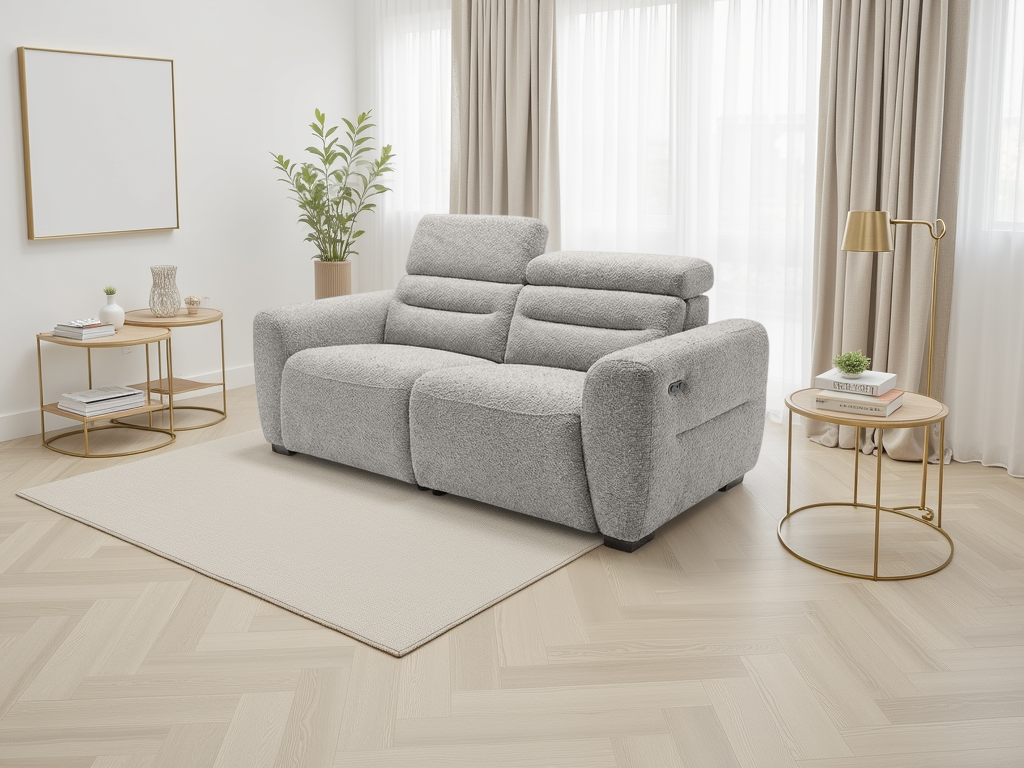
Ask ten people what they're sitting on and you might get three different answers. Sofa. Couch. Settee. All three words describe the same upholstered, multi-person seating piece that sits at the centre of most British living rooms — and yet the choice between them says something surprisingly specific about where you grew up, how old you are, and what your family called it when you were small.
This is a deeper question than it first appears. The terminology around sofas is one of the more genuinely interesting corners of the English language — a small window into social history, class, geography, and the way language evolves when the same object acquires multiple names over several centuries. Here's everything worth knowing.
Where Each Word Comes From
Sofa. The most commonly used term in Britain today has an Arabic origin — it derives from ṣuffa, meaning a raised platform or bench covered with cushions and rugs that served as seating in domestic and public spaces in the Arabic-speaking world. The word travelled through Turkish and Persian, arrived in French as sopha, and entered English in the late 17th century. By the 18th and 19th centuries it had settled into mainstream British use, where it has remained ever since.
Couch. This word comes from the Old French couche, from coucher — meaning to lie down. A couch was originally a piece of furniture specifically designed for reclining: less a seat for formal company and more a surface for rest. The word entered English in the 14th century and, for several centuries, had a different meaning from sofa — a couch was for lying down, a sofa for sitting. Today the distinction has all but disappeared, though "couch" retains a slightly more casual, horizontal quality in how people use it. In the United States and Canada, "couch" is the dominant everyday term — which is one reason British ears often register it as sounding slightly American.
Settee. This is the most distinctly British of the three terms, and the one with the most interesting social history. It derives from "settle" — a long, high-backed wooden bench that was a staple of English households from medieval times onward. The settle was often the most substantial piece of furniture in a room: a bench with arms and a high back that provided warmth and draught protection near the fire. As upholstered seating developed in the 17th and 18th centuries, the cushioned and softened version of the settle became the "settee" — a term used to distinguish the upholstered piece from its wooden predecessor.
What Each Word Signals Today
The three terms have a lived geography in Britain that's worth understanding — particularly because the word you use can inadvertently communicate things about you that you didn't intend.
Sofa is the neutral modern standard. It's the term used in furniture retail, in interior design, in journalism, and in most everyday conversation. It carries no particular class or regional connotation — if you want a word that communicates simply and clearly what you're talking about, sofa is it.
Couch reads as American to most British ears, which gives it a slightly informal, media-influenced quality. It's perfectly well understood, increasingly used, and there's no reason not to use it — but if a British person calls their sofa a "couch," it's often because they've absorbed a lot of American television.
Settee is the most loaded of the three terms in terms of social and generational connotations. It's associated with older generations and certain regional traditions — particularly in the North of England and in parts of Scotland and Wales, where it remains genuinely common. It also carries a mild class marker: for much of the 20th century, "settee" was considered the more working-class or lower-middle-class word, with "sofa" perceived as the more refined alternative. This distinction is less pronounced now than it was in, say, the 1970s, but it hasn't entirely disappeared.
The linguist and lexicographer Susie Dent has noted that "settee" is one of the words that reveals generational and regional identity almost instantly. Younger British people, particularly in urban areas, are far less likely to use it than their grandparents were. But in many British households, it's still the word — and there's nothing remotely wrong with it.
The Words You Might Also Encounter
Sofa, couch, and settee are the big three, but the seating vocabulary extends further. Here are the related terms buyers sometimes encounter when shopping for a new sofa:
Chesterfield. Specifically a sofa with deeply buttoned upholstery, rolled arms at the same height as the back, and a formal, traditional aesthetic. The Chesterfield is a specific sofa style with a specific name — it's not a synonym for sofa in general.
Loveseat. A two-person sofa — compact enough for two people sitting close together. More common as a term in the United States; in Britain, the equivalent is usually called a two-seater sofa. See the 2-seater sofas collection for the full range.
Daybed. A piece that sits between a sofa and a bed — typically a long, low surface used for reclining during the day. Related to the original meaning of "couch."
Divan. In British usage, primarily a bed base without a headboard — though the word originally described a long, cushioned seat used for reclining in Ottoman and Persian interiors (the same cultural context that gave us the sofa's Arabic predecessor).
Settee vs sofa — same piece, different name. Worth saying clearly: in contemporary British furniture retail, a settee and a sofa are the same object. If you go into a furniture store and ask for a settee, you'll be shown sofas. The word you use doesn't change what you'll be offered.
For a full breakdown of sofa styles and configurations, our guide to sofa types explained covers everything from chaise longues to Chesterfields to sectionals in detail.
Does the Word You Use Actually Matter?
For practical purposes — no. Everyone in the UK understands all three terms and will know exactly what piece of furniture you're referring to regardless of which word you choose. The terminology question is interesting but it has no bearing on the purchase itself.
What does matter, when you're choosing a sofa, is the question behind the question: which piece of seating suits your room, your household, and how you actually live. Whether you're looking for a generous corner sofa that maximises seating in a compact living room, a practical sofa bed that handles guests without requiring a spare room, or a classic 3-seater sofa that works in most living room layouts, the configuration matters far more than the word you call it.
A Note on Class and Language
It's worth acknowledging directly that the sofa/settee divide has historically carried class connotations in Britain — and that this is a slightly uncomfortable but genuinely interesting aspect of the terminology. For much of the 20th century, "sofa" was the word used by middle and upper-class households; "settee" was the word used by working-class households; and calling the wrong thing by the wrong name was one of those small social signals that British class consciousness produces with impressive efficiency.
This divide has significantly softened. The class politics of furniture vocabulary are much less acute in 2026 than they were in 1976. But the association hasn't entirely disappeared — "settee" still signals something specific to many British ears, in the same way that certain pronunciations or certain household words carry generational and regional identities.
None of which means "settee" is wrong. It's a perfectly good English word with a long and legitimate history. If it's the word your family has always used, there's no reason to stop.
The Bottom Line
Sofa, couch, and settee all describe the same thing — a padded, upholstered, multi-person seat that is the centrepiece of most British living rooms. The differences between them are linguistic and cultural rather than functional:
- Sofa — the modern standard; neutral, universally understood, dominant in retail and media
- Couch — casual, slightly American in register; perfectly well understood; increasingly common
- Settee — distinctly British; associated with older generations and certain regions; carries mild historical class connotations but remains in active everyday use
Whatever word you prefer, the piece itself is the same — and the real question is which configuration, size, and fabric suits your home. Browse the full sofas collection or explore by type: corner sofas, sofa beds, armchairs, and 2-seater sofas to find the one — by whatever name — that belongs in your living room.
Share:
How Many Cushions on a 2 Seater Sofa? Complete Styling Guide
How to Remove Pen, Biro, and Ink Marks from a Leather Sofa