
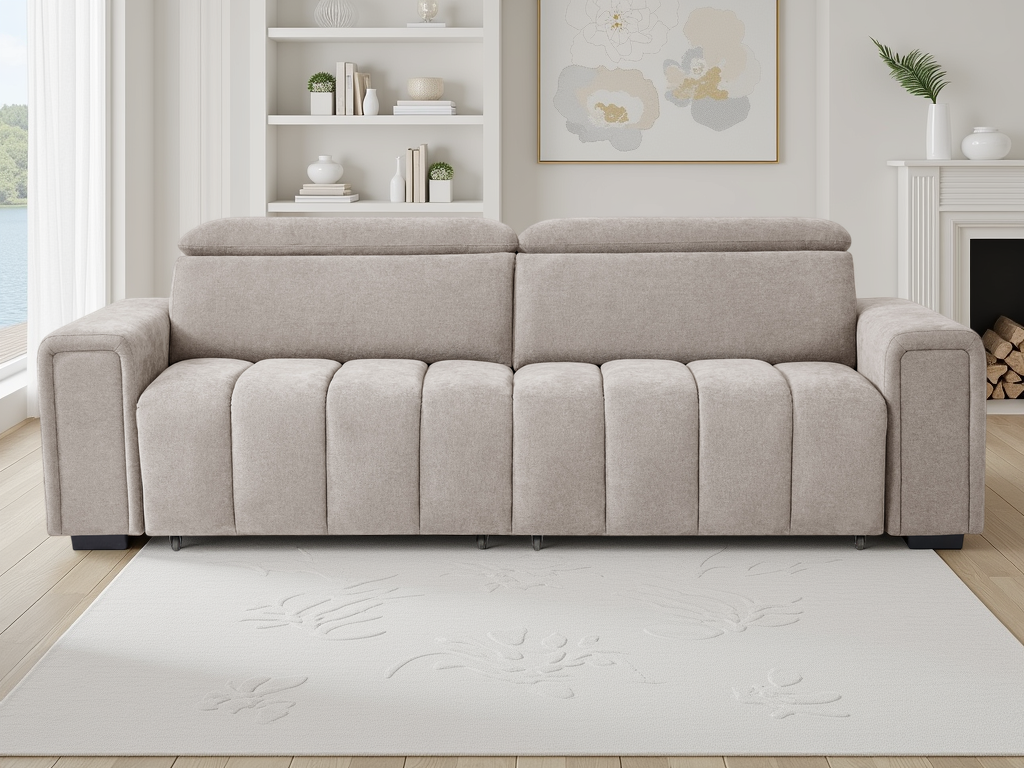
A beige sofa is the warmest neutral in the living room range — and that warmth is both its greatest asset and its most important styling variable. Unlike grey, which reads as cool and contemporary in almost any context, beige shifts meaningfully depending on its specific tone and what's placed against it. A honey-warm beige responds to colour very differently from a cool greige, and understanding your sofa's specific undertone is the most useful starting point for choosing cushions.
This guide covers the cushion colours, textures, and combinations that work best with a beige sofa — and explains why each works, not just that it does. Browse the beige sofas collection alongside this guide if you're still choosing the sofa itself.
First: Know Your Beige
Beige is a broad family. Before committing to cushion colours, identify which type of beige you're working with — it shapes which combinations will look intentional and which will look mismatched.
Warm honey beige — golden, sandy, with a distinct warmth in the undertone. This is the most common beige sofa shade and the most responsive to the earthy combinations this guide recommends. Terracotta, rust, warm sage, and warm white all sit naturally against it. Cool tones — steel blue, cool grey, lavender — can feel slightly disconnected.
Greige — the grey-beige midpoint, cooler and more contemporary than honey beige. A greige sofa has less warmth in its undertone, which means it accepts a wider range of cool and warm combinations without tension. Steel blue and charcoal work better against greige than they do against warm beige; terracotta and rust work equally well but with slightly less intensity.
Warm stone and oatmeal — the palest beige tones, closer to cream. These have the least colour saturation and the most light-reflective quality. Almost any cushion colour reads clearly against a pale stone sofa — it's the most forgiving beige tone for bold or unexpected cushion choices.
If you're uncertain which category your sofa falls into, look at it in natural daylight and ask whether it reads as more golden-warm or more neutral-grey. That answer determines which of the combinations below will work most reliably.
The Cushion Colours That Work Best
Terracotta, Rust, and Burnt Orange
This is the single most effective cushion family for a beige sofa — and its dominance in contemporary UK interiors is deserved. The warm, earthy quality of terracotta responds to beige's own warmth in a way that feels rooted and organic rather than matchy. The result is one of the most consistently popular living room palettes in British homes right now.
The key is choosing the right shade within the terracotta family. A true terracotta (warm, slightly orange-red) works beautifully against honey beige. Burnt orange (brighter, more saturated) creates more contrast and suits rooms where a stronger colour statement is wanted. Rust (darker, more brown-red) creates the most sophisticated and grounded combination — particularly in velvet, where the depth of the pile adds richness to the darker tone.
Use terracotta cushions as the anchor colour — one or two larger cushions in a solid terracotta, supplemented by smaller cushions in warm white or oatmeal. Don't over-terracotta the arrangement; the combination works because the beige base is still clearly visible.
Sage Green and Warm Olive
The earthy green family sits beside beige with a naturalness that comes from both colours' roots in organic, natural materials — sand and foliage. Sage green against honey beige is one of the most quietly beautiful combinations available in living room interiors: calm, considered, and connected to the natural world without being overly botanical.
Sage green — muted, grey-toned — is the easier of the two to work with. It reads as essentially neutral in most rooms and works with almost any surrounding wall colour and flooring. On a beige sofa, sage cushions add colour without creating visual tension.
Warm olive — earthier, with more yellow-green in the tone — creates a more confident and characterful combination. It suits rooms with warm wood flooring and earthy accessories and produces a palette that feels genuinely interior-designed rather than assembled from whatever was available.
Warm White and Cream
The most tonally close combination — warm white and cream cushions against a beige sofa create a deliberately understated, layered neutral arrangement. This isn't a lack of styling decision; it's a specific and increasingly popular aesthetic that treats texture as the primary design variable rather than colour.
When working within the warm neutral palette, texture is everything. Linen cushions in warm white alongside boucle cushions in oatmeal alongside a chunky knit throw in cream creates a richly textured arrangement that photographs beautifully and feels genuinely considered. All three pieces could be described as "neutral" but the contrast between the textures prevents the arrangement from reading as flat or underdressed.
This combination is particularly effective in rooms with white or warm white walls where a more colourful cushion arrangement would compete with the walls' own palette.
Deep Navy and Warm Blue
Navy is the most reliable cool contrast for a warm beige sofa. The combination is classic — sandy beige and deep navy is one of the most enduring coastal and traditional living room palettes — and it works because the contrast is strong without being harsh. Navy pushes the warmth of the beige forward; beige softens the formality of navy.
The key distinction is warm navy vs cool navy. A navy with slightly warm, almost teal undertones sits more naturally beside beige than a very cold, blue-black navy. Check the cushion against your sofa in natural light — if the navy looks slightly purple or cold, it's probably the wrong shade.
Pair navy with warm white or cream base cushions and the beige sofa reads as a nautical or heritage-inspired arrangement. Pair it with terracotta as the third colour and the combination becomes more contemporary and globally inspired.
Forest Green and Deep Teal
Where sage is a soft accent, forest green and deep teal are proper statement colours on a beige sofa — and they reward the commitment. A deep forest green velvet cushion against a warm beige sofa creates a combination of genuine richness and depth: earthy and sophisticated without being austere.
Teal (the blue-green mid-point) works similarly but with slightly more complexity — it shifts between blue and green depending on light conditions, which gives it a visual interest that flat colours don't share. On a beige sofa, teal cushions create a combination that looks more designed and less standard than the more commonly used sage or navy alternatives.
These colours work best as accent cushions — two or three pieces — alongside neutral base cushions rather than as the dominant cushion colour. Let the beige show; it's doing useful work as the warm base for these richer tones.
Warm Blush and Dusty Rose
Soft blush and dusty rose cushions against beige create a palette of warmth-on-warmth — feminine without being sweet, and softer than the terracotta combinations without being colourless. This is the combination that suits bedrooms and living rooms where the primary mood is calm and welcoming rather than bold and graphic.
Choose a dusty, slightly greyed blush rather than a bright pink — the desaturation is what makes it sophisticated rather than juvenile. A blush velvet cushion alongside warm white linen and one terracotta accent creates a layered warm palette that works particularly well in rooms with white walls and warm wood furniture.
Charcoal, Dark Grey, and Near-Black
A deliberate contrast: dark grey or charcoal cushions against a warm beige sofa create the most graphic and contemporary combination in this guide. The warmth of the beige and the coolness of the dark grey sit in productive tension — neither one dominates, and the result is a palette that reads as modern and considered.
This works best in rooms where the walls are white or very pale — giving the arrangement enough contrast to read clearly. In a room with warm or mid-toned walls, charcoal cushions on a beige sofa can feel disconnected from the surrounding palette. Keep the charcoal as the accent colour (one or two cushions) alongside warm neutrals as the base, rather than making it the dominant cushion tone.
Texture: The Variable That Matters More Than Colour
On a beige sofa specifically, texture in cushions does more work than colour. Beige is a warm, soft tone — and a flat, plasticky fabric in any colour will look out of place against it. The fabric quality and texture of the cushions is as visible as their colour on a neutral sofa.
Linen and cotton are the most natural companions for a beige sofa — relaxed, organic, slightly rough in texture. They suit the warmth of beige without competing with it.
Velvet adds richness and depth that flat fabrics can't match. Forest green velvet or terracotta velvet against beige creates a genuinely luxurious combination. The pile of velvet catches light differently throughout the day, giving the arrangement a visual variation that solid flat fabrics don't.
Boucle and textured weaves are the most contemporary choice — their looped or textured surface creates tactile interest that reads beautifully against a smooth beige sofa. Oatmeal boucle alongside honey beige upholstery is one of the most instinctively appealing neutral combinations in current UK interior design.
Knitted cushions and throws add an informal, lived-in warmth that suits relaxed family living rooms. A chunky knit in cream or warm grey alongside more polished velvet or linen cushions creates a layered arrangement that feels effortlessly comfortable.
Aim to use at least two different textures in any cushion arrangement — three is better. Colour can be largely consistent; texture variation is what prevents an arrangement from looking flat.
How Many Cushions?
Getting the count right matters as much as getting the colour right — too few and the sofa looks underdressed; too many and it looks cluttered and impractical.
For a 2-seater sofa: three to four cushions is typically right — two larger cushions at either end and one smaller accent in the centre.
For a 3-seater sofa: four to six cushions — two at each end and one or two in the centre.
For a corner sofa: six to nine cushions arranged across both arms — the longer arm takes more cushions than the shorter. See our detailed guide on arranging cushions on a corner sofa for a specific breakdown.
Use three sizes: large (50–55cm), medium (45cm), and small accent (35–40cm). Place the largest cushions at the ends and work inward with smaller sizes. The arrangement should feel considered but not rigid — slight asymmetry is more natural and more human than perfect symmetry.
Complete Beige Living Room Schemes
The earthy organic scheme. Warm beige sofa, terracotta and warm sage cushions, warm white throw, jute rug, oak or warm wood furniture, brass or copper lighting, indoor plants. Walls in warm white or soft clay. The most popular beige living room palette in current UK interiors.
The calm neutral scheme. Warm beige sofa, oatmeal boucle and cream linen cushions, warm white knit throw, natural fibre rug. White walls. Minimal accessories. Pale oak furniture. The arrangement where texture does all the work.
The contemporary contrast scheme. Greige sofa, charcoal and warm white cushions, one forest green velvet accent, warm wool rug in a muted geometric. White walls. Black metal or dark wood furniture. The most graphic and contemporary beige arrangement.
The warm romantic scheme. Warm honey beige sofa, dusty rose and terracotta cushions, warm linen throw, floral or organic print rug. Sage green walls or warm terracotta feature wall. Warm brass lighting throughout.
Browse the full beige sofas collection — including beige corner sofas — to find the right shade and configuration for your room. For broader colour pairing guidance, our guide to what colours go with beige, brown, and other warm sofa tones covers the full living room palette beyond cushions. And for the complete sofas collection across all colours and configurations, browse above.
Share:
What Colours Go With a Black Sofa?