
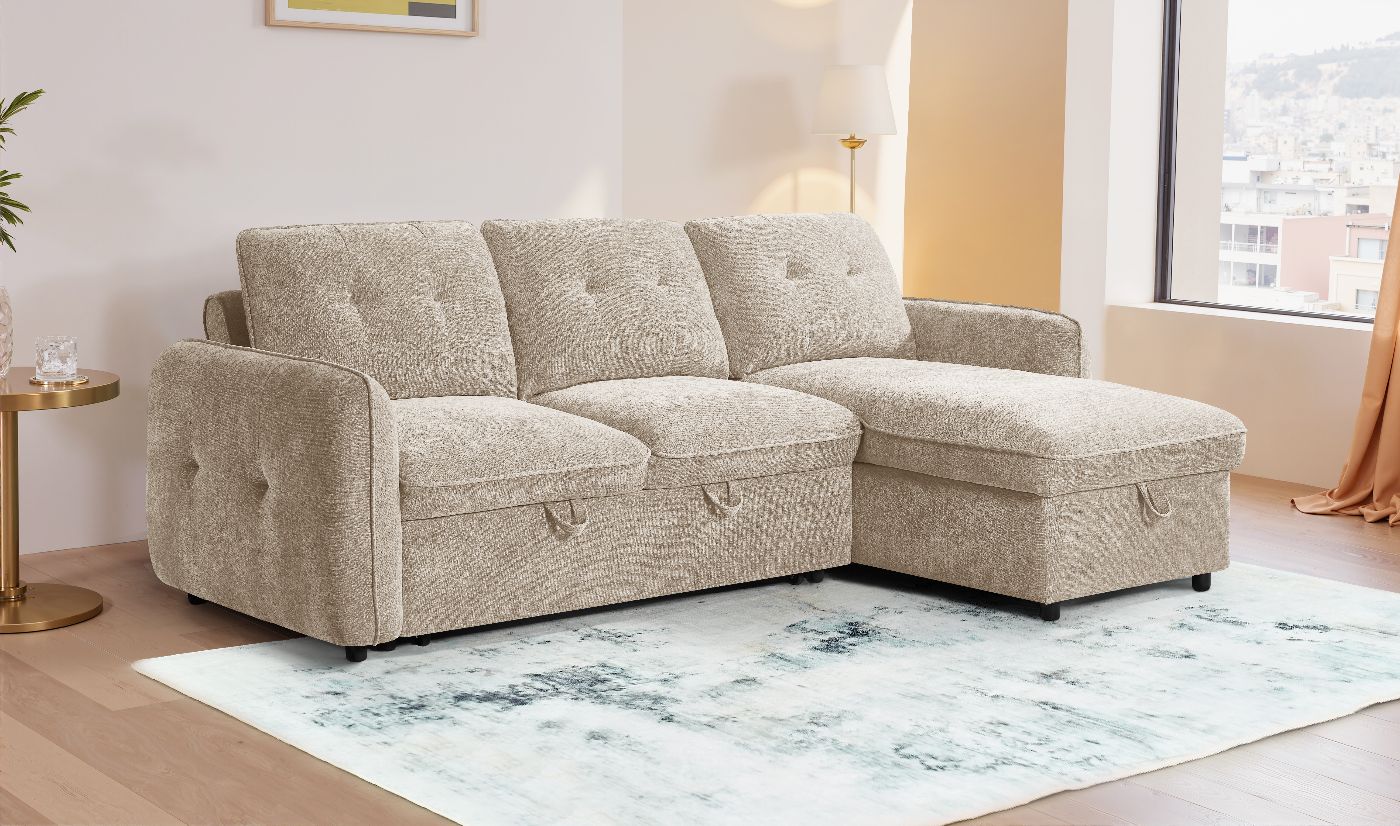
How to Style a Corner Sofa in a Small Living Room
A corner sofa in a small living room sounds like a contradiction. The instinct, when space is tight, is to go smaller — a two-seater, an armchair, something that won't dominate. But that instinct is often wrong.
The reason most small living rooms feel cramped isn't the size of the furniture — it's the number of pieces fighting for the same floor. A corner sofa, positioned well, consolidates your seating into a single defined zone and opens up the rest of the room in a way that two separate sofas or a sofa-and-armchair combination rarely achieves. It's a counterintuitive solution that, once you see it working, makes complete sense.
This guide covers everything you need to make it work: choosing the right corner sofa for a smaller room, placing it for maximum effect, and styling it with cushions, throws, and colour so the room feels considered and spacious rather than compromised.
Why a Corner Sofa Works in a Small Room
The fundamental advantage of a corner sofa in a small living room is spatial efficiency. By placing seating against two walls instead of one, you free up the central floor area — the space most people stand in, move through, and unconsciously use to gauge how large a room feels. Keep that space clear and the room reads as open. Clutter it with a coffee table too large, a footstool pulled out, and two separate sofas facing each other, and even a generous room can feel tight.
A corner sofa also eliminates the dead corner — that awkward zone behind a standalone sofa where nothing useful can happen. By running seating into the corner itself, you turn wasted space into functional, comfortable seating without adding a single extra centimetre to the room's overall furniture footprint.
The second advantage is seating capacity per square metre. A corner sofa that seats four or five people takes up less floor area than a three-seater sofa and a two-seater arranged opposite each other — which is the typical alternative in a small room trying to accommodate the same number of people. The consolidation is significant.
Choosing the Right Size Corner Sofa for a Small Room
This is where most people go wrong. The assumption is that a smaller room needs a smaller sofa — but the more useful question is: what are the specific dimensions of your room, and what corner sofa fits those dimensions while leaving adequate walkway clearance?
Start by measuring both walls the sofa will run along. A compact corner sofa with a shorter arm of around 140–160cm and a longer arm of 200–220cm works in most small-to-medium UK living rooms. This gives you generous seating without the sofa overwhelming the space. Avoid the temptation to size down further than this — a corner sofa that's too small for the room looks awkward rather than appropriate, and you lose most of the layout benefits.
Allow at least 60cm of clear walkway on the open sides of the sofa. This is the minimum for comfortable movement — less than this and the room will feel blocked even if the sofa itself is well-proportioned.
A few configurations to be aware of:
Left-hand vs right-hand facing refers to which side the chaise or shorter arm falls when you're seated facing the sofa. This is determined by your room layout — specifically where your door, window, and TV are positioned. Getting this wrong is the most common sizing mistake. Map your room on paper before you decide.
Universal corner sofas work in either orientation, which is useful if you're unsure or planning to move.
Corner sofa beds in a smaller configuration are worth considering if the room also serves as a guest space. A compact corner sofa bed delivers seating, sleeping, and space efficiency in a single piece — one of the most practical choices for a small living room that needs to do more than one job.
If you've genuinely measured and a corner sofa won't fit without compromising circulation, a well-chosen 2-seater sofa positioned at an angle, or a scatterback sofa with a slim profile, can achieve a similarly considered result. A full U-shape sofa is almost certainly too large for a small room — unless you're working with a genuinely open-plan space where the sofa is defining a living zone within a larger area.
Placement: Where to Put a Corner Sofa in a Small Room
The default placement — sofa flush against the corner, arms running along both walls — is the right starting point and works for most small rooms. It's the configuration that maximises floor space in the centre of the room and creates the clearest sense of a defined seating zone.
A few refinements worth considering:
Float it slightly from the wall. Counter-intuitive, but pulling a corner sofa 5–10cm away from the wall on both arms can actually make a small room feel more spacious. It breaks the impression that the sofa is wedged in, creates a subtle sense of depth around the piece, and allows a narrow shelf or a slim side table behind the sofa end — useful for lamps, plants, or remotes.
Orient around the screen, not the window. In a small room, the screen wall is the primary orientation — your sofa should face it. If your corner sofa ends up at an angle to the TV because of how it fits, the seating arrangement won't function well regardless of how well it's styled.
Use a rug to define the zone. A rug placed under the sofa and extending beyond the coffee table creates a distinct living area within the room. This is particularly effective in open-plan spaces where the corner sofa needs to signal "here is the seating area" without walls doing that work. Choose a rug that extends at least 30–40cm beyond the sofa on the open sides — too small a rug looks stranded and makes the sofa appear more imposing.
Leave the coffee table proportionate. The most common mistake after choosing a corner sofa for a small room is pairing it with a coffee table that's too large. A slim, lower table — or two smaller side tables rather than one central piece — keeps the floor plan clear and prevents the seating zone from feeling crowded.
Colour: The Most Impactful Small-Room Decision
Colour does as much work as furniture placement in a small living room, and the corner sofa's colour is the most significant colour decision in the room.
Light neutrals open up space. A grey corner sofa in a pale or mid-tone recedes visually — it doesn't draw the eye the way a darker shade does, which helps the room feel larger. Beige achieves a similar effect with more warmth. Cream is the brightest option and the most light-reflective, which works particularly well in north-facing rooms that need every visual advantage.
Dark colours create enclosure. A deep graphite, charcoal, or black corner sofa in a small room will feel more intimate and cosy — which for some people is exactly the right result. If you want the room to feel like a snug rather than a larger space, darker tones serve that intention well. If you want the room to feel as open as possible, go lighter.
Avoid very busy upholstery patterns. In a small room, a heavily patterned fabric competes with everything else for visual attention and can make the space feel restless. A solid colour or subtle texture — a woven weave, a soft boucle, a plush velvet — allows the room to breathe. Pattern can come in through cushions, a rug, and wall art, all of which are easier to change than upholstery.
Match to the floor, not just the walls. In a small room, the interaction between sofa colour and flooring colour is particularly visible because both are in constant view. Mid-grey sofa on pale oak flooring creates a clean, fresh combination that works in most small rooms. A warm beige sofa on a warm wood floor can feel slightly monotone — a darker or cooler rug between them provides the contrast that stops the room looking flat.
Cushions: How to Style a Corner Sofa Properly
Cushions are the quickest and most reversible way to change how a corner sofa looks — and in a small room, getting them right matters because everything is more visible and more impactful at close range.
Stick to five to seven cushions for a standard corner sofa. Fewer than five and the sofa can look sparse; more than seven and the seating starts to disappear beneath the cushions and the arrangement reads as cluttered. For a smaller corner sofa, five is often the right number. For a larger L-shape, seven gives you more to work with across the longer arm.
Use three sizes, not one. A combination of large (50–60cm), medium (45cm), and smaller (35–40cm) cushions creates visual hierarchy and stops the arrangement looking like a hotel lobby. Place the largest cushions at the corner where the two arms meet — this is the natural anchor of a corner sofa — and work out from there with smaller sizes.
Mix textures before mixing colours. The most common cushion mistake is choosing colour first and texture second. A velvet cushion, a linen cushion, and a knitted cushion in similar tones create a richer, more considered arrangement than three cushions in different colours but the same flat fabric. Once you have the texture mix right, add one or two colour accents.
Limit your colour palette to three tones. Pick a dominant tone (usually the sofa colour or something very close to it), a secondary tone (a warm or cool contrast), and an accent (a brighter or deeper colour used sparingly). For a grey corner sofa: grey as dominant, warm white as secondary, terracotta as accent. For a beige corner sofa: beige as dominant, sage green as secondary, warm brass or rust as accent. This structure prevents the arrangement from looking thrown together.
Avoid symmetry. Identical cushions on both arms of a corner sofa looks formal and slightly sterile in a small room. An asymmetric arrangement — more cushions at the corner and the longer arm, fewer at the shorter end — looks more relaxed and more human.
Throws, Rugs, and Finishing Touches
A throw draped over one arm of the corner sofa adds the final layer of warmth and texture that stops the arrangement looking like a showroom. Drape it loosely rather than folding it neatly — imprecision is the point. A chunky knit, a soft sherpa, or a lightweight cotton throw in a tone that picks up one of the cushion colours works well. Don't match it exactly to anything — a slight variation in tone is more interesting than an exact match.
A rug, as mentioned, defines the living zone. In a small room it also does something else: it visually extends the sofa's footprint in a way that makes the seating area look more considered and settled. Choose a rug large enough to sit under the front legs of the sofa at minimum, with the main body of the rug extending outward toward the opposite wall.
A floor lamp positioned at the corner where the two sofa arms meet — the inside corner creates an intimate pool of light that makes the seating zone feel like a room within the room. This is one of the most effective styling moves for a small living room with a corner sofa and costs far less than changing any furniture.
The Sofa Itself: Where to Start
If you're choosing a corner sofa for a small living room rather than styling one you already have, start with the corner sofas collection and filter by your available dimensions. The grey corner sofas range covers the most popular configurations in the most versatile colour, and our best sellers show the models our customers return to with most confidence for exactly this kind of room.
If you're working with a room that also needs to accommodate guests, a corner sofa with a fold-out sleeping surface — in our sofa beds collection — consolidates three functions (seating, lounge, guest bed) into a single well-chosen piece. For small rooms that pull multiple duties, it's one of the smartest purchases you can make.
A well-chosen, well-styled corner sofa doesn't compromise a small living room. It completes it. The key is precision in the choosing and confidence in the styling — and both of those get considerably easier with the right starting point.
Share:
Corner Sofa Types Explained: Which Style Is Right for Your Home?