
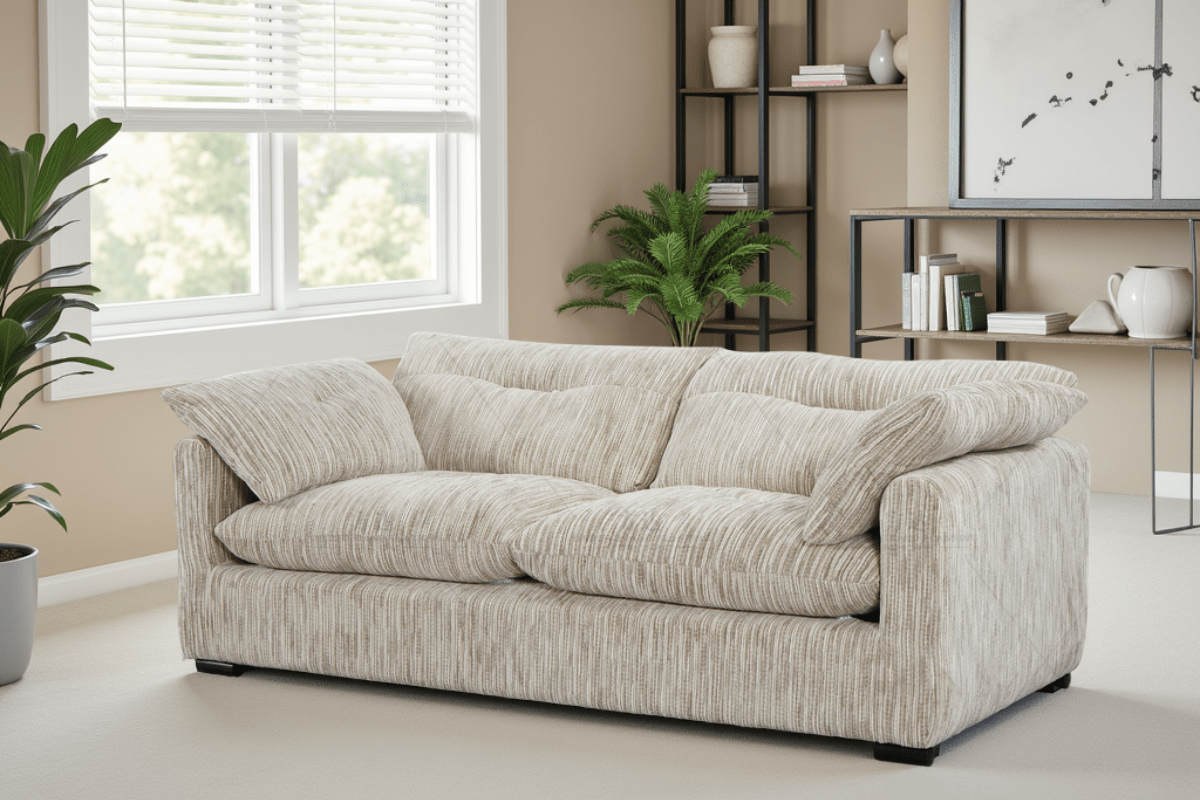
To clean a fabric sofa, start by vacuuming the entire surface to remove loose debris, then treat any stains with an appropriate cleaning solution for your fabric type, and finish with a light overall clean using a mild upholstery cleaner or DIY solution. Most fabric sofas can be cleaned effectively at home without professional equipment.
This guide covers every fabric type, every cleaning method, and how to deep clean or steam clean a sofa safely.
Before You Start: Check Your Sofa's Cleaning Code
Before applying any cleaning solution to your sofa, check the manufacturer's label — usually found underneath a seat cushion or on the sofa's base. The cleaning code tells you which methods are safe for your fabric:
| Code | What It Means |
|---|---|
| W | Water-based cleaners safe to use |
| S | Solvent-based (dry) cleaners only — no water |
| W/S | Both water and solvent-based cleaners are safe |
| X | Vacuum only — no liquid cleaners of any kind |
Always test any cleaning solution on a hidden area first — the back of a cushion or the underside of the sofa skirt — and allow it to dry fully before proceeding.
What You'll Need
- A vacuum cleaner with an upholstery attachment
- Mild washing-up liquid or specialist upholstery cleaner
- Warm water
- Two clean white cloths or microfibre cloths (avoid coloured cloths — dye can transfer)
- A soft-bristled brush (for textured fabrics)
- Bicarbonate of soda (for odour treatment)
- A spray bottle
- A fan or open window for drying
How to Clean a Fabric Sofa at Home: Step-by-Step
Step 1: Vacuum Thoroughly
Before any liquid is applied, vacuum the entire sofa — including under the cushions, along the seams, and in any crevices. Use the upholstery attachment for the main surfaces and the crevice tool for joins and gaps.
This step removes the loose dirt, crumbs, and debris that would turn to muddy streaks the moment any liquid is applied.
Step 2: Treat Stains First
Address any stains before cleaning the whole sofa. Always blot — never rub — to avoid spreading the stain or pushing it deeper into the fibres.
For most fabric types: Mix one teaspoon of washing-up liquid with 250ml of warm water. Apply a small amount to a clean white cloth and blot the stain from the outside edge inward. Rinse the cloth and repeat until the stain lifts.
For dried or stubborn stains: Mix equal parts white vinegar and warm water in a spray bottle. Lightly mist the stain, leave for two to three minutes, then blot clean with a dry cloth.
Step 3: Clean the Whole Sofa
Once stains are treated, clean the full surface:
- Mix a small amount of upholstery cleaner or mild washing-up liquid with warm water in a bucket — you want a foamy solution rather than a watery one
- Dip a clean cloth into the foam (not the liquid beneath it) and apply to the sofa in gentle circular motions
- Work in sections — one cushion at a time, one panel at a time
- Use a second clean damp cloth to wipe away any soap residue
- Allow the sofa to dry fully before using — open windows or use a fan to speed drying
Step 4: Deodorise
Once clean and dry, sprinkle bicarbonate of soda liberally over the sofa surface. Leave for at least 20 minutes — longer for stronger odours — then vacuum thoroughly. Bicarbonate of soda is highly effective at neutralising pet odours, general mustiness, and food smells without any chemicals or residue.
How to Clean a Velvet Sofa
Velvet requires a gentler approach than most fabric types because the pile can be crushed or marked by heavy-handed cleaning.
- Vacuum with a soft brush attachment — always move in the direction of the pile, never against it
- Treat stains immediately — blot with a dry cloth first to absorb as much liquid as possible before applying any cleaner
- Use a specialist velvet or upholstery cleaner rather than washing-up liquid — harsh detergents can flatten the pile permanently
- Apply sparingly with a soft cloth — work in the direction of the pile and avoid saturating the fabric
- Restore the pile after cleaning by brushing lightly with a soft-bristled brush in the direction of the nap once fully dry
What to avoid on velvet: steam cleaning, excessive water, rubbing against the pile direction, and leaving wet marks to dry without attention — these cause tide marks that are difficult to remove.
How to Clean a Suede Sofa
Suede — and faux suede — is more water-sensitive than most upholstery fabrics. Check the cleaning code carefully before applying any liquid.
For light cleaning and maintenance: Use a dedicated suede brush to remove surface dirt and restore the nap. Brush in one direction with light, even strokes.
For stains:
- Allow wet stains to dry completely before treating — attempting to clean wet suede spreads the stain
- Once dry, use a suede eraser or clean pencil eraser to gently buff the stain
- For more stubborn marks, apply a small amount of white vinegar to a cloth and blot gently — never rub
- Finish by brushing the nap back into direction with a suede brush
What to avoid on suede: water-based cleaners unless the label confirms W or W/S coding, steam cleaning, and any cleaning product not specifically formulated for suede.
How to Clean a Microfibre Sofa
Microfibre is one of the most practical upholstery fabrics to clean — it resists staining well and responds effectively to both water and solvent-based cleaners.
For water-safe microfibre (W or W/S code): Mix a small amount of washing-up liquid with warm water. Apply the foam to the sofa with a clean cloth, working in circular motions. Wipe clean with a damp cloth and allow to dry. Use a soft brush to restore the texture once dry.
For solvent-only microfibre (S code): Use rubbing alcohol applied with a clean white cloth. Work in circular motions and allow to dry fully. The alcohol evaporates quickly and won't leave water marks.
Pro tip: Microfibre can look stiff or rough after cleaning. Once completely dry, run a clean soft-bristled brush over the surface to restore the soft texture.
How to Clean a Chenille Sofa
Chenille is a textured, looped fabric that traps dirt easily but can be damaged by aggressive cleaning.
- Vacuum regularly with a soft brush attachment — this is the most important maintenance step for chenille
- Blot spills immediately — chenille absorbs liquid quickly, so speed matters
- Use a mild upholstery cleaner diluted in water, applied with a soft cloth using gentle dabbing motions rather than scrubbing
- Avoid soaking the fabric — chenille takes a long time to dry and is prone to shrinkage and pile distortion if over-wetted
- Allow to dry naturally in a well-ventilated room — avoid direct heat sources which can cause shrinkage
How to Clean a Cloth Sofa
Cloth or woven upholstery covers a broad range of fabrics — linen, cotton, polyester blends, and weaves. Most cloth sofas have a W or W/S cleaning code and respond well to standard home cleaning methods.
Follow the general step-by-step above. For heavily soiled cloth sofas, a stronger solution of upholstery cleaner applied with a soft brush can be worked into the fabric before wiping clean. Always test in a hidden area first as some woven fabrics are prone to shrinkage or colour fade with water.
How to Deep Clean a Sofa
A deep clean goes beyond surface cleaning to address embedded dirt, odours, and staining throughout the fabric.
DIY deep clean method:
- Vacuum thoroughly — including removing and vacuuming all cushion covers if they're removable and washable
- Apply bicarbonate of soda across the entire sofa and leave for a minimum of one hour (overnight for heavy odours)
- Vacuum the bicarbonate of soda away completely
- Apply an upholstery cleaner using a soft brush, working it into the fabric in circular motions
- Wipe clean with a damp cloth, working in sections
- Allow to dry fully before replacing cushions — use a fan and open windows to accelerate drying
How often should you deep clean a sofa? For a household with no pets or children, once or twice a year is sufficient. For homes with pets or young children, a deep clean every three to four months is more realistic.
How to Steam Clean a Sofa
Steam cleaning is one of the most effective methods for deep cleaning and sanitising a fabric sofa — but it's not suitable for all fabric types.
Safe to steam clean: Cotton, linen, polyester, and most woven fabrics with a W code.
Not suitable for steam cleaning: Velvet, suede, silk, and any fabric with an S or X cleaning code.
How to steam clean a sofa at home:
- Vacuum the sofa thoroughly before steaming
- Attach the upholstery nozzle to your steam cleaner
- Hold the nozzle 20–30cm from the fabric surface — never press it directly against the fabric
- Work in slow, even passes across the sofa, moving continuously to avoid saturating any one area
- Allow the sofa to dry fully — steam cleaning introduces moisture into the fabric, so good ventilation is essential
- Vacuum again once dry to lift any debris brought to the surface during steaming
If you don't own a steam cleaner, most hire shops and supermarkets offer day-hire options for under £30.
How to Clean Sofa Cushions
Sofa cushion covers and cushion pads need slightly different treatment.
Removable cushion covers: Check the care label. Most fabric cushion covers can be machine washed on a cool, gentle cycle. Wash them inside out to protect the fabric surface, and allow to air dry rather than tumble drying — heat can cause shrinkage and distort the shape.
Non-removable cushion covers: Clean in place using the same methods described for your fabric type above. Pay particular attention to the seams and piping where dirt accumulates.
Cushion pads: Most foam or fibre cushion pads cannot be washed. Sprinkle liberally with bicarbonate of soda, leave for at least an hour, then vacuum thoroughly. Air them outside on a dry day to freshen them naturally.
Frequently Asked Questions
How do you clean a fabric sofa at home?
Vacuum first to remove loose debris, treat any stains by blotting with a mild soap and water solution, then clean the full surface with upholstery foam applied with a clean cloth. Finish with a bicarbonate of soda deodorise once dry.
How do you clean a velvet sofa?
Vacuum in the direction of the pile with a soft brush attachment. Treat stains by blotting immediately with a dry cloth, then applying a small amount of specialist velvet cleaner in the pile direction. Avoid steam cleaning and excess water.
How do you deep clean a sofa?
Apply bicarbonate of soda across the whole sofa and leave for at least an hour before vacuuming away. Follow with a thorough clean using upholstery cleaner and a soft brush, wipe clean, and allow to dry fully with good ventilation.
How do you steam clean a sofa?
Vacuum first, then use an upholstery nozzle held 20–30cm from the fabric in slow, even passes. Allow to dry fully afterwards. Only use steam on fabrics with a W cleaning code — avoid velvet, suede, and any S or X coded fabrics.
How do you clean sofa cushion covers?
If removable, machine wash on a cool, gentle cycle inside out and air dry. If non-removable, clean in place using a damp cloth and mild upholstery cleaner appropriate for the fabric type.
How do you clean a suede sofa?
Use a suede brush for regular maintenance. For stains, allow to dry first then use a suede eraser or white vinegar applied with a cloth, blotting gently. Never apply water to suede unless the cleaning code confirms it is safe.
How do you wash sofa cushions?
Remove covers and machine wash on a cool gentle cycle if the care label permits. Cushion pads cannot usually be washed — treat with bicarbonate of soda and air outside to freshen.
Keep Your Sofa Looking Its Best
Regular cleaning extends the life of your sofa significantly and keeps it looking and feeling as good as the day it arrived. If you're in the market for a new sofa, browse full sofa collection — every piece is crafted with durable, premium fabrics designed to stand up to everyday life.
Looking for a corner sofa specifically? Explore the full corner sofa range in grey, beige, cream, and black, or browse our best sellers for the most popular styles right now.
Already have your sofa sorted? Read our guide to how to arrange cushions on a corner sofa for the finishing touch.
Share:
How to Position a Corner Sofa in Your Living Room
How to Clean a Leather Sofa: Safe Methods and Products