
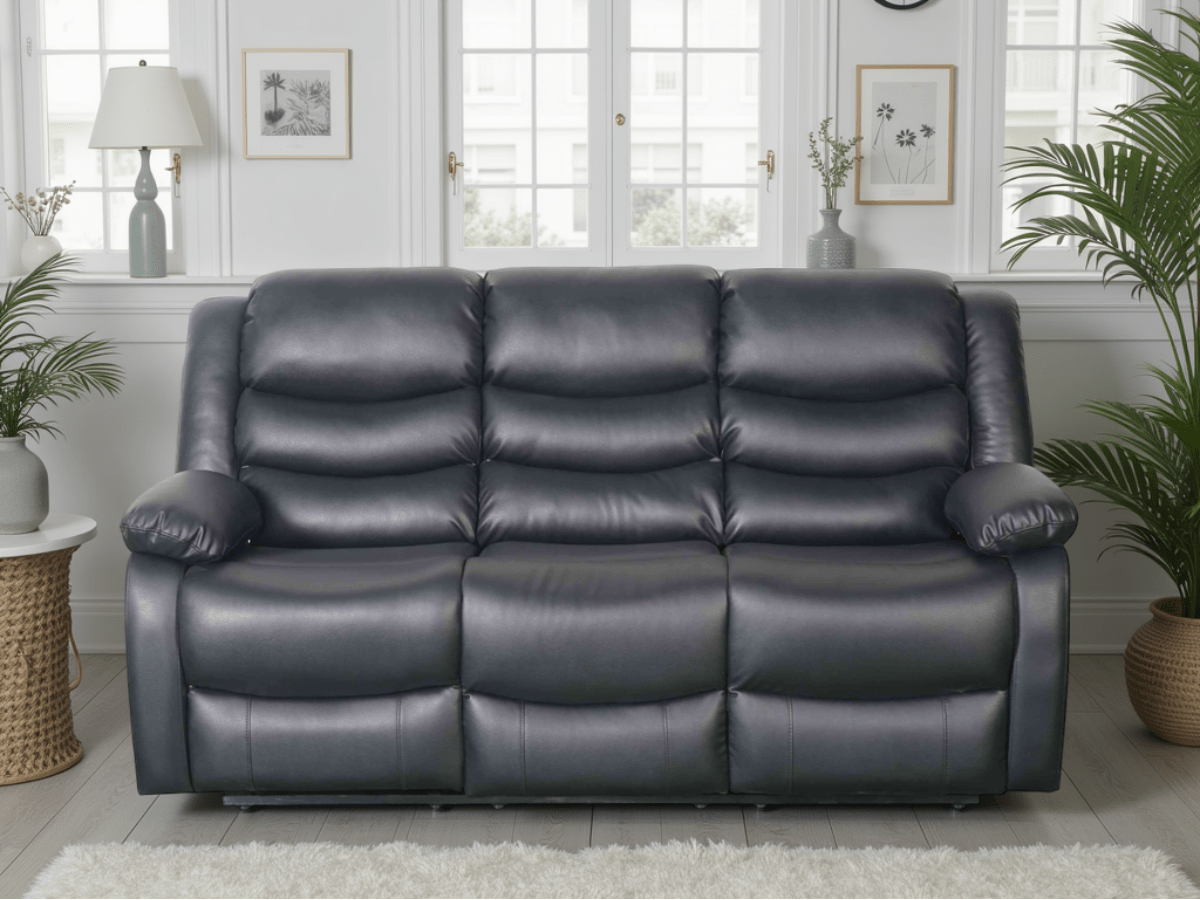
To clean a leather sofa, wipe the surface with a soft damp cloth to remove surface dirt, treat any stains with a mild soap solution or dedicated leather cleaner, then condition the leather to restore moisture and prevent cracking. Most leather sofas can be cleaned safely at home in under 30 minutes.
The method varies depending on whether your sofa is genuine leather, faux leather, or a specific colour like cream or white — each has its own considerations. This guide covers all of them.
Genuine Leather vs Faux Leather: Know What You Have
Before cleaning, it's worth confirming which type of leather your sofa is made from — the cleaning approach differs meaningfully between them.
Genuine leather is made from animal hide and has a natural grain, slight imperfections, and a distinctive smell. It's breathable, durable, and responds well to leather-specific cleaners and conditioners. Without regular conditioning, genuine leather dries out and cracks over time.
Faux leather — also sold as PU leather, synthetic leather, imitation leather, or artificial leather — is made from a fabric base coated with polyurethane or PVC. It looks similar to genuine leather but doesn't breathe, doesn't need conditioning in the same way, and can peel or flake with age. It's generally more resistant to spills but less tolerant of harsh chemicals.
If you're unsure which you have, check the product label or care tag on the sofa. Genuine leather will usually state "100% leather" or "top grain leather"; faux leather will often say "PU leather", "bonded leather", or "synthetic".
What You'll Need
For genuine leather:
- Soft microfibre cloths (two or more)
- Mild soap — a few drops of washing-up liquid or saddle soap
- Warm water
- Dedicated leather conditioner
- Leather cleaner for deeper cleaning
For faux, artificial or imitation leather:
- Soft microfibre cloths
- Mild washing-up liquid and warm water
- White vinegar (for disinfecting)
- Isopropyl alcohol (for stubborn marks — diluted 1:1 with water)
Always avoid on any leather type: bleach, ammonia-based cleaners, acetone, baby wipes containing alcohol, and abrasive scrubbing pads.
How to Clean a Leather Sofa at Home: Step-by-Step
Step 1: Dust and Vacuum First
Before any liquid is applied, vacuum the sofa using an upholstery attachment to remove loose dust, crumbs, and debris. Pay particular attention to the seams, crevices, and the gaps between cushions — dirt trapped in these areas can scratch the leather surface during cleaning.
Step 2: Wipe Down With a Damp Cloth
Dampen a soft microfibre cloth with plain warm water — wrung out well so it's barely damp rather than wet. Wipe the entire sofa surface in gentle, circular motions. This lifts surface dust and light grime without introducing excess moisture.
Never use a soaking wet cloth on leather — water left to sit on the surface can cause staining, particularly on lighter coloured sofas.
Step 3: Clean With a Mild Soap Solution
Mix two to three drops of mild washing-up liquid into 500ml of warm water. Dip a clean cloth into the solution, wring it out thoroughly, and wipe the sofa in sections using gentle circular motions. Work systematically — one cushion, one panel at a time.
Wipe each section with a clean damp cloth to remove any soap residue, then dry immediately with a dry cloth. Never leave soap residue to dry on the surface — it dulls the finish and can cause cracking over time.
Step 4: Treat Stains
For ink, food, or drink stains on genuine leather:
- Act quickly — the longer a stain sits, the harder it is to remove
- Blot immediately with a dry cloth to absorb as much as possible — never rub
- Apply a small amount of leather cleaner to a cloth and work gently from the outside of the stain inward
- Wipe clean and dry thoroughly
For stubborn stains on genuine leather that won't respond to soap solution, a dedicated leather cleaner is the most reliable option. Apply according to the product instructions and always test on a hidden area first.
Step 5: Condition the Leather
This step applies to genuine leather only and is one of the most important — and most overlooked — parts of leather sofa maintenance.
Apply a small amount of leather conditioner to a clean, dry cloth and work it into the leather surface using circular motions. The conditioner restores the natural oils that cleaning removes, keeping the leather supple and preventing the surface from drying out and cracking.
Condition genuine leather sofas two to four times per year — more frequently in rooms with central heating or direct sunlight, both of which accelerate drying.
How to Clean a Cream Leather Sofa
Cream leather shows marks and discolouration more readily than darker leather, and requires a slightly more careful approach to avoid yellowing or tide marks.
- Use the mildest possible cleaning solution — a very small amount of washing-up liquid in warm water, or a dedicated cream leather cleaner
- Wring the cloth out completely before applying to the surface — excess moisture is the most common cause of tide marks on cream leather
- Work in small sections and dry each section immediately after wiping — don't allow damp patches to sit
- Treat denim dye transfer promptly — blue dye from jeans is one of the most common issues on cream leather sofas. Apply a dedicated leather dye remover as soon as possible; the longer it sits, the harder it becomes to remove
- Condition regularly — cream leather benefits from conditioning every two to three months to maintain its colour and prevent yellowing
What to avoid on cream leather: any cleaner containing bleach or harsh brightening agents, baby wipes, and coloured cloths that could transfer dye onto the pale surface.
Explore cream corner sofas if you're considering a cream leather or fabric sofa for your home.
How to Clean a White Leather Sofa
White leather requires the same approach as cream but with even greater care around dye transfer and yellowing. Everything used on the sofa — cloths, cleaning products, even the clothes you're wearing — should be colour-safe.
For general cleaning, a solution of equal parts white vinegar and warm water applied with a white microfibre cloth is one of the safest and most effective methods for white leather. White vinegar is mildly acidic, cuts through grease and grime, and won't yellow the surface.
For yellowing that has already occurred — often caused by sunlight exposure or cleaning product build-up — a dedicated white leather restorer applied according to the product instructions is the most reliable solution.
How to Clean a Faux Leather Sofa
Faux leather — also sold as PU leather, synthetic leather, or imitation leather — is more resistant to spills than genuine leather but less forgiving of certain cleaning products, particularly alcohol-based cleaners used at full strength.
General cleaning: Wipe with a soft cloth dampened with mild soapy water. Faux leather doesn't need conditioning, but regular wiping keeps the surface from dulling. Dry after each clean to prevent water marks.
For stubborn marks on faux leather: Mix isopropyl alcohol 1:1 with water and apply with a soft cloth, blotting rather than rubbing. Test in a hidden area first — some PU coatings are sensitive to alcohol at any concentration.
For artificial or imitation leather sofas: The approach is identical to faux leather above. These terms are largely interchangeable in the UK market and refer to the same PU or PVC-coated synthetic material.
What to avoid on faux leather: acetone or nail polish remover, undiluted alcohol, bleach, and abrasive sponges or scourers — all of these can lift, crack, or discolour the PU coating permanently.
If you're browsing for a black corner sofa in faux leather or a grey corner sofa in PU fabric, Airedale Livings range includes a variety of easy-care finishes suited to busy households.
How to Disinfect a Leather Sofa
To disinfect a leather sofa safely without damaging the surface:
Genuine leather: Mix equal parts white vinegar and warm water. Apply with a soft cloth using light circular motions and wipe dry immediately. White vinegar is a natural disinfectant that won't harm the leather surface when diluted.
Faux or artificial leather: The same vinegar solution works well. Alternatively, a diluted isopropyl alcohol solution (1:1 with water) is effective and evaporates quickly, minimising moisture exposure.
What not to use: Antibacterial sprays and wipes containing bleach, high-concentration alcohol, or strong fragrance — these strip the surface finish on genuine leather and can crack or lift the coating on faux leather.
Can You Steam Clean a Leather Sofa?
No — steam cleaning is not recommended for leather sofas of any type.
The high heat and moisture from a steam cleaner can cause genuine leather to dry out, crack, and lose its natural oils. On faux or PU leather, steam can cause the coating to bubble, peel, or warp — damage that is impossible to reverse.
If you're looking for a deep clean on a leather sofa, use a dedicated leather cleaner applied manually rather than any steam-based method. For fabric sofas where steam cleaning is appropriate, read our guide on how to clean a fabric sofa for a full breakdown of safe methods by fabric type.
How to Deep Clean a Leather Sofa
A deep clean goes beyond the routine wipe-down to address embedded grime, body oil build-up, and ingrained marks.
- Vacuum thoroughly — including all seams, crevices, and under cushions
- Clean the full surface with a leather cleaner, working in sections and buffing dry as you go
- Address all stains individually using appropriate stain treatment
- Wipe down all non-leather elements — legs, feet, and any fabric panels
- Condition fully once the sofa is clean and completely dry — apply conditioner generously and buff to a soft shine
- Allow to rest for several hours before use so the conditioner absorbs fully
Deep clean a genuine leather sofa once or twice a year, with routine cleaning every two to four weeks depending on use.
Leather Sofa Cleaning: Quick Reference Guide
| Leather Type | Safe Cleaners | Avoid | Conditioning Needed |
|---|---|---|---|
| Genuine leather | Mild soap, leather cleaner, diluted vinegar | Bleach, alcohol, ammonia | Yes — 2–4x per year |
| Faux / PU leather | Mild soap, diluted alcohol (1:1), vinegar | Acetone, bleach, abrasives | No |
| Cream leather | Mild soap, cream leather cleaner | Bleach, coloured cloths, baby wipes | Yes — every 2–3 months |
| White leather | Vinegar and water, white leather cleaner | Any coloured products, bleach | Yes — every 2–3 months |
| Artificial / imitation leather | Mild soap, diluted alcohol (1:1) | Acetone, undiluted alcohol | No |
Frequently Asked Questions
How do you clean a leather sofa at home?
Vacuum first, then wipe with a barely damp cloth. Clean with a mild soap solution applied with a wrung-out cloth, working in sections. Wipe dry immediately. Finish by applying leather conditioner to genuine leather sofas to restore moisture and suppleness.
How do you clean a cream leather sofa?
Use a very dilute mild soap solution applied with a well-wrung cloth, working in small sections and drying immediately. Treat denim dye transfer promptly with a leather dye remover. Condition every two to three months and avoid any bleach-based or brightening products.
How do you clean a faux leather sofa?
Wipe with mild soapy water applied with a soft cloth and dry after each clean. For stubborn marks, use isopropyl alcohol diluted 1:1 with water, testing in a hidden area first. Avoid acetone, bleach, and abrasive materials.
Can you steam clean a leather sofa?
No. Steam cleaning is not safe for any type of leather sofa. The heat and moisture can cause genuine leather to crack and dry out, and can cause the coating on faux leather to bubble or peel. Use a leather cleaner applied manually instead.
How do you disinfect a leather sofa?
Mix equal parts white vinegar and warm water and apply with a soft cloth using light circular motions. Wipe dry immediately. For faux leather, a diluted isopropyl alcohol solution (1:1 with water) is also effective.
How do you deep clean a leather sofa?
Vacuum thoroughly, clean the full surface with a leather cleaner working in sections, treat all stains individually, then condition the entire sofa once clean and dry. Allow several hours for the conditioner to absorb before using the sofa again.
How do you clean an artificial leather sofa?
Artificial and imitation leather is the same material as faux or PU leather. Clean with mild soapy water and a soft cloth, dry after wiping, and use diluted isopropyl alcohol for stubborn marks. Avoid acetone, bleach, and abrasive cleaners.
Explore Aireale Living Sofa Range
A well-maintained sofa lasts significantly longer — but there comes a point where a fresh start makes more sense. Browse full sofa collection to find your next piece, or explore our corner sofa range in grey, beige, cream, and black.
If you're considering a large corner sofa or a U-shaped sofa for a bigger space, our guide to how to choose the right corner sofa covers everything from size to configuration to orientation. And if you've just taken delivery, read how to position a corner sofa in your living room for layout ideas that make the most of your space.
New sofa arriving soon? Read our guide to how corner sofas are delivered so you know exactly what to expect on the day.
Share:
How to Clean a Fabric Sofa: The Complete Guide
How to Wash Sofa Covers Without Shrinking