
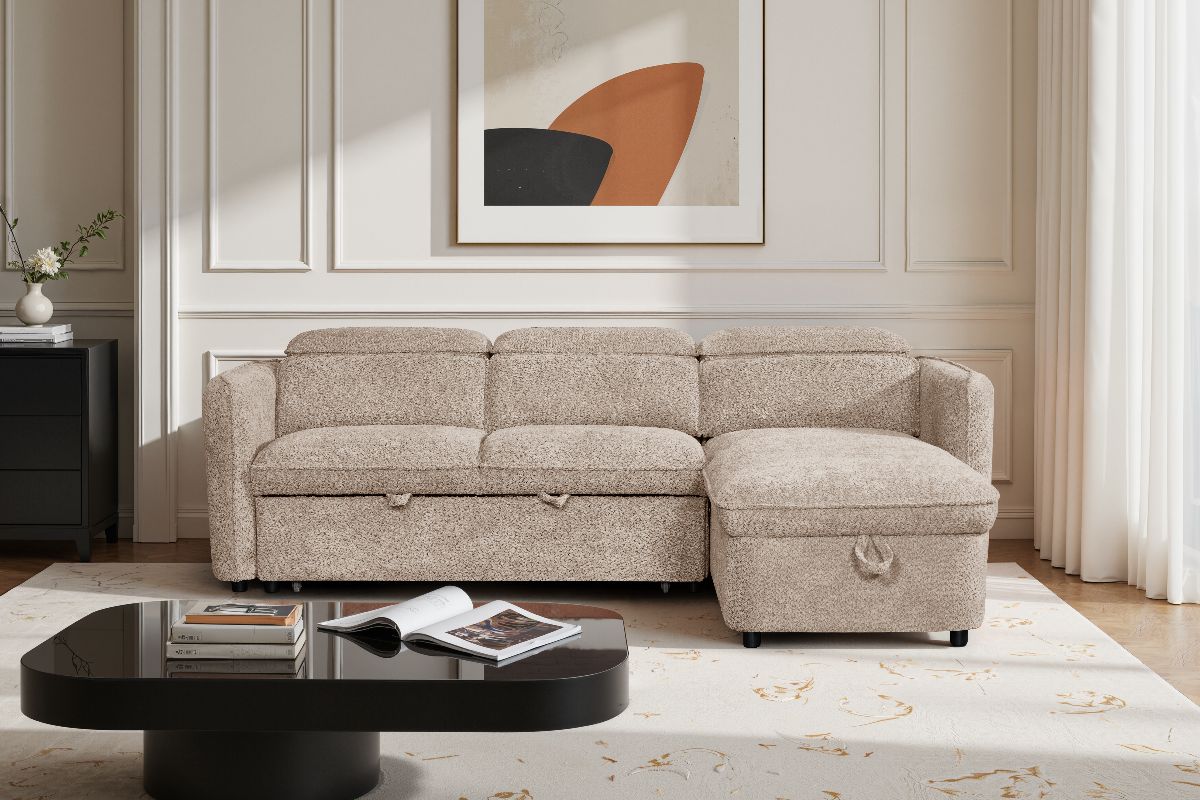
Choosing a corner sofa comes down to six key decisions: the size, the configuration, the orientation, the style, the fabric, and whether it fits your room and access points. Get these right and a corner sofa will be one of the best investments you make for your home — generous, practical, and genuinely transformative in a living space.
This guide walks through each decision in turn, with signposts to more detailed guides where helpful.
Is a Corner Sofa Right for Your Room?
Before diving into specifics, it's worth confirming that a corner sofa is the right choice for your space at all.
A corner sofa works best when you have two walls that can anchor it, enough floor area to accommodate the L-shape without blocking walkways, and a room layout where the corner position makes sense relative to the TV or focal point. Most UK living rooms — even modestly sized ones — can accommodate a corner sofa if the right size and configuration is chosen.
A corner sofa is a practical choice if:
- You need seating for four or more people regularly
- You want to define a seating zone in an open-plan space
- You have a corner or two adjacent walls available
- You want to maximise seating without cluttering the room with multiple separate pieces
It may not be the right choice if:
- Your room is very narrow and the return section would block movement
- You only need seating for two or three people
- Your room layout has no suitable corner or wall configuration
If you're working with a smaller room, our guide to styling a corner sofa in a small living room covers how to make it work without overwhelming the space.
Step 1: Choose the Right Size
Size is the single most important decision. A corner sofa that's too large will dominate the room and restrict movement; one that's too small will look lost and underwhelm the space.
Standard UK corner sofa sizes:
| Size | Longest Side | Shorter Return | Best For |
|---|---|---|---|
| Small | 200–230cm | 140–160cm | Compact rooms, flats |
| Medium | 230–260cm | 160–190cm | Average UK living rooms |
| Large | 260–300cm | 190–220cm | Generous rooms |
| U-shaped | 280–350cm | 180–250cm | Large or open-plan spaces |
As a general rule, leave at least 45cm between the sofa and any opposing furniture, and keep at least one-third of the floor area clear to maintain a sense of space and proportion.
For a full breakdown of sizes by room and configuration, read how big is a corner sofa. To measure your room accurately before buying, our guide on how to measure a corner sofa covers every step from room dimensions to doorway access.
Step 2: Choose the Right Configuration
Corner sofas come in several configurations, each with a different footprint and feel. Understanding the difference helps you match the sofa to how you actually use your living room.
L-Shaped Corner Sofa
The most popular configuration is the L shaped sofa. One long main run meets a shorter return section at a right angle. Versatile, widely available, and suited to most room layouts. A good starting point if you're unsure.
Chaise Corner Sofa
A hybrid between a standard sofa and a corner sofa. One end extends into a longer lounging section rather than a full return. Slightly more compact than a traditional L-shape and ideal if one person regularly stretches out.
U-Shaped Sofa
Three sections wrapping around on both sides. The largest configuration by footprint — best suited to genuinely generous rooms or open-plan spaces. Exceptional for families and entertaining. Browse Airedale Living U-shaped sofas to see the full range.
Modular Corner Sofa
Built from individual sections that can be arranged and rearranged. Highly flexible, easier to move and deliver, and ideal if your living situation is likely to change. Most corner sofas are delivered in modular sections.
How Many Pieces Does a Corner Sofa Come In?
Most corner sofas are delivered in two to four sections depending on the configuration. A standard L-shape typically arrives in two or three pieces — a main sofa section, a corner unit, and sometimes a separate chaise or ottoman. A U-shaped sofa may arrive in three to five sections. This modular delivery makes access through hallways and doorways significantly easier, but it's still worth checking the dimensions of individual sections against your access points before ordering.
For a full overview of the different configurations, read our guide to corner sofa types explained.
Step 3: Choose the Right Orientation
Once you've settled on a size and configuration, you need to decide on left-hand or right-hand facing — which side the chaise or return section extends to.
Left-hand facing (LHF): The chaise extends to the left when you stand facing the sofa. Right-hand facing (RHF): The chaise extends to the right when you stand facing the sofa.
The right choice depends on:
- Which side of the room has the most available wall space
- Which orientation gives the best sightline to the TV
- Which layout keeps doorways and walkways clear
Stand in the room facing the wall the sofa will back onto, then decide which side feels more natural for the chaise. Use masking tape to mark both options on the floor — it takes two minutes and almost always makes the decision obvious.
For a complete guide to working out your orientation, read left-hand vs right-hand corner sofa: how to choose.
Step 4: Choose the Right Style
With size, configuration, and orientation confirmed, the enjoyable part begins. Corner sofas span a wide range of aesthetic styles — and the right choice depends on the look and feel you want to achieve in your room.
Contemporary and Modern
Clean lines, minimal arms, and a low profile. Works well in modern, open-plan spaces and pairs beautifully with wooden flooring and neutral walls.
Scandi and Mid-Century
Tapered wooden legs, understated silhouettes, and a considered use of colour and texture. Adds warmth and character without visual noise.
Classic and Traditional
Fuller arms, deeper seats, and more substantial proportions. Suited to period properties and rooms with traditional detailing.
Cinema and High-Back
Generously proportioned with high backs and deep seats — built for comfort above all else. Ideal for dedicated TV rooms and media spaces. Explore cinema sofas if this is the look you're after.
Not sure which style fits your home? Browse the best corner sofas for 2026 for curated picks across every aesthetic.
Step 5: Choose the Right Fabric and Colour
The fabric you choose affects not just the look of your sofa but how it wears over time — particularly important for a piece that gets as much daily use as a corner sofa.
Fabric options to consider:
- Boucle: Textured, tactile, and on-trend. Works beautifully in neutral and warm toned rooms. Best in lower-traffic spaces or homes without pets
- Velvet: Rich, luxurious, and surprisingly durable when high-quality. Adds warmth and depth to any room
- Linen and weave: Breathable, relaxed, and versatile. Suits both modern and traditional interiors
- Leather and faux leather: Hardwearing, easy to clean, and timeless. A strong choice for families and high-traffic rooms
Colour is equally important. Neutral tones — grey, beige, and cream — are the most versatile and easiest to style around. Black makes a bold, considered statement and works particularly well in contemporary and industrial-influenced rooms.
Step 6: Check Delivery Access
Even the perfect sofa becomes a problem if it can't get into the room. Before you order, measure every access point it will need to pass through — front door, hallway, any staircases, and the internal doorway into your living room.
Allow at least 10–15cm of clearance on each side of a sofa section passing through a doorway. Because most corner sofas arrive in sections, delivery is usually more straightforward than people expect — but tighter properties with narrow hallways or steep staircases are always worth checking in advance.
Our how to measure a corner sofa guide includes a full access point checklist.
How to Order a Corner Sofa: What to Confirm Before You Buy
Before placing your order, run through this checklist:
| What to Confirm | Why It Matters |
|---|---|
| Overall dimensions (width x depth) | Ensures it fits the room |
| Individual section dimensions | Ensures it fits through access points |
| Left-hand or right-hand orientation | Cannot be changed after ordering in most cases |
| Fabric and colour | Check swatches in your home before committing if possible |
| Delivery timescale | Lead times vary — confirm before purchasing |
| Returns and trial period | Know your options if the sofa doesn't work in the room |
| Finance options | Airedale Living offers 3, 6, and 12 month finance on selected sofas |
Frequently Asked Questions
How do I know what corner sofa I need?
Start with your room size — measure the available wall space along both sides of your planned sofa position. Then decide on configuration (L-shape, chaise, or U-shape), orientation (left or right hand facing), and style. Use masking tape to mark the footprint on your floor before buying.
How do I choose a corner sofa for my living room?
Measure your room first, then work through size, configuration, orientation, style, and fabric in that order. Prioritise fit and proportion over aesthetics — a sofa that's the wrong size or orientation will never feel right, regardless of how good it looks.
How practical is a corner sofa?
Very practical for most households. A corner sofa consolidates seating into one generous piece, defines the room layout, and eliminates the need for multiple separate seats. It's particularly well suited to families, regular entertainers, and anyone who values a proper lounging sofa.
How many pieces does a corner sofa come in?
Most corner sofas are delivered in two to four sections. A standard L-shape typically arrives in two or three pieces; a U-shape in three to five. Modular delivery makes access significantly easier and means individual sections can be manoeuvred through tight hallways and doorways.
How do I order a corner sofa?
Confirm the dimensions, orientation, fabric, and delivery details before placing your order. Check that each delivered section will fit through your access points, and clarify the returns policy in case adjustments are needed once the sofa is in the room.
How do I choose between a left-hand and right-hand corner sofa?
Stand in your room facing the wall the sofa will back onto. The side where you want the chaise to extend determines your orientation — left for LHF, right for RHF. Read our full guide on left-hand vs right-hand corner sofas for a step-by-step walkthrough.
Ready to Find Your Corner Sofa?
Browse full corner sofa collection, explore our large corner sofas for generous spaces, or shop by colour — grey, beige, cream, and black. If you'd like to see what's performing best right now, head to our best sellers or check out new arrivals.
Still researching? Explore our full sofa collection or browse sofa beds and armchairs to complete your living room.
Share:
Left-Hand vs Right-Hand Corner Sofa: How to Choose the Right Side
How to Arrange Cushions on a Corner Sofa (+ How Many You Need)