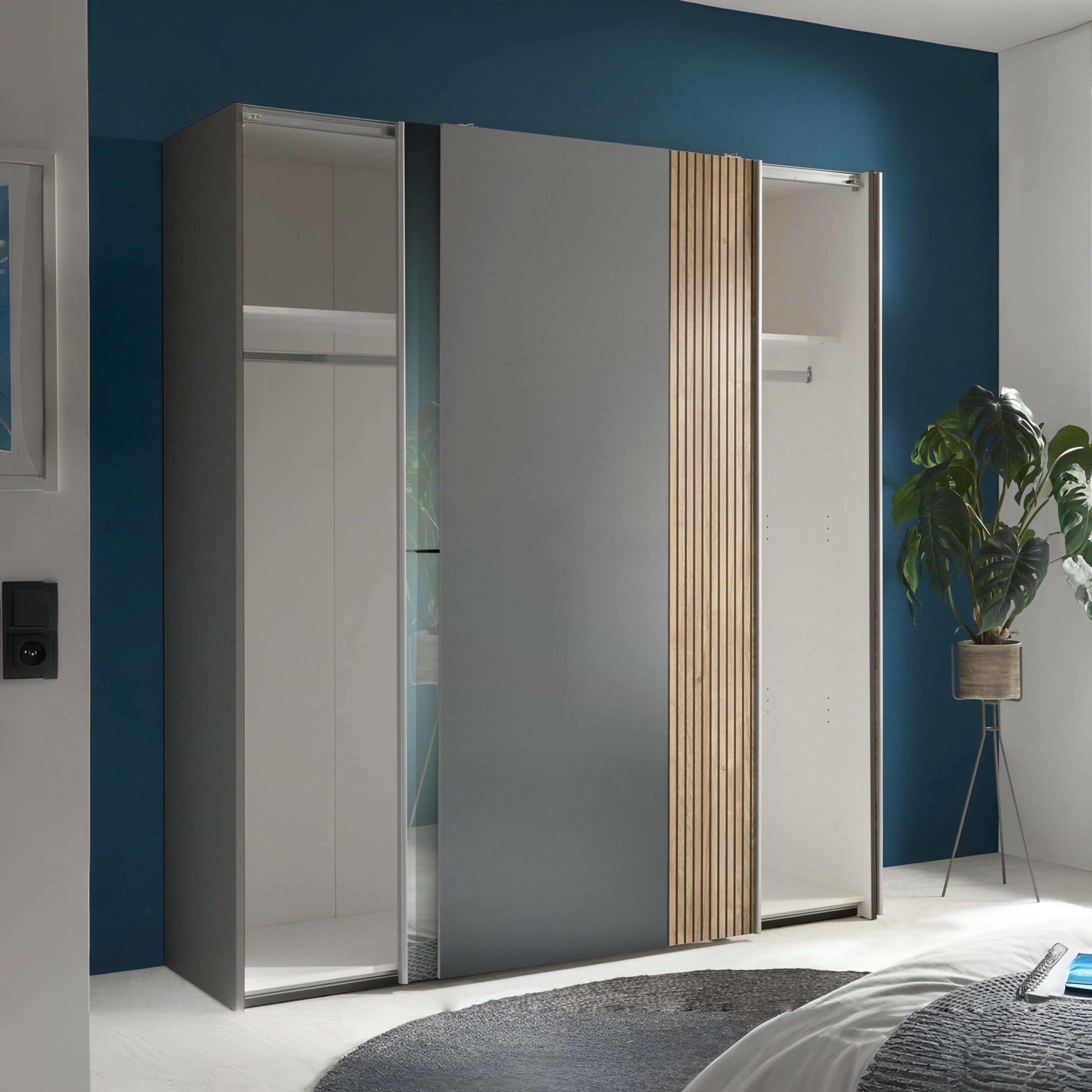
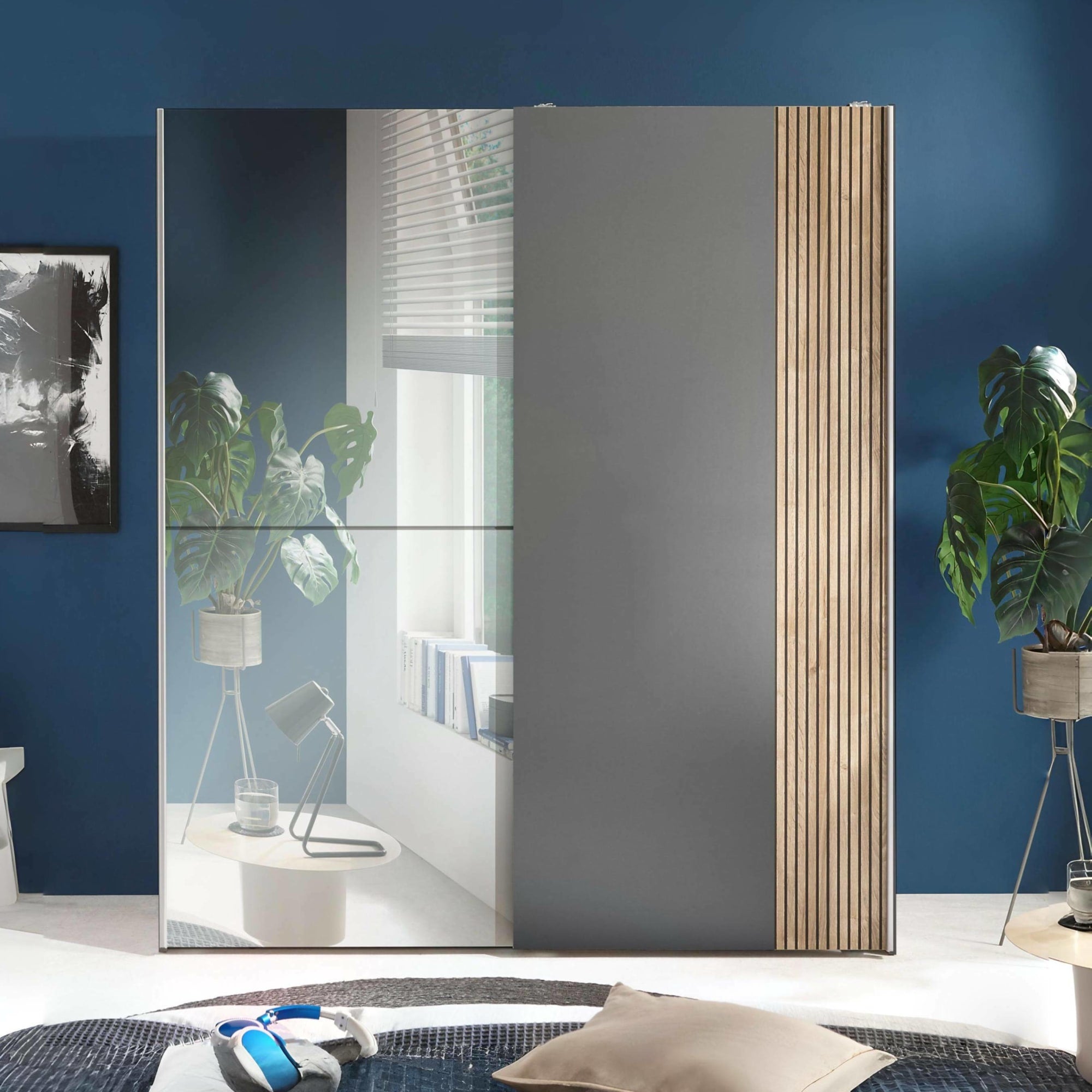
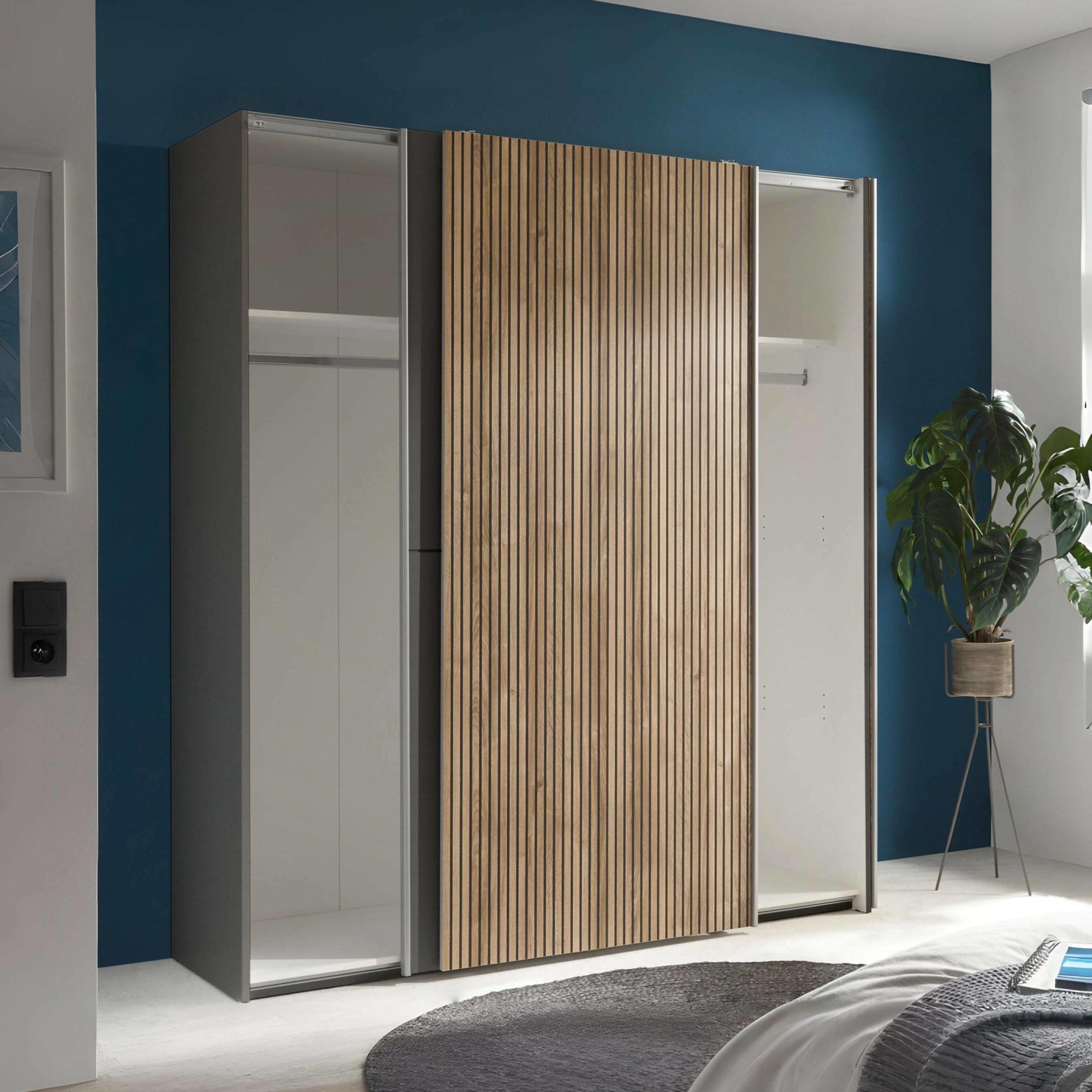
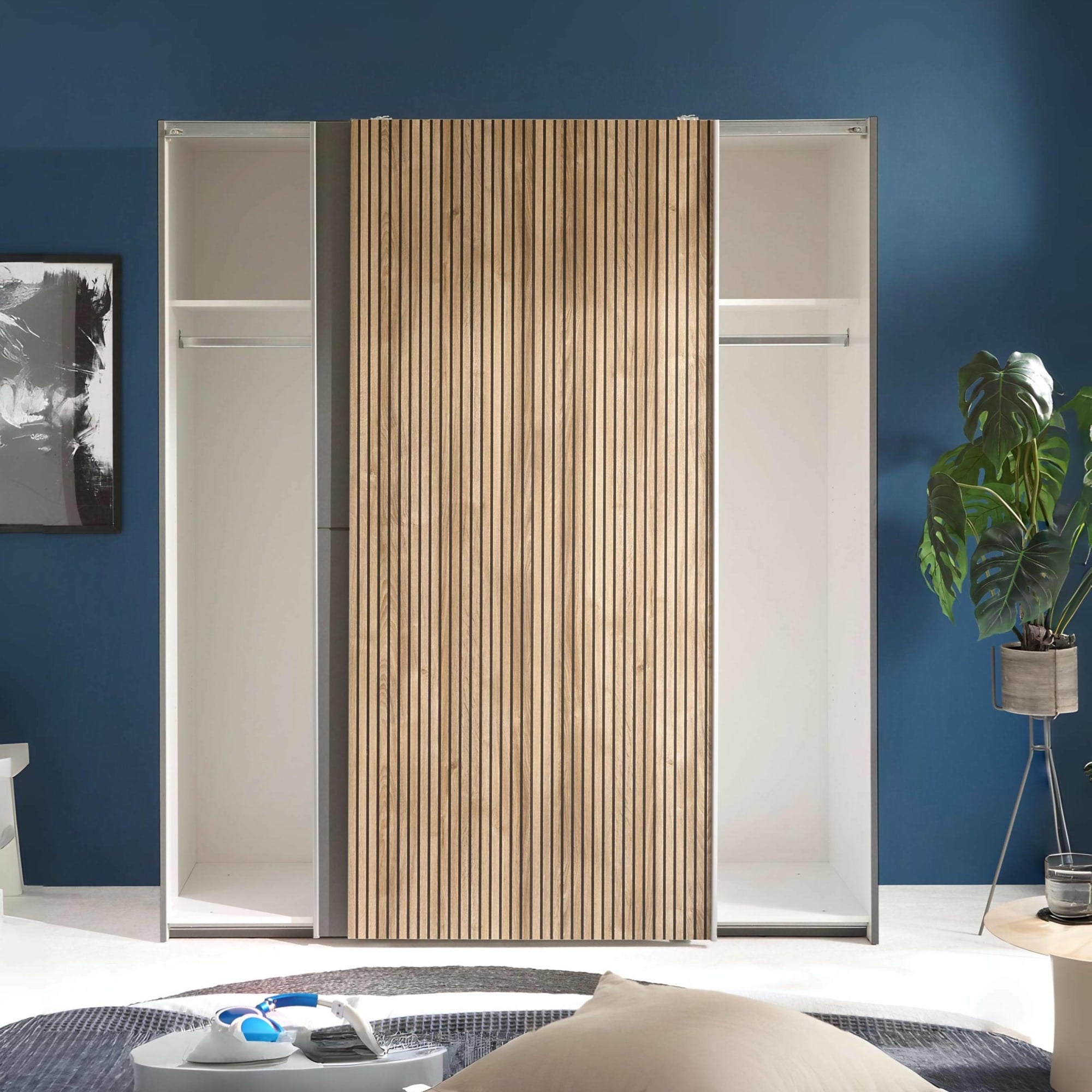
A sliding door wardrobe is the most space-efficient wardrobe format for bedrooms where the floor area in front of the wardrobe is limited — the doors slide laterally rather than swinging outward, which means no floor clearance is required beyond comfortable standing space. Where a hinged-door wardrobe of the same width needs 50–60cm of clear floor depth in front of it for the doors to open fully, a sliding door wardrobe needs only the space to stand. At Airedale Living, our sliding door wardrobes are available in mirrored, wooden panel, and combination door finishes across a range of frame sizes and colours. Browse the full collection above and use the filters to find the right width, finish, and configuration for your bedroom. Free UK delivery is included on every order.

2 products

Sliding Door Wardrobes: How They Work and When They're the Right Choice

Sliding door wardrobes operate on a track system — a top rail, bottom rail, or both, along which the door panels slide laterally. The doors don't open into the room; they move across the face of the wardrobe, with each door panel typically overlapping the adjacent one when moved to one side. This means that at any one time, half the wardrobe interior is accessible — the section behind the open door panel. To access the full interior, you move the doors in opposite directions.

When sliding doors are clearly the right choice. The floor space in front of the wardrobe is less than 60cm — the minimum comfortable clearance for a hinged door to open fully. This is common in bedrooms where the bed is positioned directly opposite the wardrobe, leaving limited space between the bed foot and the wardrobe face. A sliding door wardrobe in this scenario is not just a stylistic preference — it's the only format that functions practically. Sliding doors also suit long walls where a large wardrobe (180cm+ wide) with multiple hinged doors would require significant room depth to open all doors simultaneously.

When hinged doors may actually serve better. The wardrobe is in a room with generous floor depth — 60cm or more of clear space in front. Hinged doors give full, unrestricted access to the entire interior simultaneously — every hanging rail, shelf, and drawer visible and reachable at once. Sliding doors always partially obscure part of the interior when open, which can be mildly inconvenient for wardrobes where items are stored across the full width. If floor depth isn't the constraint, hinged doors from the wardrobes collection offer more complete access to the interior.

Sliding Wardrobe Door Types: Mirrored, Panel, and Combination

Mirrored sliding doors. The most popular sliding wardrobe door finish — and for practical reasons. A mirrored sliding wardrobe provides a full-length mirror within the wardrobe's existing footprint, eliminating the need for a separate wall mirror and making the most of a bedroom feature that's going to be on the wall regardless. Mirrored doors also reflect light outward, which makes the bedroom feel larger and brighter — a genuine practical advantage in smaller bedrooms or north-facing rooms where light is a consideration. Mirrored doors suit almost any bedroom aesthetic and are the default choice for most buyers who don't have a specific reason to choose otherwise.

Wooden panel sliding doors. Panel doors in oak, white, grey, black, or other solid finishes give the wardrobe a more furniture-like quality — it reads as a wardrobe rather than a mirror wall, which some buyers prefer particularly in rooms where a large mirror would feel overwhelming or out of keeping with the interior style. Wooden panel sliding wardrobes suit Scandi, traditional, and contemporary bedroom schemes where the wardrobe is expected to integrate into the furniture arrangement rather than become a reflective focal point. Available in finishes to coordinate with chest of drawers, bedside tables, and dressing tables in the same colour family.

Combination doors. Some sliding wardrobe models use a combination of mirrored and panel sections — a mirror in the centre panel with solid panels on each side, or alternating mirror and panel doors. These provide some light-reflecting benefit without the full mirror-wall effect, and can create a more layered, interesting visual than a fully mirrored front. Combination doors suit bedrooms where some mirror is wanted but full mirroring feels too dominant.

Frame colour. The sliding door frame — the rail and side sections visible when the doors are closed — is available in silver, chrome, black, and wood-effect finishes depending on the model. The frame colour should complement the door finish and the surrounding bedroom furniture. Silver and chrome frames suit mirrored doors and contemporary interiors. Black frames suit both mirrored and dark panel doors and create the sharpest, most defined sliding wardrobe aesthetic. Wood-effect frames suit panel doors in warm finishes.

Sliding Wardrobe Sizing and Track Systems: What to Know Before Ordering

Sizing a sliding door wardrobe. Measure the available wall width carefully — sliding wardrobes are typically available in standard widths from 90cm to 270cm, and some models allow modular configuration. Subtract 2–3cm from each end for fitting clearance. Unlike hinged-door wardrobes, the floor depth requirement in front is minimal — 60–70cm of standing space is sufficient — which means the usable space beside and in front of the wardrobe is less constrained.

Height. Sliding door wardrobes are typically available in standard heights of 190–210cm, designed for standard UK ceiling heights of 240cm. This leaves a gap above the wardrobe that can be used for storage boxes or left clear. For rooms with lower ceilings or for a built-in look, check individual product pages for maximum height options.

Track systems. Sliding wardrobe doors operate on one of two track configurations: top-hung or bottom-rolling. Top-hung systems carry the weight of the door on the upper track — the bottom rail serves only as a guide, keeping the door panel stable. These tend to produce a smoother, quieter sliding action and are less susceptible to debris accumulating in the bottom track. Bottom-rolling systems carry the door weight on a lower rail with wheels or rollers — typically more affordable, more widely available, and still smooth when well-maintained, but the bottom track can accumulate dust and debris that occasionally affects the rolling action. Both systems are widely used in quality sliding wardrobes. Check individual product pages for the track system specified.

Sliding wardrobe door kits. Some buyers search for sliding door kits to retrofit onto an existing wardrobe frame or alcove. Airedale Living sliding door wardrobe collection covers complete freestanding wardrobe units rather than retrofit door kits. If you're looking to add sliding doors to an existing alcove or frame, a specialist joinery or fitted wardrobe supplier is the more appropriate source. Our freestanding sliding door wardrobes provide a complete, self-contained unit that installs against a wall without any alcove or existing frame.

Completing the Bedroom with a Sliding Door Wardrobe

A sliding door wardrobe is the storage centrepiece of most bedrooms — the piece that most visually defines the wall it occupies. The surrounding furniture works best when it complements rather than competes. Bedside tables in a finish that relates to the wardrobe frame colour — warm wood alongside an oak panel sliding wardrobe, or white alongside a white-framed mirrored wardrobe — create coherence without requiring exact matching.

If the sliding wardrobe's interior doesn't include an integrated drawer section, a chest of drawers positioned beside or elsewhere in the room handles folded clothing storage. A dressing table provides a dedicated getting-ready surface — particularly useful when the sliding wardrobe's mirrored doors aren't conveniently positioned for daily use at seated height. For rooms where an additional wall mirror is wanted, see the mirrors collection.

Browse the full wardrobes collection to compare sliding and hinged options side by side, the wardrobes with drawers collection for combination hanging and drawer storage, and the complete bedroom furniture collection to plan the full room.

Every Airedale Living sliding door wardrobe comes with free UK delivery and arrives ready for self-assembly with all fixings and instructions included.

Browse the full sliding door wardrobe collection above — and find the format that makes your bedroom work better without sacrificing a centimetre of floor space.

Frequently Asked Questions

Sliding wardrobe doors move laterally along a track — they require no floor clearance in front of the wardrobe beyond standing space, making them the more practical choice when the room depth in front of the wardrobe is limited. Hinged wardrobe doors swing outward into the room — they require 50–60cm of clear floor depth in front for each door to open fully, but give unrestricted access to the entire interior simultaneously. Sliding doors always partially obscure part of the interior when open (the section behind the door being used). For rooms with adequate floor depth in front of the wardrobe, hinged doors offer more complete interior access. For rooms where the bed or other furniture limits floor depth, sliding doors are the practical solution.

Sliding wardrobe doors operate on a track system — either top-hung (weight carried on an upper rail, bottom rail acts as a guide) or bottom-rolling (weight carried on a lower rail with rollers or wheels). The door panels slide laterally along the track, moving across the face of the wardrobe. On a 2-door sliding wardrobe, the doors move in opposite directions — one slides left, one slides right — giving access to one half of the interior at a time. On a 3-door model, the outer doors slide behind the central door, giving access to two thirds of the interior simultaneously. The track system requires no specialist installation — the rails are fixed to the wardrobe frame during self-assembly.

Sliding door retrofit kits exist for fitting doors to existing alcoves or freestanding frames, but Airedale Living sliding door wardrobe range covers complete freestanding wardrobe units rather than retrofit door kits or systems. If you're looking to add sliding doors to an existing alcove or joinery frame, a specialist fitted wardrobe or joinery supplier is the more appropriate source for retrofit hardware. Our sliding door wardrobes are self-contained freestanding units that install against a wall without requiring an existing frame or alcove.

Sliding wardrobe doors use one of two main track systems. Top-hung systems carry the door weight on an upper rail — the bottom rail acts only as a stabilising guide. These tend to produce a smoother, quieter sliding action and are less affected by floor debris. Bottom-rolling systems carry the door weight on a lower rail with wheels or rollers — typically more affordable and widely available, with smooth performance when maintained, though the bottom track can accumulate dust that occasionally affects the rolling action. Both systems are used in quality sliding wardrobes. Check the individual product page for the track system specified on each model.

Yes in terms of floor clearance required to open the doors. Sliding doors require only comfortable standing space in front of the wardrobe — typically 60–70cm. Hinged doors require 50–60cm of clear floor depth per door panel to swing open fully — for a double wardrobe with two doors, this means 50–60cm of floor depth must be kept clear in front of the full wardrobe width. In a bedroom where the bed is positioned opposite the wardrobe with limited space between the bed foot and the wardrobe face, sliding doors are not just more space-saving but the only practical door format. In rooms with generous floor depth, the space saving is less critical — and hinged doors provide the advantage of full, simultaneous interior access. Browse the full wardrobes collection to compare both formats.