
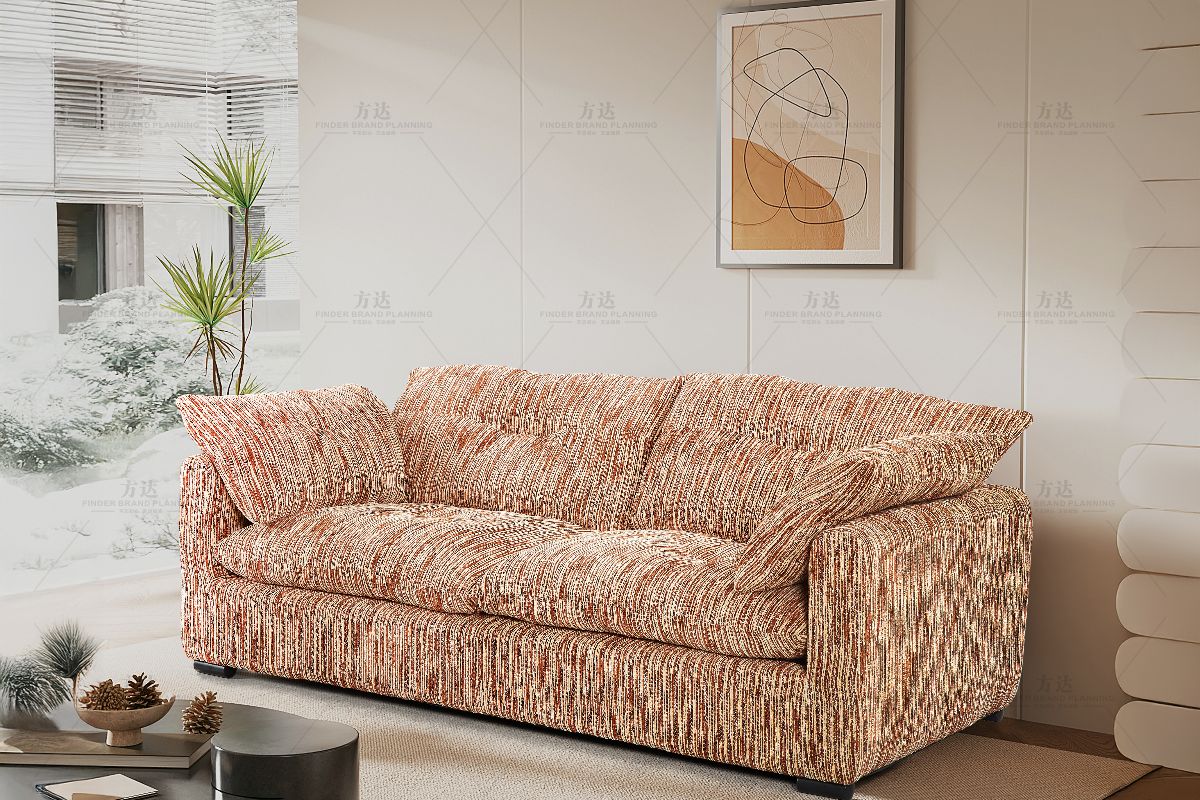
The most effective ways to make a sofa more comfortable are replacing or upgrading the cushion inserts, adding a memory foam sofa topper, raising the height with sofa risers, and improving back support with strategically placed lumbar cushions. Most uncomfortable sofas can be significantly improved without replacement — it usually comes down to identifying the specific problem first.
This guide covers every common comfort issue with practical, tested solutions.
Step 1: Identify the Problem
Before reaching for a solution, it helps to diagnose exactly what's making your sofa uncomfortable — the fix varies considerably depending on the issue.
| Comfort Problem | Most Likely Cause | Best Fix |
|---|---|---|
| Sofa feels too low | Worn legs, foam compression, or design | Sofa risers or leg replacement |
| Sofa feels too soft or saggy | Compressed or worn foam inserts | Cushion re-stuffing or topper |
| Sofa feels too hard | Low-quality or thin foam | Memory foam topper or cushion upgrade |
| Poor back support | Wrong seat depth or no lumbar support | Lumbar cushions, seat wedge |
| Sofa uncomfortable for back pain | Wrong posture position | Lumbar support, seat height adjustment |
| Sofa bed too hard | Thin or worn mattress | Memory foam mattress topper |
| Armrests too low or too high | Fixed design issue | Armrest pads or repositioning |
How to Make a Sofa More Comfortable: General Fixes
Upgrade the Cushion Inserts
The single most impactful improvement you can make to most sofas is replacing the cushion inserts. Sofa cushion foam compresses over time — what was once a supportive, buoyant seat becomes flat and unsupportive. Replacing the foam inserts with a higher-density foam, or upgrading to a foam and feather combination, restores the sofa to something close to its original feel.
What to look for:
- High-resilience foam (HR foam) — denser and more durable than standard foam, it bounces back after use rather than staying compressed
- Foam and fibre combination — a foam core wrapped in hollow fibre gives a softer, more relaxed feel while maintaining shape
- Duck feather or down inserts — the most luxurious option. Feather cushions are soft and mouldable but require regular plumping
Measure your existing cushion covers before ordering replacement inserts — the insert should be slightly larger than the cover (by approximately 2–3cm) to give a full, well-filled appearance. For guidance on cushion arrangement once upgraded, read how to arrange cushions on a corner sofa — the principles apply to all sofa types.
Add a Sofa Topper or Seat Pad
A memory foam sofa topper or seat pad sits on top of the existing seat cushions and adds an immediate layer of cushioning and support. These are particularly effective for sofas that have become hard or flat over time without the cushion covers needing replacement.
Memory foam toppers conform to body shape, distribute weight evenly, and reduce pressure points — the same technology that makes memory foam mattresses comfortable translates well to sofa seating. Look for a topper of at least 5cm depth for a meaningful improvement in comfort.
Reinforce Sagging Cushions
If the sofa seat sags in the middle — the classic worn sofa problem — the issue may be with the suspension rather than the cushions themselves. Place a sofa saver board (a flat rigid board cut to the size of the seat base) between the cushions and the sofa frame. This levels out the seat, prevents further sagging, and immediately improves the sitting experience without any permanent modification.
How to Raise Sofa Height — and Why It Matters
Sofa height is one of the most overlooked comfort factors — and one of the most impactful. A sofa that sits too low forces your knees above your hips, compresses the lower back, and makes sitting and standing difficult. The ideal sofa seat height for most adults is 42–48cm from the floor.
How to Make a Sofa Higher With Sofa Risers
Sofa risers are blocks or cups that fit under each sofa leg, raising the entire sofa by a fixed amount — typically 5, 8, or 10cm. They're inexpensive, require no tools, and are immediately effective.
How to use sofa risers:
- Measure your current sofa seat height (floor to top of seat cushion)
- Decide how much additional height you need — most people find 5–8cm makes a significant difference
- Choose risers rated to support the weight of your sofa — check the load rating per riser
- Lift each corner of the sofa in turn and slide the riser under the leg
- Check the sofa is stable and level before use
What to check: risers need to match your leg shape — flat-bottomed legs need flat-based risers; round or tapered legs need cup-style risers. Always check the weight rating — a large corner sofa can weigh 90–130kg or more, so each riser needs to be rated accordingly.
How to Make a Sofa Taller With Replacement Legs
If your sofa has screw-in legs, replacing them with longer versions is a clean, permanent solution that looks far better than risers. Most sofa legs use a standard M8 or M10 thread — measure the existing leg thread before ordering replacements. Replacement legs are available in a wide range of heights, materials, and finishes to suit any sofa style.
How to Sit on a Sofa With Lower Back Pain
Sofa design and sitting posture have a significant impact on lower back pain. Most standard sofas encourage a slumped, rounded posture — the cushioned seat compresses under weight, tilting the pelvis backward and flattening the lumbar curve.
The best sitting position for lower back pain on a sofa:
- Sit with your back fully against the sofa back — don't perch at the front of the seat
- Keep your feet flat on the floor — if the sofa is too low, a footstool helps
- Your knees should be at or slightly below hip height — if they're above, the sofa is too low
- Place a lumbar cushion in the small of your back to maintain the natural lumbar curve
- Avoid sitting for extended periods in the same position — shift position regularly
Best sofa features for back pain:
- A firm seat rather than a very soft or sagging one — soft seats encourage pelvic tilting
- A seat depth of 55–65cm — deeper seats force you to perch or slouch; shallower seats keep the pelvis in a better position
- A seat height of 42–48cm — correct height keeps the knees at or below hip level
- Good lumbar support in the sofa back — either built-in or via a lumbar cushion
How to Sit on a Sofa With Sciatica
Sciatica is typically aggravated by positions that stretch or compress the sciatic nerve — particularly deep, soft seating that tilts the pelvis and flexes the hip joint. The same principles as lower back pain apply, with additional attention to:
- Avoid very deep or soft seats — the deeper the seat and the softer the cushion, the more the hip flexes and the more the sciatic nerve is placed under tension
- Use a firm lumbar cushion to support the lower back and reduce forward flexion
- Raise the sofa height if it's too low — keeping the knee at or below hip height reduces sciatic tension significantly
- Avoid the chaise or lying position for extended periods if sciatica is active — the twisted position used when lying sideways on a chaise can aggravate symptoms
How to Choose a Sofa for a Tall Person
Standard sofas are typically designed for people of average height — around 5'8" to 5'10". For taller people, the most common issues are insufficient seat depth, back height that doesn't reach the shoulders, and seat height that's too low.
What to look for when choosing a sofa for a tall person:
- Seat depth of 65cm or more — deeper seats allow taller people to sit fully back without their legs extending awkwardly off the front
- Back height of 85cm or above — standard sofa backs are often 75–80cm, which leaves a tall person's shoulders and neck unsupported
- Seat height of 45–50cm — slightly higher than average, making it easier to sit and stand, and keeping the knees at a comfortable angle
- High-back sofa designs — these provide the additional back height that tall people need. Browse high-back sofas for options specifically designed with taller back heights
A large corner sofa with a deep chaise section is often the most comfortable option for tall people — the chaise allows full leg extension without compromise.
How to Make a Sofa Bed More Comfortable
Sofa beds are frequently less comfortable than dedicated beds — the mattress is typically thinner, the base is less forgiving, and the centre bar of the folding mechanism can be felt through a thin mattress. All of these issues are fixable.
Add a Memory Foam Mattress Topper
The single most effective fix for an uncomfortable sofa bed is a memory foam mattress topper placed directly on the sofa bed mattress. A topper of 5–8cm depth dramatically improves comfort by cushioning pressure points and insulating against the metal frame beneath.
Look for a topper specifically sized for sofa beds — standard single and double sizes fit most fold-out sofa bed mattresses.
Use a Dedicated Sofa Bed Mattress
If the existing sofa bed mattress is very thin or worn, replacing it entirely with a dedicated sofa bed mattress (rather than a standard mattress, which is too thick to fold) is the most comprehensive solution. Sofa bed mattresses are available in pocket sprung and memory foam versions — either is significantly more comfortable than the basic foam mattress most sofa beds come with.
Address the Centre Bar
The metal bar felt through the middle of a sofa bed mattress is the folding hinge of the frame. A mattress topper helps significantly, but for maximum comfort, a sofa bed mattress board placed over the hinge area before the topper distributes weight more evenly and eliminates the ridge entirely.
Improve the Bedding
Use a proper fitted sheet rather than tucking in a flat sheet — fitted sheets stay in place on sofa bed mattresses, which tend to shift more than standard mattresses. A mattress protector under the fitted sheet also adds a small but useful layer of cushioning and keeps the mattress clean.
For guidance on sofa bed types and what to look for when buying, read our guide to sofa types explained — it covers the differences between standard sofa beds and clic clac designs. Browse sofa bed collection if you're considering a replacement.
Frequently Asked Questions
How do you make a sofa more comfortable?
The most effective fixes are replacing worn cushion inserts with high-resilience foam, adding a memory foam sofa topper, using a sofa saver board to address sagging, and adding lumbar cushions for back support. Identify the specific problem first — the right fix depends on whether the sofa is too hard, too soft, too low, or lacking in back support.
How do you raise sofa height?
Use sofa risers placed under each leg — these add 5–10cm of height and require no tools. Alternatively, replace screw-in legs with longer versions for a cleaner, permanent solution. Aim for a final seat height of 42–48cm from the floor for most adults.
How do you make a sofa higher?
Sofa risers are the quickest solution — cups or blocks that fit under each leg. For a more permanent fix, replace screw-in legs with longer alternatives. Check the weight rating of any risers against your sofa's total weight before purchasing.
How do you sit on a sofa with lower back pain?
Sit fully back with your spine against the sofa back, feet flat on the floor, and knees at or below hip height. Use a firm lumbar cushion in the small of your back. If the sofa is too low, raise it with sofa risers so your knees drop to a more comfortable angle.
How do you make a sofa bed more comfortable?
Add a memory foam mattress topper of at least 5–8cm depth directly onto the sofa bed mattress. For the bar felt through the middle, place a mattress board over the hinge before the topper. Use a fitted sheet to keep bedding in place.
How do you choose a sofa for a tall person?
Look for a seat depth of 65cm or more, a back height of 85cm or above, and a seat height of 45–50cm. High-back sofa designs and large corner sofas with a deep chaise section are generally the most comfortable options for taller people.
How do you make a sofa sleeper more comfortable?
Replace or supplement the existing mattress with a dedicated sofa bed mattress topper or a full sofa bed mattress replacement. Address the centre bar with a mattress board. Use a proper fitted sheet and mattress protector to improve the overall sleep surface.
Ready for a New Sofa?
Sometimes the most practical solution is a fresh start — particularly if your current sofa is significantly worn or simply the wrong size or style for your needs. Browse full sofa collection or explore the corner sofa range in grey, beige, cream, and black.
Not sure which size or configuration works for your room? Read how to choose the right corner sofa for guidance on every decision from size to orientation, or how big is a corner sofa for a full breakdown of standard dimensions. Every sofa is delivered by a 2-man team and assembled in your room — read how corner sofas are delivered for full delivery details.
Share:
Sofa Types Explained: Chaise, Chesterfield, Sectional and More
How to Stop a Sofa From Sliding: Every Fix That Works