
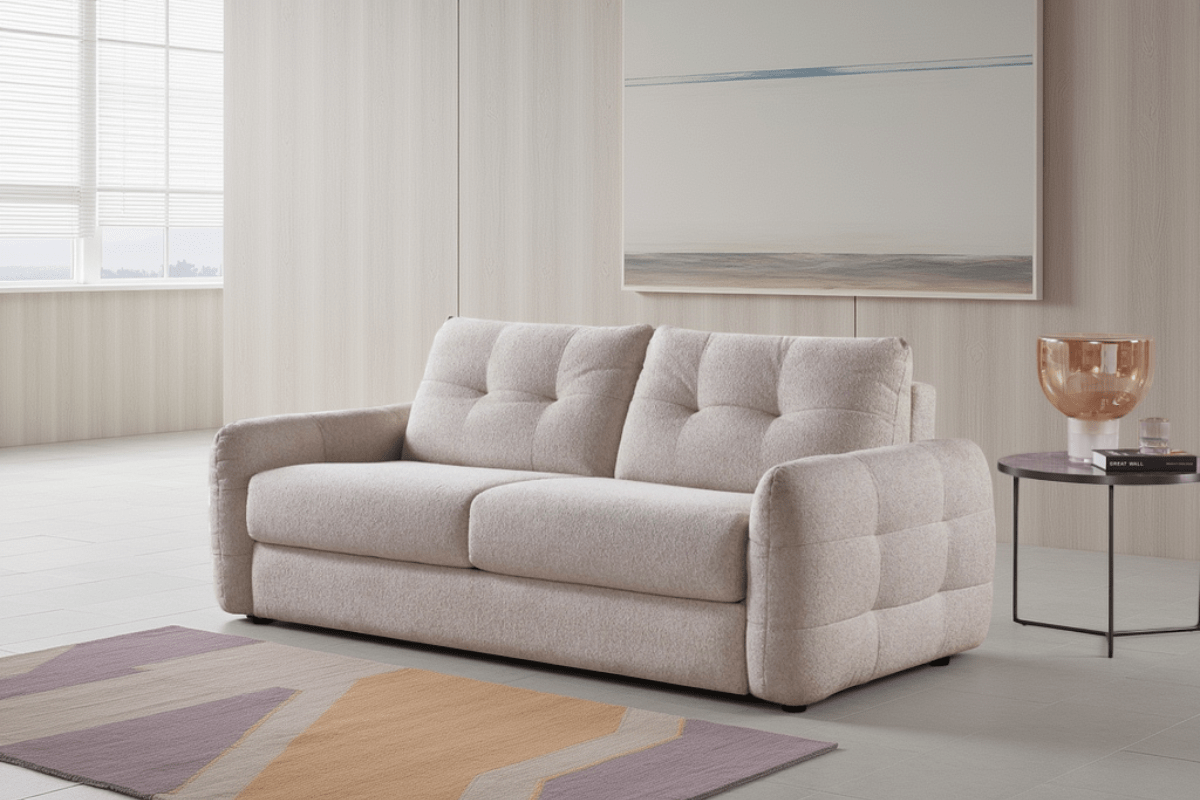
The most effective ways to stop a sofa from sliding are non-slip furniture pads placed under each leg, a non-slip rug placed under the sofa's footprint, or rubber furniture grippers on the base of the frame. The right solution depends on whether your sofa sits on carpet or a hard floor — the methods differ significantly between the two.
This guide covers both, plus how to stop sofa cushions from sliding separately.
Why Sofas Slide: The Most Common Causes
Understanding why your sofa is moving helps you choose the right fix:
- Smooth floor surface — polished wood, laminate, vinyl, and tile offer very little grip for sofa feet
- Smooth sofa feet — plastic or varnished wooden feet have minimal friction against most floor types
- No rug or underlay — a sofa sitting directly on a hard floor or a smooth rug will always slide more than one anchored by a grippy surface beneath it
- Regular movement during use — sitting down, standing up, and general use all push the sofa backward incrementally
- Lightweight sofa on a slick surface — lighter sofas slide more easily than heavier ones because there's less weight holding them in place
For corner sofas specifically, sliding is often more pronounced because the L-shape means force is applied in two directions simultaneously — the main sofa body gets pushed back while the return section gets pushed sideways, gradually pulling the join apart over time.
How to Stop a Sofa From Sliding on Hard Floors
Hard floors — wood, laminate, vinyl, and tile — offer the least grip of any surface. These solutions work specifically for hard floor situations.
Non-Slip Furniture Pads (Most Effective)
Self-adhesive rubber or felt furniture pads applied to the underside of each sofa leg are the most reliable and discreet solution for hard floors. The rubber creates friction against the floor surface without marking it.
How to apply:
- Clean the underside of each sofa leg with a dry cloth to remove dust and grease
- Peel the backing from the self-adhesive pad and press firmly onto the leg base
- Allow the adhesive to bond for at least 30 minutes before use
- Replace every 12–18 months as the rubber wears down and loses grip
Look for pads rated for your floor type — some rubber compounds can discolour light-coloured vinyl or laminate over time. Check the product description before purchasing.
Non-Slip Rug or Rug Underlay
Placing a non-slip rug under the sofa — or adding a non-slip underlay beneath an existing rug — creates a high-grip surface across the full sofa footprint rather than just at the legs. This is the most effective approach for larger or heavier sofas where leg pads alone aren't sufficient.
A non-slip rug under a large corner sofa or U-shaped sofa also performs double duty — it stops the sofa moving and defines the seating area visually, which is particularly useful in open-plan spaces. For rug sizing guidance with a corner sofa, read how to position a corner sofa in your living room.
Rubber Furniture Grippers
Rubber furniture grippers are thicker than standard pads and designed specifically for heavier pieces on slick surfaces. They sit under each leg as cups or discs and grip the floor through a combination of rubber friction and suction.
These work particularly well on polished wood and tile where self-adhesive pads may not provide enough resistance. They're also removable and reusable, making them a good choice if you move furniture regularly.
Velcro Strips
For very lightweight sofas that slide easily, self-adhesive velcro strips applied to the underside of the sofa base — with the corresponding strip stuck to the floor — create a strong mechanical bond. This is more of a permanent solution and isn't suitable for rented properties or floors you don't want to mark.
How to Stop a Sofa From Sliding on Carpet
Carpet provides more grip than hard floors, but sofas can still slide — particularly on newer, thicker carpets or low-pile carpet where the sofa feet sit on top of the fibres rather than sinking in.
Non-Slip Rug Underlay
The most effective solution for carpet is a piece of non-slip rug underlay cut to the size of the sofa's footprint and placed directly between the sofa and the carpet. The underlay's waffle or mesh texture grips the carpet pile from both sides, creating significant resistance to movement.
This approach works well for grey corner sofas, beige corner sofas, and any large sofa configuration where the footprint is substantial enough to benefit from full-base grip rather than just leg pads.
Furniture Cups or Castors
Furniture cups — small plastic or rubber dishes that the sofa legs sit into — grip the carpet pile around the leg and prevent movement in any direction. They're inexpensive, require no adhesive, and are completely reversible.
For sofas on castors, locking castors — castors with a brake mechanism that engages when not deliberately moved — are the most effective solution. Most castor-based sofas have a brake lever on each castor that can be engaged once the sofa is in position.
Increase the Sofa's Weight Distribution
On carpet, a heavier sofa slides less. Adding a dense rug on top of the carpet and beneath the sofa (rather than non-slip underlay) effectively increases the weight load pressing into the carpet pile — though this works less reliably than dedicated anti-slip products.
How to Stop Sofa Cushions From Sliding
Sliding cushions are one of the most common and frustrating sofa problems — and a separate issue from the sofa itself sliding. The causes and fixes differ from the sofa-moving problem above.
Why Sofa Cushions Slide
- Smooth sofa fabric — velvet, faux leather, and satin-finish fabrics offer very little friction between cushion and sofa base
- Flat, under-filled cushion inserts — thin cushions have less contact surface and less resistance to movement
- No tuck-in at the back — back cushions that rest against the sofa back rather than being tucked in are much more likely to slide forward
Non-Slip Mat Under Seat Cushions
Cut a piece of non-slip rug underlay or grip mat to fit the sofa seat base and place it under the seat cushions. This is the most effective fix for sliding seat cushions — the rubber mesh grips both the sofa fabric below and the cushion cover above.
This same approach applies whether your sofa is a cream corner sofa, a black corner sofa, or any other fabric or leather configuration.
Velcro Between Cushion and Base
Self-adhesive velcro applied to the underside of cushion covers and the sofa seat platform creates a firm mechanical connection that prevents movement entirely. This is the most secure long-term solution — particularly effective for back cushions that regularly fall forward.
Apply the hook side to the sofa platform and the loop side to the cushion underside. The connection is strong enough to hold cushions in place during use but can be separated for washing.
Upgrade to Plumper Cushion Inserts
Flat, under-filled cushions slide more easily because there's less contact friction between the cushion and the sofa surface. Replacing thin inserts with plumper, higher-fill alternatives — a foam and fibre combination or a higher-density foam — creates more surface contact and more resistance to sliding.
Tuck Back Cushions In
Rather than resting back cushions flush against the sofa back, tuck the bottom 5–8cm of each cushion into the gap between the seat and the back frame. This creates a natural anchor point that prevents both back and seat cushions from shifting during use.
For full cushion arrangement guidance — including how to style cushions so they stay in place and look great — read how to arrange cushions on a corner sofa.
Sofa Sliding Solutions: Quick Reference
| Problem | Best Solution | Alternative |
|---|---|---|
| Sofa sliding on hard floor | Non-slip rubber leg pads | Non-slip rug or rug underlay |
| Sofa sliding on carpet | Non-slip rug underlay under footprint | Furniture cups under legs |
| Corner sofa sections drifting apart | Non-slip underlay + check connectors | Rubber furniture grippers |
| Seat cushions sliding | Non-slip mat under cushions | Velcro between cushion and base |
| Back cushions sliding forward | Tuck bottom 5–8cm behind seat | Velcro between cushion and back |
| All cushions moving | Plumper inserts + non-slip mat | Velcro on all cushions |
Corner Sofa Sections Drifting Apart
For corner sofas specifically, the sections can gradually drift apart as the sofa slides — particularly on hard floors. If your corner sofa sections are separating during use, the solution is twofold: stop the sofa sliding using the methods above, and check that the connectors between sections are fully engaged.
If connectors have worked loose, read how to assemble and connect a corner sofa for guidance on re-engaging hook, clip, and locking bar connections. If the sections keep drifting despite properly engaged connectors, a non-slip rug under the full footprint is the most reliable long-term solution — it prevents the lateral movement that causes sections to separate in the first place.
Frequently Asked Questions
How do you stop a sofa from sliding?
Apply non-slip rubber furniture pads to the underside of each leg, place a non-slip rug or rug underlay under the sofa's footprint, or use rubber furniture grippers under each leg. On carpet, non-slip underlay cut to the sofa's footprint size is the most effective solution.
How do you stop sofa cushions from sliding?
Place a non-slip mat cut from rug underlay under the seat cushions. Apply velcro between the underside of cushion covers and the sofa platform for a more permanent fix. Tuck the base of back cushions into the seat-back gap to prevent them sliding forward.
How do you keep a sofa from sliding on hard floors?
Self-adhesive rubber furniture pads on each leg are the most reliable solution. For heavier sofas, rubber furniture grippers provide more resistance. A non-slip rug under the full sofa footprint is the most comprehensive approach.
How do you stop sofa cushions slipping?
Use a non-slip grip mat under seat cushions, velcro between cushion covers and the sofa base, and tuck back cushions into the seat-back gap. Upgrading to plumper cushion inserts also helps — thicker cushions have more contact friction and slide less.
How do you keep a sofa from sliding on carpet?
Place non-slip rug underlay cut to the sofa's footprint size between the sofa and the carpet. Furniture cups under each leg also grip the carpet pile effectively. Locking castors are the best solution for sofas on castors.
Find a Sofa That Stays Put
Every Airedale Livings sofa is delivered by a 2-man team and assembled in your room — read how corner sofas are delivered for full delivery details. Browse the full corner sofa collection in grey, beige, cream, and black, or explore large corner sofas and U-shaped sofas for generous spaces.
Not sure which sofa is right for your room? Read how to choose the right corner sofa for guidance on every decision from size to configuration, or how to make a sofa more comfortable if comfort rather than stability is the issue you're trying to solve.
Share:
How to Make a Sofa More Comfortable: Practical Fixes That Work
How Does a Recliner Sofa Work? Types, Mechanisms and Buying Guide