
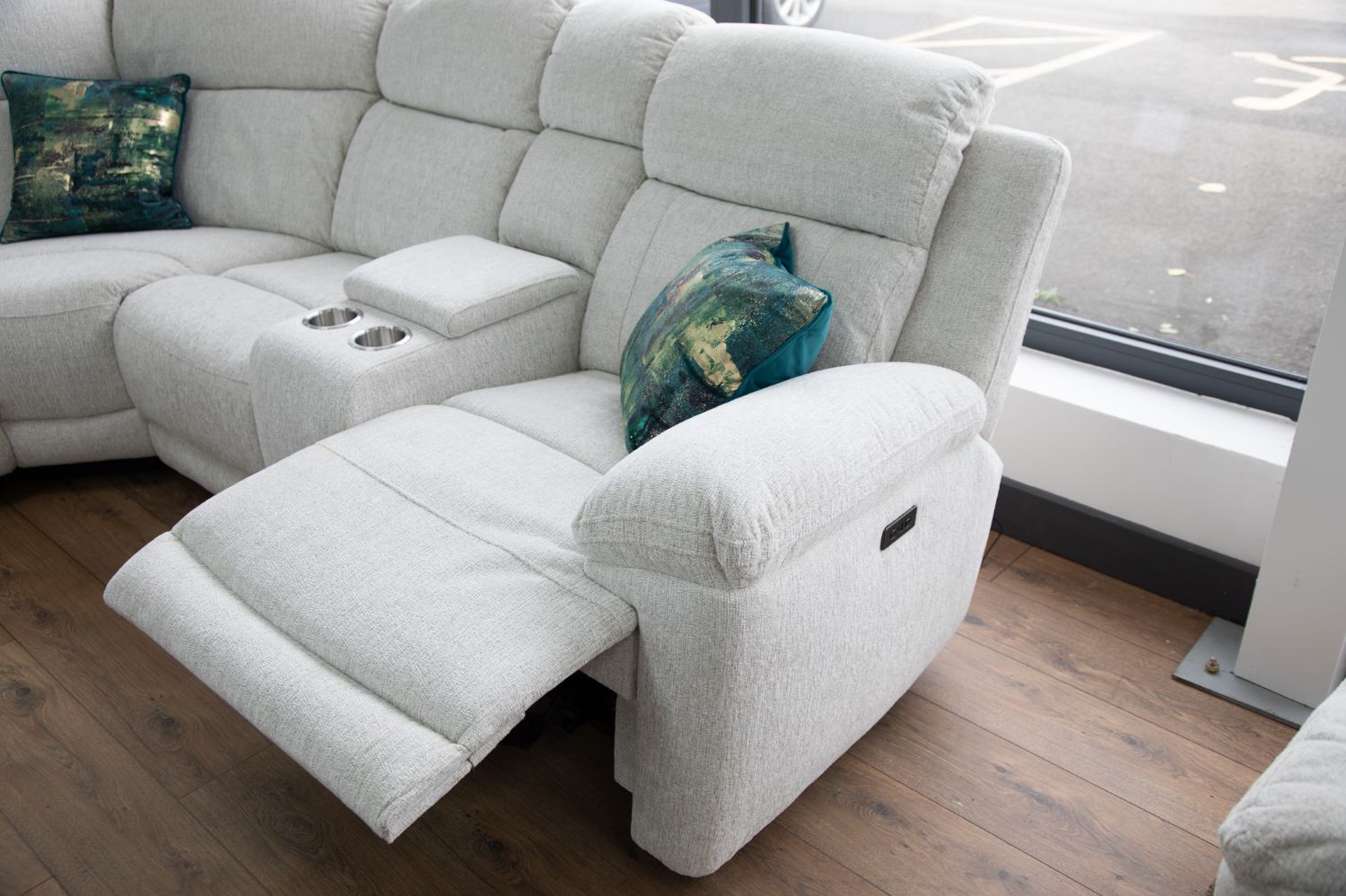
Most recliner sofas assemble in two stages — attaching the back section to the seat base, and connecting any electrical wiring on power models. The process typically takes 15–30 minutes and requires no specialist tools. The key is following the correct sequence and testing the mechanism before pushing the sofa into its final position.
If you've ordered from Airedale Living, your sofa is delivered by a 2-man team who carry every section into your room and assemble it on site — so you won't need to do any of this yourself. But if you're reassembling after a move, this guide covers every step.
What You'll Need
- A Phillips head screwdriver (for bolt-through back attachments)
- An Allen key (supplied with most recliner sofas)
- A second person — recliner sections are heavier than standard sofa sections due to the mechanism
- The assembly instructions supplied with the sofa, if available
- A clear floor area large enough to work around the sofa
How to Assemble a Recliner Sofa: Step-by-Step
Step 1: Position the Seat Base First
Before attaching anything, position the seat base in the room — accounting for the wall clearance the sofa will need when reclined. Standard recliners need 30–45cm of clearance behind the sofa; wall-hugger models need as little as 5–10cm. More on this below.
Do not push the sofa against the wall at this stage — you need full access to the back of the frame to attach the back section and connect any wiring.
Step 2: Identify the Back Attachment Points
Most recliner sofas attach the back section to the seat base via one of two systems:
Hook and bracket system — metal hooks fixed to the bottom of the back section slot over corresponding brackets on the top of the seat base frame. No tools required — the back simply drops onto the brackets and locks into place under its own weight.
Bolt-through system — the back section is held to the seat base by bolts that pass through both frames. These require a screwdriver or Allen key to tighten once the back is in position.
Check which system your sofa uses before attempting to attach the back — the method will be shown in the supplied assembly guide.
Step 3: Attach the Back Section
For hook and bracket systems:
- Lift the back section and align the hooks with the brackets on the seat base — one person on each end
- Lower the back section carefully until the hooks seat fully on the brackets
- Apply gentle downward pressure to confirm the hooks are fully engaged — the back should feel solid with no movement at the join
- Check the back is level across its full width before moving on
For bolt-through systems:
- Lift the back section into position and align the bolt holes between the back and seat base frames
- Insert the bolts by hand first — do not tighten until all bolts are seated
- Tighten all bolts evenly, working in a cross pattern to ensure even tension
- Do not overtighten — firm hand-tight is sufficient for most recliner back attachments
Step 4: Connect the Electrical Wiring (Power Recliners Only)
On electric recliner sofas, the motor in the seat base connects to the control panel and handset via a wiring loom. This must be connected before the sofa is tested or pushed into position.
How to connect an electric recliner sofa:
- Locate the wiring connector — usually a multi-pin plug on a short cable extending from the seat base, and a corresponding socket on the back section or control panel
- Align the connector pins carefully — most use a keyed connector that only fits one way
- Push firmly until the connector clicks into place — a loose connection is the most common cause of power recliner faults after assembly
- Tuck the cable neatly behind the sofa frame — most recliners have cable clips or channels for this purpose
- Connect the mains power cable to a wall socket — ensure the socket is within cable reach before finalising the sofa's position
Labelling tip: If you're reassembling after dismantling, photograph all wiring connections before disconnecting them. This makes reconnection significantly faster and eliminates guesswork.
Step 5: Test the Mechanism Before Positioning
Before pushing the sofa into its final position against or near the wall, test the full range of movement:
- Sit in each reclining seat in turn
- Activate the full recline — either by pulling the lever (manual) or pressing the recline button (electric)
- Allow the mechanism to complete its full range of motion and check nothing catches, binds, or makes unexpected noise
- Return to upright and repeat twice more to confirm the mechanism operates smoothly
- For electric models, test all button functions — recline, return, and any additional functions such as headrest or lumbar adjustment
Testing before positioning is essential — if the mechanism needs adjusting, it is far easier to access before the sofa is against the wall.
Step 6: Position the Sofa With Correct Wall Clearance
Once the mechanism is confirmed working, position the sofa in its final location — accounting for the clearance needed behind it.
Can a Reclining Sofa Go Against a Wall?
This is one of the most common questions about recliner sofas — and the answer depends on the type of recliner.
Standard recliners cannot go directly against a wall. The backrest tilts backward when reclining, requiring 30–45cm of clear space between the sofa back and the wall. Positioning too close to the wall prevents the mechanism from completing its full range of motion and can damage the wall, the backrest, and the mechanism over time.
Wall-hugger recliners are specifically designed for rooms where wall clearance is limited. The mechanism slides the seat forward as it reclines rather than tilting the back into the wall — requiring as little as 5–10cm of clearance. If your room is tight, a wall-hugger model is the practical choice.
What to Put Behind a Reclining Sofa
If you have a standard recliner and want to fill the gap between the sofa and the wall without restricting the mechanism:
- A narrow console table positioned behind the sofa at exactly the right clearance distance — this fills the visual gap and provides a useful surface for lamps or décor without blocking recline
- A thin bookcase positioned to one side rather than directly behind the recline path
- Nothing — an empty gap is preferable to anything that impedes the mechanism. The gap is only visible when standing, not when seated
How to Assemble a 2-Seater Recliner Sofa
A 2-seater recliner typically arrives in two pieces — the seat base and the back section — and follows the standard assembly steps above. The back section on a 2-seater is lighter and more manageable than a 3-seater, making it possible for two people to assemble comfortably without additional help.
Check whether both seats recline or just one — some 2-seater models have one reclining seat and one fixed seat, with the mechanism only on one side. If the sofa is an electric model, the wiring connector is usually located on the outer left or right side of the seat base.
Browse 2-seater sofas if you're looking for a compact sofa for a smaller room alongside a separate recliner chair.
How to Assemble a 3-Seater Recliner Sofa
A 3-seater recliner sofa may arrive in two or three pieces depending on the model — some have a single seat base and one back section; others have a split base or separate centre console section.
For split-base 3-seater models:
- Connect the two seat base sections first using the connector system described above — hooks, clips, or bolts depending on the model
- Ensure the seat base join is fully secure before attaching the back
- Attach the back section across the full width of the now-connected seat base
- Connect wiring for electric models, ensuring all cables are routed correctly before connection
The back section on a 3-seater recliner is heavy — particularly on electric models where the control panel and wiring loom are housed in the back. Three people make this step significantly safer and easier.
Browse 3-seater sofas for standard 3-seater options, or recliner sofas for the full reclining range.
How Much Does a Reclining Sofa Weigh?
Recliner sofas are heavier than equivalent standard sofas due to the mechanism — typically by 15–30kg depending on the model.
| Recliner Size | Approximate Total Weight |
|---|---|
| 2-seater manual recliner | 70–100kg |
| 3-seater manual recliner | 100–140kg |
| 2-seater power recliner | 90–120kg |
| 3-seater power recliner | 120–160kg |
| Corner recliner sofa | 130–200kg+ |
Always use two people minimum when moving recliner sections — the weight combined with the awkward bulk of the mechanism makes single-person handling a significant injury risk.
How to Get a Reclining Sofa Through a Door
Because recliner sofas arrive in sections, getting them through a doorway is more manageable than moving a fully assembled sofa — but recliner sections are heavier and bulkier than standard sofa sections due to the mechanism.
Before delivery, check:
- Doorway width at its narrowest point including the frame — allow at least 10–15cm clearance on each side of the section
- Hallway width — note any tight turns or bends
- Staircase width and ceiling height for upper-floor deliveries — recliner sections need more manoeuvring room than standard sections due to their depth
- Internal doorway width — the doorway into the room the sofa is going into
On the day:
- Remove doors from hinges if the clearance is tight — this adds 5–8cm immediately
- Carry sections vertically where possible to reduce the footprint being manoeuvred through the door
- For very tight access, check whether the back section can be separated from the seat base before attempting doorways — this gives two smaller, lighter pieces rather than one large section
For full delivery and access guidance, read how corner sofas are delivered — the same principles apply to recliner sofa delivery.
How to Move a Reclining Sofa
Moving a recliner sofa — whether across the room or to a new property — requires the same disassembly process as assembly in reverse.
- Disconnect all power on electric models before touching any connections
- Remove the back section by reversing the attachment method — unhook from brackets or remove bolts
- Disconnect all wiring at the connector rather than pulling on cables
- Label all wiring with masking tape before disconnecting — photographs are even better
- Move sections individually — never attempt to move an assembled recliner sofa as a whole unit
- Keep all hardware — bolts, Allen keys, and cable clips — in a labelled bag
For full guidance on separating sofa sections safely, read how to dismantle and take apart a corner sofa — the principles for separating and moving sections are identical for recliner sofas.
Frequently Asked Questions
How do you assemble a recliner sofa?
Position the seat base first with correct wall clearance, then attach the back section using the hook-and-bracket or bolt-through system. For electric models, connect the wiring loom before testing. Test the full mechanism before pushing the sofa into its final position.
How do you connect an electric recliner sofa?
Locate the multi-pin wiring connector extending from the seat base, align it with the corresponding socket, and push firmly until it clicks into place. Connect the mains cable to a wall socket within reach. Test all button functions before finalising the sofa's position.
Can a reclining sofa go against a wall?
Standard recliners need 30–45cm of clearance behind the sofa to tilt fully. Wall-hugger recliners need only 5–10cm as they slide forward during recline. Do not position a standard recliner directly against a wall — it will prevent full recline and can damage the mechanism.
How much does a reclining sofa weigh?
A 3-seater manual recliner typically weighs 100–140kg; a 3-seater power recliner weighs 120–160kg. Always use two people minimum when moving recliner sections.
How do you get a reclining sofa through a door?
Separate into individual sections before attempting doorways. Check doorway width against individual section dimensions and allow at least 10–15cm clearance on each side. Remove doors from hinges for tight access. Carry sections vertically where possible.
How do you move a heavy reclining sofa?
Disconnect all power, remove the back section, disconnect wiring at the connectors (not at the cables), label everything, then move sections individually. Never attempt to move an assembled recliner as a whole unit.
Find Your Perfect Recliner at Airedale Living
Browse recliner sofa collection to find the right model for your home — or explore our new arrivals and best sellers for the most popular styles right now. If you're comparing recliner sofas against standard configurations, our corner sofa range and cinema sofas are worth exploring alongside.
Not sure whether a recliner is right for you? Read are recliner sofas worth it for an honest assessment of the pros and cons, or how a recliner sofa works for a full breakdown of every mechanism type before you decide.
Share:
Are Recliner Sofas Worth It? What to Look For Before You Buy
How to Style a Recliner Sofa: Room Layout, Coffee Tables and Décor